Plastic Disinfectant
CN → US| HS Code | Tariff Rate | Origin | Destination | Doc |
|---|---|---|---|---|
| 3402905010 | 13.7% | CN | US | Official Doc |
| 3808594000 | 40.0% | CN | US | Official Doc |
| 3808945095 | 40.0% | CN | US | Official Doc |
| 3402905030 | 38.7% | CN | US | Official Doc |
Product Images
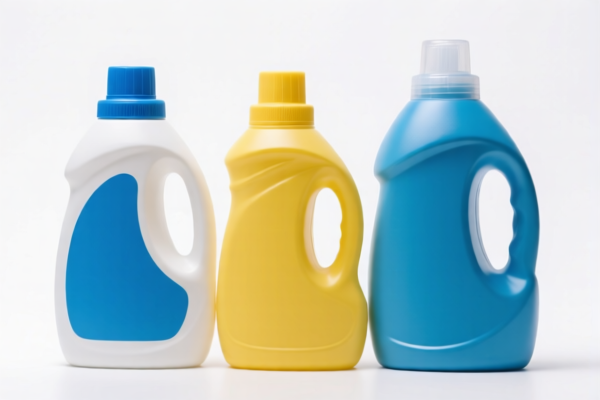
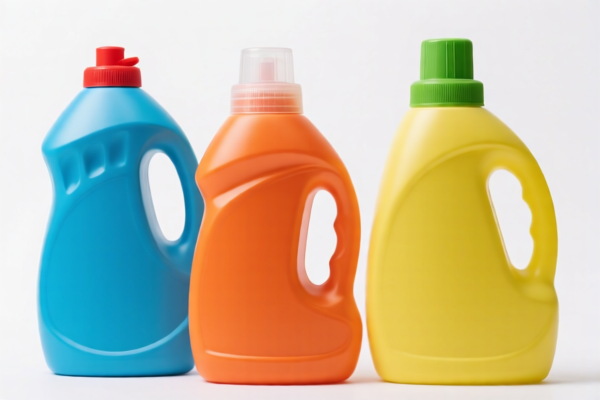


AI Analysis
🧴 Plastic Disinfectant (Chemical Preparations)
🌐 HS Code Reference & Clearance Guide | 2026 Latest Tariff Analysis | Professional Customs Strategy
📌 I. Product Definition & Classification: Do You Truly Understand "Plastic Disinfectant"?
"Plastic Disinfectant" is a commercial term that can be ambiguous in international trade. It generally refers to chemical preparations used for disinfection and preservation. The classification depends heavily on the chemical nature and primary function of the product.
- Category A: Cleaning/Surfactant-Based Preparations
If the product’s primary function is cleaning with disinfectant properties (e.g., detergent-based surface cleaners), it may fall under Heading 3402. - Category B: Specialized Disinfectants/Biocides
If the product is formulated specifically as a disinfectant, antiseptic, or preservative without being a primary cleaning agent, it falls under Heading 3808.
⚠️ Key Distinction Point:
- If the product is primarily a surfactant/cleaning agent with added disinfectant properties → HS 3402.90.50
- If the product is primarily a chemical disinfectant/preservative (active biocidal ingredients) → HS 3808
📦 II. HS Code Classification Details (2026 Latest Tariff Authority)
Based on the provided data, here are the four potential HS Codes and their corresponding tax implications for imports (likely from China to the US, given the "Section 301/122" context in the source data):
| HS Code | Product Description | Application Scenario | Tax Status (Total) |
|---|---|---|---|
3402.90.50.10 |
Chemical preparations for washing, cleaning, or lubricating (incl. surfactants) | Disinfectants functioning as cleaning agents; chemical preparations consistent with detergent properties. | 13.7% |
3808.59.40.00 |
Disinfectants and similar products (e.g., for agriculture, veterinary use, or general disinfection) | Exact match for "Disinfectant" usage; no material or form conflict. | 40.0% |
3808.94.50.95 |
Other disinfectants and similar products (catch-all for chemical disinfectants) | Matches "Disinfectant" usage; chemical preparation category; catch-all item. | 40.0% |
3402.90.50.30 |
Other chemical preparations for washing/cleaning | Meets cleaning agent characteristics; chemical preparation category. | 38.7% |
🔍 Critical Reminder:
- HS 3808 (Disinfectants) carries a significantly higher tariff burden (40%) due to USITC and IEEPA附加 taxes.
- HS 3402 (Cleaning Preparations) offers a lower effective rate (13.7% – 38.7%) if the product can be justified as a cleaning/surfactant-based preparation.
- The choice depends on the primary function and chemical composition declared in the technical specification.
💰 III. 2026 Latest Tariff Rate Breakdown (Including Add-on Taxes & Policy Add-ons)
✅ Applicable Country: United States (US)
✅ Origin: China (CN)
✅ Effective Date: Current rates apply (includes Section 301/122 add-ons)
🎯 1. 3402.90.50.10 — Chemical Preparations (Cleaning/Surfactant Focus)
| Item | Content |
|---|---|
| Base Tariff | 3.7% |
| Section 301 Add-on | 0.0% (Note: Data indicates 0.0% for this specific subheading in the source) |
| Section 122/IEEPA Add-on | +10% |
| Total Tax Rate | 13.7% |
| Tax Calculation | CIF Value × 13.7% |
| De Minimis Exemption | ❌ Not Applicable (Commercial Import) |
| Legal Basis | Base Tariff 3.7% + IEEPA 10% |
📌 Explanation:
- This classification is the most cost-effective option.
- It requires the product to be framed as a cleaning or surfactant-based preparation rather than a pure biocide.
- The "Section 301" add-on appears to be 0% for this specific line in the provided data, but the IEEPA 10% applies.
🎯 2. 3808.59.40.00 — Disinfectants (Specific Disinfectant Category)
| Item | Content |
|---|---|
| Base Tariff | 5.0% |
| Section 301 Add-on | +25.0% |
| Section 122/IEEPA Add-on | +10% |
| Total Tax Rate | 40.0% |
| Tax Calculation | CIF Value × 40.0% |
| De Minimis Exemption | ❌ Not Applicable |
| Legal Basis | Base Tariff 5.0% + Section 301 25.0% + IEEPA 10% |
📌 Explanation:
- This is the standard classification for disinfectants.
- The summary states: "Product use (disinfection/preservation) fully matches the 'disinfectant' classification explanation, no material or form conflict."
- This results in the highest cost.
🎯 3. 3808.94.50.95 — Other Disinfectants (Catch-All Chemical Disinfectant)
| Item | Content |
|---|---|
| Base Tariff | 5.0% |
| Section 301 Add-on | +25.0% |
| Section 122/IEEPA Add-on | +10% |
| Total Tax Rate | 40.0% |
| Tax Calculation | CIF Value × 40.0% |
| De Minimis Exemption | ❌ Not Applicable |
| Legal Basis | Base Tariff 5.0% + Section 301 25.0% + IEEPA 10% |
📌 Explanation:
- Also classified under 3808 (Disinfectants).
- Summary: "The 'disinfection' use in the product name fully matches 'disinfectant' in the classification; fits the catch-all category for chemical preparations."
- Same high tariff burden as above.
🎯 4. 3402.90.50.30 — Other Chemical Cleaning Preparations
| Item | Content |
|---|---|
| Base Tariff | 3.7% |
| Section 301 Add-on | +25.0% |
| Section 122/IEEPA Add-on | +10% |
| Total Tax Rate | 38.7% |
| Tax Calculation | CIF Value × 38.7% |
| De Minimis Exemption | ❌ Not Applicable |
| Legal Basis | Base Tariff 3.7% + Section 301 25.0% + IEEPA 10% |
📌 Explanation:
- This is another 3402 option but with a higher Section 301 add-on (25%) compared to3402.90.50.10.
- Summary: "Meets the usage characteristics of cleaning preparations; belongs to chemical preparations; no conflict with cleaning agent attributes."
- Use this only if3402.90.50.10is not applicable for other technical reasons.
🛠️ IV. Clearance Practical Advice (Battle-Tested Pitfall Avoidance Guide)
✅ 1. Preparation Checklist (All Required)
| Document | Mandatory | Description |
|---|---|---|
| ✅ Product Specification Sheet | ✔️ | Must detail active ingredients, concentration, and primary function (cleaning vs. disinfection). |
| ✅ Technical Data Sheet (TDS) | ✔️ | Include SDS (Safety Data Sheet) highlighting if it is a surfactant or a biocide. |
| ✅ Product Photos (with Label) | ✔️ | Clear image of the label, including "For Disinfection" or "Cleaning" claims. |
| ✅ Commercial Invoice | ✔️ | Describe as "Chemical Preparation for Cleaning/Disinfection" or "Disinfectant Solution" consistently with HS Code. |
| ✅ Packing List | ✔️ | Detail net/gross weight and volume. |
| ✅ Certificate of Origin | ✔️ | If applicable for other markets, but for US, origin is key for tariff calculation. |
✅ 2. Declaration Strategy (Key Mantra)
🔥 “Function Dictates Code, Cleaning Saves Money, Disinfection Costs More!”
| Scenario | Correct Declaration | Risk if Incorrect |
|---|---|---|
| Surface Cleaner with Disinfectant Properties | 3402.90.50.10 |
Misdeclared as Disinfectant → 36.3% extra tax |
| Pure Disinfectant (Spray/Solution) | 3808.59.40.00 or 3808.94.50.95 |
Misdeclared as Cleaner → Customs Audit/Compliance Risk |
| Hand Sanitizer/Gel | Usually 3808.94 (Disinfectant) |
Misdeclared as Cleaner → High Penalty |
| Industrial Floor Disinfectant (Detergent Base) | 3402.90.50.10 (if surfactant dominant) |
Misdeclared as 3808 → Overpayment of Tax |
📌 Crucial Tip:
- If the product is primarily a detergent (e.g., contains sodium lauryl sulfate) and disinfectant is an additive, argue for 3402.
- If the product is primarily alcohol, quaternary ammonium compounds, or bleach without significant cleaning agents, declare as 3808.
✅ 3. Special Handling Scenarios
| Situation | Recommendation |
|---|---|
| Mixed Use (Clean + Disinfect) | Provide SDS showing surfactant is the primary active ingredient. Aim for 3402.90.50.10. |
| Plastic Packaging (Not Plastic Product) | Ensure the description does not imply the product is made of plastic. The HS Code refers to the chemical content, not the container. |
| OEM/Private Label | Use generic technical names (e.g., "Benzalkonium Chloride Solution") rather than brand names to avoid classification confusion. |
| High Concentration Biocides | Must declare as 3808. No workaround for pure biocides. |
🌍 V. Global Market Clearance Comparison (2026 Latest)
| Country/Region | Recommended HS Code | Approx. Tariff | Certification Requirements | Notes |
|---|---|---|---|---|
| 🇺🇸 USA | 3402.90.50.10 or 3808.94.50.95 |
13.7% – 40.0% | EPA Registration (for disinfectant claims) | High impact of Section 301/122 taxes. |
| 🇨🇳 China | 3402.90.50 or 3808.94 |
5% – 10% | N/A | Lower tariffs, no Section 301. |
| 🇪🇺 EU | 3808.94 or 3402.99 |
4.5% – 6.5% | Biocidal Products Regulation (BPR) | No high add-on taxes like US. |
| 🇬🇧 UK | 3808.94 or 3402.99 |
4.5% – 6.5% | BPR | Post-Brexit alignment with EU standards. |
📌 Conclusion:
- The US market is uniquely expensive for disinfectants due to Section 301 and IEEPA taxes.
- Classification strategy is critical to save up to 26.3% in duties by qualifying under 3402 if chemically justified.
📌 VI. Common Mistakes & Pitfalls (Lessons Learned)
❌ Mistake 1: Declaring a pure alcohol-based disinfectant as "Cleaning Agent" to save tax.
👉 Consequence: Customs audit, penalties, and retroactive tax payment (36.3% difference).
❌ Mistake 2: Ignoring EPA registration requirements for disinfectant claims.
👉 Consequence: Product seizure by CBP (Customs and Border Protection) for violating EPA regulations.
❌ Mistake 3: Using vague descriptions like "Plastic Disinfectant" without specifying chemical nature.
👉 Consequence: Customs may assign the highest general rate or delay clearance for inspection.
❌ Mistake 4: Assuming all "disinfectants" fall under one HS code.
👉 Consequence: Misclassification between 3808.59 and 3808.94 may lead to scrutiny, though taxes are similar.
✅ Correct Practice:
"Surface Disinfectant Cleaner, 500ml Bottle, Contains Quaternary Ammonium Compounds, EPA Registered No. XXXX"
OR
"Industrial Cleaning Solution with Disinfectant Properties, Surfactant-Based, Model XYZ"
🎯 VII. Conclusion: Precision in Classification, Maximization of Profit
🎯 Remember the Mantra:
🔹 "Cleaning = 3402 (13.7%), Disinfectant = 3808 (40%). Save 26% if possible!"
🔹 "Document your chemical composition. Let the surfactants speak for you."
🔹 "One wrong digit costs 26%. One right document saves thousands."
📌 Pro Tip:
If your product is a detergent-based cleaner with disinfectant claims, insist on 3402.90.50.10 in your commercial invoice and provide a technical justification that the primary function is cleaning.
For pure disinfectants, accept the 40% rate and ensure EPA compliance to avoid seizure.
📣 Immediate Action Required:
📞 Consult with a customs broker to review your SDS and Formula.
📝 Ensure your commercial invoice matches the HS Code perfectly.
🚀 Clear customs efficiently, minimize duties, and maximize your margin!
✨ Professional Clearance Starts with Accurate Classification!
💼 Every percentage point matters in global trade!
Customer Reviews
About HS Code Classification
The Harmonized System (HS) is an internationally standardized nomenclature developed by the World Customs Organization (WCO) to classify traded products. Over 200 countries use the HS system as the basis for customs tariffs, trade statistics, and import/export regulations.
Each HS code follows a hierarchical structure:
- Chapter (2 digits) — Broad category of goods (e.g., Chapter 84: Machinery and Mechanical Appliances)
- Heading (4 digits) — More specific grouping within the chapter
- Subheading (6 digits) — Internationally standardized breakdown, used by all WCO member countries
- National subdivisions (8-10 digits) — Country-specific extensions for further classification, such as US HTSUS 10-digit codes
Correct HS code classification is essential for smooth customs clearance, accurate duty payment, and compliance with trade regulations. Misclassification can lead to customs delays, overpayment of duties, or penalties.
When importing from CN to US, the applicable tariff rates may include:
- Most-Favored-Nation (MFN) rate — The standard duty rate applied to WTO members
- General rate — Applied to countries without trade agreements
- Trade remedy duties — Additional tariffs such as Section 301 (anti-dumping), Section 232 (national security), or countervailing duties
The information provided on this page is for reference purposes only. For official classification, please consult with your local customs authority or a licensed customs broker.