Plastic Disposable Spoons
CN → US| HS Code | Tariff Rate | Origin | Destination | Doc |
|---|---|---|---|---|
| 3926904800 | 13.4% | CN | US | Official Doc |
| 8215994060 | 15.0% | CN | US | Official Doc |
| 3924102000 | 24.0% | CN | US | Official Doc |
| 3924104000 | 13.4% | CN | US | Official Doc |
| 3926901000 | 20.9% | CN | US | Official Doc |
Product Images
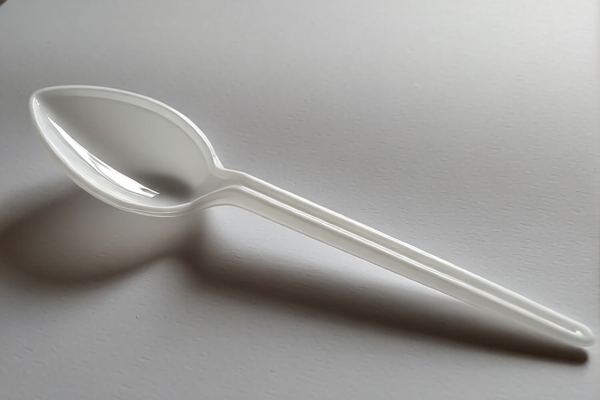
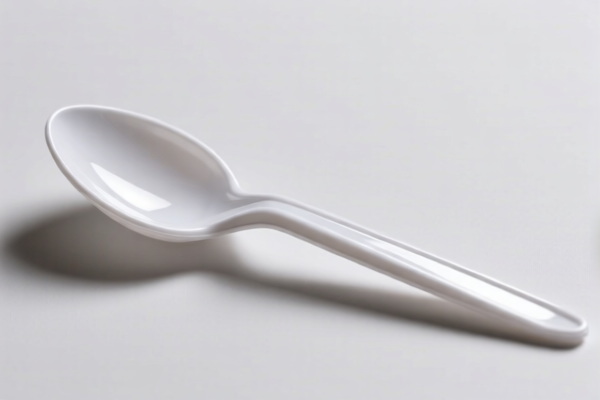

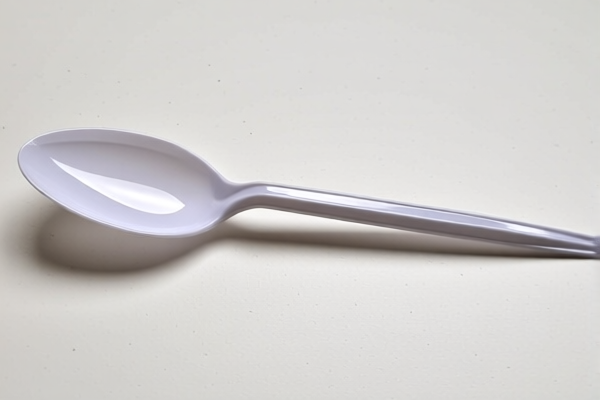
AI Analysis
🥄 Plastic Disposable Spoons: HS Code Classification & US Import Tax Strategy (2026)
🌐 HS Code Reference & Customs Clearance Guide | 2026 Latest Tariff Breakdown | Professional Entry Strategy
📌 1. Product Definition & Classification: Do You Really Understand "Plastic Spoons"?
Plastic disposable spoons are widely used in food service, catering, and household dining. In international trade, they are primarily classified under Chapter 39 (Plastics and Articles Thereof) or Chapter 82 (Tools, Implements, Cutlery) depending on material composition and structural characteristics.
Key Classification Divergence:
- 100% Plastic Spoons: If the spoon is entirely made of plastic (including handle and bowl), it falls under Chapter 39 (e.g.,
3926.90or3924.10depending on specific sub-category definitions like "tableware" vs. "other articles"). - Hybrid Material Spoons: If the spoon has a non-stainless steel metal or non-metal handle combined with a plastic head (or vice versa), it may be classified under Chapter 82 (
8215.99), specifically as cutlery with mixed materials.
⚠️ Critical Distinction Point: - Pure Plastic: No metal parts → Classify under HS 39xx (Plastics). - Mixed Material: Non-stainless metal handle + plastic head → Classify under HS 8215.99 (Other Cutlery). - Note: Stainless steel components would push classification to Chapter 82 (Steel) or 73 (Iron/Steel), but this guide focuses on the provided data which specifies non-stainless or plastic characteristics.
📦 2. HS Code Classification Details (2026 Authoritative Comparison)
Based on the provided data, here are the five possible HS codes for plastic disposable spoons, along with their specific customs descriptions and tax implications.
| HS Code | Product Description | Key Characteristics | Total Tax Rate* | Tax Composition Detail |
|---|---|---|---|---|
3926.90.48.00 |
Plastic Spoons (Plastic Material) | 100% Plastic; Cutlery use; Fits general plastic articles category. | 13.4% | Base: 3.4% Add-on: 0.0% Sec 122: 10% |
8215.99.40.60 |
Plastic Spoons (Non-Stainless Metal/Non-Metal Handle) | Contains a non-stainless metal or non-metal handle; classified as cutlery. | 15.0% | Base: 5.0% Add-on: 0.0% Sec 122: 10% |
3924.10.20.00 |
Plastic Tableware (Plastic Material) | 100% Plastic; Classified specifically as "Plastic Tableware" (Eating Utensils). | 24.0% | Base: 6.5% Add-on: 7.5% Sec 122: 10% |
3924.10.40.00 |
Plastic Tableware (Plastic Material) | 100% Plastic; Fits definition of "Plastic Cutlery/Tableware". | 13.4% | Base: 3.4% Add-on: 0.0% Sec 122: 10% |
3926.90.10.00 |
Plastic Articles (Other Plastic Articles) | 100% Plastic; "Catch-all" category for plastic goods not specified elsewhere. | 20.9% | Base: 3.4% Add-on: 7.5% Sec 122: 10% |
🔍 Key Reminder: - HS 3924 is specifically for tableware (plates, bowls, cutlery). If the product is clearly defined as "tableware,"
3924.10.xxis the most accurate chapter. - HS 3926 is a residual category ("Other articles of plastics"). It is often used if the item doesn't fit the specific "tableware" definition strictly, or if customs officers interpret it broadly. - HS 8215 applies only if there is a non-stainless metal part (e.g., a cheap alloy handle). If it's 100% plastic, do not use this code.
💰 3. 2026 Latest Tariff Rate Breakdown (Detailed Policy Analysis)
✅ Applicable Country: United States (US)
✅ Origin: China (CN) (Implied by "Section 122" and typical 122/301 tariff structures)
✅ Effective Time: 2025/2026 Period
🎯 1. Lowest Risk/Lowest Tax: 3926.90.48.00 & 3924.10.40.00
Tax Rate: 13.4%
| Item | Content |
|---|---|
| Base Tariff | 3.4% |
| USITC/Section 301 Add-on | 0.0% (Note: Some plastic tableware may be exempt from 25% 301 tariffs depending on specific HTSUS listings, hence the low base) |
| Section 122 Tariff | 10% (Applied to specific Chinese goods) |
| Total Effective Rate | 13.4% |
| Tax Calculation | CIF Value × 13.4% |
| De Minimis Eligibility | ❌ No (Section 122 goods are generally excluded from Section 321 de minimis exemption for imports >$800) |
📌 Interpretation:
- This is the most cost-effective classification for pure plastic spoons.
- The "0% add-on" suggests that this specific subheading might be exempt from the standard 25% Section 301 tariffs, leaving only the Section 122 10% tariff.
- Strategy: Ensure the product description clearly states "100% Plastic" to support this classification.
🎯 2. Hybrid Material: 8215.99.40.60
Tax Rate: 15.0%
| Item | Content |
|---|---|
| Base Tariff | 5.0% |
| USITC/Section 301 Add-on | 0.0% |
| Section 122 Tariff | 10% |
| Total Effective Rate | 15.0% |
| Tax Calculation | CIF Value × 15.0% |
| De Minimis Eligibility | ❌ No |
📌 Interpretation:
- If your spoon has a non-stainless metal handle (e.g., zinc alloy, chrome-plated non-steel), it falls here.
- Slightly higher tax than pure plastic but still relatively low.
- Warning: Do not use this if there is any stainless steel component, as that changes the chapter entirely.
🎯 3. High Risk/High Tax: 3924.10.20.00 & 3926.90.10.00
Tax Rates: 24.0% & 20.9%
| HS Code | Total Tax | Tax Composition Detail |
|---|---|---|
3924.10.20.00 |
24.0% | Base: 6.5% Add-on: 7.5% Sec 122: 10% |
3926.90.10.00 |
20.9% | Base: 3.4% Add-on: 7.5% Sec 122: 10% |
📌 Interpretation:
-3924.10.20.00incurs a 7.5% additional tariff on top of the base and Section 122. This is likely due to specific USITC footnotes applying to certain plastic tableware items from China.
-3926.90.10.00is a "catch-all" plastic category that also attracts the 7.5% add-on.
- Strategy: Avoid these codes if possible, as they increase costs by ~7-10% compared to the optimal classifications. Misclassifying a pure plastic spoon as "other plastic articles" (3926.90.10) instead of "tableware" (3924.10.40) can lead to higher taxes if the specific tableware subheading is exempt from add-ons.
🛠️ 4. Customs Clearance Practical Advice (Avoid Pitfalls)
✅ 1. Preparation Checklist (Non-negotiable)
| Document | Required | Explanation |
|---|---|---|
| Product Specification Sheet | ✅ | Must state: "100% Plastic" (e.g., PP, PS) OR "Plastic Head + Non-Stainless Handle". |
| Material Declaration Letter | ✅ | Supplier must confirm no stainless steel is used if claiming HS 3924/3926. |
| Product Photos | ✅ | Clear images of the spoon, showing no metal components (if claiming 100% plastic). |
| Commercial Invoice | ✅ | Describe as "Disposable Plastic Spoons" or "Plastic Cutlery". Avoid vague terms like "Plastic Items". |
| Packing List | ✅ | Net weight and gross weight are critical for duty calculations. |
✅ 2. Declaration Tips (Key Mantras)
🔥 "Pure Plastic = Chapter 39; Mixed Handle = Chapter 82. Be Precise!"
| Scenario | Correct Classification | Incorrect Classification | Consequence |
|---|---|---|---|
| 100% Plastic Spoon | 3924.10.40.00 (13.4%) |
3926.90.10.00 (20.9%) |
Overpaying ~7.5% |
| 100% Plastic Spoon | 3926.90.48.00 (13.4%) |
3924.10.20.00 (24.0%) |
Overpaying ~10.6% |
| Non-Stainless Handle Spoon | 8215.99.40.60 (15.0%) |
3924.10.40.00 (13.4%) |
Underpayment Risk (if misclassified as pure plastic) |
| Stainless Steel Handle | Not in Data (Likely Chapter 73/82 Steel) | Any 39 Code | Severe Penalty (Wrong HS Code) |
✅ 3. Special Handling
| Situation | Recommendation |
|---|---|
| OEM Custom Spoons | Provide design drawings. If handle is different material, declare both. |
| Packaged Sets | If sold as a set (spoon + fork + knife), declare the item that determines the essential character (usually the cutlery). |
| Food Contact | Ensure compliance with FDA standards. While not a tariff issue, it can cause customs delays if flagged. |
🌍 5. Global Market Comparison (2026)
| Market | Recommended HS Code | Estimated Tax (China Origin) | Notes |
|---|---|---|---|
| 🇺🇸 USA | 3924.10.40.00 |
13.4% | Best rate. Avoid 3924.10.20.00 (24%). |
| 🇨🇳 China | 3924.10.20.00 |
5-9% (Import) | Low entry tariff. No Section 122. |
| 🇪🇺 EU | 3924.10.00 |
0-4.2% | No Section 122. Verify EPR regulations. |
| 🇬🇧 UK | 3924.10.00 |
4.2% | Post-Brexit rules apply. |
| 🇯🇵 Japan | 3924.10.00 |
0% | Often duty-free for plastic tableware. |
📌 Conclusion: - The USA is the most complex due to Section 122 and potential 7.5% add-ons. - Optimization: Aim for
3924.10.40.00or3926.90.48.00to secure the 13.4% rate. - Risk Avoidance: Do not use3924.10.20.00(24%) unless explicitly advised by a customs broker for your specific product form.
📌 6. Common Mistakes & Pitfalls (Lessons Learned)
❌ Mistake 1: Classifying 100% plastic spoons as 3924.10.20.00
👉 Consequence: Paying 24% instead of 13.4%. Loss of $10.6 per $100 goods!
❌ Mistake 2: Declaring "Plastic Spoons" without material detail 👉 Consequence: Customs may assign a default code with higher tariffs or request additional information, causing delays.
❌ Mistake 3: Using 8215.99.40.60 for 100% plastic spoons
👉 Consequence: Incorrect classification. If no non-stainless metal is present, this code is invalid. Risk of audit and penalties.
❌ Mistake 4: Ignoring Section 122 👉 Consequence: Failing to pay the 10% Section 122 tariff results in back taxes, interest, and potential seizure.
✅ Correct Action:
"Disposable Plastic Spoons, Material: 100% Polypropylene (PP), Purpose: Tableware, HS Code: 3924.10.40.00, Value: $X, Origin: China"
🎯 7. Conclusion: Precision in Classification Saves Money!
🎯 Key Takeaway:
🔹 "Pure Plastic = 13.4% (Optimal); Hybrid = 15.0%; Wrong Subcategory = 20-24%." 🔹 "Section 122 adds 10% universally to China origin goods in this dataset." 🔹 "Always verify if your plastic spoon fits 'Tableware' (3924) or 'Other Plastic Articles' (3926)."
📌 Pro Tip:
If your product has any doubt about material composition (e.g., recycled plastic with unknown additives), provide detailed material safety data sheets (MSDS) to customs brokers to support the 13.4% classification.
Get a Pre-Ruling if importing large volumes to lock in the 13.4% rate and avoid future disputes.
📣 Call to Action:
📞 Contact your customs broker with the exact material composition.
🚀 Declare accurately: "Plastic Tableware, 100% Plastic" to qualify for the 13.4% rate.
💼 Save money: Avoid the 24% trap by choosing the right subheading!
✨ Professional Clearance Starts with Accurate Classification!
💼 Every Percentage Point Counts in Your Profit Margin!
Customer Reviews
About HS Code Classification
The Harmonized System (HS) is an internationally standardized nomenclature developed by the World Customs Organization (WCO) to classify traded products. Over 200 countries use the HS system as the basis for customs tariffs, trade statistics, and import/export regulations.
Each HS code follows a hierarchical structure:
- Chapter (2 digits) — Broad category of goods (e.g., Chapter 84: Machinery and Mechanical Appliances)
- Heading (4 digits) — More specific grouping within the chapter
- Subheading (6 digits) — Internationally standardized breakdown, used by all WCO member countries
- National subdivisions (8-10 digits) — Country-specific extensions for further classification, such as US HTSUS 10-digit codes
Correct HS code classification is essential for smooth customs clearance, accurate duty payment, and compliance with trade regulations. Misclassification can lead to customs delays, overpayment of duties, or penalties.
When importing from CN to US, the applicable tariff rates may include:
- Most-Favored-Nation (MFN) rate — The standard duty rate applied to WTO members
- General rate — Applied to countries without trade agreements
- Trade remedy duties — Additional tariffs such as Section 301 (anti-dumping), Section 232 (national security), or countervailing duties
The information provided on this page is for reference purposes only. For official classification, please consult with your local customs authority or a licensed customs broker.