Plastic Document Box
CN → US| HS Code | Tariff Rate | Origin | Destination | Doc |
|---|---|---|---|---|
| 3924104000 | 13.4% | CN | US | Official Doc |
| 3926901000 | 20.9% | CN | US | Official Doc |
| 3924905650 | 20.9% | CN | US | Official Doc |
| 3923109000 | 38.0% | CN | US | Official Doc |
| 3926909989 | 22.8% | CN | US | Official Doc |
Product Images
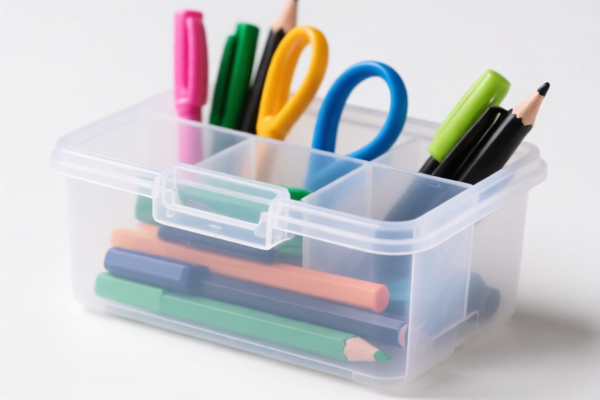
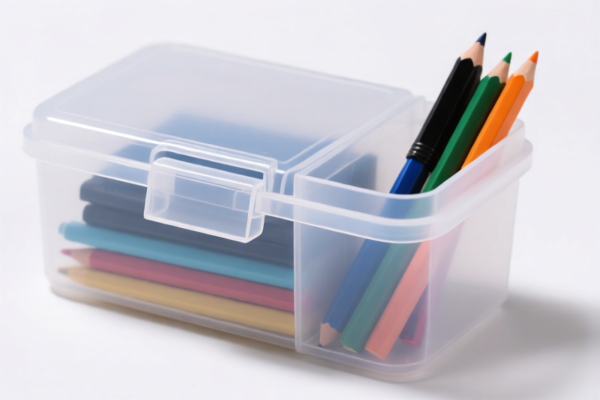
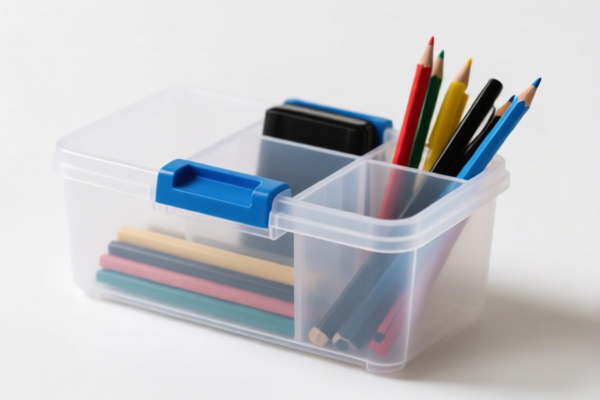
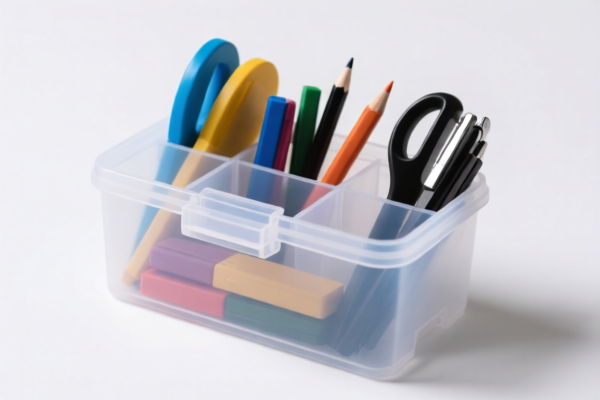
AI Analysis
📦 Plastic Document Box (Office Storage & Packaging Classification)
🌐 HS Code Reference & Customs Clearance Guide | 2026 Updated Tariff Analysis | Strategic Compliance Strategy
📌 I. Product Definition & Classification: What Exactly is a "Plastic Document Box"?
A "Plastic Document Box" is a broad commercial term that can refer to several distinct types of plastic articles depending on its design, function, and construction. In international trade, the distinction between office storage (for organizing papers/files) and packaging (for protecting/shipping goods) is critical for correct HS Code classification.
1. Office Storage/Sorting Trays (3924):
Used in offices or homes for organizing documents, files, or small items. These are typically open-top, stackable, or have drawers. They are considered "Table, kitchen, toiletry, or bedroom articles."
2. Shipping/Packaging Boxes (3923):
Used primarily for transporting, protecting, or storing goods during logistics. These may include corrugated plastic boxes, crate-style containers, or rigid boxes designed for bulk handling.
3. General Plastic Containers (3926/3924):
Items that don't fit neatly into the above categories, such as decorative storage bins or specialized industrial plastic holders.
⚠️ Key Distinction Point:
- If the item is open-top, tray-like, or file-sorting → It is likely 3924.
- If the item has a lid, is used for shipping/bulk transport, or is a rigid box → It may fall under 3923 (Packaging) or 3926 (Other articles).
- Misclassification Risk: Declaring a shipping box as "office storage" to avoid higher tariffs can lead to customs penalties.
📦 II. HS Code Classification Details (2026 Latest Tariff Concordance)
Based on the provided data, here are the specific HS Codes and their corresponding tax implications for plastic document boxes.
| HS Code | Product Description | Application Scenario | Tax Rate (Total) |
|---|---|---|---|
3924.10.40.00 |
Plastic articles for table, kitchen, or bedroom use; specifically, storage boxes for home/office organizing. | Office document trays, home storage bins, drawer organizers. | 13.4% |
3926.90.10.00 |
Other plastic articles; containers or buckets extending from general storage. | Generic plastic containers, specialized non-packaging storage units. | 20.9% |
3924.90.56.50 |
Other plastic table/kitchen/bedroom articles; miscellaneous home use items. | Decorative storage, non-standard home organization tools. | 20.9% |
3923.10.90.00 |
Plastic boxes, cases, crates, and similar articles; for packaging or transport. | Shipping boxes, logistics crates, protective packaging for documents/goods. | 38.0% |
3926.90.99.89 |
Other plastic articles; unclassified other plastic products. | Niche plastic items, custom industrial holders, unlisted plastic forms. | 22.8% |
🔍 重点提醒 (Key Reminder):
- 3924 vs. 3923: The most common error is classifying a shipping box (3923) as an office organizer (3924).
- 3924 (Office/Home Use) has a lower total tax (13.4%).
- 3923 (Packaging/Transport) has a much higher total tax (38.0%) due to higher additional tariffs.
- If the box is used primarily for shipping (e.g., corrugated plastic boxes, crates), it must be classified under 3923.
- If it is used primarily for organization (e.g., desk trays, file sorters), it may qualify for 3924.
💰 III. 2026 Latest Tariff Rate Breakdown (Including Surtaxes)
✅ Applicable Country: United States (US)
✅ Origin: China (CN)
✅ Effective Date: From 2025-11-10 onwards (including subsequent imports)
🎯 1. 3924.10.40.00 — Plastic Storage Boxes for Home/Office (Lowest Tax Option)
| Item | Content |
|---|---|
| Base Rate | 3.4% |
| Surtax (Section 301) | 0.0% |
| Section 122 Surtax | 10.0% |
| Total Tax Rate | 13.4% |
| Tax Calculation | CIF Value × 13.4% |
| De Minimis Eligibility | ❌ Not Eligible (Deny De Minimis for China origin under Section 122) |
| Legal Basis | 3924.10.40.00 → Base Tariff 3.4% + Section 122: 10% |
📌 Explanation:
- This is the most favorable classification for organizational plastic boxes.
- Section 122 applies a 10% surtax on all plastic articles from China, regardless of other surtaxes.
- No Section 301 surtax applies here, which is a significant advantage over packaging categories.
🎯 2. 3926.90.10.00 — Other Plastic Containers (General Storage)
| Item | Content |
|---|---|
| Base Rate | 3.4% |
| Surtax (Section 301) | 7.5% |
| Section 122 Surtax | 10.0% |
| Total Tax Rate | 20.9% |
| Tax Calculation | CIF Value × 20.9% |
| De Minimis Eligibility | ❌ Not Eligible |
| Legal Basis | 3926.90.10.00 → Base 3.4% + Section 301: 7.5% + Section 122: 10% |
📌 Explanation:
- Applies to generic plastic containers not specifically designed as "tableware" or "packaging."
- Higher tax due to Section 301 (7.5%) plus Section 122 (10%).
🎯 3. 3924.90.56.50 — Other Plastic Table/Kitchen/Bedroom Articles
| Item | Content |
|---|---|
| Base Rate | 3.4% |
| Surtax (Section 301) | 7.5% |
| Section 122 Surtax | 10.0% |
| Total Tax Rate | 20.9% |
| Tax Calculation | CIF Value × 20.9% |
| De Minimis Eligibility | ❌ Not Eligible |
| Legal Basis | 3924.90.56.50 → Base 3.4% + Section 301: 7.5% + Section 122: 10% |
📌 Explanation:
- Similar to above, but for miscellaneous home use plastic items.
- Same tax burden as3926.90.10.00.
🎯 4. 3923.10.90.00 — Plastic Boxes for Packaging/Transport (Highest Tax)
| Item | Content |
|---|---|
| Base Rate | 3.0% |
| Surtax (Section 301) | 25.0% |
| Section 122 Surtax | 10.0% |
| Total Tax Rate | 38.0% |
| Tax Calculation | CIF Value × 38.0% |
| De Minimis Eligibility | ❌ Not Eligible |
| Legal Basis | 3923.10.90.00 → Base 3.0% + Section 301: 25% + Section 122: 10% |
📌 Explanation:
- This category is for packaging and shipping.
- Section 301 surtax is 25%, the highest among plastic goods.
- Critical: If you declare a shipping box as "office storage" (3924) but customs determines it is for packaging, you will face reclassification, penalties, and back taxes (difference between 13.4% and 38.0%).
🎯 5. 3926.90.99.89 — Other Unclassified Plastic Articles
| Item | Content |
|---|---|
| Base Rate | 5.3% |
| Surtax (Section 301) | 7.5% |
| Section 122 Surtax | 10.0% |
| Total Tax Rate | 22.8% |
| Tax Calculation | CIF Value × 22.8% |
| De Minimis Eligibility | ❌ Not Eligible |
| Legal Basis | 3926.90.99.89 → Base 5.3% + Section 301: 7.5% + Section 122: 10% |
📌 Explanation:
- For niche or unlisted plastic products.
- Not recommended for standard document boxes unless no other category fits.
🛠️ IV. Customs Clearance Practical Advice (Avoiding Pitfalls)
✅ 1. Documentation Checklist (Mandatory)
| Document | Required? | Notes |
|---|---|---|
| ✅ Product Specifications | ✔️ | Must clearly state: "Office Document Organizer" vs. "Shipping Container." |
| ✅ Product Photos | ✔️ | Show open-top design (for 3924) vs. sealed/lidded design (for 3923). |
| ✅ Commercial Invoice | ✔️ | Accurate description: e.g., "Plastic File Sorter" not "Plastic Box." |
| ✅ Origin Certificate | ✔️ | Required for US imports from China. |
| ✅ Packing List | ✔️ | Itemize contents to avoid "bulk packaging" suspicion. |
| ✅ Section 122 Declaration | ✔️ | Acknowledge 10% surtax applies to all plastic articles from China. |
✅ 2. Classification Strategy (Key Rules)
🔥 "Function Dictates Code: Office Storage = 13.4%, Shipping = 38%!"
| Scenario | Correct HS Code | Tax Rate | Risk if Misclassified |
|---|---|---|---|
| Desk File Sorter (Open, for papers) | 3924.10.40.00 |
13.4% | Safe |
| Home Storage Bin (Decorative, plastic) | 3924.10.40.00 |
13.4% | Safe |
| Shipping Crate (For logistics) | 3923.10.90.00 |
38.0% | High Risk (Penalties + Back Taxes) |
| General Plastic Container (No specific use) | 3926.90.10.00 |
20.9% | Moderate Risk |
📌 Critical Tip:
- If the box is rigid, has a lid, and is marketed for shipping, DO NOT classify it under3924.
- Customs will look at marketing materials, invoices, and product design. If it’s sold as a "shipping box," it must be3923.
✅ 3. Special Cases
| Situation | Handling Advice |
|---|---|
| Mixed Shipment | If shipping both office organizers and shipping boxes, declare separately. Do not mix under one HS Code. |
| Custom Printed Boxes | If boxes are printed with company logos, ensure description reflects primary function (office vs. packaging). |
| Plastic Collapsible Boxes | If designed for storage (home/office), classify under 3924. If for transport, classify under 3923. |
| De Minimis Exemption | ❌ Not available for China-origin plastic goods under Section 122. Even small shipments (under $800) are subject to duties. |
🌍 V. Global Market Comparison (2026)
| Country/Region | Recommended HS Code | Tax Rate (China Origin) | Notes |
|---|---|---|---|
| 🇺🇸 United States | 3924.10.40.00 (Office) |
13.4% | 3923 (Packaging) = 38.0% |
| 🇨🇳 China (Import) | 3924.10.40.00 |
~13% | Standard MFN Rate |
| 🇪🇺 European Union | 3924.10.00 |
~3-6% | No Section 301/122 surtax |
| 🇬🇧 United Kingdom | 3924.10.00 |
~3-6% | No Section 301/122 surtax |
📌 Conclusion:
- The US is the only major market with significant additional surtaxes (Section 301 + Section 122) for Chinese plastic goods.
- Accurate classification is crucial to save 24.6% (38.0% - 13.4%) on shipping boxes vs. office organizers.
📌 VI. Common Errors & Pitfalls (Lessons Learned)
❌ Error 1: Declaring shipping boxes as office organizers
👉 Consequence: Customs audit, reclassification to 3923, back taxes of 24.6%, and penalties.
❌ Error 2: Ignoring Section 122 (10% surtax)
👉 Consequence: All plastic articles from China face this surtax. It cannot be avoided.
❌ Error 3: Vague descriptions like "Plastic Box"
👉 Consequence: Customs may assign higher default tariffs or delay clearance for classification review.
❌ Error 4: Assuming De Minimis ($800) exemption applies
👉 Consequence: Section 122 explicitly denies de minimis for plastic goods from China. Even small shipments are taxed.
✅ Correct Approach:
"Plastic Document Organizer, Open-Top, Desk Storage, Model XYZ, Made in China"
➡️ HS Code:3924.10.40.00
➡️ Tax: 13.4% (Base 3.4% + Section 122 10%)
🎯 VII. Conclusion: Professional Classification Saves Money!
🎯 Remember the Key Rule:
🔹 "Office Storage = 13.4% | Shipping Packaging = 38%!"
🔹 "Section 122 Applies to ALL Plastic from China!"
🔹 "Be Specific in Description: Avoid 'Plastic Box'!"
📌 Pro Tip:
- If your product is primarily for organization, use 3924.10.40.00.
- If your product is primarily for shipping, use 3923.10.90.00.
- Do not try to game the system; customs has advanced AI tools to detect misclassification.
📣 Immediate Action:
📞 Consult a licensed customs broker
📸 Provide clear product photos and usage descriptions
📄 Prepare accurate commercial invoices
🚀 Avoid costly penalties and ensure smooth clearance!
✨ Professional Clearance, Precise Classification, Maximum Savings!
💼 Every percent saved is profit earned!
Customer Reviews
About HS Code Classification
The Harmonized System (HS) is an internationally standardized nomenclature developed by the World Customs Organization (WCO) to classify traded products. Over 200 countries use the HS system as the basis for customs tariffs, trade statistics, and import/export regulations.
Each HS code follows a hierarchical structure:
- Chapter (2 digits) — Broad category of goods (e.g., Chapter 84: Machinery and Mechanical Appliances)
- Heading (4 digits) — More specific grouping within the chapter
- Subheading (6 digits) — Internationally standardized breakdown, used by all WCO member countries
- National subdivisions (8-10 digits) — Country-specific extensions for further classification, such as US HTSUS 10-digit codes
Correct HS code classification is essential for smooth customs clearance, accurate duty payment, and compliance with trade regulations. Misclassification can lead to customs delays, overpayment of duties, or penalties.
When importing from CN to US, the applicable tariff rates may include:
- Most-Favored-Nation (MFN) rate — The standard duty rate applied to WTO members
- General rate — Applied to countries without trade agreements
- Trade remedy duties — Additional tariffs such as Section 301 (anti-dumping), Section 232 (national security), or countervailing duties
The information provided on this page is for reference purposes only. For official classification, please consult with your local customs authority or a licensed customs broker.