Plastic Door Top
CN → US| HS Code | Tariff Rate | Origin | Destination | Doc |
|---|---|---|---|---|
| 3925200010 | 22.8% | CN | US | Official Doc |
| 3925200091 | 22.8% | CN | US | Official Doc |
| 3926305000 | 22.8% | CN | US | Official Doc |
| 3926909989 | 22.8% | CN | US | Official Doc |
| 3917290090 | 38.1% | CN | US | Official Doc |
Product Images
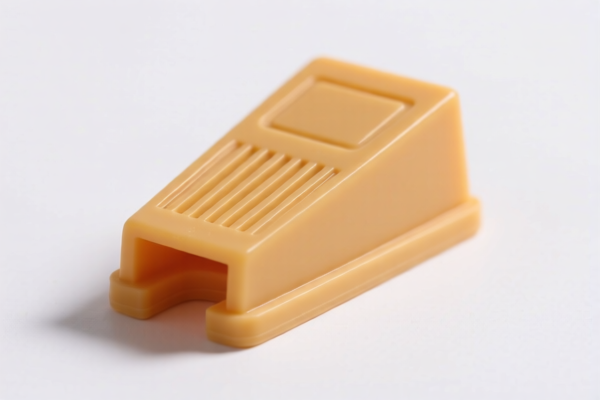
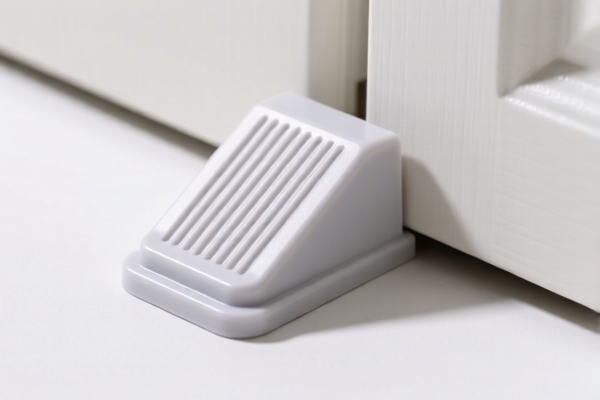
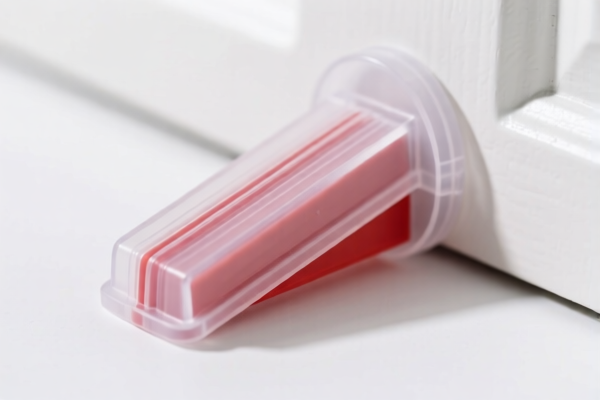

AI Analysis
🚪 Plastic Door Top (Thresholds & Sills) – Ultimate HS Code & Tax Guide for US Importers
🌐 HS Code Reference & Customs Clearance Guide | 2026 Latest Tariff Analysis | Professional Strategy for Avoiding 22.8%~38.1% Duties
📌 I. Product Definition: What is a "Plastic Door Top"?
In international trade, "Plastic Door Top" typically refers to door thresholds, sills, or weatherstripping components made of plastic. These are architectural building components used to seal the bottom of a door, preventing drafts, water, and pests.
Key Classification Nuance:
The correct HS Code depends heavily on whether the item is considered:
1. A specific building component (Section 39, Chapter 39.25: "Articles for the installation of furniture, kitchenware...").
2. A general plastic article (Section 39, Chapter 39.26: "Other articles of plastics").
3. A pipe/duct accessory (Section 39, Chapter 39.17: "Tubes, pipes...").
⚠️ Critical Distinction:
- If it is a standalone threshold/sill installed at the door frame base → 3925.20.00 is the most accurate and common classification.
- If it is a flexible weatherstrip attached to the door edge → It may fall under 3926.30.50 (furniture parts) or 3926.90.99 (other).
- If it is a rigid pipe-like connector → 3917.29.00 might apply (but less common for standard thresholds).
📦 II. HS Code Classification Matrix (2026 Data)
| HS Code | Product Description | Applicability | Tax Rate |
|---|---|---|---|
| 3925.20.00.10 | Plastic Thresholds – Specific classification for plastic door thresholds. | ✅ Best Fit for rigid plastic sills/thresholds. | 22.8% |
| 3925.20.00.91 | Plastic Door Parts – Other plastic articles for doors/windows (including thresholds not specifically named). | ✅ Good Fit if "threshold" is not explicitly listed in local tariffs. | 22.8% |
| 3926.30.50.00 | Plastic Furniture/Building Fittings – Connectors, fittings, or parts for furniture/buildings. | ⚠️ Alternative for flexible or complex plastic connectors. | 22.8% |
| 3926.90.99.89 | Other Plastic Articles – Catch-all for plastic products not specified elsewhere. | ❌ Worst Fit (higher administrative scrutiny, same rate). | 22.8% |
| 3917.29.00.90 | Other Plastic Tubes/Pipes – Includes door seals if considered "pipe accessories." | ❌ High Risk – Only if classified as a tubing accessory. | 38.1% |
🔍 Key Insight:
- 3925.20 is the most defensible classification for "Door Thresholds" because Section 39.25 explicitly covers "Articles for the installation of furniture, kitchenware and other household articles... including doors, windows..."
- 3917.29 carries a significantly higher tax (38.1%). Avoid this unless your product is literally a plastic tube used in a door mechanism (e.g., sliding door track), not a threshold sill.
💰 III. 2026 Tariff Rate Breakdown (US Imports from China)
✅ Country of Origin: China (CN)
✅ Effective Date: Current rates apply as per 2025-2026 IEEPA & 301 Lists.
🎯 1. Primary Classifications: 3925.20.00.10 / 3925.20.00.91 / 3926.30.50.00 / 3926.90.99.89
Total Effective Tax Rate: 22.8%
| Component | Rate | Source | Notes |
|---|---|---|---|
| Basic Tariff | 5.3% | USITC Harmonized Tariff Schedule | Base rate for plastic building articles. |
| Section 301 Tariff | 7.5% | USTR Footnote 9903.88.01 | "Covered Chinese goods" under Trade Act of 1974. |
| IEEPA Section 122 Tariff | 10.0% | IEEPA:9903.01.25 | Additional surcharge on Chinese-origin goods. |
| Total Tax | 22.8% | 5.3% + 7.5% + 10.0% | Applies to CIF Value. |
📌 Important:
- These four HS codes share the same effective tax rate (22.8%).
- De Minimis Exemption? ❌ NO. Goods classified under 3925/3926 from China are subject to Section 301 and IEEPA tariffs and do NOT qualify for the $800 de minimis exemption (if applicable under current rules).
- Legal Basis:USITC:3925.20.00.10→USTR:Footnote 9903.88.01→IEEPA:9903.01.25
🎯 2. High-Risk Classification: 3917.29.00.90
Total Effective Tax Rate: 38.1%
| Component | Rate | Source | Notes |
|---|---|---|---|
| Basic Tariff | 3.1% | USITC Harmonized Tariff Schedule | Base rate for plastic pipes/tubes. |
| Section 301 Tariff | 25.0% | USTR Footnote 9903.88.01 | Higher 301 rate for certain plastic articles. |
| IEEPA Section 122 Tariff | 10.0% | IEEPA:9903.01.25 | Additional surcharge. |
| Total Tax | 38.1% | 3.1% + 25.0% + 10.0% | Significantly Higher! |
📌 Warning:
- Misclassifying a standard plastic threshold as a "pipe accessory" triggers the 25% Section 301 rate instead of 7.5%.
- Never use3917.29unless the product is explicitly a plastic tube, pipe, or hose used in fluid/gas conveyance, not a structural building component.
🛠️ IV. Customs Clearance Best Practices (Avoid Penalties & Delays)
✅ 1. Required Documentation (Mandatory)
| Document | Requirement | Why It Matters |
|---|---|---|
| Product Photos | Clear images of the item, showing shape, mounting holes, and flexibility. | Proves it is a threshold/sill, not a pipe. |
| Installation Guide | Manual showing how it is installed at the door base. | Confirms building component status (3925). |
| Material Declaration | "100% PVC Plastic" or "ABS Plastic." | Determines correct HTS subheading. |
| Commercial Invoice | Describe as: "Plastic Door Threshold/Sill, Model XYZ, for Residential Use." | Avoids ambiguous terms like "plastic part." |
| Packing List | Item count, weight, dimensions. | Supports valuation. |
✅ 2. Smart Declaration Tips
🔥 Golden Rule:
"Call it a Threshold, Show the Door, Classify under 3925!"
| Scenario | Recommended HS Code | Why? |
|---|---|---|
| Standard Rigid Threshold (Vinyl, PVC, ABS) | 3925.20.00.10 |
Explicitly for "thresholds." |
| Flexible Weatherstrip (attached to door) | 3926.30.50.00 |
Considered a "furniture/building fitting." |
| Custom/Unusual Plastic Door Part | 3926.90.99.89 |
Catch-all if not other listed. |
| Plastic Tube Used in Door Mechanism | 3917.29.00.90 |
Only if it’s a tube, not a sill. |
❌ Avoid:
- Describing the item as "plastic connector" or "plastic pipe part" unless it truly is.
- Using generic terms like "plastic building material" without specificity.
✅ 3. Special Cases
| Case | Strategy |
|---|---|
| Composite Materials (e.g., Wood + Plastic) | If >50% plastic by weight → 3925. If >50% wood → 4418 (different tax!). |
| Imported as Kit (Threshold + Seal) | Declare as threshold (3925) if seal is integral. Do not split. |
| OEM Custom Thresholds | Provide design specs. Ensure no metal reinforcements >5% (which may change classification). |
🌍 V. Global Comparison (Quick Reference)
| Market | Recommended HS Code | Est. Tax Rate (China Origin) | Key Requirement |
|---|---|---|---|
| 🇺🇸 USA | 3925.20.00.10 |
22.8% | Section 301 + IEEPA apply. |
| 🇨🇳 China | 3925.20.00.10 |
5.0% | No anti-dumping. |
| 🇪🇺 EU | 3925.20.00 |
3.7% | CE marking not always required, but RoHS may apply. |
| 🇨🇦 Canada | 3925.20.00 |
0%~5% | CUSMA may offer duty-free if originating in US/Mexico. |
| 🇲🇽 Mexico | 3925.20.00 |
0%~5% | USMCA benefits apply. |
📌 Note:
- The USA imposes the highest effective tax (22.8%) due to Section 301 and IEEPA.
- No free trade agreements currently waive these tariffs for plastic building components from China.
🚫 VI. Common Mistakes & Pitfalls (Learn from Others’ Failures)
❌ Mistake 1: Using 3917.29.00.90 for a door threshold.
👉 Consequence: 38.1% tax instead of 22.8%. Overpayment of 15.3%!
👉 Fix: Always use 3925 for thresholds.
❌ Mistake 2: Describing the product as "plastic door seal" without context.
👉 Consequence: Customs may classify as 4016 (rubber) or 3926 (other plastic), leading to delays.
👉 Fix: Use "Door Threshold" or "Door Sill" in the declaration.
❌ Mistake 3: Ignoring the "Section 301" tariff in cost calculations.
👉 Consequence: Underquoting CIF value, leading to penalties and liens.
👉 Fix: Include 7.5% (Section 301) + 10% (IEEPA) + 5.3% (Basic) = 22.8% in landed cost.
✅ Correct Declaration Example:
"Plastic Door Threshold, PVC Material, Model DT-200, for Residential Sliding Doors, Country of Origin: China."
🎯 VII. Conclusion: Streamline Your Customs Process
🎯 Key Takeaways:
1. Use 3925.20.00.10 for standard plastic door thresholds.
2. Expect 22.8% total tax (5.3% Base + 7.5% Section 301 + 10% IEEPA).
3. Avoid 3917.29 unless it’s a true pipe/tube, to prevent a 38.1% tax hit.
4. Provide photos and installation guides to prove it’s a threshold, not a pipe.
📌 Pro Tip:
For large volumes, consider Advance Rulings (CBP Ruling Letters) from U.S. Customs and Border Protection to lock in the3925.20.00.10classification and avoid post-entry audits.
📣 Action Item:
📞 Consult your customs broker with photos of your product.
📄 Ensure your invoice clearly states "Door Threshold/Sill."
🚀 Optimize your landed cost by using the correct HS code from day one.
✨ Precision in Classification = Precision in Profit!
💼 Don’t let a 15% tax mistake eat your margin.
Customer Reviews
About HS Code Classification
The Harmonized System (HS) is an internationally standardized nomenclature developed by the World Customs Organization (WCO) to classify traded products. Over 200 countries use the HS system as the basis for customs tariffs, trade statistics, and import/export regulations.
Each HS code follows a hierarchical structure:
- Chapter (2 digits) — Broad category of goods (e.g., Chapter 84: Machinery and Mechanical Appliances)
- Heading (4 digits) — More specific grouping within the chapter
- Subheading (6 digits) — Internationally standardized breakdown, used by all WCO member countries
- National subdivisions (8-10 digits) — Country-specific extensions for further classification, such as US HTSUS 10-digit codes
Correct HS code classification is essential for smooth customs clearance, accurate duty payment, and compliance with trade regulations. Misclassification can lead to customs delays, overpayment of duties, or penalties.
When importing from CN to US, the applicable tariff rates may include:
- Most-Favored-Nation (MFN) rate — The standard duty rate applied to WTO members
- General rate — Applied to countries without trade agreements
- Trade remedy duties — Additional tariffs such as Section 301 (anti-dumping), Section 232 (national security), or countervailing duties
The information provided on this page is for reference purposes only. For official classification, please consult with your local customs authority or a licensed customs broker.