Plastic Drum Liner Bag
CN → US| HS Code | Tariff Rate | Origin | Destination | Doc |
|---|---|---|---|---|
| 3923210030 | 38.0% | CN | US | Official Doc |
| 4202929700 | 52.6% | CN | US | Official Doc |
| 4202221500 | 51.0% | CN | US | Official Doc |
Product Images


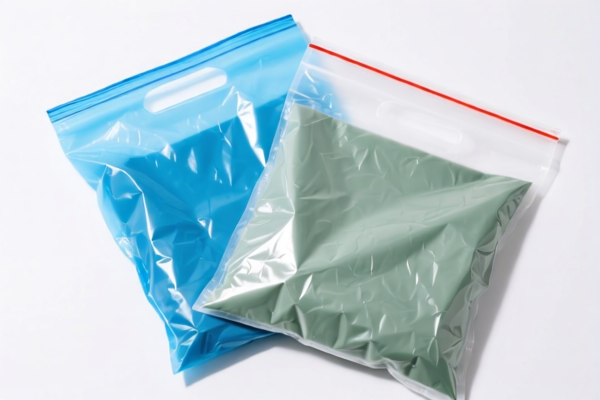
AI Analysis
🛢️ Plastic Drum Liner Bag
🌐 HS Code Reference & Clearance Guide | 2026 Latest Tariff Analysis | Professional Customs Strategy
📌 I. Product Definition & Classification: Do You Really Understand "Plastic Drum Liner Bags"?
A Plastic Drum Liner Bag is a flexible, high-density polyethylene (HDPE) or similar polymer container designed to fit inside rigid drums (typically 55-gallon/200L drums). Its primary purpose is to provide a chemical-resistant barrier for storing and transporting liquids, powders, or granules.
In international trade, classification depends on two key factors:
1. Material Composition: Primarily plastic polymers (e.g., PE, PP).
2. Form & Function: Is it treated as a simple packaging material ("bag/sack") or a finished container article?
⚠️ Critical Distinction:
- If classified as a simple plastic bag/sack → Falls under Chapter 39 (Plastics)
- If classified as a finished container/article → Falls under Chapter 42 (Articles of Plastics, Leather, etc.)
📦 II. HS Code Classification Details (2026 Latest Tariff Authority Comparison)
Based on the provided data, there are three potential HS Code classifications with significantly different tax implications.
| HS Code | Product Description | Classification Logic | Total Tax Rate |
|---|---|---|---|
3923.21.00.30 |
Plastic Bags & Sacks (Other) | Material & Form Match: Matches "plastic" material and "bag/pouch" form. Uses the "other" category fallback principle. | 38.0% |
4202.92.97.00 |
Other Plastic Articles (Shopping bags, bottle bags, similar containers) | Material & Purpose Match: Material "plastic" fits "made of plastic sheets"; Form "bag" fits "shopping bags, bottle bags & similar containers". | 52.6% |
4202.22.15.00 |
Plastic-Lined Handbags & Similar Containers | Explicit Material Match: Product name explicitly "plastic"; Fits "outer surface material is plastic sheets"; Form "bag" fits handbag/container attributes. | 51.0% |
🔍 Key Insight:
- Cheapest Option:3923.21.00.30(38.0% total tax)
- Most Expensive Option:4202.92.97.00(52.6% total tax)
- Risk: Misclassification between Chapter 39 (packaging) and Chapter 42 (finished articles) can lead to 14.6% tariff difference and customs penalties.
💰 III. 2026 Latest Tariff Rate Breakdown (Including Surcharges & Policy Add-ons)
✅ Applicable Country: United States (US)
✅ Country of Origin: China (CN)
✅ Effective Date: November 10, 2025 (and subsequent imports)
🎯 1. 3923.21.00.30 —— Plastic Bags & Sacks (Plastic, Not Folded/Creased)
| Item | Detail |
|---|---|
| Base Tariff | 3.0% (Ad Valorem) |
| Section 301 Surcharge | +25.0% (USITC Footnote 9903.88.01) |
| IEEPA Surcharge | +10.0% (China-specific, effective Nov 10, 2025) |
| Total Tax Rate | 38.0% |
| Calculation Method | CIF Value × 38.0% |
| De Minimis Exemption | ❌ Not Applicable (deny_de_minimis) |
| Legal Authority Path | IEEPA:9903.01.25 → IEEPA:9903.01.24 → USITC:3923.21.00.30 → FOOTNOTE:9903.88.01 |
📌 Explanation:
- The 25% Section 301 tariff applies to most plastic products from China.
- The 10% IEEPA is a new add-on for Chinese goods under the International Emergency Economic Powers Act.
- Total 38% is already high, but this is the lowest among the three options.
🎯 2. 4202.92.97.00 —— Other Plastic Articles (Shopping Bags, Bottle Bags, etc.)
| Item | Detail |
|---|---|
| Base Tariff | 17.6% (Ad Valorem) |
| Section 301 Surcharge | +25.0% |
| IEEPA Surcharge | +10.0% |
| Total Tax Rate | 52.6% |
| Calculation Method | CIF Value × 52.6% |
| De Minimis Exemption | ❌ Not Applicable |
| Legal Authority Path | IEEPA:9901.25 → IEEPA:9903.01.24 → USITC:4202.92.97.00 → FOOTNOTE:9903.88.01 |
📌 Warning:
- This classification treats the liner as a "finished article" rather than raw packaging.
- Higher base tariff (17.6% vs 3.0%) makes this option 14.6% more expensive than3923.21.00.30.
- Only use if customs forces Chapter 42 classification due to specific product features (e.g., pre-formed handles, printed branding making it a "retail" item).
🎯 3. 4202.22.15.00 —— Plastic-Lined Handbags & Similar Containers
| Item | Detail |
|---|---|
| Base Tariff | 16.0% (Ad Valorem) |
| Section 301 Surcharge | +25.0% |
| IEEPA Surcharge | +10.0% |
| Total Tax Rate | 51.0% |
| Calculation Method | CIF Value × 51.0% |
| De Minimis Exemption | ❌ Not Applicable |
| Legal Authority Path | IEEPA:9903.01.25 → IEEPA:9903.01.24 → USITC:4202.22.15.00 → FOOTNOTE:9903.88.01 |
📌 Note:
- Similar to4202.92.97.00, but slightly lower base tariff (16.0% vs 17.6%).
- Applies if the bag is considered a "similar container" with plastic outer surface.
- Still 13.0% more expensive than the Chapter 39 classification.
🛠️ IV. Clearance Practical Advice (Real-World Pitfall Avoidance)
✅ 1. Required Documentation Checklist (All Mandatory)
| Document | Required | Purpose |
|---|---|---|
| ✅ Product Specification Sheet | ✔️ | Must detail: Material (HDPE/PP), Thickness, Dimensions, Chemical Resistance |
| ✅ Product Photos | ✔️ | Show bag inside drum, empty bag, and any printed text/logos |
| ✅ Commercial Invoice | ✔️ | Must clearly state: "Plastic Drum Liner Bag, Not a Finished Container" |
| ✅ Packing List | ✔️ | Specify quantity, weight, and that bags are bulk-packed (not retail-ready) |
| ✅ Material Safety Data Sheet (MSDS) | ✔️ | Proves chemical compatibility with stored goods |
| ✅ Certificate of Origin | ✔️ | Required for tariff calculation; verify China origin |
| ✅ Third-Party Test Report | ✔️ | ISO, FDA, or REACH compliance if applicable |
✅ 2. Declaration Strategy (Key Mantra)
🔥 “Simple Bag, Chapter 39; Finished Container, Chapter 42. Be Precise, Pay Less!”
| Scenario | Correct Declaration | Wrong Declaration | Consequence |
|---|---|---|---|
| Bulk Liner Bags (no handles, flat-packed) | 3923.21.00.30 |
4202.92.97.00 |
Overpay by 14.6% |
| Pre-printed Branded Bags (with handles) | 4202.92.97.00 |
3923.21.00.30 |
Under-declaration penalty |
| Bags with Built-in Valves/Spouts | 4202.22.15.00 or 3923.21.00.30 |
Incorrect Chapter | Customs review delay |
| Small Sample Bags | 3923.21.00.30 |
4202.92.97.00 |
Unnecessary high tax |
📌 Tip:
- Emphasize "simple plastic bag" in the description.
- Avoid words like "shopping bag," "handbag," or "finished container" unless the product truly fits those categories.
- Use "Liner Bag" or "Insert Bag" to clarify its function (lining a drum, not a standalone retail item).
✅ 3. Special Cases Handling
| Situation | Recommendation |
|---|---|
| Customs Questions Chapter Classification | Provide engineering drawings showing no handles, no rigid structure. Cite GRI 1 (General Rules for Interpretation) for Chapter 39. |
| Bags with Printed Branding | If printing is minor, still argue for Chapter 39. If printing makes it a "retail item," consider Chapter 42 to avoid fraud charges. |
| Multi-layer Bags | Specify material composition. If outer layer is plastic, Chapter 39 likely applies. |
| OEM Custom Liners | Provide customer purchase order and design specs to prove they are "packaging materials," not "consumer goods." |
🌍 V. Global Market Clearance Comparison (2026 Latest)
| Country/Region | Recommended HS Code | Tariff Rate | Certification Required | Notes |
|---|---|---|---|---|
| 🇺🇸 USA | 3923.21.00.30 |
38.0% (China) | FDA (if food-grade) | Avoid Chapter 42 to save 14.6% |
| 🇨🇳 China | 3923.21.00.30 |
5.0% | None | No surcharges |
| 🇪🇺 EU | 3923.21.00.30 |
6.5% | REACH | No Section 301/IEEPA |
| 🇬🇧 UK | 3923.21.00.30 |
6.5% | UKCA | Post-Brexit alignment with EU |
| 🇯🇵 Japan | 3923.21.00.30 |
6.0% | FSC (if food contact) | Low tariffs |
📌 Conclusion:
- USA has the highest tariffs due to Section 301 and IEEPA.
- Chapter 39 (3923.21.00.30) is the optimal classification for plastic drum liners, saving up to 14.6% in taxes compared to Chapter 42.
- China-origin products face significant surcharges in the US. Consider Third-Country Transshipment (e.g., Vietnam, Mexico) for tariff mitigation, but ensure substantial transformation.
📌 VI. Common Errors & Pitfall Guide (Lessons Learned)
❌ Error 1: Declaring "Plastic Bag" as "Shopping Bag"
👉 Result: Customs reclassifies to 4202.92.97.00 → Pay 52.6% instead of 38.0% → Lose 14.6% margin
❌ Error 2: Using vague terms like "Packaging Material" without detail
👉 Result: Customs flags for manual review → Delay in clearance → Demurrage charges
❌ Error 3: Ignoring IEEPA 10% Surcharge
👉 Result: Underpaid taxes → Penalties + Interest → Import ban risk
❌ Error 4: Not providing Material Safety Data (MSDS)
👉 Result: Customs suspects chemical content → Detention → Additional testing fees
✅ Correct Approach:
"Plastic Drum Liner Bag, HDPE, 30 micron, 55-gallon capacity, bulk packed, no handles, for industrial use only. Model: PDL-55G. Material: 100% High-Density Polyethylene."
🎯 VII. Conclusion: Professional Declaration, Save Cost, Ensure Compliance!
🎯 Remember the Mantra:
🔹 "Chapter 39 for Liners, Chapter 42 for Retailers. Pay 38%, Not 52%! Be Clear, Be Compliant!"
🔹 "HS Code Defines Cost, Rate Difference is Key. One Wrong Step, Pay Extra Thousands!"
📌 Pro Tip:
If your plastic drum liners are originating from Vietnam, Mexico, or Thailand, you may qualify for IEEPA Exemptions or lower Section 301 rates.
Recommend Applying for Advance Ruling (Pre-classification) with US CBP to secure the 38.0% rate and avoid disputes.
📣 Immediate Action:
📞 Contact a Professional Broker + Provide Product Photos + Apply for HS Code Advance Ruling
🚀 Let Your Drum Liners Clear Smoothly, Export Efficiently, Profit Maximally!
✨ Professional Clearance Starts with Accurate Classification!
💼 Every Penny of Your Cost Deserves Precise Calculation!
Customer Reviews
About HS Code Classification
The Harmonized System (HS) is an internationally standardized nomenclature developed by the World Customs Organization (WCO) to classify traded products. Over 200 countries use the HS system as the basis for customs tariffs, trade statistics, and import/export regulations.
Each HS code follows a hierarchical structure:
- Chapter (2 digits) — Broad category of goods (e.g., Chapter 84: Machinery and Mechanical Appliances)
- Heading (4 digits) — More specific grouping within the chapter
- Subheading (6 digits) — Internationally standardized breakdown, used by all WCO member countries
- National subdivisions (8-10 digits) — Country-specific extensions for further classification, such as US HTSUS 10-digit codes
Correct HS code classification is essential for smooth customs clearance, accurate duty payment, and compliance with trade regulations. Misclassification can lead to customs delays, overpayment of duties, or penalties.
When importing from CN to US, the applicable tariff rates may include:
- Most-Favored-Nation (MFN) rate — The standard duty rate applied to WTO members
- General rate — Applied to countries without trade agreements
- Trade remedy duties — Additional tariffs such as Section 301 (anti-dumping), Section 232 (national security), or countervailing duties
The information provided on this page is for reference purposes only. For official classification, please consult with your local customs authority or a licensed customs broker.