Plastic Durable Table Covers
CN → US| HS Code | Tariff Rate | Origin | Destination | Doc |
|---|---|---|---|---|
| 5903102010 | 35.0% | CN | US | Official Doc |
| 5903102090 | 35.0% | CN | US | Official Doc |
| 3920100000 | 39.2% | CN | US | Official Doc |
| 3920200055 | 39.2% | CN | US | Official Doc |
Product Images
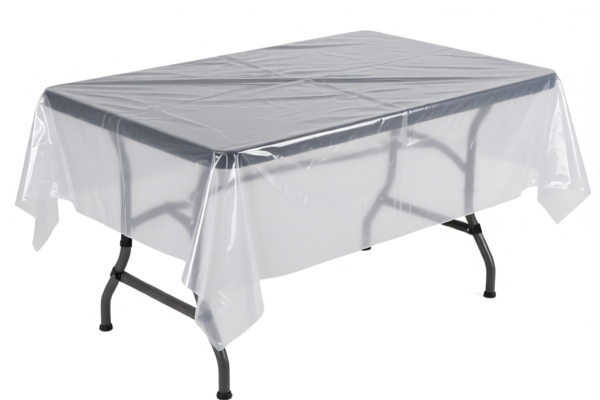
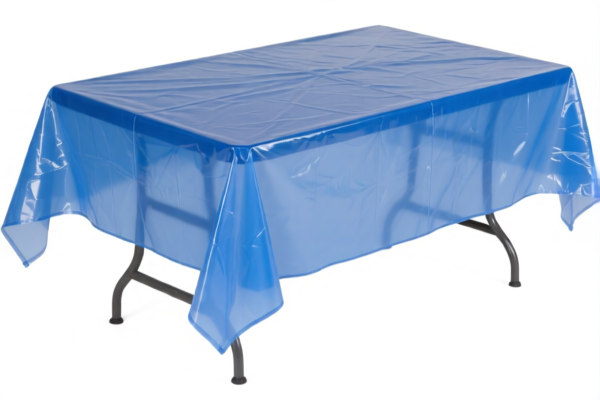
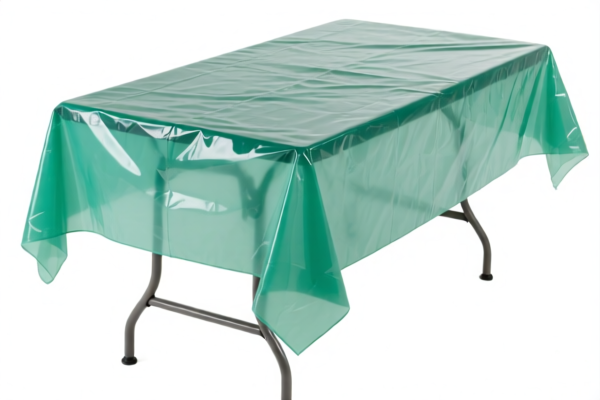

AI Analysis
🍽️ Plastic Durable Table Covers (Plastic Tablecloths)
🌐 HS Code Reference & Customs Clearance Guide | 2026 Latest Tariff Analysis | Professional Customs Strategy
📌 I. Product Definition & Classification: What Exactly Are "Plastic Durable Table Covers"?
Plastic table covers are essential protective and decorative items for dining, hospitality, and industrial settings. In international trade, their classification depends heavily on the material composition and the manufacturing process (whether the fabric is impregnated/coated or if it is a solid plastic sheet).
There are two main categories:
1. Textile-Based with Plastic Coating/Lamination (Chapters 59):
Fabric (like polyester or cotton) that has been impregnated, coated, covered, or laminated with plastics (e.g., PVC, PE). These feel like fabric but have a plastic layer.
2. Solid Plastic Sheets/Films (Chapter 39):
Made entirely from polymers like Polyethylene (PE), Polypropylene (PP), or Polyvinyl Chloride (PVC), formed into sheets, films, or strips without a textile base.
⚠️ Key Distinction Point:
- If the product is a fabric with a plastic coating/lamination → Classify under 5903.10.20
- If the product is a solid plastic sheet/film (no fabric base) → Classify under 3920.10 or 3920.20
📦 II. HS Code Classification Details (2026 Latest Tariff Authoritative Comparison)
| HS Code | Product Description | Application Scenario | Material/Structure |
|---|---|---|---|
5903.10.20.10 |
Plastic Table Covers; Textile fabrics impregnated, coated, covered or laminated with plastics | PVC-coated tablecloths, laminated fabric table covers | ✅ Textile + Plastic Coating/Lamination |
5903.10.20.90 |
Plastic Table Covers; Textile fabrics impregnated/coated with plastics (other than PVC) | Other plastic-impregnated tablecloths | ✅ Textile + Plastic Coating |
3920.10.00.00 |
Plastic Table Covers; Sheets, films, plates, etc., of polyethylene | Solid PE plastic tablecloths, disposable plastic sheets | ❌ No textile base (Pure Plastic Sheet/Film) |
3920.20.00.55 |
Plastic Table Covers; Sheets, films, plates, etc., of polypropylene | Solid PP plastic tablecloths, rigid/flexible plastic mats | ❌ No textile base (Pure Plastic Sheet/Film) |
🔍 Important Reminder:
- All table covers with a textile base that have been processed with plastic must be classified under 5903, not 39. - Pure plastic sheets without any fabric backing fall under 3920. - Misclassification (e.g., declaring a PVC-coated fabric as a pure plastic sheet) can lead to significant duty differences and customs penalties.
💰 III. 2026 Latest Tariff Rate Details (Including Surcharges & Policy Add-ons)
✅ Applicable Country: United States (US)
✅ Country of Origin: China (CN)
✅ Effective Date: November 10, 2025 onwards (including subsequent imports)
🎯 1. 5903.10.20.10 & 5903.10.20.90 —— Textile Fabrics Impregnated/Coated with Plastics
| Item | Content |
|---|---|
| Base Tariff Rate | 0.0% (ad valorem) |
| USITC Surcharge | +25.0% (Under Section 301 Tariffs) |
| Section 122 Surcharge | +10.0% (Specific provision for certain textile/plastic articles) |
| Total Tariff Rate | 35.0% |
| Tax Calculation | CIF Value × 35% |
| De Minimis Exemption | ❌ Not Eligible (denied_de_minimis) |
| Legal Basis Path | Section 301: 9903.88.01 → Section 122 → USITC:5903.10.20.10/90 |
📌 Explanation:
- The 25% USITC surcharge is applied under the Section 301 trade action against China. - The 10% Section 122 surcharge is a specific additional duty applied to certain plastic and textile products. - Total: 35%. This is a high tariff rate. Cost planning must account for this fully.
🎯 2. 3920.10.00.00 & 3920.20.00.55 —— Solid Plastic Sheets/Films (PE/PP)
| Item | Content |
|---|---|
| Base Tariff Rate | 4.2% (ad valorem) |
| USITC Surcharge | +25.0% (Under Section 301 Tariffs) |
| Section 122 Surcharge | +10.0% (Specific provision for certain plastic articles) |
| Total Tariff Rate | 39.2% |
| Tax Calculation | CIF Value × 39.2% |
| De Minimis Exemption | ❌ Not Eligible (denied_de_minimis) |
| Legal Basis Path | Section 301: 9903.88.01 → Section 122 → USITC:3920.10.00.00/3920.20.00.55 |
📌 Explanation:
- Unlike textile-plastic combos, pure plastic sheets have a base tariff of 4.2%. - However, the 25% Section 301 and 10% Section 122 surcharges still apply. - Total: 39.2%. This is even higher than the textile-based plastic covers.
🛠️ IV. Customs Clearance Practical Advice (Battle-Tested Pitfall Avoidance Guide)
✅ 1. Required Documentation Checklist (None Can Be Missing)
| Document | Required | Description |
|---|---|---|
| ✅ Product Specification Sheet | ✔️ | Must detail: Material (e.g., 100% PVC, PE, or Poly-cotton blend), Thickness, Dimensions, Coating type |
| ✅ Product Photos (Front/Back) | ✔️ | Clear images showing texture, weave (if textile-based), or transparency (if pure plastic) |
| ✅ Commercial Invoice | ✔️ | Must explicitly state: "Plastic Table Cover" or "Tablecloth" and correct HS Code |
| ✅ Packing List | ✔️ | Itemized count, weight, and packaging details |
| ✅ Certificate of Origin (CO) | ✔️ | If non-China origin, may qualify for lower rates. For China, confirms Section 301 applicability |
| ✅ Manufacturing Process Statement | ✔️ | Crucial for distinguishing between Impregnated Fabric (5903) and Plastic Sheet (3920). State: "Fabric impregnated with PVC" vs. "Molded Polyethylene Sheet" |
✅ 2. Declaration Tips (Key Mnemonics)
🔥 "Fabric + Plastic = 5903; Pure Plastic Sheet = 3920. Name Accurate, Duty Clear!"
| Scenario | Correct Declaration | Wrong Action |
|---|---|---|
| PVC-coated cloth tablecloth | 5903.10.20.10 |
Declare as "Plastic Sheet" → Higher duty (39.2%) or misclassification penalty |
| Pure PE disposable tablecover | 3920.10.00.00 |
Declare as "Tablecloth" → May be questioned, need to prove no fabric base |
| Textile tablecloth without plastic | (Not in scope, likely 6302) | Declare as 5903 → Wrong chapter |
| Plastic tablecloth with fabric backing | 5903.10.20.10 |
Declare as 3920 → Risk of penalty |
✅ 3. Special Handling Cases
| Case | Handling Advice |
|---|---|
| Mixed Packaging | If plastic table covers are packed with napkins (textile, no plastic), declare separately. Do not bundle as one HS code. |
| Sample Imports | Even samples are subject to 35% or 39.2% duties. No de minimis exemption. |
| Return/Refund Goods | If returning defective goods, ensure the original declaration was correct. Incorrect original HS = No duty refund. |
| Material Change | If switching from PVC-coated (5903) to PP-sheet (3920), recalculate costs. The rate changes from 35% to 39.2%. |
🌍 V. Global Market Customs Comparison (2026 Latest)
| Country/Region | Recommended HS Code | Tariff (China Origin) | Certification/Notes | Remarks |
|---|---|---|---|---|
| 🇺🇸 USA | 5903.10.20.10 / 3920.10.00.00 |
35% / 39.2% | None specific for plastic | High tariffs due to Section 301 & 122. Critical to classify correctly. |
| 🇨🇳 China | 5903.10.20.10 / 3920.10.00.00 |
~5-10% (Import Duty) | None | Low import duty, but high export cost for US-bound goods. |
| 🇪🇺 EU | 5903.10.20 / 3920.10 |
0-4% | REACH, LFGB (Food Contact) | No Section 301. Focus on food safety compliance. |
| 🇬🇧 UK | 5903.10.20 / 3920.10 |
0-4% | UKCA, Food Standards | Post-Brexit rules apply. Generally low duty. |
| 🇯🇵 Japan | 5903.10.20 / 3920.10 |
0-4% | Food Sanitation Law | Low duty. Strict food contact standards. |
📌 Conclusion:
- The US is the only major market imposing these punitive surcharges on Chinese plastic/textile hybrids and plastic sheets. - Total landed cost in the US includes 35-39.2% in duties alone. Pricing must reflect this. - For EU/UK/Japan, focus on food safety certifications rather than duty optimization.
📌 VI. Common Mistakes & Pitfall Guide (Lessons Learned the Hard Way)
❌ Mistake 1: Declaring PVC-coated fabric tablecloths as "Plastic Sheets" (3920)
👉 Consequence: Customs may reject or reclassify, leading to higher duties (39.2%) or penalties for incorrect declaration. Also, 3920 items might be subject to different inspection protocols.
❌ Mistake 2: Ignoring Section 122 Tariff
👉 Consequence: Underestimating total cost by 10%. Total duty becomes 39.2% for plastics, 45% for some textiles.
❌ Mistake 3: Using "Tablecloth" as the only description
👉 Consequence: Customs cannot determine if it’s fabric-based or plastic-based. Delay in clearance, additional questions, storage fees.
❌ Mistake 4: Assuming de minimis applies to small orders
👉 Consequence: All these HS codes are denied de minimis. Even small samples pay full duty.
✅ Correct Practice:
"PVC Coated Polyester Tablecloth, Size 60x120in, Washable, HS 5903.10.20.10"
OR
"Polyethylene Disposable Table Cover, Clear, 10 Micron, HS 3920.10.00.00"
🎯 VII. Conclusion: Precise Classification, Cost Control, Smooth Clearance!
🎯 Remember the Mnemonic:
🔹 "Fabric + Plastic = 5903 (35%); Pure Plastic = 3920 (39.2%). No de minimis, no mercy!"
🔹 "Section 301 + 122 = High Cost. Declare accurately to avoid penalties!"
📌 Pro Tip:
If your table covers are originating from Vietnam, India, or Mexico, you may avoid Section 301 tariffs.
For US-bound shipments, always apply for an Advance Ruling if the material composition is ambiguous.
Food-contact compliance (FDA for US, LFGB for EU) is mandatory for table covers. Ensure your supplier has the required migration test reports.
📣 Immediate Action:
📞 Contact a licensed customs broker + Provide product material spec + Apply for HS Code Advance Ruling
🚀 Let your table covers clear customs smoothly, maximize profit, and reach customers faster!
✨ Professional clearance starts with accurate classification!
💼 Every penny of duty counts!
Customer Reviews
About HS Code Classification
The Harmonized System (HS) is an internationally standardized nomenclature developed by the World Customs Organization (WCO) to classify traded products. Over 200 countries use the HS system as the basis for customs tariffs, trade statistics, and import/export regulations.
Each HS code follows a hierarchical structure:
- Chapter (2 digits) — Broad category of goods (e.g., Chapter 84: Machinery and Mechanical Appliances)
- Heading (4 digits) — More specific grouping within the chapter
- Subheading (6 digits) — Internationally standardized breakdown, used by all WCO member countries
- National subdivisions (8-10 digits) — Country-specific extensions for further classification, such as US HTSUS 10-digit codes
Correct HS code classification is essential for smooth customs clearance, accurate duty payment, and compliance with trade regulations. Misclassification can lead to customs delays, overpayment of duties, or penalties.
When importing from CN to US, the applicable tariff rates may include:
- Most-Favored-Nation (MFN) rate — The standard duty rate applied to WTO members
- General rate — Applied to countries without trade agreements
- Trade remedy duties — Additional tariffs such as Section 301 (anti-dumping), Section 232 (national security), or countervailing duties
The information provided on this page is for reference purposes only. For official classification, please consult with your local customs authority or a licensed customs broker.