Plastic Eco friendly Tablecloth
CN → US| HS Code | Tariff Rate | Origin | Destination | Doc |
|---|---|---|---|---|
| 5903102010 | 35.0% | CN | US | Official Doc |
| 5903102090 | 35.0% | CN | US | Official Doc |
| 3920100000 | 39.2% | CN | US | Official Doc |
| 3920200055 | 39.2% | CN | US | Official Doc |
Product Images


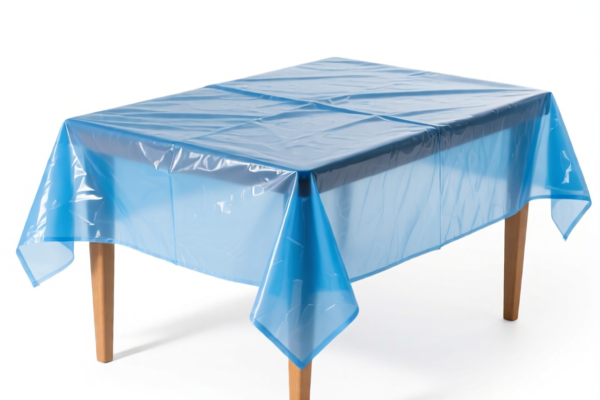

AI Analysis
🌱 Plastic Eco-friendly Tablecloth
🌐 HS Code Reference & Customs Clearance Guide | 2026 Latest Tariff Breakdown | Professional Logistics Strategy
📌 I. Product Definition & Classification: Do You Really Understand "Eco-friendly Plastic Tablecloths"?
The term "Plastic Eco-friendly Tablecloth" is a marketing description, not a technical classification. In international trade, customs authorities ignore the word "eco-friendly" unless certified biodegradability is proven. The classification depends strictly on the material composition (PVC vs. PP vs. Polymer) and the form (Textile-backed vs. Pure Plastic Film).
Critical Distinction: 1. Coated Textiles: If the tablecloth is a fabric (cloth) that has been impregnated, coated, covered, or laminated with plastic → It falls under Chapter 59. 2. Pure Plastic Sheets: If the tablecloth is made entirely of plastic polymers (no fabric base) in the form of sheets/films → It falls under Chapter 39.
⚠️ Key Warning:
- "Eco-friendly" Claim: If it is traditional PVC/PP, it is taxed at standard rates.
- Classification Risk: Misdeclaring a coated textile as a pure plastic sheet (or vice versa) leads to misclassification penalties.
📦 II. HS Code Classification Details (2026 Latest Tariff Concordance)
Based on the provided product data, here are the exact classifications and their tax implications.
| HS Code | Product Description (Technical Summary) | Material/Form Logic | Total Tax Rate |
|---|---|---|---|
| 5903.10.20.10 | Plastic Tablecloth: Textile fabric impregnated/coated/laminated with plastic. | Base: Textile (Cloth/Fabric) Coating: Any Plastic (PVC, etc.) |
35.0% |
| 5903.10.20.90 | Plastic Tablecloth: Textile fabric impregnated/coated with Polyvinyl Chloride (PVC) or similar plastics. | Base: Textile (Cloth/Fabric) Coating: Specifically PVC |
35.0% |
| 3920.10.00.00 | Plastic Tablecloth: Polymerized Plastic/Vinyl Polymer, in sheets, films, or strips. | Base: Pure Plastic (No fabric) Form: Sheet/Film/Strip |
39.2% |
| 3920.20.00.55 | Plastic Tablecloth: Polypropylene (PP) material, in sheets, films, foils, or strips. | Base: Pure Plastic (PP) Form: Sheet/Film/Foil/Strip |
39.2% |
🔍 Critical Analysis:
- Chapter 59 Codes (35.0%): Apply only if the product is a cloth that was dipped or coated. This is common for "heavy-duty" reusable tablecloths. - Chapter 39 Codes (39.2%): Apply if the product is a thin plastic sheet (like disposable or semi-durable plastic wrap) with no fabric backing. - Why the "Eco-friendly" tag matters: If it is a biodegradable plastic (e.g., PLA), it may still fall under Chapter 39 unless it is a textile blend. The "eco" label does not automatically reduce the tariff.
💰 III. 2026 Tariff Rate Breakdown (Detailed Policy Analysis)
✅ Applicable Country: United States (US)
✅ Origin: China (CN) (Assumed based on 122 Clause context)
✅ Effective Date: Current 2026 Trade Regime
🎯 Scenario A: Textile-Backed Plastics (HS 5903.10.20.10 / 5903.10.20.90)
Total Tax: 35.0%
| Tax Component | Rate | Legal Source / Description |
|---|---|---|
| Base Tariff | 0.0% | Standard Most-Favored-Nation (MFN) rate for these textile/plastic composites. |
| Section 301 "Additional" Tariff | +25.0% | Imposed under US Trade Law Section 301 (China-specific punitive measures). |
| Section 122 Tariff | +10.0% | Specific "122 Clause" tariff (often related to strategic materials or retaliatory measures). |
| 🔴 Grand Total | 35.0% | Calculated on CIF Value. |
📌 Explanation:
Even though the "Base Tariff" is 0%, the 25% Section 301 and 10% 122 Clause tariffs stack up immediately. The term "Eco-friendly" does not exempt you from these punitive duties.
🎯 Scenario B: Pure Plastic Sheets (HS 3920.10.00.00 / 3920.20.00.55)
Total Tax: 39.2%
| Tax Component | Rate | Legal Source / Description |
|---|---|---|
| Base Tariff | 4.2% | Standard MFN rate for plastic plates/sheets/films (Polymers). |
| Section 301 "Additional" Tariff | +25.0% | Standard Section 301 surcharge on plastic goods from China. |
| Section 122 Tariff | +10.0% | Additional 10% surcharge on these specific plastic polymer codes. |
| 🔴 Grand Total | 39.2% | Calculated on CIF Value. |
📌 Comparison:
Pure plastic sheets (39.2%) are taxed slightly higher than coated textiles (35.0%) because the Base Tariff (4.2%) is non-zero.
🛠️ IV. Customs Clearance Practical Advice (Step-by-Step)
✅ 1. Material Verification (The Most Critical Step)
Before shipping, you must determine if the tablecloth has a fabric base. * Test: Tear the tablecloth. * If you see threads/fibers and the plastic feels like a coating → HS 5903 (Lower tax: 35%). * If it tears cleanly with no fibers, looking like a plastic bag → HS 3920 (Higher tax: 39.2%).
✅ 2. Documentation Checklist
| Document | Requirement | Why? |
|---|---|---|
| Commercial Invoice | Must specify "Plastic Coated Textile" OR "Polymer Sheet". | Must match HS Code. Do not just write "Eco-friendly Tablecloth". |
| Material Certificate | Must list % of Fiber vs. % of Plastic. | To prove it is "Coated Textile" (5903) and not "Pure Plastic" (3920). |
| Photos | Close-up of texture (fabric weave vs. smooth plastic). | Visual proof for Customs (CBP) to verify classification. |
| Declaration of Origin | China (CN) declared clearly. | To calculate the 25% + 10% surcharges correctly. |
✅ 3. Strategic Declaration Tips
- Avoid the "Eco-friendly" Trap: If the product is PVC (common plastic), do not claim it is biodegradable unless you have a lab report. False claims lead to seizure.
- Optimize Classification: If the product is both (e.g., woven fabric + plastic coating), try to justify 5903.10.20.10 to save 4.2% in base duty compared to the pure plastic option.
- Packaging: Ensure the packaging describes the product technically (e.g., "PVC Coated Poly-cotton Tablecloth") rather than just "Eco-friendly".
✅ 4. Special Consideration for "Eco-friendly" (Biodegradable)
If the tablecloth is made of PLA (Polylactic Acid) or Starch-based plastics: * It is often classified under 3920.20.00 (Plastics) but may require a Certificate of Biodegradability (e.g., ASTM D6400). * Warning: Unless the product is from a country with a Free Trade Agreement (FTA), the Section 301 (25%) + 122 (10%) duties still apply. There is currently no tax break for "biodegradable" imports from China to the US under these specific clauses.
🚨 V. Common Pitfalls & Risk Mitigation
| ❌ Common Mistake | ✅ Consequence | ✅ Solution |
|---|---|---|
| Declaring "Plastic Tablecloth" as "Textile" only | Rejection or Audit. | Specify "Impregnated/Coated Textile". |
| Ignoring the "122 Clause" | Underpayment → Fine + Interest. | Always include the 10% 122 Clause in cost calculation. |
| Assuming "Eco-friendly" = 0% Tax | Shipment held at customs. | No exemption exists for Chinese-origin plastics under Section 301/122. |
| Using generic "Plastic" in description | CBP asks for material spec. | Use precise terms: "PVC Coated", "Polypropylene Film". |
🌍 VI. Summary of Costs
| HS Code | Category | Base Duty | Sec 301 | 122 Clause | Total Duty | Best For |
|---|---|---|---|---|---|---|
| 5903.10.20.10 | Coated Textile | 0.0% | 25.0% | 10.0% | 35.0% | Reusable Tablecloths (Fabric base) |
| 5903.10.20.90 | PVC Coated Textile | 0.0% | 25.0% | 10.0% | 35.0% | PVC Tablecloths (Fabric base) |
| 3920.10.00.00 | Pure Vinyl Sheet | 4.2% | 25.0% | 10.0% | 39.2% | Disposable/Thin Sheets |
| 3920.20.00.55 | Pure PP Sheet | 4.2% | 25.0% | 10.0% | 39.2% | Polypropylene Mats/Sheets |
🎯 VII. Final Verdict: How to Ship Smoothly
- Identify the Base: If it has cloth fibers, declare 5903.10.20.10 or 5903.10.20.90. This saves you 4.2% on the base rate.
- Prepare for High Duties: Do not budget for 0%. Budget for 35% or 39.2% total landed cost duty.
- Documentation is Key: Your invoice must explicitly state the technical composition (e.g., "60% Cotton / 40% PVC Coating").
- No "Eco" Tax Break: Unless you are shipping from Vietnam/Mexico/Thailand (which may avoid Section 301), "Eco-friendly" is a marketing term, not a tax exemption.
🔥 Pro Tip: If you can source this product from a non-China origin (e.g., Vietnam), you might avoid the 25% Section 301, reducing your total tax significantly. Always verify the Country of Origin before shipping!
✨ Clear Customs, Maximize Profit!
💼 Your logistics strategy starts with the right HS Code.
Customer Reviews
About HS Code Classification
The Harmonized System (HS) is an internationally standardized nomenclature developed by the World Customs Organization (WCO) to classify traded products. Over 200 countries use the HS system as the basis for customs tariffs, trade statistics, and import/export regulations.
Each HS code follows a hierarchical structure:
- Chapter (2 digits) — Broad category of goods (e.g., Chapter 84: Machinery and Mechanical Appliances)
- Heading (4 digits) — More specific grouping within the chapter
- Subheading (6 digits) — Internationally standardized breakdown, used by all WCO member countries
- National subdivisions (8-10 digits) — Country-specific extensions for further classification, such as US HTSUS 10-digit codes
Correct HS code classification is essential for smooth customs clearance, accurate duty payment, and compliance with trade regulations. Misclassification can lead to customs delays, overpayment of duties, or penalties.
When importing from CN to US, the applicable tariff rates may include:
- Most-Favored-Nation (MFN) rate — The standard duty rate applied to WTO members
- General rate — Applied to countries without trade agreements
- Trade remedy duties — Additional tariffs such as Section 301 (anti-dumping), Section 232 (national security), or countervailing duties
The information provided on this page is for reference purposes only. For official classification, please consult with your local customs authority or a licensed customs broker.