Plastic Elastic Band for Clothing
CN → US| HS Code | Tariff Rate | Origin | Destination | Doc |
|---|---|---|---|---|
| 5604909000 | 40.0% | CN | US | Official Doc |
| 4008111000 | 35.0% | CN | US | Official Doc |
| 4008210000 | 35.0% | CN | US | Official Doc |
| 5903102010 | 35.0% | CN | US | Official Doc |
| 5903102090 | 35.0% | CN | US | Official Doc |
Product Images
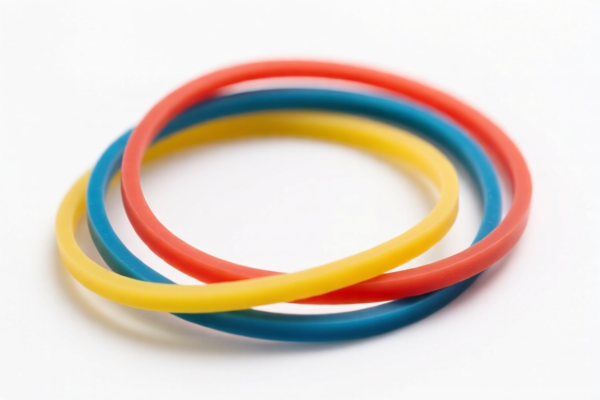
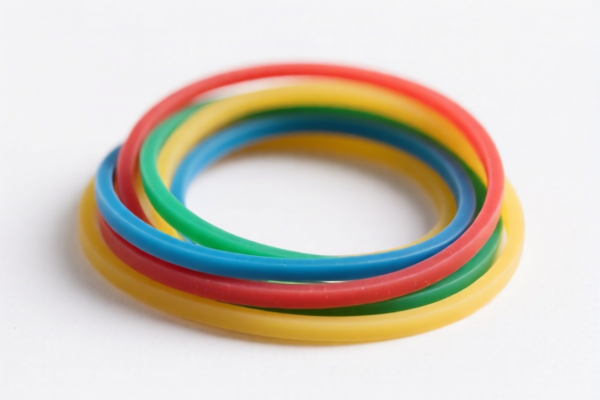
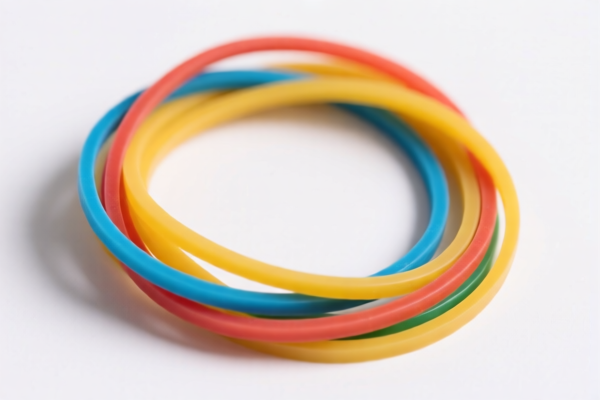
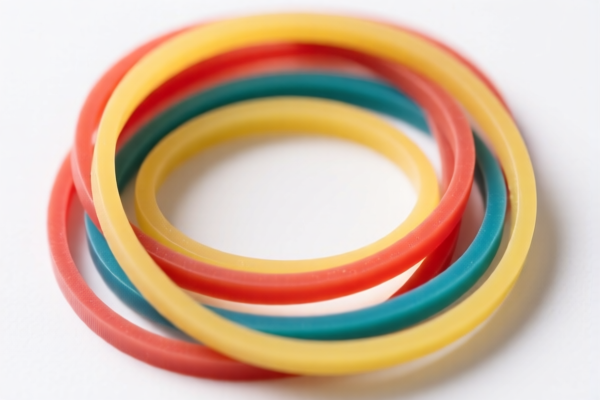
AI Analysis
🧵 Plastic Elastic Band for Clothing
🌐 HS Code Reference & Customs Clearance Guide | 2026 Latest Tariff Analysis | Professional Clearance Strategy
📌 I. Product Definition & Classification: Do You Really Understand "Plastic Elastic Bands"?
Plastic elastic bands are essential components in the apparel industry, used for waistbands, cuffs, and garment reinforcements. In international trade, they are classified based on their material composition (textile vs. rubber) and manufacturing process (impregnated/coated vs. pure rubber).
Key Distinction Logic:
- Textile-Based: If the band consists of textile threads/ribbons impregnated with rubber/plastic to create elasticity → Chapter 56 or 59.
- Rubber-Based: If the band is made entirely of natural or synthetic rubber (non-textile base) → Chapter 40.
⚠️ Critical Decision Point:
- If the core is textile + coated with rubber/plastic for stretch →5604.90.90.00,5903.10.20.10, or5903.10.20.90.
- If the core is pure rubber (sheet/strip form) →4008.11.10.00or4008.21.00.00.
📦 II. HS Code Classification Details (2026 Latest Tariff Authority Comparison)
| HS Code | Product Description | Application Scenario | Material/State |
|---|---|---|---|
5604.90.90.00 |
Elastic strips, whether or not covered with textile or rubber/plastic impregnation | Textile-core elastic bands with rubber/plastic coating | Textile base + Rubber/Plastic coating |
4008.11.10.00 |
Natural rubber strips, plates, and sheets (non-foam) | Pure natural rubber elastic bands | 100% Natural Rubber |
4008.21.00.00 |
Synthetic rubber strips, plates, and sheets (non-foam) | Pure synthetic rubber elastic bands | 100% Synthetic Rubber |
5903.10.20.10 |
Textile fabrics impregnated/coated with PVC or similar plastics | PVC-coated elastic textile bands | Textile + PVC/Plastic Impregnation |
5903.10.20.90 |
Other textile fabrics impregnated/coated with plastic (excluding PVC) | Other plastic-coated elastic textiles | Textile + Other Plastic Impregnation |
🔍 Key Reminder:
- "Elasticity" alone does not determine the HS Code. You must identify the primary material and structure.
- If the band is made of rubber threads wrapped in textile, it may fall under 5604 or 5903 depending on the coating type.
- If the band is solid rubber (no textile core), it falls under 4008.
💰 III. 2026 Latest Tariff Rate Details (Including Additional Taxes, Policy Surcharges)
✅ Applicable Country: United States (US)
✅ Origin: China (CN)
✅ Effective Date: November 10, 2025 onwards (including subsequent imports)
🎯 1. 5604.90.90.00 —— Elastic Strips (Textile Base + Rubber/Plastic Coating)
| Item | Content |
|---|---|
| Basic Tariff | 5.0% (ad valorem) |
| Additional Tariff (Section 301) | +25% |
| IEEPA Tariff (Section 122/China Specific) | +10% |
| Total Rate | 40.0% |
| Tax Calculation | CIF Value × 40.0% |
| De Minimis Exemption | ❌ Not Eligible (deny_de_minimis) |
| Legal Basis Path | USITC:5604.90.90.00 → FOOTNOTE:9903.88.01 → IEEPA:9903.01.25 |
📌 Explanation:
- This code is for textile-based elastic bands coated with rubber or plastic.
- The 40% total rate is high due to the combination of basic tariff (5%) + Section 301 (25%) + IEEPA (10%).
- No de minimis exemption applies, meaning small shipments still pay full tax.
🎯 2. 4008.11.10.00 —— Natural Rubber Strips (Pure Rubber)
| Item | Content |
|---|---|
| Basic Tariff | 0.0% (ad valorem) |
| Additional Tariff (Section 301) | +25% |
| IEEPA Tariff (Section 122/China Specific) | +10% |
| Total Rate | 35.0% |
| Tax Calculation | CIF Value × 35.0% |
| De Minimis Exemption | ❌ Not Eligible (deny_de_minimis) |
| Legal Basis Path | USITC:4008.11.10.00 → FOOTNOTE:9903.88.01 → IEEPA:9903.01.24 |
📌 Note:
- Even though the basic tariff is 0%, the 35% total rate still applies due to additional tariffs.
- This code is for pure natural rubber bands with no textile core.
🎯 3. 4008.21.00.00 —— Synthetic Rubber Strips (Pure Rubber)
| Item | Content |
|---|---|
| Basic Tariff | 0.0% (ad valorem) |
| Additional Tariff (Section 301) | +25% |
| IEEPA Tariff (Section 122/China Specific) | +10% |
| Total Rate | 35.0% |
| Tax Calculation | CIF Value × 35.0% |
| De Minimis Exemption | ❌ Not Eligible (deny_de_minimis) |
| Legal Basis Path | USITC:4008.21.00.00 → FOOTNOTE:9903.88.01 → IEEPA:9903.01.24 |
📌 Note:
- Similar to natural rubber, but made from synthetic rubber (e.g., SBR, EPDM).
- 35% total rate applies.
🎯 4. 5903.10.20.10 & 5903.10.20.90 —— Textile Fabrics Impregnated with Plastic
| Item | Content |
|---|---|
| Basic Tariff | 0.0% (ad valorem) |
| Additional Tariff (Section 301) | +25% |
| IEEPA Tariff (Section 122/China Specific) | +10% |
| Total Rate | 35.0% |
| Tax Calculation | CIF Value × 35.0% |
| De Minimis Exemption | ❌ Not Eligible (deny_de_minimis) |
| Legal Basis Path | USITC:5903.10.20.xx → FOOTNOTE:9903.88.01 → IEEPA:9903.01.24 |
📌 Note:
-5903.10.20.10is for PVC-coated textile elastic bands.
-5903.10.20.90is for other plastic-coated textile elastic bands (e.g., PU, PE).
- Both fall under Chapter 59 (Impregnated/Coated Textiles) and incur 35% total tax.
🛠️ IV. Customs Clearance Practical Advice (Real-World Pitfall Avoidance Guide)
✅ 1. Required Documentation Checklist (Must-Have)
| Document | Required? | Description |
|---|---|---|
| ✅ Product Specification Sheet | ✔️ | Must detail material composition (e.g., "60% Nylon, 40% Rubber Core"). |
| ✅ Product Photos (Clear) | ✔️ | Show cross-section to prove if it’s textile-core or pure rubber. |
| ✅ Material Safety Data Sheet (MSDS) | ✔️ | If applicable for rubber/plastic components. |
| ✅ Commercial Invoice | ✔️ | Must specify "Elastic Band for Garment" and HS Code. |
| ✅ Packing List | ✔️ | Detail contents to avoid partial shipment issues. |
| ✅ Certificate of Origin (CO) | ✔️ | If non-China origin, to claim preferential rates. |
✅ 2. Declaration Tips (Key Mnemonics)
🔥 "Material is Key, Structure is Truth, Name is Precise, Tax is Reduced!"
| Scenario | Correct Declaration | Wrong Action |
|---|---|---|
| Textile core + Rubber coating | 5604.90.90.00 (40%) |
Misdeclare as pure rubber → Risk of audit & penalties |
| Pure Natural Rubber strip | 4008.11.10.00 (35%) |
Misdeclare as textile → Classification error |
| PVC-coated Textile band | 5903.10.20.10 (35%) |
Misdeclare as "garment accessory" → Higher tax |
| General Plastic-coated Textile | 5903.10.20.90 (35%) |
Use vague terms like "elastic strip" → Delays |
✅ 3. Special Cases Handling
| Case | Handling Advice |
|---|---|
| OEM Custom Bands | Provide customer specs + material test reports to prove classification. |
| Mixed Materials | If >50% textile by weight, lean toward Chapter 56/59; if >50% rubber, lean toward Chapter 40. |
| Small Samples | Still subject to 35-40% tax; no de minimis exemption for these HS codes. |
| Labeling | Clearly mark "Elastic Band" not "Garment Part" to avoid being classified as apparel (which may have different rules). |
🌍 V. Global Market Clearance Comparison (2026 Latest)
| Country/Region | Recommended HS Code | Tariff | Certification | Notes |
|---|---|---|---|---|
| 🇺🇸 USA | 5604.90.90.00 / 4008.xx |
35%-40% | None specific | High due to 301/IEEPA |
| 🇨🇳 China | 5604.90.90.00 / 4008.xx |
5%-10% | N/A | Lower basic rates, no 301 |
| 🇪🇺 EU | 5604.90.00 / 4008.xx |
0%-6% | REACH | No additional tariffs |
| 🇬🇧 UK | 5604.90.00 / 4008.xx |
0%-6% | UKCA | Post-Brexit rules apply |
| 🇯🇵 Japan | 5604.90.00 / 4008.xx |
0%-6% | JIS | Low tariffs, high standards |
📌 Conclusion:
- USA is the most expensive market due to additional tariffs (301 + IEEPA).
- EU/UK/Japan have lower tariffs but stricter chemical regulations (REACH, etc.).
- China has lower basic tariffs but imports into China may face different rules.
📌 VI. Common Mistakes & Pitfall Avoidance (Blood & Tears Lessons)
❌ Mistake 1: Declaring "Elastic Band" as "Garment Accessory" without proof
👉 Consequence: Customs may reclassify to higher tax brackets or demand additional documentation → Delays & Fines
❌ Mistake 2: Confusing "Textile-Core" with "Pure Rubber"
👉 Consequence: Misclassification → Audit, Back Taxes, Penalties
❌ Mistake 3: Ignoring the "Coating" Material
👉 Consequence: PVC vs. PU changes HS Code under 5903 → Incorrect Tax Rate
❌ Mistake 4: Assuming De Minimis Applies
👉 Consequence: For these HS codes, no de minimis exemption → Full Tax on All Shipments
✅ Correct Approach:
"Elastic Band for Clothing, Textile Core with Rubber Coating, Width 20mm, Model EB-200, Material: 60% Nylon/40% Natural Rubber, HS Code: 5604.90.90.00"
🎯 VII. Conclusion: Precise Declaration Saves Money!
🎯 Remember the Mnemonic:
🔹 "Material Dictates Code, Structure Determines Truth, Textile=56/59, Rubber=40, Tax=35-40%, No De Minimis!"
🔹 "HS Code is King, Tariff is Queen, Declaration is the Sword, Mistake is the Enemy!"
📌 Pro Tip:
- If your elastic bands are originally from Vietnam, Mexico, or Thailand, you may apply for IEEPA Exemption → 0%-5% Tax.
- Consider applying for an Advance Ruling before shipment to avoid customs disputes.
📣 Immediate Action:
📞 Contact a Professional Customs Broker + Provide Product Photos + Apply for HS Code Advance Ruling
🚀 Let Your Elastic Bands Clear Customs Smoothly, Export Efficiently, and Maximize Profits!
✨ Professional Clearance Starts with Accurate Classification!
💼 Every Penny of Cost Deserves to Be Calculated Precisely!
Customer Reviews
About HS Code Classification
The Harmonized System (HS) is an internationally standardized nomenclature developed by the World Customs Organization (WCO) to classify traded products. Over 200 countries use the HS system as the basis for customs tariffs, trade statistics, and import/export regulations.
Each HS code follows a hierarchical structure:
- Chapter (2 digits) — Broad category of goods (e.g., Chapter 84: Machinery and Mechanical Appliances)
- Heading (4 digits) — More specific grouping within the chapter
- Subheading (6 digits) — Internationally standardized breakdown, used by all WCO member countries
- National subdivisions (8-10 digits) — Country-specific extensions for further classification, such as US HTSUS 10-digit codes
Correct HS code classification is essential for smooth customs clearance, accurate duty payment, and compliance with trade regulations. Misclassification can lead to customs delays, overpayment of duties, or penalties.
When importing from CN to US, the applicable tariff rates may include:
- Most-Favored-Nation (MFN) rate — The standard duty rate applied to WTO members
- General rate — Applied to countries without trade agreements
- Trade remedy duties — Additional tariffs such as Section 301 (anti-dumping), Section 232 (national security), or countervailing duties
The information provided on this page is for reference purposes only. For official classification, please consult with your local customs authority or a licensed customs broker.