Plastic Enema Bags with Tubing
CN → US| HS Code | Tariff Rate | Origin | Destination | Doc |
|---|---|---|---|---|
| 3917290090 | 38.1% | CN | US | Official Doc |
| 3926909987 | 22.8% | CN | US | Official Doc |
| 3917210000 | 38.1% | CN | US | Official Doc |
| 3926909989 | 22.8% | CN | US | Official Doc |
Product Images
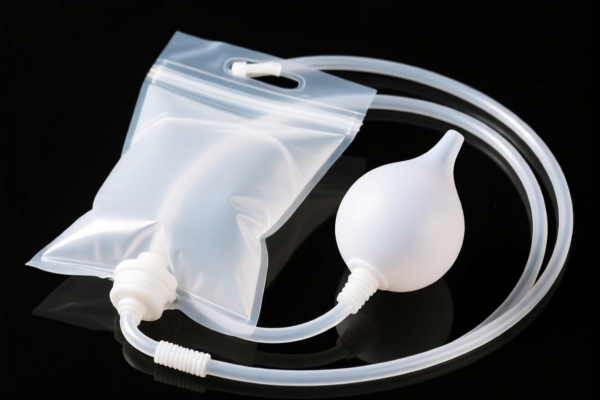
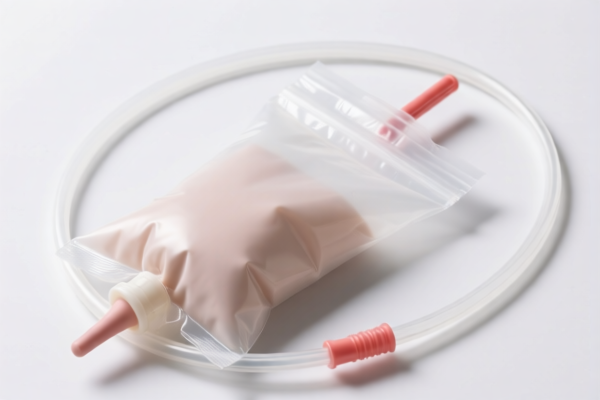
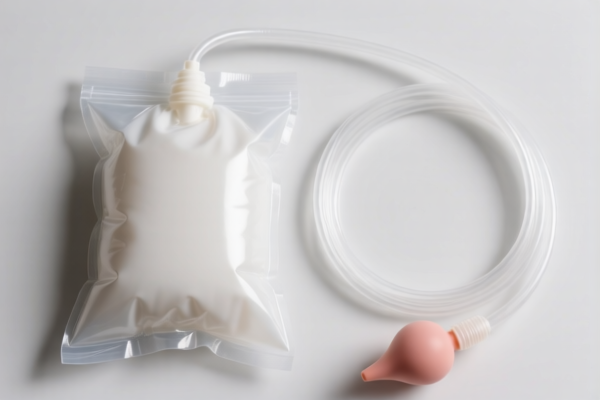
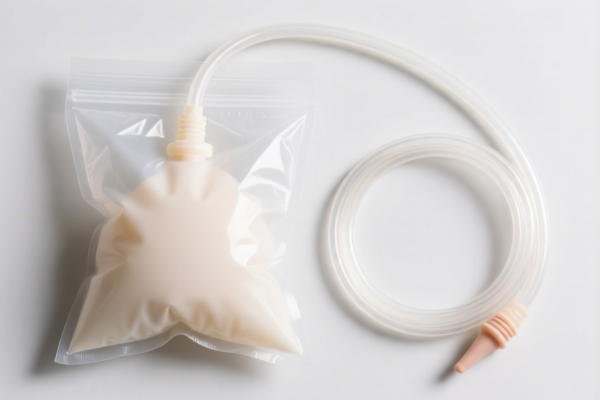
AI Analysis
💉 Plastic Enema Bags with Tubing (Medical Irrigation Supplies)
🌐 HS Code Reference & Customs Clearance Guide | 2026 Latest Tariff Analysis | Strategic Compliance Strategy
📌 I. Product Definition & Classification: Are You Declaring "Plastic Pipes" or "Medical Devices"?
Plastic Enema Bags with Tubing are medical irrigation devices used for cleaning the bowel or administering fluids. In international trade, they consist of a reservoir (bag) and delivery mechanism (tubing).
Key Distinction in Classification: * As "Plastic Pipes/Tubing" (Chemical Products): If declared strictly as raw plastic components (e.g., "Plastic Tube for Medical Use") without context of being a finished device, they often fall under Chapter 39. * As "Medical Devices" (Chapter 90): If declared as a complete enema set or kit, they should ideally fall under 9018 (Instruments/Apparatus for medical, surgical, dental, or veterinary sciences).
⚠️ Critical Warning for US Imports:
Because your provided data references Section 301 Tariffs (25%) and Section 122 Tariffs (10%), the customs broker or importer is likely classifying this product under Chapter 39 (Plastics) rather than Chapter 90 to simplify declaration, OR the specific component being imported is just the tubing/bag material.However, the data provided below strictly follows the HS Codes given in your set. We will analyze why these specific "Plastic" HS codes are applied to "Enema Bags/Tubing."
📦 II. HS Code Classification Details (Based on Provided Data)
The following HS codes are provided for Plastic Products, specifically focusing on tubes, pipes, and general plastic articles.
| HS Code | Product Description (From Data) | Applicable Scenario | Why it Fits "Enema Bags/Tubing" |
|---|---|---|---|
3917.29.00.90 |
Matches material (Plastic) & form (Tube), suitable for plastic tube goods. | General plastic tubes, non-rigid or semi-rigid tubing. | Best Fit for Tubing: The delivery tube of the enema bag is a "plastic tube." This code covers plastic tubes not elsewhere specified. |
3926.90.99.87 |
Matches material (Plastic) & form (Tube), suitable for hard pipes or tubes in plastic articles. | Hard plastic pipes, rigid tubing, specific plastic accessories. | Alternative for Rigid Parts: If the enema kit includes hard plastic connectors, nozzles, or rigid tubing sections, this code applies to "other plastic articles." |
3917.21.00.00 |
Matches material (Plastic) & form (Tube), complies with plastic tube classification requirements. | Plastic pipes, tubes, hoses, and accessories (specifically for fluid conveyance). | Standard Plastic Tubing: Covers plastic tubes used for conveying fluids. Since enema bags convey fluids, this is a strong candidate for the tubing component. |
3926.90.99.89 |
Matches material (Plastic), suitable for plastic articles, including inferred tubular forms. | General plastic制品 (articles), including items inferred to be tubular. | Fallback Category: If the product is a mixed assembly (bag + tube + connector) and doesn't fit neatly into "pure tubes," this "other plastic articles" code is used. |
🔍 Key Insight:
- The classification relies on the material (Plastic) and shape (Tube/Bag) rather than the medical function.
- By classifying under Chapter 39, the importer is treating the product as a plastic good, not a regulated medical device (which would be Chapter 90).
- Note: In the US, enema bags are often regulated by the FDA. Classifying them as "plastic tubes" may require additional FDA registration and pre-market notifications, even if the HS code suggests otherwise.
💰 III. 2026 Latest Tariff Rate Breakdown (Including Surcharges & Policy Add-ons)
✅ Applicable Country: United States (US)
✅ Origin: China (CN)
✅ Effective Date: Post-2025 (Including subsequent imports)
🎯 1. HS Code 3917.29.00.90 & 3917.21.00.00 (Plastic Tubes)
| Item | Content |
|---|---|
| Base Tariff | 3.1% (Ad Valorem) |
| Section 301 Surcharge | +25.0% (Added Tariff) |
| Section 122 Tariff | +10.0% (Section 122 Tariff) |
| Total Tariff Rate | 38.1% |
| Tax Calculation | CIF Value × 38.1% |
| De Minimis Exemption? | ❌ No (deny_de_minimis) |
| Legal Basis | Base: 3917, Sec301: Footnote, Sec122: Specific Clause |
📌 Explanation:
- Base (3.1%): Standard MFN rate for plastic tubes.
- Section 301 (25%): The major hurdle. These codes are on the China-specific tariff list.
- Section 122 (10%): Additional duty applicable to certain plastic articles.
- Total (38.1%): This is a high-cost entry. Importers must account for this in their landed cost.
🎯 2. HS Code 3926.90.99.87 & 3926.90.99.89 (Other Plastic Articles)
| Item | Content |
|---|---|
| Base Tariff | 5.3% (Ad Valorem) |
| Section 301 Surcharge | +7.5% (Added Tariff) |
| Section 122 Tariff | +10.0% (Section 122 Tariff) |
| Total Tariff Rate | 22.8% |
| Tax Calculation | CIF Value × 22.8% |
| De Minimis Exemption? | ❌ No (deny_de_minimis) |
| Legal Basis | Base: 3926, Sec301: Footnote, Sec122: Specific Clause |
📌 Explanation:
- Base (5.3%): Slightly higher base rate for "other plastic articles" compared to "tubes."
- Section 301 (7.5%): Lower surcharge than the tube category.
- Section 122 (10%): Same additional duty.
- Total (22.8%): Significantly cheaper than the 3917 codes.
- Strategy: If the product can be legally justified as an "article" (e.g., a complete enema kit with a bag) rather than just "tubing," using 3926.90 codes saves 15.3% in total tariffs.
🛠️ IV. Customs Clearance Practical Advice (Pitfall Avoidance Guide)
✅ 1. Documentation Checklist (Must-Haves)
| Document | Required? | Notes |
|---|---|---|
| ✅ Product Description | ✔️ | Clearly state: "Plastic Enema Bag with Tubing" or "Medical Irrigation Kit" |
| ✅ Material Specification | ✔️ | Confirm 100% Plastic (PVC/PE). No rubber or metal parts if using 3917/3926. |
| ✅ Function Statement | ✔️ | "For medical/bowel irrigation use." |
| ✅ FDA Registration | ✔️ | Critical: Even if declared as plastic, the FDA may still regulate it as a medical device. Check if it's a Class I or II device. |
| ✅ Commercial Invoice | ✔️ | Must match HS code description. If using 3926, describe as "Plastic Medical Accessories." |
| ✅ Packing List | ✔️ | Detail contents: Bag count, tubing length, connectors. |
✅ 2. Declaration Strategy (Key Tips)
🔥 "Choose the Right Code: Tubes are Expensive, Articles are Cheaper!"
| Scenario | Recommended HS Code | Total Tax | Why? |
|---|---|---|---|
| Importing only Tubing | 3917.29.00.90 or 3917.21.00.00 |
38.1% | Fits the "tube" definition perfectly. High tax. |
| Importing Complete Kits (Bag + Tube) | 3926.90.99.87 or 3926.90.99.89 |
22.8% | Fits "plastic article" definition. Lower tax. |
| Importing as Medical Device | 9018.90.80 (Not in Data) |
Varies | Not in provided data. May require FDA 510(k). Avoid if not necessary. |
📌 Pro Tip:
- If you are importing complete enema sets (bag + tube + nozzle), argue for 3926.90 ("Other Plastic Articles") to reduce the Section 301 surcharge from 25% to 7.5%.
- If you are importing bulk tubing, you must use 3917, and accept the 38.1% rate.
✅ 3. Special Considerations
| Issue | Solution |
|---|---|
| FDA Compliance | Ensure the product is listed with the FDA as a medical device, even if the HS code is plastic. Misclassification can lead to import holds. |
| Labeling | Must include "Sterile" (if applicable), "Single Use," and manufacturer details. |
| Country of Origin | Ensure the origin is correctly declared. If assembled in Vietnam, you might avoid US tariffs, but verify Substantial Transformation rules. |
🌍 V. Global Market Comparison (2026)
| Market | HS Code (Plastic) | Total Tax (China Origin) | Notes |
|---|---|---|---|
| 🇺🇸 USA | 3917.29.00.90 |
38.1% | High tariffs due to Sec 301 & 122. |
| 🇺🇸 USA | 3926.90.99.87 |
22.8% | Lower tariffs for "articles." |
| 🇪🇺 EU | 3917.29 |
~5-7% | No Section 301/122. Standard EU duty. |
| 🇨🇳 China | 3917.29 |
~5-10% | Standard import duty for plastic goods. |
| 🇬🇧 UK | 3917.29 |
~5-7% | Post-Brexit tariff structure applies. |
📌 Conclusion:
- USA is the most expensive market for these goods due to layered tariffs.
- Optimization Opportunity: If importing into the US, classify as 3926.90 (Plastic Articles) instead of 3917 (Plastic Tubes) if the product structure allows, saving 15.3%.
📌 VI. Common Errors & Pitfalls (Lessons Learned)
❌ Error 1: Declaring "Enema Bag" as "Plastic Pipe" without context.
👉 Consequence: Customs may reject as "inaccurate description" or misclassify, leading to delays.
👉 Fix: Use "Plastic Medical Irrigation Tubing" or "Plastic Enema Kit."
❌ Error 2: Ignoring FDA requirements because the HS code is plastic.
👉 Consequence: Product seized by FDA for unregistered medical device.
👉 Fix: Verify FDA status before shipment.
❌ Error 3: Using 3917 codes for a complete kit (bag + tube).
👉 Consequence: Overpaying 15.3% in tariffs.
👉 Fix: Use 3926 codes for assembled kits.
✅ Correct Approach:
"Plastic Enema Bag with Tubing, Complete Kit, Single-Use, Sterile"
HS Code:3926.90.99.87(If kit) or3917.29.00.90(If tubing only)
Tax: 22.8% or 38.1%
🎯 VII. Conclusion: Strategic Classification for Cost Efficiency
🎯 Remember the Golden Rule:
🔹 "Tubing is 38%, Kit is 22.8%!"
🔹 "Don't over-classify simple plastic goods!"
📌 Pro Tip:
If your enema bags are originating from Vietnam, Thailand, or Mexico, check if they qualify for USMCA or other FTA benefits. You may avoid Section 301 and 122 tariffs entirely.
📣 Immediate Action:
📞 Contact your customs broker:
1. Confirm if the product is a kit or component.
2. If a kit, demand 3926.90.99.87 (22.8%).
3. Verify FDA compliance for medical device status.
🚀 Minimize costs, maximize compliance, ensure smooth clearance!
✨ Professional Customs Clearance, Starting with Accurate Classification!
💼 Every percentage point of tax saves your profit margin!
Customer Reviews
About HS Code Classification
The Harmonized System (HS) is an internationally standardized nomenclature developed by the World Customs Organization (WCO) to classify traded products. Over 200 countries use the HS system as the basis for customs tariffs, trade statistics, and import/export regulations.
Each HS code follows a hierarchical structure:
- Chapter (2 digits) — Broad category of goods (e.g., Chapter 84: Machinery and Mechanical Appliances)
- Heading (4 digits) — More specific grouping within the chapter
- Subheading (6 digits) — Internationally standardized breakdown, used by all WCO member countries
- National subdivisions (8-10 digits) — Country-specific extensions for further classification, such as US HTSUS 10-digit codes
Correct HS code classification is essential for smooth customs clearance, accurate duty payment, and compliance with trade regulations. Misclassification can lead to customs delays, overpayment of duties, or penalties.
When importing from CN to US, the applicable tariff rates may include:
- Most-Favored-Nation (MFN) rate — The standard duty rate applied to WTO members
- General rate — Applied to countries without trade agreements
- Trade remedy duties — Additional tariffs such as Section 301 (anti-dumping), Section 232 (national security), or countervailing duties
The information provided on this page is for reference purposes only. For official classification, please consult with your local customs authority or a licensed customs broker.