Plastic Energy saving Pipe Fittings
CN → US| HS Code | Tariff Rate | Origin | Destination | Doc |
|---|---|---|---|---|
| 8481805090 | 38.0% | CN | US | Official Doc |
| 8481805040 | 38.0% | CN | US | Official Doc |
| 3926909987 | 22.8% | CN | US | Official Doc |
| 3926305000 | 22.8% | CN | US | Official Doc |
| 3917400050 | 40.3% | CN | US | Official Doc |
Product Images
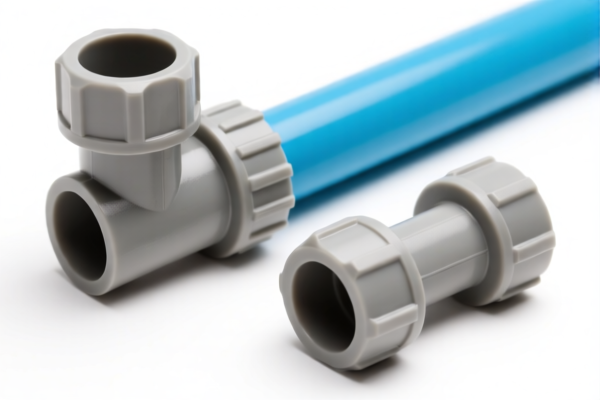
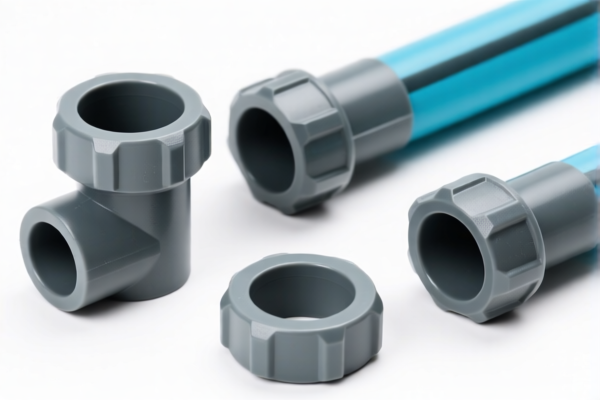
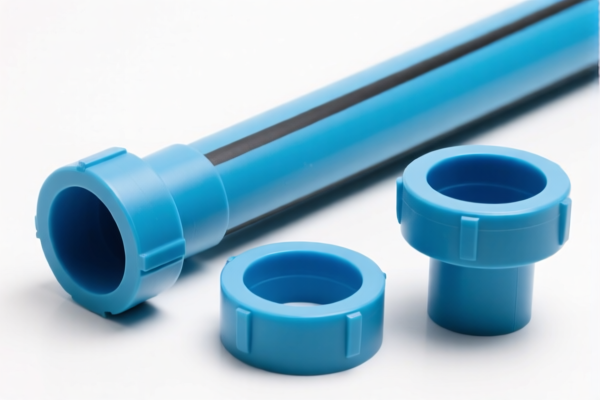
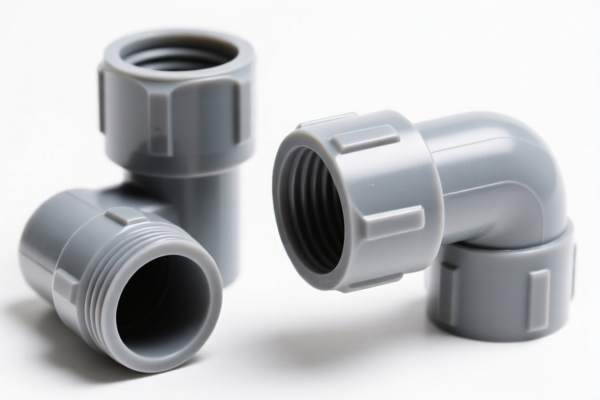
AI Analysis
🏗️ Plastic Energy-Saving Pipe Fittings: HS Code Classification & US Customs Clearance Guide (2026)
🌐 HS Code Reference & Customs Clearance Guide | Latest 2026 Tariff Analysis | Professional Strategy for Plastic Pipe Fittings
📌 I. Product Definition: What are "Plastic Energy-Saving Pipe Fittings"?
Plastic energy-saving pipe fittings are critical components in fluid transport systems, designed to connect, control, or alter the direction of pipelines. In international trade, their classification depends heavily on their specific function, material structure, and integration level.
They are generally categorized into two main types:
- Pipe Accessories/Connectors (8481.80): Fittings that are integral parts of valves, taps, cocks, or similar appliances for controlling flow (e.g., plastic flanges, adapters with specific mechanical locking mechanisms for pressurized systems).
- Plastic Articles (3926/3917): Generic plastic connectors, clamps, or simple elbows/couplings that do not qualify as "valve-like" control devices, or are considered simple plastic manufactured articles.
⚠️ Key Distinction:
- If the fitting acts as a valve/tap/cock (controlling flow direction/pressure via a mechanism) → It may fall under Chapter 84 (8481).
- If it is a simple connector, elbow, tee, or clamp without flow-control mechanics → It falls under Chapter 39 (Plastics).
📦 II. HS Code Classification Details (2026 Latest Tariff Concordance)
| HS Code | Product Description | Application Scenario | Control Mechanism? |
|---|---|---|---|
8481.80.50.90 |
Plastic pipe connector, classified as a pipe fitting/appliance part | High-pressure industrial pipes, complex connection systems | ✅ Yes (Functional part of pipe system) |
8481.80.50.40 |
Plastic pipe connector, classified as a general part/accessory | General plumbing, standard joint connections | ✅ Yes (Recognized as part of valve/tap apparatus) |
3926.90.99.87 |
Plastic pipe connector, general plastic article | Standard PVC/PE elbows, tees, simple couplings | ❌ No (Simple plastic shape) |
3926.30.50.00 |
Plastic pipe connector, specific plastic article | Industrial plastic fittings with precise manufacturing | ❌ No (Plastic article category) |
3917.40.00.50 |
Plastic pipe valve | Plastic valves (ball valves, gate valves) made of plastic | ✅ Yes (Explicitly a valve) |
🔍 Critical Reminder:
- Chapter 84 (8481) items are often treated as "Machinery Parts" and attract higher scrutiny and potentially higher tariffs due to "Section XI" vs "Section XVI" rules. - Chapter 39 (3926/3917) items are "Plastic Articles" and may have different duty structures. - Misclassification between "Connector" (3926) and "Pipe Fitting/Valve" (8481) can lead to significant duty differences and customs delays.
💰 III. 2026 Latest Tariff Rate Breakdown (Including Surtaxes & Policy Add-ons)
✅ Applicable Country: United States (US)
✅ Country of Origin: China (CN)
✅ Effective Date: Post-November 2025 (Current Trade Environment)
🎯 1. 8481.80.50.90 & 8481.80.50.40 — Plastic Pipe Fittings (Valve/Control Appliance Parts)
| Item | Content |
|---|---|
| Base Duty Rate | 3.0% (Ad Valorem) |
| USITC Surtax (Section 301) | +25.0% (High Priority Items) |
| IEEPA Surtax (Section 122/EO) | +10.0% (Specific China-origin surtax) |
| Total Effective Rate | 38.0% |
| Tax Calculation | CIF Value × 38.0% |
| De Minimis Eligibility | ❌ Not Eligible (Large value items, no $800 exemption) |
| Legal Basis Path | USITC:8481.80.50.xx → FOOTNOTE:301_301 → IEEPA:Section_122 |
📌 Explanation:
- These codes are classified as pipe appliances/parts.
- The 25% Section 301 tariff applies to most machinery parts from China.
- The additional 10% IEEPA surtax is applied to specific Chinese-origin goods under current executive orders.
- Total 38% is a significant cost driver. Importers must verify if the product truly fits "8481" (mechanical control) or can be reclassified to "3926" (simple plastic) to reduce duties.
🎯 2. 3926.90.99.87 & 3926.30.50.00 — Plastic Pipe Connectors (General Plastic Articles)
| Item | Content |
|---|---|
| Base Duty Rate | 5.3% (Ad Valorem) |
| USITC Surtax (Section 301) | +7.5% (Reduced rate for some plastic articles) |
| IEEPA Surtax (Section 122/EO) | +10.0% (Specific China-origin surtax) |
| Total Effective Rate | 22.8% |
| Tax Calculation | CIF Value × 22.8% |
| De Minimis Eligibility | ❌ Not Eligible |
| Legal Basis Path | USITC:3926.xx.xx.xx → FOOTNOTE:301_Plastic → IEEPA:Section_122 |
📌 Explanation:
- These codes are classified as Plastic Articles.
- The 7.5% Section 301 surtax is lower than the 25% applied to machinery parts, reflecting trade policy nuances for certain plastic goods.
- The 10% IEEPA surtax still applies.
- Total 22.8% offers a ~15.2% savings compared to the 8481 classification.
🎯 3. 3917.40.00.50 — Plastic Pipe Valves
| Item | Content |
|---|---|
| Base Duty Rate | 5.3% (Ad Valorem) |
| USITC Surtax (Section 301) | +25.0% (Valves often face higher surtax) |
| IEEPA Surtax (Section 122/EO) | +10.0% |
| Total Effective Rate | 40.3% |
| Tax Calculation | CIF Value × 40.3% |
| De Minimis Eligibility | ❌ Not Eligible |
| Legal Basis Path | USITC:3917.40.00.50 → FOOTNOTE:301_Valves → IEEPA:Section_122 |
📌 Explanation:
- Explicitly classified as Valves.
- Attracts the maximum 25% Section 301 surtax due to strategic importance.
- Total 40.3% is the highest rate among the options. Avoid this code unless the product is strictly a valve.
🛠️ IV. Customs Clearance Practical Advice (Real-World Pitfall Avoidance)
✅ 1. Required Documentation Checklist (Non-Negotiable)
| Document | Mandatory? | Notes |
|---|---|---|
| ✅ Product Specification Sheet | ✔️ | Must detail material (PVC, PE, PP), pressure rating, temperature range. |
| ✅ Product Photos | ✔️ | Clear images showing connections, threads, or fusion ends. |
| ✅ Bill of Lading / Air Waybill | ✔️ | Ensure "Plastic Pipe Fittings" is stated, not generic "Parts". |
| ✅ Commercial Invoice | ✔️ | Accurate value, CIF terms. |
| ✅ Certificate of Origin | ✔️ | Required for Section 301/IEEPA surtax application. |
| ✅ Third-Party Test Report | ✔️ | ASTM/ISO standards for plastic pipes (e.g., ASTM D3035 for PVC). |
✅ 2. Declaration Tips (Key Mantras)
🔥 "Classify by Function, Not Just Material!"
| Scenario | Correct HS Code | Common Mistake | Consequence |
|---|---|---|---|
| Simple Elbow/Tee (No valve mechanism) | 3926.90.99.87 / 3926.30.50.00 |
Declaring as 8481.80.50.90 |
Overpaying 15.2% extra duty |
| Plastic Ball Valve (With handle/mechanism) | 3917.40.00.50 or 8481.80.50.xx |
Declaring as 3926 |
Underpayment Risk → Penalty + Back Taxes |
| Complex Flange Assembly | 8481.80.50.90 |
Declaring as 3926 |
Customs Seizure / Delay |
✅ 3. Special Case Handling
| Case | Recommendation |
|---|---|
| "Energy-Saving" Claim | Do not declare as "Energy Saving" on the invoice. It’s a marketing term, not a technical classification. Focus on material and function. |
| Kit Packing | If fittings are sold with bolts/gaskets, declare as Set. Ensure the principal component is correctly classified. |
| Material Declaration | Clearly state "100% PVC", "HDPE", etc. Ambiguity leads to higher scrutiny and potential reclassification by CBP. |
🌍 V. Global Market Comparison (2026)
| Market | Recommended HS Code | Estimated Duty (China Origin) | Notes |
|---|---|---|---|
| 🇺🇸 USA | 3926.90.99.87 (Fittings) / 8481.80.50.90 (Valves) |
22.8% / 38.0% | High tariffs due to Section 301 + IEEPA. |
| 🇨🇳 China | 3926.90.99.87 |
5.3% | No Section 301. Lower cost for re-exports. |
| 🇪🇺 EU | 3926.90 |
0% - 2.5% | No Section 301. CE marking required. |
| 🇮🇳 India | 3926.90 |
7.5% + SWS | Anti-dumping duties may apply for Chinese plastic fittings. |
📌 Conclusion:
- The US market is the most expensive due to layered tariffs.
- Reclassification to Chapter 39 (Plastic Articles) is the primary strategy to reduce duty from 38.0% to 22.8%, if the product is a simple connector and not a valve.
📌 VI. Common Errors & Pitfalls (Lessons Learned)
❌ Error 1: Calling all plastic pipe parts "Pipe Fittings" under 8481
👉 Result: Paying 38.0% instead of 22.8%.
✅ Fix: Verify if the item has a flow-control mechanism. If not, use 3926.
❌ Error 2: Ignoring the IEEPA 10% Surcharge
👉 Result: Under-declaring duty, leading to seizure or fines.
✅ Fix: Always include the 10% IEEPA in cost calculations for China-origin goods.
❌ Error 3: Vague Product Description ("Plastic Parts")
👉 Result: CBP holds shipment for additional documentation, causing delays.
✅ Fix: Use precise terms: "PVC Pipe Elbow, 2-inch, Pressure Rating 150 PSI".
🎯 VII. Conclusion: Precision Classification Saves Money!
🎯 Remember:
🔹 "Valve = High Duty, Connector = Lower Duty"
🔹 "38% vs 22.8% = 15.2% Savings on every shipment!"
🔹 "Material + Function = Correct HS Code"
📌 Pro Tip:
If your plastic fittings are simple elbows, tees, or couplings without valves, insist on Classifying under 3926. This can save you thousands of dollars annually on large shipments.
Always request a Pre-Ruling from CBP if unsure, especially for mixed consignments.
📣 Take Action Now:
📞 Consult with a licensed customs broker.
📄 Provide product drawings and specs.
🚀 Optimize your supply chain costs today!
✨ Professional Customs Clearance Starts with Accurate Classification!
💼 Every Percent of Duty Saved is Pure Profit!
Customer Reviews
About HS Code Classification
The Harmonized System (HS) is an internationally standardized nomenclature developed by the World Customs Organization (WCO) to classify traded products. Over 200 countries use the HS system as the basis for customs tariffs, trade statistics, and import/export regulations.
Each HS code follows a hierarchical structure:
- Chapter (2 digits) — Broad category of goods (e.g., Chapter 84: Machinery and Mechanical Appliances)
- Heading (4 digits) — More specific grouping within the chapter
- Subheading (6 digits) — Internationally standardized breakdown, used by all WCO member countries
- National subdivisions (8-10 digits) — Country-specific extensions for further classification, such as US HTSUS 10-digit codes
Correct HS code classification is essential for smooth customs clearance, accurate duty payment, and compliance with trade regulations. Misclassification can lead to customs delays, overpayment of duties, or penalties.
When importing from CN to US, the applicable tariff rates may include:
- Most-Favored-Nation (MFN) rate — The standard duty rate applied to WTO members
- General rate — Applied to countries without trade agreements
- Trade remedy duties — Additional tariffs such as Section 301 (anti-dumping), Section 232 (national security), or countervailing duties
The information provided on this page is for reference purposes only. For official classification, please consult with your local customs authority or a licensed customs broker.