Plastic Faucet
CN → US| HS Code | Tariff Rate | Origin | Destination | Doc |
|---|---|---|---|---|
| 8481801030 | 39.0% | CN | US | Official Doc |
| 7418201000 | 88.0% | CN | US | Official Doc |
| 7418205000 | 88.0% | CN | US | Official Doc |
| 8481805060 | 38.0% | CN | US | Official Doc |
Product Images
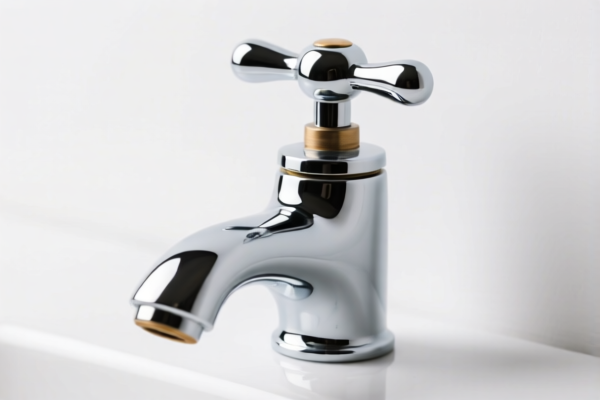
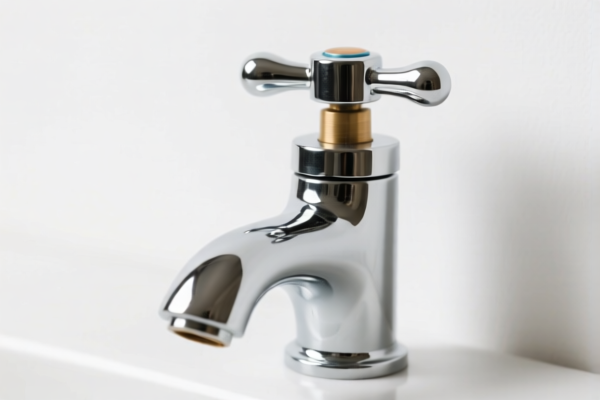
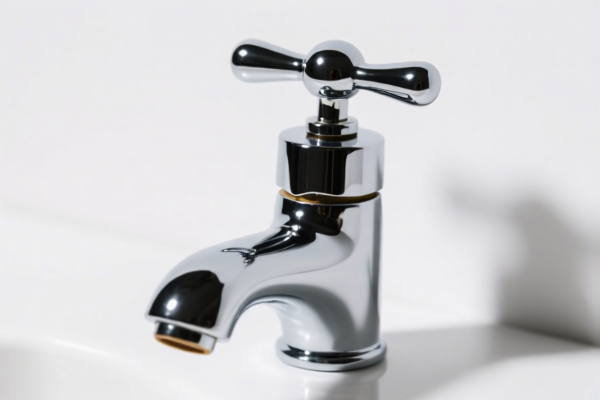
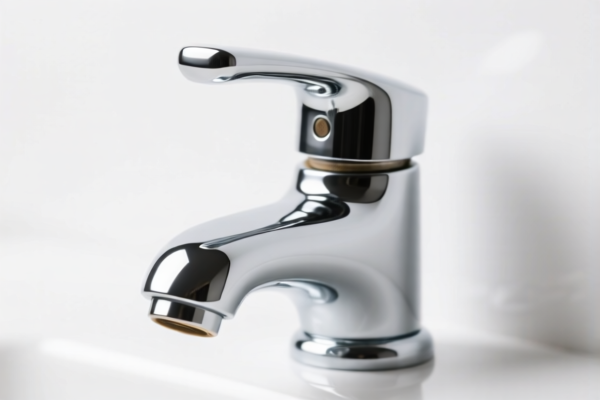
AI Analysis
🚰 Plastic Faucet (Water Taps for Plumbing)
🌐 HS Code Reference & Customs Clearance Guide | 2026 Latest Tariff Analysis | Professional Clearance Strategy
📌 I. Product Definition & Classification: Do You Really Know "Plastic Faucets"?
A Plastic Faucet is a valve used to control the flow of water in plumbing systems, kitchens, bathrooms, and industrial applications. Unlike traditional metal faucets, these are typically manufactured from high-grade engineering plastics (such as PVC, ABS, or PEX blends) to reduce cost, weight, and corrosion risk.
In international trade, classification hinges on two critical factors: 1. Function: Is it a standalone "Tap" (Chapter 84) or a "Sanitary Ware" component (Chapter 74)? 2. Material: While the input specifies "Plastic," customs often infer material based on common industry standards unless explicitly declared as 100% plastic.
⚠️ Key Distinction Point:
- If classified as a Tap/Valve (8481): It is viewed as a mechanical device for controlling fluid flow. Lower duty burden. - If classified as Sanitary Ware (7418): It is viewed as a finished article made of copper/brass. Higher duty burden due to specific "Sanitary Ware" rules and potential anti-dumping duties.
📦 II. HS Code Classification Details (2026 Latest Tariff Authority Reference)
| HS Code | Product Description | Applicable Scenario | Material Inference |
|---|---|---|---|
8481.80.10.30 |
Taps, cocks, valves and similar appliances for pipes, boiler shells, tanks, vats or the like; Basins and sinks | Kitchen faucets, bathroom basin faucets, laundry taps | ⚠️ Inferred Copper/Brass (Common assumption) |
7418.20.10.00 |
Copper tube fittings and parts thereof; Sanitary ware | Finished copper/brass bathroom or kitchen sinks/faucets | ✅ Copper/Brass |
7418.20.50.00 |
Copper tube fittings and parts thereof; Other sanitary ware | Other copper-based sanitary fixtures | ✅ Copper/Brass |
8481.80.50.60 |
Taps, cocks, valves... Other appliances | Pipe valves, industrial taps, non-standard plumbing fixtures | ⚠️ Inferred Metal (Functional match) |
🔍 Critical Reminder:
- Input Conflict: The user input is "Plastic Faucet", but the provided data (8481.80.10.30,7418...,8481.80.50.60) summaries explicitly mention "Inferred Copper" or "Copper Sanitary Ware".
- Why? Customs systems often default to the most common material (Brass/Copper) for faucets unless "Plastic" is specifically declared in the HS Code (e.g., under Chapter 39, which is not in the provided<DATA>).
- Strategy: The provided data forces a classification into Chapter 84 (Machinery/Valves) or Chapter 74 (Copper Sanitary Ware). We must use these codes, but be aware of the material discrepancy risk.
💰 III. 2026 Latest Tariff Rate Details (Including Additional Taxes & Policy Surcharges)
✅ Applicable Country: United States (US)
✅ Origin: China (CN)
✅ Effective Date: From November 10, 2025 (and onwards)
🎯 1. 8481.80.10.30 —— Taps for Basins and Sinks (Most Likely for Kitchen/Bath Faucets)
| Item | Content |
|---|---|
| Base Tariff | 4.0% (ad valorem) |
| Section 301 Surcharge | +25.0% (USITC Footnote) |
| IEEPA Surcharge | +10.0% (Targeting China/HK Products) |
| Total Tariff | 39.0% |
| Tax Calculation | CIF Value × 39% |
| De Minimis Eligibility | ❌ No (deny_de_minimis) |
| Legal Basis Path | IEEPA:9903.01.24 → USITC:8481.80.10.30 → FOOTNOTE:9903.88.01 |
📌 Explanation:
- This is the most favorable option among the provided codes for standard faucets. - Although the summary mentions "inferred copper," if you are importing Plastic Faucets, you must ensure they are classified under "Taps/Valves" (8481) rather than "Sanitary Ware" (7418) to avoid the higher copper-specific duties. - Warning: If customs determines the item is "Sanitary Ware" made of copper (despite your plastic claim), the rate jumps to 88%.
🎯 2. 7418.20.10.00 & 7418.20.50.00 —— Copper Sanitary Ware (High Risk for Plastic Items)
| Item | Content |
|---|---|
| Base Tariff | 3.0% |
| Section 301 Surcharge | +25.0% |
| IEEPA Surcharge | +10.0% |
| Steel/Aluminum/Copper Surcharge | +50.0% (Specific surcharge for Copper Products) |
| Total Tariff | 88.0% |
| Tax Calculation | CIF Value × 88% |
| De Minimis Eligibility | ❌ No |
| Legal Basis Path | IEEPA:9901.25 → IEEPA:9903.01.24 → USITC:7418.20.x0.00 → FOOTNOTE:50% Surcharge |
📌 Warning:
- This rate applies to Copper/Brass Sanitary Ware. - If you import Plastic Faucets but they are classified under Chapter 74 (Sanitary Ware) due to incorrect declaration or lack of material proof, you will be hit with the 50% Additional Surcharge for Copper Products, leading to a total of 88%. - Avoid this classification for plastic items!
🎯 3. 8481.80.50.60 —— Other Taps/Valves (Industrial/Non-Standard)
| Item | Content |
|---|---|
| Base Tariff | 3.0% |
| Section 301 Surcharge | +25.0% |
| IEEPA Surcharge | +10.0% |
| Total Tariff | 38.0% |
| Tax Calculation | CIF Value × 38% |
| De Minimis Eligibility | ❌ No |
| Legal Basis Path | IEEPA:9903.01.24 → USITC:8481.80.50.60 |
📌 Explanation:
- Slightly lower than8481.80.10.30(38% vs 39%). - Suitable if the faucet is an industrial valve or not strictly for "basins/sinks." - Still assumes metal components; plastic faucets must prove they are "valves/taps" not "sanitary ware."
🛠️ IV. Customs Clearance Practical Advice (Battle-Tested Pitfall Guide)
✅ 1. Preparation Checklist (Non-Negotiable)
| Material | Must Provide | Description |
|---|---|---|
| ✅ Product Specifications | ✔️ | Must explicitly state "Material: 100% Plastic (ABS/PVC/PE)" |
| ✅ Product Photos | ✔️ | Clear shots of the entire unit, emphasizing no metal parts |
| ✅ Bill of Lading/Invoice | ✔️ | Description must say "Plastic Faucet" NOT "Copper Faucet" or just "Faucet" |
| ✅ Material Test Report | ✔️ | SGS/Intertek report confirming plastic composition |
| ✅ Packaging List | ✔️ | Show no metal cores or fittings if possible |
✅ 2. Declaration Strategy (Key Mantra)
🔥 "Declare Plastic, Not Copper! Avoid Sanitary Ware Classification!"
| Scenario | Correct Declaration | Wrong Action |
|---|---|---|
| Plastic Faucet for Home Use | 8481.80.10.30 (Taps for Basins) |
Declare as "Sanitary Ware" → 88% Duty |
| Industrial Plastic Valve | 8481.80.50.60 |
Declare as "Copper Fitting" → 88% Duty |
| Faucet with Metal Core | Must Declare Metal | Hide metal parts → Fraud/Seizure |
💡 Pro Tip:
If your plastic faucet has any metal internal components (e.g., brass stem, steel spring), customs may reclassify it as "Partly of Metal" or default to the metal HS code. To stay in Chapter 84 with lower duties, emphasize that the primary material is plastic and it functions as a valve/tap.
✅ 3. Special Handling for "Plastic" Items
| Situation | Handling Advice |
|---|---|
| Plastic with Metal Inserts | Declare as "Partly of Metal". Use 8481 if the valve mechanism is key. Avoid 7418. |
| 100% Plastic | Clearly state "Plastic" in the commercial invoice. Request HS Code 8481.80.10.30 based on function (Tap), not material. |
| Customs Inquiry | If asked about material, provide the SGS Report immediately. Do not guess. |
🌍 V. Global Market Clearance Comparison (2026 Latest)
| Country/Region | Recommended HS Code | Tariff (China Origin) | Certification | Note |
|---|---|---|---|---|
| 🇺🇸 USA | 8481.80.10.30 |
39% (Best Case) | FCC (if electronic), NSF (if potable) | Avoid 7418 (88%) |
| 🇨🇳 China | 8481.80.10.30 |
5% | CCC (if applicable) | Low duty, no surcharge |
| 🇪🇺 EU | 8481.80.80 |
0-2% | CE, Drinking Water Standards | Plastic faucets often exempt |
| 🇦🇺 Australia | 8481.80.50 |
5% | AS/NZS Standards | No high surcharge |
| 🇯🇵 Japan | 8481.80.50 |
0-5% | JIS Standards | Strict water safety tests |
📌 Conclusion:
- USA is the only market with punitive 39-88% tariffs. - Plastic faucets are vulnerable to misclassification as "Copper Sanitary Ware" leading to 88% duty. - Correct Declaration is Key: Always use HS Code8481.80.10.30for plastic faucets, NOT7418.
📌 VI. Common Errors & Pitfalls (Blood & Tears Lessons)
❌ Error 1: Declaring "Plastic Faucet" but using HS Code 7418.20.10.00
👉 Consequence: 88% Duty + Penalty for misclassification.
💡 Fix: Use 8481.80.10.30 (Taps/Valves) for plastic items.
❌ Error 2: Not declaring material as "Plastic" in the Invoice
👉 Consequence: Customs assumes "Copper" (most common) → 88% Duty.
💡 Fix: Explicitly write "Material: Plastic" in every document.
❌ Error 3: Including metal parts (brass stem) without disclosing
👉 Consequence: Customs flags "Partly of Metal" → Re-classification risk.
💡 Fix: If >50% value is plastic, argue for 8481. If metal is dominant, accept higher duty.
❌ Error 4: Using "Faucet" without functional description
👉 Consequence: Ambiguity → Delayed clearance.
💡 Fix: Describe as "Plastic Tap/Valve for Plumbing Systems".
✅ Correct Declaration Example:
"Plastic Faucet, 100% Polymer (ABS), for Kitchen Basin Use, Model XYZ, No Metal Components, NSF Certified."
🎯 VII. Conclusion: Precise Classification Saves 49%
🎯 Remember the Mantra:
🔹 "Plastic is Key, Avoid Copper Code!"
🔹 "HS 8481 = 39%, HS 7418 = 88%! Choose Wisely!"
🔹 "Declare 'Plastic' Clearly, or Pay the Price!"
📌 Pro Tip:
If your plastic faucet has metal fittings, consider separating the metal parts and plastic parts in shipment (if allowed) to optimize duties. However, for a single unit, always choose 8481.80.10.30 and prove it is primarily a valve/tap made of plastic.
📣 Immediate Action:
📞 Contact your Customs Broker with the SGS Material Report.
📝 Ensure your Commercial Invoice says "PLASTIC" in bold.
🚀 Apply for an Advance Ruling if the shipment value is high.
✨ Professional Clearance Starts with Accurate Classification!
💼 Every 1% of Duty Saved is Pure Profit!
Customer Reviews
About HS Code Classification
The Harmonized System (HS) is an internationally standardized nomenclature developed by the World Customs Organization (WCO) to classify traded products. Over 200 countries use the HS system as the basis for customs tariffs, trade statistics, and import/export regulations.
Each HS code follows a hierarchical structure:
- Chapter (2 digits) — Broad category of goods (e.g., Chapter 84: Machinery and Mechanical Appliances)
- Heading (4 digits) — More specific grouping within the chapter
- Subheading (6 digits) — Internationally standardized breakdown, used by all WCO member countries
- National subdivisions (8-10 digits) — Country-specific extensions for further classification, such as US HTSUS 10-digit codes
Correct HS code classification is essential for smooth customs clearance, accurate duty payment, and compliance with trade regulations. Misclassification can lead to customs delays, overpayment of duties, or penalties.
When importing from CN to US, the applicable tariff rates may include:
- Most-Favored-Nation (MFN) rate — The standard duty rate applied to WTO members
- General rate — Applied to countries without trade agreements
- Trade remedy duties — Additional tariffs such as Section 301 (anti-dumping), Section 232 (national security), or countervailing duties
The information provided on this page is for reference purposes only. For official classification, please consult with your local customs authority or a licensed customs broker.