Plastic Film (Stretch)
CN → US| HS Code | Tariff Rate | Origin | Destination | Doc |
|---|---|---|---|---|
| 3920992000 | 39.2% | CN | US | Official Doc |
| 3920991000 | 41.0% | CN | US | Official Doc |
| 3920991000 | 41.0% | CN | US | Official Doc |
| 3920992000 | 39.2% | CN | US | Official Doc |
Product Images
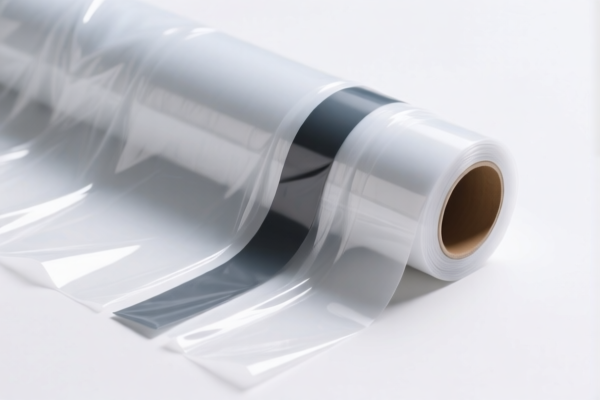
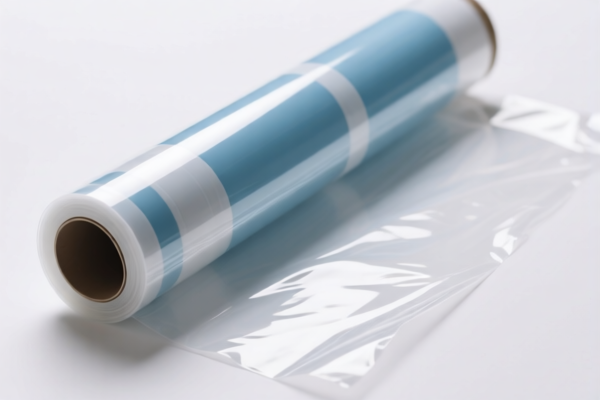
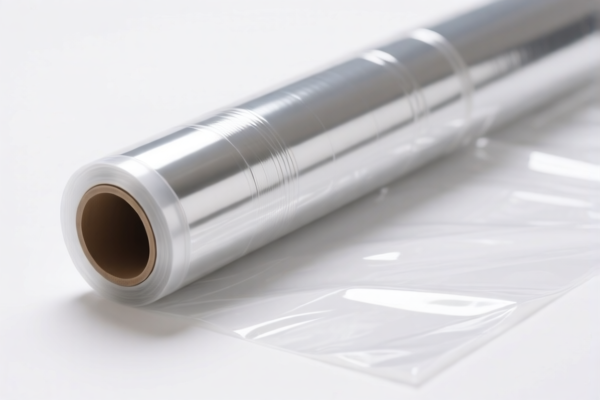
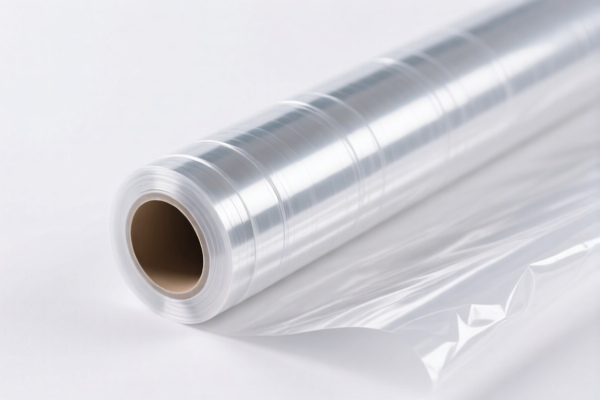
AI Analysis
🎞️ Plastic Film (Stretch)
🌐 HS Code Reference & Customs Clearance Guide | 2026 Latest Tariff Analysis | Professional Entry Strategies
📌 I. Product Definition & Classification: Do You Really Understand "Stretch Film"?
Stretch film, often referred to as stretch wrap or pallet wrap, is a highly elastic plastic film used to hold items together on pallets. In international trade, its classification depends strictly on its material type, physical structure (cellular/reinforced), and thickness.
Based on the provided data, the relevant commodities fall under Chapter 39 (Plastics and Articles Thereof), specifically heading 3920: Other plates, sheets, film, foil and strip, of plastics, noncellular and not reinforced, laminated, supported or similarly combined with other materials.
⚠️ Critical Distinction:
- If the film is flexible and has a thickness over 0.152 mm, it triggers specific subheadings.
- If the thickness is ≤ 0.152 mm, it may fall under different subheadings (not listed in the provided data).
- If it is reinforced, laminated, or cellular, it is excluded from these codes (Chapter 39 headings 39.21 or others).
📦 II. HS Code Classification Details (2026 Latest Tariff Authority Alignment)
| HS Code | Product Description | Applicable Scenario | Thickness Condition |
|---|---|---|---|
3920.99.10.00 |
Other plates, sheets, film, foil and strip, of plastics (flexible film/strip/sheets), over 0.152 mm in thickness | Heavy-duty pallet wrap, industrial stretch film, thick protective sheets | ✅ > 0.152 mm |
3920.99.20.00 |
Other plates, sheets, film, foil and strip, of plastics (flexible), Other (implicitly ≤ 0.152 mm or non-specified thin film) | Standard thin stretch wrap, lightweight packaging film, food-grade wrap | ✅ ≤ 0.152 mm (Typically) |
🔍 Key Reminder:
- The provided data only lists these two specific HS Codes for "flexible film/strip/sheets".
-3920.99.10.00is explicitly defined for films over 0.152 mm.
-3920.99.20.00serves as the "Other" category, likely capturing thinner films or those not meeting the specific thickness threshold of 10.00.
- Do not mix cellular (foam) plastics or reinforced laminates with these codes; they belong elsewhere.
💰 III. 2026 Latest Tariff Rate Breakdown (Detailed Tax Clauses)
✅ Applicable Countries: United States (US)
✅ Origin: China (CN)
✅ Effective Time: Current tariffs apply as per the provided data.
🎯 1. 3920.99.10.00 —— Plastic Film (Stretch), Over 0.152 mm Thickness
| Item | Content |
|---|---|
| Base Tariff Rate | 0.0% (Ad Valorem) |
| Surtax (Section 301/Additional) | 0.0% |
| Total Tax Rate | 0.0% |
| Tax Calculation | CIF Value × 0% = $0 |
| Can De Minimis Apply? | ✅ Yes (Typically for low-value shipments, subject to current CBP rules) |
| Legal Basis Path | HTSUS:3920.99.10.00 → No additional surtax footnote listed in data |
📌 Explanation:
- This code benefits from a 0% total tariff.
- No additional surtax (e.g., 25% Section 301) is listed in the provided data for this specific code.
- Cost Advantage: This is a highly favorable code for exporters if the film thickness exceeds 0.152 mm.
🎯 2. 3920.99.20.00 —— Plastic Film (Stretch), Other (Thin/Unspecified)
| Item | Content |
|---|---|
| Base Tariff Rate | 4.2% (Ad Valorem) |
| Surtax (Section 301/Additional) | 25.0% |
| Total Tax Rate | 29.2% |
| Tax Calculation | CIF Value × 29.2% |
| Can De Minimis Apply? | ❓ Depends (Check current CBP enforcement on Section 301 goods via de minimis) |
| Legal Basis Path | HTSUS:3920.99.20.00 → USITC Footnote: Section 301 Surtax 25% |
📌 Explanation:
- Base Duty: 4.2% is the standard Most Favored Nation (MFN) rate.
- Additional Surtax: A significant 25% is added, likely due to Section 301 trade actions against Chinese plastics.
- Total Burden: 29.2% makes this a high-cost entry point.
- Strategic Implication: Importers must carefully measure film thickness. If possible, ensuring the film is over 0.152 mm might shift it to3920.99.10.00(0% tax), but only if it truly exceeds that thickness. Caution: Misdeclaration of thickness is a serious violation.
🛠️ IV. Customs Clearance Practical Advice (Real-World Pitfall Avoidance)
✅ 1. Preparation Checklist (Non-Negotiable)
| Document | Required? | Purpose |
|---|---|---|
| ✅ Product Specification Sheet | ✔️ | Must explicitly state thickness (in mm), material (e.g., LLDPE), and stretchability. |
| ✅ Technical Data Sheet (TDS) | ✔️ | Proves the film is "noncellular" and "not reinforced." |
| ✅ Commercial Invoice | ✔️ | Must clearly describe the goods as "Plastic Stretch Film" and include HS Code. |
| ✅ Material Certificate | ✔️ | Confirms the plastic type (e.g., Polyethylene) to ensure Chapter 39 classification. |
| ✅ Packaging List | ✔️ | Details roll dimensions, weight, and quantity. |
✅ 2. Declaration Tips (Key Mantras)
🔥 "Thickness is King, Material is Queen, No Foam, No Reinforcement!"
| Scenario | Correct Declaration | Incorrect Practice |
|---|---|---|
| Film > 0.152 mm | 3920.99.10.00 |
Mislabeling as thin film → Risk of 29.2% Tax |
| Film ≤ 0.152 mm | 3920.99.20.00 |
Overstating thickness to avoid tax → Customs Penalty |
| Reinforced Film | Not 3920 | Declaring as 3920 → Wrong Classification (Check 39.21) |
| Cellular Foam Film | Not 3920 | Declaring as 3920 → Wrong Classification (Check 39.21) |
📌 Critical Warning:
- Thickness Verification: Customs may physically measure the film. Ensure your product spec matches the declared HS Code.
- Material Purity: Ensure the film is not laminated with paper, aluminum, or other materials, which would change the classification.
✅ 3. Special Case Handling
| Situation | Handling Advice |
|---|---|
| Multilayer Co-extruded Film | If layers are not separable and one is plastic, it may still fall under 3920 if "noncellular/not reinforced." Provide layer structure proof. |
| Adhesive Stretch Film | If it has an adhesive backing, it may be classified under 3919 (Self-adhesive tapes). Check if it’s just "stretchable" or has "pressure-sensitive adhesive." |
| Biodegradable Plastic Film | If made from PLA or similar, it still falls under Chapter 39. Ensure the description reflects the polymer type. |
| Reinforced Stretch Film | If it contains fiberglass or mesh for strength, it is reinforced and likely falls under 39.21. Do not use 3920 codes. |
🌍 V. Global Market Clearance Comparison (2026 Latest)
| Country/Region | Recommended HS Code | Tariff (China Origin) | Certification | Notes |
|---|---|---|---|---|
| 🇺🇸 USA | 3920.99.10.00 (Thick) |
0.0% | No specific | Best for thick industrial wrap |
| 🇺🇸 USA | 3920.99.20.00 (Thin) |
29.2% | No specific | High tariff burden |
| 🇨🇳 China | 3920.99.10.00 / 3920.99.20.00 |
Varies (Export) | N/A | Export duty may apply |
| 🇪🇺 EU | 3920.10 (PE) |
~0-6% | REACH | Different HS structure |
| 🇦🇺 Australia | 3920.10 |
~5% | No specific | Check local thresholds |
📌 Conclusion:
- US Tariffs are highly sensitive to thickness for this product.
- 0% vs. 29.2% is a massive difference. Accurate measurement is not just compliance; it’s a cost-saving strategy.
- No De Minimis Exemption for Surtax?: While3920.99.10.00is 0%,3920.99.20.00carries a 25% surtax. CBP enforcement on de minimis (Section 321) for Section 301 goods has tightened. Consult a customs broker for low-value shipments.
📌 VI. Common Mistakes & Pitfall Guide (Blood & Tears Lessons)
❌ Mistake 1: Declaring all stretch film as 3920.99.10.00 (0%) without checking thickness.
👉 Consequence: Customs measures the film, finds it ≤ 0.152 mm, reclassifies to 3920.99.20.00, and demands 29.2% tax + penalties.
❌ Mistake 2: Ignoring the "Reinforced/Laminated" clause.
👉 Consequence: If your film has a mesh insert, it is not 3920. It should be 3921. Wrong declaration leads to delays and audits.
❌ Mistake 3: Using "Plastic Bag" or "Wrap" as the description.
👉 Consequence: Vague descriptions trigger customs reviews. Use precise terms: "Linear Low-Density Polyethylene (LLDPE) Stretch Film, Non-Cellular, Thickness 0.20mm".
✅ Correct Approach:
"Stretch Film, LLDPE, Noncellular, Not Reinforced, Thickness 0.18mm, Roll Width 50cm"
→ This precise description allows customs to correctly apply3920.99.10.00(if >0.152mm) or3920.99.20.00(if ≤0.152mm).
🎯 VII. Conclusion: Precision in Thickness, Profit in Clearance
🎯 Remember the Mantra:
🔹 "Thick Film = 0% Tax (3920.99.10.00)"
🔹 "Thin Film = 29.2% Tax (3920.99.20.00)"
🔹 "Measure Before You Ship!"
📌 Pro Tip:
- If your film thickness is borderline (e.g., 0.150 mm vs. 0.155 mm), certify the thickness with your manufacturer.
- If you can adjust the manufacturing process to ensure a minimum thickness of 0.153 mm, you may save 29.2% on duties.
- Always consult a licensed customs broker for pre-classification rulings if the thickness is critical.
📣 Immediate Action:
📞 Contact your supplier to get the exact average thickness of your stretch film.
📄 Verify if it is >0.152 mm or ≤0.152 mm.
🚀 Select the correct HS Code to optimize your landed cost.
✨ Professional clearance starts with accurate classification!
💼 Every percentage point counts in plastic film trade!
Customer Reviews
About HS Code Classification
The Harmonized System (HS) is an internationally standardized nomenclature developed by the World Customs Organization (WCO) to classify traded products. Over 200 countries use the HS system as the basis for customs tariffs, trade statistics, and import/export regulations.
Each HS code follows a hierarchical structure:
- Chapter (2 digits) — Broad category of goods (e.g., Chapter 84: Machinery and Mechanical Appliances)
- Heading (4 digits) — More specific grouping within the chapter
- Subheading (6 digits) — Internationally standardized breakdown, used by all WCO member countries
- National subdivisions (8-10 digits) — Country-specific extensions for further classification, such as US HTSUS 10-digit codes
Correct HS code classification is essential for smooth customs clearance, accurate duty payment, and compliance with trade regulations. Misclassification can lead to customs delays, overpayment of duties, or penalties.
When importing from CN to US, the applicable tariff rates may include:
- Most-Favored-Nation (MFN) rate — The standard duty rate applied to WTO members
- General rate — Applied to countries without trade agreements
- Trade remedy duties — Additional tariffs such as Section 301 (anti-dumping), Section 232 (national security), or countervailing duties
The information provided on this page is for reference purposes only. For official classification, please consult with your local customs authority or a licensed customs broker.