Plastic Film Briefcase
CN → US| HS Code | Tariff Rate | Origin | Destination | Doc |
|---|---|---|---|---|
| 3926909989 | 22.8% | CN | US | Official Doc |
| 4202122910 | 55.0% | CN | US | Official Doc |
| 4202122120 | 55.0% | CN | US | Official Doc |
| 4202924500 | 55.0% | CN | US | Official Doc |
| 3926903300 | 16.5% | CN | US | Official Doc |
Product Images
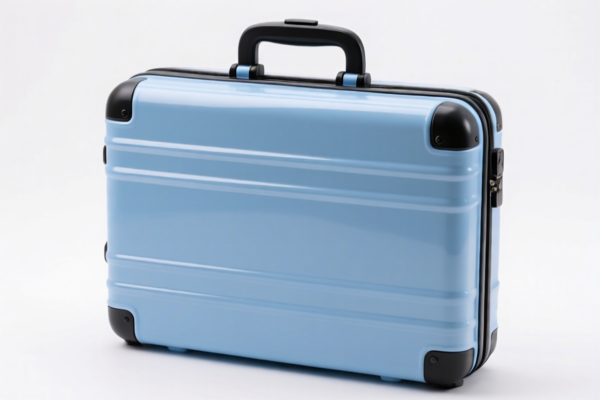
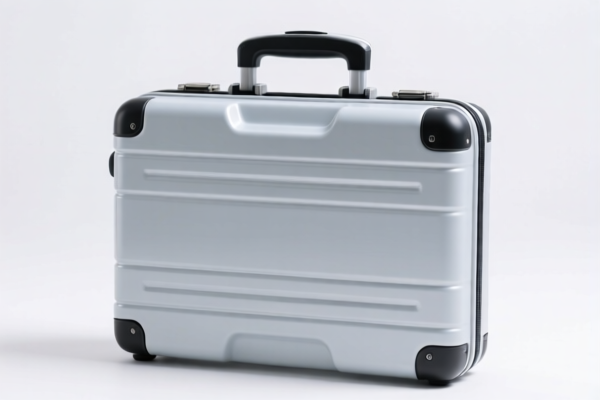
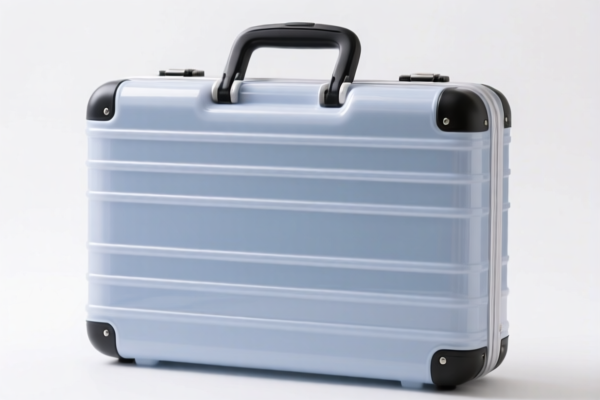
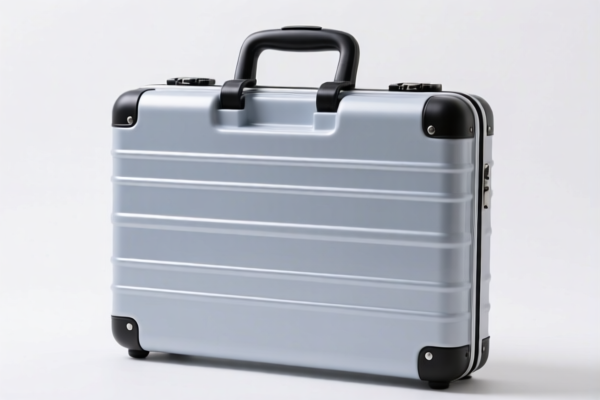
AI Analysis
👜 Plastic Film Briefcase: HS Code Classification & US Customs Clearance Guide 2026
🌐 HS Code Reference & Clearance Strategy | 2026 Latest Tariff Analysis | Professional Customs Advice
📌 I. Product Definition & Classification: What is a "Plastic Film Briefcase"?
A "Plastic Film Briefcase" typically refers to a rigid or semi-rigid document holder or short-lived carrying case made primarily of plastic materials (often PVC, PET, or similar synthetic films/sheets). In international trade, the classification hinges on two critical factors: 1. Material Composition: Is it purely plastic (Chapter 39) or does it have the structural characteristics of a leather/plastic article of travel (Chapter 42)? 2. Function & Structure: Is it a "bag" designed for carrying items like a briefcase/satchel (Chapter 42), or is it a generic "article of plastic" not specified elsewhere (Chapter 39)?
⚠️ Key Distinction Point:
- If the item is a rigid, structured case specifically shaped as a briefcase with handles/straps and intended for carrying documents, it often falls under Chapter 42 (Articles of Leather; similar materials).
- If it is considered a general-purpose plastic container without the specific "bag" construction of Chapter 42, it may fall under Chapter 39 (Plastics and articles thereof).
- US Customs Interpretation: Rigid plastic briefcases are often scrutinized under Chapter 42 (Heading 4202) because they mimic the form of leather briefcases. However, if the plastic is the main material and it doesn't meet the specific "bag" definition of 4202 (e.g., no fabric lining, simple molded shape), it may be classified under 3926.
📦 II. HS Code Classification Details (Based on Provided Data)
| HS Code | Product Description (Summary from Data) | Total Tax Rate | Tax Breakdown |
|---|---|---|---|
| 3926.90.99.89 | Rigid plastic briefcase, plastic material, category: "Other plastic articles" | 22.8% | Base: 5.3% Additional: 7.5% Section 301 (122): 10% |
| 4202.12.29.10 | Rigid plastic briefcase, plastic material, rigid form, use: briefcase | 55.0% | Base: 20.0% Additional: 25.0% Section 301 (122): 10% |
| 4202.12.21.20 | Rigid plastic briefcase, fits "rigid and formed structure" requirement | 55.0% | Base: 20.0% Additional: 25.0% Section 301 (122): 10% |
| 4202.92.45.00 | Plastic messenger bag, plastic material, bag form, travel/sport use | 55.0% | Base: 20.0% Additional: 25.0% Section 301 (122): 10% |
| 3926.90.33.00 | Plastic messenger bag, plastic material, bag form, handbag/other articles | 16.5% | Base: 6.5% Additional: 0.0% Section 301 (122): 10% |
🔍 Critical Observation:
- Chapter 42 Codes (4202...) carry a total tax of 55% (20% Base + 25% Section 301 + 10% IEEPA/122). This is significantly higher.
- Chapter 39 Codes (3926...) offer lower rates: 22.8% (3926.90.99.89) and 16.5% (3926.90.33.00).
- The difference hinges on whether Customs views the item as a "Bag" (Ch. 42) or a "General Plastic Article" (Ch. 39).
💰 III. 2026 US Tariff Rate Detailed Explanation (For Chinese Origin)
✅ Applicable Country: United States (US)
✅ Country of Origin: China (CN)
✅ Effective Date: Post-November 2025 (Current 2026 Rules)
🎯 1. Lower Tax Bracket: Chapter 39 (Plastics & Articles Thereof)
A. HS Code 3926.90.99.89 – Other Plastic Articles
| Item | Detail |
|---|---|
| Base Duty | 5.3% |
| Section 301 Additional | 7.5% |
| IEEPA/122 Clause | 10% |
| Total Rate | 22.8% |
| Calculation | CIF Value × 22.8% |
| De Minimis Exemption | ❌ Not Eligible (Denied for Section 301 goods) |
📌 Interpretation:
- This code is used when the briefcase is viewed as a generic plastic item rather than a specialized "bag."
- The 7.5% Section 301 rate is lower than the 25% rate for Chapter 42 goods.
- Eligibility: Apply if the briefcase is simple, molded, and lacks complex bag features (like fabric linings or leather-like trim).
B. HS Code 3926.90.33.00 – Plastic Messenger Bag/Handbag
| Item | Detail |
|---|---|
| Base Duty | 6.5% |
| Section 301 Additional | 0.0% |
| IEEPA/122 Clause | 10% |
| Total Rate | 16.5% |
| Calculation | CIF Value × 16.5% |
| De Minimis Exemption | ❌ Not Eligible |
📌 Interpretation:
- This code applies specifically to plastic "bags" (like messenger bags) classified under plastic articles.
- Key Advantage: 0% Section 301 Additional Duty! This is the lowest possible tariff for this product type.
- Eligibility: Only if Customs agrees the item fits the "plastic bag" subheading under 3926.90.33. This is the optimal target for cost-saving.
🎯 2. Higher Tax Bracket: Chapter 42 (Articles of Leather/Similar Materials)
A. HS Codes 4202.12.29.10, 4202.12.21.20, 4202.92.45.00 – Bags of Plastic/Textile Materials
| Item | Detail |
|---|---|
| Base Duty | 20.0% |
| Section 301 Additional | 25.0% |
| IEEPA/122 Clause | 10% |
| Total Rate | 55.0% |
| Calculation | CIF Value × 55.0% |
| De Minimis Exemption | ❌ Not Eligible |
📌 Interpretation:
- Why so high? Chapter 42 articles of plastic/textile are subject to the maximum Section 301 tariff (25%).
- Risk: If Customs classifies your "Plastic Film Briefcase" as a "Bag" (Heading 4202), you pay 55%.
- When does this happen? If the briefcase has a structured body, straps, pockets, and resembles a traditional leather briefcase but made of plastic, Customs may insist on Chapter 42.
🛠️ IV. Customs Clearance Practical Advice (Risk Mitigation & Cost Saving)
✅ 1. Preparation Checklist (Must-Have Documents)
| Document | Required | Purpose |
|---|---|---|
| ✅ Product Photos | ✔️ | Front, back, inside, handles, and material close-up. Must show it’s plastic, not leather/fabric. |
| ✅ Material Specification | ✔️ | Confirm 100% plastic (e.g., PVC, PET). No leather, fabric lining, or textile straps. |
| ✅ Structure Diagram | ✔️ | Is it molded (rigid) or sewn (flexible)? Molded supports Chapter 39; sewn supports Chapter 42. |
| ✅ Commercial Invoice | ✔️ | Describe as "Plastic Document Case" or "Molded Plastic Briefcase" to avoid "Bag" connotations. |
| ✅ Origin Certificate | ✔️ | To prove Chinese origin for tariff calculation. |
✅ 2. Declaration Strategy (Crucial for Low Tariff)
🔥 “Avoid ‘Bag’ Keywords, Emphasize ‘Case’ or ‘Container’!”
| Scenario | Recommended HS Code | Description for Customs | Expected Tax |
|---|---|---|---|
| Molded Rigid Case | 3926.90.99.89 |
"Rigid Plastic Document Case, Molded PVC, No Handles/Straps" | 22.8% |
| Simple Plastic Holder | 3926.90.33.00 |
"Plastic Messenger Holder, Single Material, No Lining" | 16.5% |
| Structured Briefcase with Straps | 4202.12.29.10 |
"Plastic Briefcase Bag, Structured, With Handle" | 55.0% |
📌 Pro Tip:
- If the briefcase has no handles, no straps, and is a single molded piece, argue for 3926.90.33.00 (16.5%).
- If it has handles/straps, Customs may force 4202 (55%). To avoid this, consider removing straps or declaring it as a "Case" rather than a "Bag."
- Never use the word "Bag" in the product name if you can avoid it. Use "Case," "Holder," or "Container."
✅ 3. Special Cases & Pitfalls
| Situation | Advice |
|---|---|
| Plastic + Fabric Lining | ❌ Danger! This triggers Chapter 42 (55%). Use pure plastic interiors. |
| Plastic + Leather Trim | ❌ Danger! If leather exceeds 10% of surface area, it may be Chapter 42. Avoid. |
| OEM Custom Design | Provide design drawings to prove it’s a "Molded Plastic Article," not a "Sewn Bag." |
| Clearance Delay | If Customs questions the code, provide a Material Safety Data Sheet (MSDS) and Composition Certificate proving 100% plastic. |
🌍 V. Global Market Comparison (2026)
| Country/Region | Recommended HS Code | Approx. Tax (China Origin) | Notes |
|---|---|---|---|
| 🇺🇸 USA | 3926.90.33.00 (Target) |
16.5% | Aggressive classification needed. Avoid 4202 (55%). |
| 🇨🇳 China | 3926.90.99.00 |
~5% + VAT | Domestic trade low tariff. |
| 🇪🇺 EU | 3926.90.97 |
~4% | No Section 301 equivalent. |
| 🇬🇧 UK | 3926.90.90 |
~4% | Post-Brexit rules apply. |
📌 Conclusion:
- The USA is the only major market with punitive Section 301 tariffs.
- Goal: Classify under 3926.90.33.00 (16.5%) if possible. If not, 3926.90.99.89 (22.8%).
- Avoid: 4202.12.29.10 (55%) at all costs.
📌 VI. Common Errors & Pitfalls (Blood & Tears Lessons)
❌ Error 1: Describing the product as "Plastic Bag" in the invoice.
👉 Result: Customs assigns 4202.12.29.10 → 55% Tax!
❌ Error 2: Including fabric handles or leather lining.
👉 Result: Fails Chapter 39 "Plastic Article" test → Reclassified to Chapter 42 → 55% Tax!
❌ Error 3: Using "Briefcase" without specifying "Plastic Case."
👉 Result: Ambiguity leads to highest possible duty.
❌ Error 4: Assuming "De Minimis" ($800) exemption applies.
👉 Result: False! Section 301 goods from China are excluded from de minimis. You must declare and pay duties.
✅ Correct Approach:
"Molded Rigid Plastic Document Holder, 100% PVC, No Fabric/Lining, Single Piece Construction."
→ Target HS Code: 3926.90.33.00 (16.5%) or 3926.90.99.89 (22.8%).
🎯 VII. Conclusion: Strategic Classification for Profit Maximization
🎯 Key Takeaway:
🔹 "Plastic Film Briefcase" is a high-risk product for US Customs.
🔹 Tax Spread: 16.5% vs. 55% – a difference of 38.5%!
🔹 Action: Design the product to be a molded plastic case without straps/fabric to qualify for Chapter 39.
📌 Final Recommendation:
1. Contact your customs broker before shipment.
2. Apply for a Binding Tariff Information (BTI) or Advance Ruling from US Customs and Border Protection (CBP) to lock in the 16.5% or 22.8% rate.
3. Avoid any textile or leather components in the briefcase.
✨ Professional clearance starts with precise classification!
💼 Save 38.5% on duties by choosing the right HS Code!
📣 Immediate Action Required:
📞 Verify product structure with your factory.
📄 Prepare pure plastic material certificates.
🚀 Ensure your commercial invoice says "Plastic Case", NOT "Plastic Bag."
Customer Reviews
About HS Code Classification
The Harmonized System (HS) is an internationally standardized nomenclature developed by the World Customs Organization (WCO) to classify traded products. Over 200 countries use the HS system as the basis for customs tariffs, trade statistics, and import/export regulations.
Each HS code follows a hierarchical structure:
- Chapter (2 digits) — Broad category of goods (e.g., Chapter 84: Machinery and Mechanical Appliances)
- Heading (4 digits) — More specific grouping within the chapter
- Subheading (6 digits) — Internationally standardized breakdown, used by all WCO member countries
- National subdivisions (8-10 digits) — Country-specific extensions for further classification, such as US HTSUS 10-digit codes
Correct HS code classification is essential for smooth customs clearance, accurate duty payment, and compliance with trade regulations. Misclassification can lead to customs delays, overpayment of duties, or penalties.
When importing from CN to US, the applicable tariff rates may include:
- Most-Favored-Nation (MFN) rate — The standard duty rate applied to WTO members
- General rate — Applied to countries without trade agreements
- Trade remedy duties — Additional tariffs such as Section 301 (anti-dumping), Section 232 (national security), or countervailing duties
The information provided on this page is for reference purposes only. For official classification, please consult with your local customs authority or a licensed customs broker.