Plastic Film Courier Bag
CN → US| HS Code | Tariff Rate | Origin | Destination | Doc |
|---|---|---|---|---|
| 3923210030 | 38.0% | CN | US | Official Doc |
| 4202929700 | 52.6% | CN | US | Official Doc |
| 4202221500 | 51.0% | CN | US | Official Doc |
| 3926903300 | 16.5% | CN | US | Official Doc |
| 4202923900 | 52.6% | CN | US | Official Doc |
Product Images
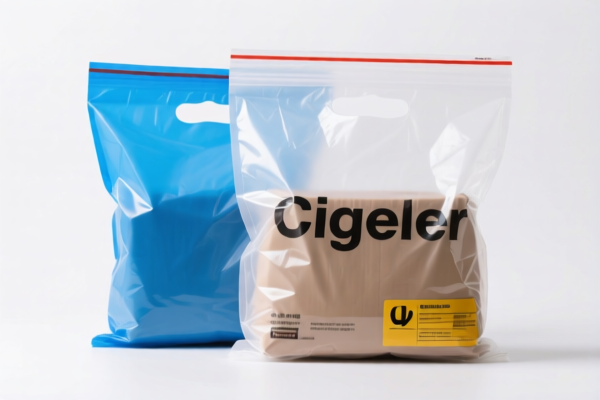
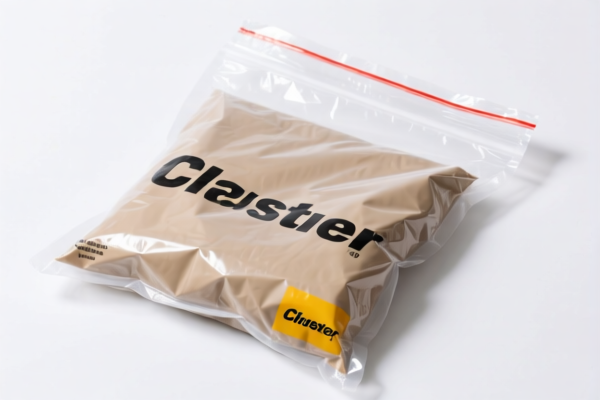
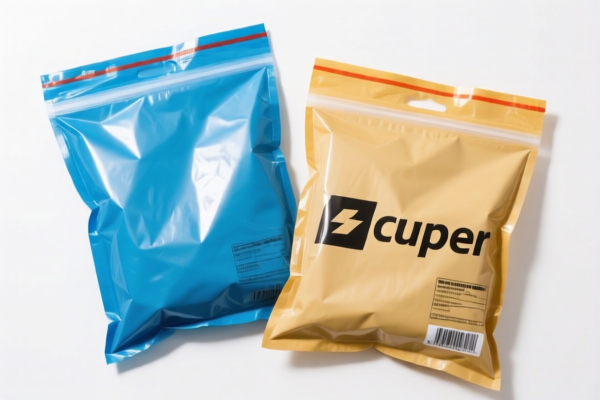
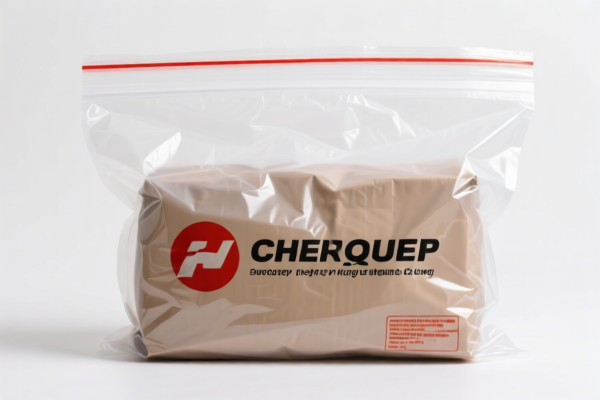
AI Analysis
📦 Plastic Film Courier Bag (物流塑料快递袋)
🌐 HS Code Reference & Customs Clearance Guide | 2024/2025 Latest Tariff Analysis | Professional Entry Strategy
📌 I. Product Definition & Classification: Do You Really Know "Plastic Film Courier Bag"?
A Plastic Film Courier Bag is a flexible packaging item made primarily of plastic polymers, designed specifically for shipping documents, small parcels, or retail goods. In international trade, its classification depends strictly on Material Composition and End-Use Purpose.
Key Classification Dilemmas:
1. Chapter 39 (Plastics and Articles Thereof): If the bag is purely for containment/packaging (not designed for repeated personal use like a handbag).
2. Chapter 42 (Articles of Leather; Travel Goods, Handbags): If the bag is marketed as a reusable container (e.g., shopping bag, messenger bag, tote) even if made of plastic.
⚠️ Critical Distinction Point:
- If it is a single-use or disposable shipping bag → Generally falls under Chapter 39.
- If it is a reusable shopping bag, tote, or fashion handbag → Falls under Chapter 42.
- Misclassification leads to massive tariff differences (38% vs 52%+).
📦 II. HS Code Classification Details (Based on Provided Data)
Below are the 5 potential HS Codes identified in your data, ranked by likelihood and tax impact.
| HS Code | Product Description (Summary) | Application Scenario | Total Tax Rate (China-Origin to US) |
|---|---|---|---|
| 3923.21.00.30 | Plastic Sacks & Bags (Fallback/General) | Standard shipping bags, bubble mailers, disposable logistics packaging. | 38.0% |
| 4202.92.97.00 | Other Travel/Specialty Goods (Shopping Bags) | Reusable shopping bags, bottle bags, similar containers made of plastic/ textiles. | 52.6% |
| 4202.22.15.00 | Handbags with Outer Surface of Plastic Sheet | Fashionable handbags, totes, or structured bags made of plastic material. | 51.0% |
| 4202.92.39.00 | Other Travel Goods (e.g., Messenger Bags) | Reusable messenger bags, briefcases, or specific "bag" formats made of plastic. | 52.6% |
| 3926.90.33.00 | Other Plastic Articles (Non-packaging) | Plastic bags/bags categorized as "other" plastic articles, potentially avoiding Chapter 42 "Bag" duties if usage is ambiguous. | 16.5% |
🔍 Key Insight:
- The highest risk is misclassifying a simple shipping bag as a "Handbag" (4202), resulting in ~52% tax.
- The lowest tax option is3926.90.33.00at 16.5%, but this requires proving the item is an "Other Plastic Article" rather than a "Bag" for storage/transport, which is legally risky.
- The standard/safe classification for generic courier bags is3923.21.00.30at 38.0%.
💰 III. 2024/2025 Latest Tariff Rate Breakdown (Detailed Tax Analysis)
✅ Applicable Country: United States (US)
✅ Origin: China (CN)
✅ Effective Time: Current Trade War Rates (Section 301 + IEEPA)
🎯 1. 3923.21.00.30 – Plastic Sacks and Bags (Most Common for Courier Bags)
| Item | Detail |
|---|---|
| Base Tariff | 3.0% (Standard Most Favored Nation rate) |
| Section 301 Tariff | 25.0% (Trade war add-on) |
| IEEPA Tariff (Section 122/301 variant) | 10.0% (Specific enforcement provision) |
| Total Effective Rate | 38.0% |
| De Minimis (Section 321) Eligibility | ❌ Generally NOT Eligible for Section 301 goods under current enforcement, though some small packages may slip through; high risk of seizure. |
| Legal Basis | HTSUS: 3923.21.00 → Section 301 List 4 → IEEPA Proclamation 10913 |
📌 Explanation:
- This is the standard classification for disposable plastic mailers.
- The 38% total duty is a hard cost to factor into your landed cost.
- Do not attempt to under-declare value; CBP uses AI to detect shipping bag discrepancies.
🎯 2. 4202.92.97.00 & 4202.92.39.00 – Reusable/Shopping Bags (High Risk)
| Item | Detail |
|---|---|
| Base Tariff | 17.6% (Higher base for "Other" travel goods) |
| Section 301 Tariff | 25.0% |
| IEEPA Tariff | 10.0% |
| Total Effective Rate | 52.6% |
| De Minimis Eligibility | ❌ Not Eligible |
| Legal Basis | HTSUS: 4202.92 → Section 301 List 4 |
📌 Warning:
- If your product is described as a "Reusable Shopping Bag" or "Tote," Customs will likely apply these higher rates.
- Avoid unless you have a specific business case for reusable retail packaging.
🎯 3. 3926.90.33.00 – Other Plastic Articles (Lowest Tax, Highest Risk)
| Item | Detail |
|---|---|
| Base Tariff | 6.5% |
| Section 301 Tariff | 0.0% (Note: Some 3926 items may be exempt from specific 301 lists, but verify carefully) |
| IEEPA Tariff | 10.0% |
| Total Effective Rate | 16.5% |
| De Minimis Eligibility | ❌ High Risk of Audit |
| Legal Basis | HTSUS: 3926.90 → Customs Ruling Interpretation |
📌 Risk Alert:
- While the tax is only 16.5%, classifying a "Bag" as "Other Plastic Article" is a red flag for Customs.
- Only use this if the item is not primarily a "bag" in function (e.g., a plastic sheet folded but not sold as a bag). For standard courier bags, this is likely an incorrect classification.
🎯 4. 4202.22.15.00 – Handbags with Plastic Surface
| Item | Detail |
|---|---|
| Base Tariff | 16.0% |
| Section 301 Tariff | 25.0% |
| IEEPA Tariff | 10.0% |
| Total Effective Rate | 51.0% |
| Legal Basis | HTSUS: 4202.22 |
📌 Note:
- Applies if the bag is styled as a fashion handbag (handles, structured shape).
- Not suitable for flat, disposable courier bags.
🛠️ IV. Customs Clearance Practical Advice (Avoid Pitfalls)
✅ 1. Required Documentation Checklist
| Document | Must Provide | Explanation |
|---|---|---|
| ✅ Product Description | ✔️ | Must clearly state "Plastic Courier Bag" or "Poly Mailer," NOT "Handbag" or "Tote." |
| ✅ Material Composition | ✔️ | Specify "100% Polyethylene" or "Polypropylene." |
| ✅ Intended Use | ✔️ | State "For shipping/delivery of documents and small parcels." |
| ✅ Photos | ✔️ | Show the bag with shipping label, not styled like a fashion accessory. |
| ✅ Commercial Invoice | ✔️ | Ensure HS Code matches the description exactly. |
✅ 2. Declaration Tips (Key Mantras)
🔥 "Describe as Packaging, Not Fashion; Declare Material, Not Purpose."
| Scenario | Correct Declaration | Wrong Declaration | Consequence |
|---|---|---|---|
| Disposable Shipping Bag | Plastic Poly Mailer for Courier Use |
Reusable Shopping Bag |
Tax jumps from 38% to 52.6% |
| Bubble Mailer | Plastic Sack with Bubble Lining |
Packaging Material (too vague) |
Customs may classify under higher duty "Other" |
| Reusable Retail Bag | Non-Woven Plastic Shopping Bag |
Courier Bag |
Misdeclaration leads to seizure |
✅ 3. Special Cases
| Situation | Handling Advice |
|---|---|
| Mixed Container | If shipping bags are packed inside boxes, ensure the primary function of the inner item is declared. |
| Branded Bags | If the bag has a brand logo and is marketed as "reusable," Customs may classify it under Chapter 42 (51-52%). |
| Section 321 (De Minimis) | Do not rely on the $800 de minimis exemption for Section 301 goods. CBP is actively auditing these for plastic articles from China. |
🌍 V. Global Market Comparison (2024/2025)
| Country/Region | Recommended HS Code | Tariff Rate (China Origin) | Notes |
|---|---|---|---|
| 🇺🇸 USA | 3923.21.00.30 |
38.0% | High tariffs due to Section 301. |
| 🇨🇳 China (Export) | 3923.21.00.30 |
Varies (Usually low/0) | Export duty is minimal. |
| 🇪🇺 EU | 3923.21.00 |
6.5% | No Section 301 equivalent; lower base duty. |
| 🇬🇧 UK | 3923.21.00 |
6.5% | Similar to EU post-Brexit. |
| 🇨🇦 Canada | 3923.21.00 |
5% + DRT | DRT (Delivery Return Tax) may apply. |
📌 Conclusion:
- The US market is the most expensive for plastic packaging due to the 25% Section 301 tariff.
- EU/UK are significantly cheaper (~6.5% base).
- Strategy: If targeting the US, factor in 38% duty into your pricing. If targeting EU, you save ~25% on duties alone.
📌 VI. Common Errors & Pitfalls (Lessons Learned)
❌ Error 1: Calling a "Courier Bag" a "Handbag" or "Tote"
👉 Consequence: Tax increases from 38% to 52.6%.
👉 Why: Chapter 42 (Handbags) has higher base duties and is considered a "consumer good" rather than "packaging material."
❌ Error 2: Using 3926.90.33.00 (16.5%) for a standard plastic bag
👉 Consequence: Customs Audit & Seizure.
👉 Why: 3926 is for "Other" plastic articles. A bag specifically designed for carrying items belongs in 3923 (Sacks/Bags) or 4202 (Travel Goods). Misclassification is fraud.
❌ Error 3: Ignoring the "122 Clause" or IEEPA 10%
👉 Consequence: Underpayment of duties.
👉 Why: Even if Section 301 is 25%, an additional 10% may apply under specific enforcement proclamations, bringing the total to 38%.
✅ Correct Approach:
"Plastic Courier Bag, 100% Polyethylene, for Shipping Documents, HS Code 3923.21.00.30"
🎯 VII. Conclusion: Professional Declaration Saves Money!
🎯 Remember the Rules:
🔹 "Courier Bag = Packaging (3923) = 38% Tax"
🔹 "Shopping/Hand Bag = Consumer Good (4202) = 51-52% Tax"
🔹 "Don't Guess, Verify: 3923 vs 4202 is a 14-15% Price Difference!"
📌 Pro Tip:
If you are importing large volumes, consider Apply for an Advance Ruling from CBP to confirm the classification of 3923.21.00.30 for your specific bag design. This prevents sudden retroactive tax bills.
📣 Action Item:
📞 Consult your freight forwarder with the exact HS Code 3923.21.00.30 and Material Spec.
🚀 Price your US goods with 38% landed cost included to maintain profit margins.
✨ Precise Classification, Predictable Costs, Smooth Customs!
💼 Don't Let a 14% Tax Difference Destroy Your Margins!
Customer Reviews
About HS Code Classification
The Harmonized System (HS) is an internationally standardized nomenclature developed by the World Customs Organization (WCO) to classify traded products. Over 200 countries use the HS system as the basis for customs tariffs, trade statistics, and import/export regulations.
Each HS code follows a hierarchical structure:
- Chapter (2 digits) — Broad category of goods (e.g., Chapter 84: Machinery and Mechanical Appliances)
- Heading (4 digits) — More specific grouping within the chapter
- Subheading (6 digits) — Internationally standardized breakdown, used by all WCO member countries
- National subdivisions (8-10 digits) — Country-specific extensions for further classification, such as US HTSUS 10-digit codes
Correct HS code classification is essential for smooth customs clearance, accurate duty payment, and compliance with trade regulations. Misclassification can lead to customs delays, overpayment of duties, or penalties.
When importing from CN to US, the applicable tariff rates may include:
- Most-Favored-Nation (MFN) rate — The standard duty rate applied to WTO members
- General rate — Applied to countries without trade agreements
- Trade remedy duties — Additional tariffs such as Section 301 (anti-dumping), Section 232 (national security), or countervailing duties
The information provided on this page is for reference purposes only. For official classification, please consult with your local customs authority or a licensed customs broker.