Plastic Film Cutting Machine
CN → US| HS Code | Tariff Rate | Origin | Destination | Doc |
|---|---|---|---|---|
| 8441900000 | 35.0% | CN | US | Official Doc |
| 8479899595 | 37.5% | CN | US | Official Doc |
| 8462390020 | 39.4% | CN | US | Official Doc |
| 8479899595 | 37.5% | CN | US | Official Doc |
| 8208906000 | 35.0% | CN | US | Official Doc |
Product Images
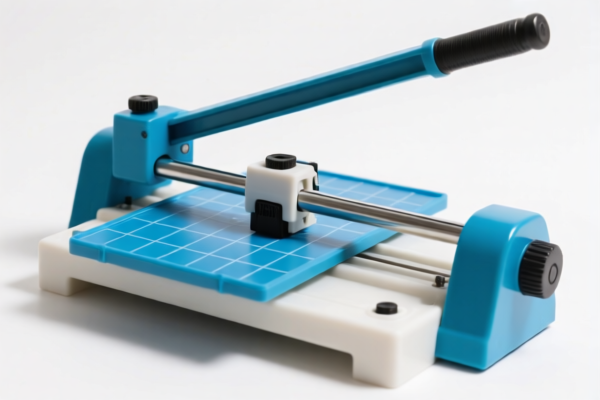
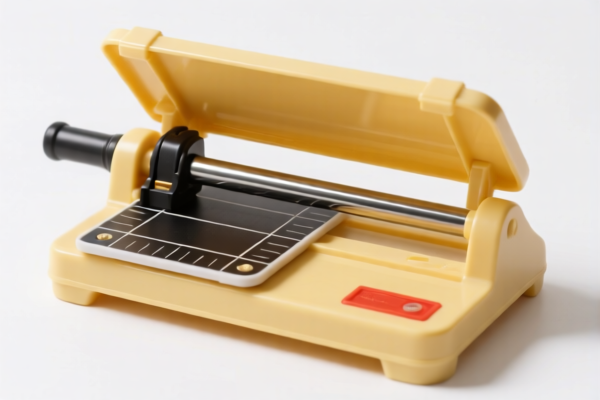
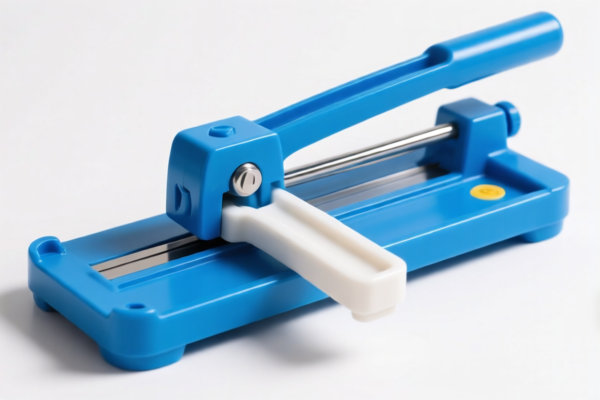
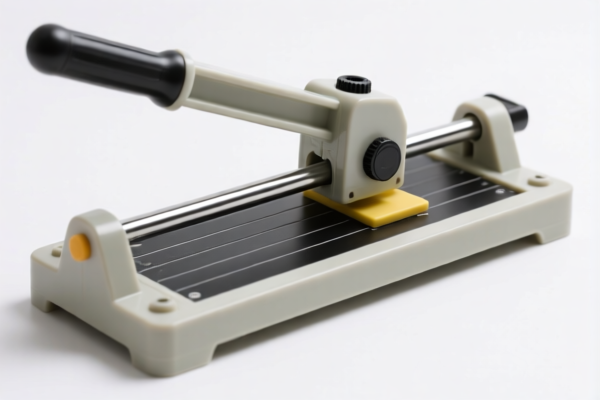
AI Analysis
🎬 Plastic Film Cutting Machine (Industrial Automation & Precision)
🌐 HS Code Reference & Customs Clearance Guide | 2026 Latest Tariff Analysis | Strategic Import Strategies
📌 I. Product Definition & Classification: What is a "Plastic Film Cutting Machine"?
A Plastic Film Cutting Machine is an industrial mechanical device designed to slice, trim, or sliver flexible plastic films (such as PE, PP, PET, PVC) into specific shapes or widths. In international trade, the classification hinges on its primary function and mechanical structure, rather than just the material it cuts.
It is generally categorized into two main scenarios: 1. Paper/Pulp Machinery Accessories/Extensions: If it is specifically engineered for high-speed film processing lines similar to papermaking machines, it may fall under Chapter 84. 2. General Mechanical Appliances: If it is a standalone cutting unit with specific industrial functions not covered elsewhere, it falls under 8479 (Machines and mechanical appliances having individual functions).
⚠️ Critical Distinction Point:
- If the machine is primarily a metalworking shear (designed for rigid metals) misapplied to film → 8462 (Higher Duty).
- If it is a dedicated cutting blade/tool only → 8208 (Tools Category).
- If it is a complete standalone mechanical cutter for flexible materials → 8479 or 8441 (Standard Industrial Machinery).
📦 II. HS Code Classification Details (Based on Provided Data Analysis)
The following analysis is strictly based on the provided <DATA> snippets, which present four distinct potential classifications depending on the machine's specific mechanical configuration and intended industrial context.
| HS Code | Product Description | Matching Logic from Data | Total Tax Rate |
|---|---|---|---|
8441.90.00.00 |
Paper/Pulp Machinery Accessories | "Infers involvement in paper/film processing; 'cutting machine' fits machinery attributes; no material conflict." | 35.0% |
8479.89.95.95 |
Other Mechanical Appliances | "Finished equipment; cutting 'film' (semi-finished) fits mechanical processing function; aligns with industrial machinery logic." | 37.5% |
8479.89.95.95 |
Other Mechanical Appliances | "Independent function machine; 'film cutting' purpose aligns with industrial processing attributes." | 37.5% |
8462.39.00.20 |
Metalworking Pressing/Shearing Machines | "Inferred as metal/shearing equipment due to form; assumes metal machine structure by default; no material conflict noted." | 39.4% |
8208.90.60.00 |
Knives & Cutting Blades | "Focuses on 'cutting knife' aspect; inferred metal material; classified as 'other' parts/tools." | 35.0% |
🔍 Key Insight from Data:
- The most common classification for a complete machine is8479.89.95.95(37.5% total tax), as it captures the "independent mechanical function" for cutting flexible materials.
-8441.90.00.00(35.0%) is a viable alternative if the machine is closely tied to pulp/paper processing lines.
-8462.39.00.20(39.4%) is the highest duty option, derived from classifying it as a "metal shear," which is often a misclassification for film cutters unless they are heavy-duty metal presses.
💰 III. 2026 Latest Tariff Rate Breakdown (Including Surtaxes & Policy Add-ons)
✅ Applicable Country: United States (US)
✅ Origin: China (CN)
✅ Effective Date: 2025/2026 (Post-November 2025 imports)
The provided data indicates a consistent pattern of Base Tariff + Section 301 Tariff (25%) + IEEPA Tariff (10%).
🎯 1. 8441.90.00.00 & 8208.90.60.00 —— Machinery Accessories / Cutting Tools
- Base Tariff: 0.0%
- Section 301 Surtax: +25.0%
- IEEPA Surcharge (122 Clause): +10.0%
- Total Tax Rate: 35.0%
- Calculation: CIF Value × 35%
- De Minimis Exemption: ❌ NOT Eligible (Standard for machinery/tools from China post-2025).
📌 Explanation:
- The 0% base rate reflects the low traditional duty for these subheadings.
- However, the 35% effective duty is significant. This classification is often used for blades (8208) or paper machine parts (8441).
🎯 2. 8479.89.95.95 —— Other Mechanical Appliances (Most Likely for "Complete Machines")
- Base Tariff: 2.5%
- Section 301 Surtax: +25.0%
- IEEPA Surcharge (122 Clause): +10.0%
- Total Tax Rate: 37.5%
- Calculation: CIF Value × 37.5%
- De Minimis Exemption: ❌ NOT Eligible.
📌 Explanation:
- This is the standard "catch-all" for industrial machines with specific functions not listed elsewhere.
- The 2.5% base duty makes it slightly higher in total duty than the 0% base categories, but it is the most accurate for a standalone "Plastic Film Cutting Machine" that doesn't fit strictly into paper machinery.
🎯 3. 8462.39.00.20 —— Metalworking Presses/Shears (Highest Risk)
- Base Tariff: 4.4%
- Section 301 Surtax: +25.0%
- IEEPA Surcharge (122 Clause): +10.0%
- Total Tax Rate: 39.4%
- Calculation: CIF Value × 39.4%
- De Minimis Exemption: ❌ NOT Eligible.
📌 Warning:
- This classification assumes the machine is a metal shear. If your machine is primarily for plastic film, classifying it here may trigger a customs audit for misclassification.
- Only use this if the machine is a heavy-duty industrial press capable of cutting metal and plastic, and the primary function is metalworking.
🛠️ IV. Customs Clearance Practical Advice (Real-World Pitfall Guide)
✅ 1. Documentation Checklist (Must-Haves)
| Document | Required | Notes |
|---|---|---|
| ✅ Product Technical Manual | ✔️ | Must clearly state: "Cutting Plastic Film", not "Metal Shearing". |
| ✅ Product Photos | ✔️ | Show the cutting head, feed rollers, and control panel. |
| ✅ Commercial Invoice | ✔️ | Description: "Plastic Film Cutting Machine, Model XYZ, for flexible materials". |
| ✅ Packing List | ✔️ | List all parts; ensure no loose blades are declared separately as "tools" unless intended. |
| ✅ Certificate of Origin | ✔️ | Required for determining origin-based surtaxes. |
| ✅ Self-Declaration of Function | ✔️ | Explicitly state: "This machine is designed for non-metallic flexible materials (plastic/paper/film)." |
✅ 2. Declaration Strategy (Key Tips)
🔥 Rule of Thumb:
"Define by Function, Not by Material Cut"
- If the machine has adjustable rollers, tensioners, and film guides → Declare as8479.89.95.95(Mechanical Appliance).
- If the machine is a simple blade holder with no automation → Consider8208.90.60.00(Tools/Knives), but verify if it’s a "complete machine" or just a "blade".
- Avoid declaring as8462(Metalworking) unless it is genuinely a metal press. Misclassification can lead to penalties + back duties.
✅ 3. Special Cases & Recommendations
| Scenario | Recommendation |
|---|---|
| Hybrid Machine (Cuts Metal & Plastic) | Declare based on primary intended use. If mostly plastic, use 8479 or 8441. |
| Only Blades/Knives Imported | Declare as 8208.90.60.00. Ensure description is "Cutting Blades for Plastic Film Machines". |
| Part of a Larger Production Line | If part of a continuous film production line, consider 8441.90.00.00 (Paper/Pulp machinery accessories). |
| High-Value Automated Machine | Pre-ruling (Advance Ruling) recommended for 8479.89.95.95 to confirm "independent function" status. |
🌍 V. Global Market Comparison (2026 Context)
| Region | Likely HS Code | Est. Duty (China Origin) | Notes |
|---|---|---|---|
| 🇺🇸 USA | 8479.89.95.95 |
37.5% | Includes 25% Section 301 + 10% IEEPA. High scrutiny on "Mechanical Appliance" vs "Specific Machinery". |
| 🇪🇺 EU | 8479.89.99 |
~4-6% | Generally lower base duties. No US-style surtaxes. CE Marking required. |
| 🇨🇳 China (Import) | 8479.89.99 |
~5-7% | Lower import duties for machinery. CCC certification may apply. |
| 🇬🇧 UK | 8479.89.99 |
~4-5% | Post-Brexit tariff schedule similar to EU but requires UK CA Marking. |
📌 Conclusion:
- The US market is the most challenging due to the 35-39.4% effective duty rate.
- For other markets, the duty burden is significantly lower, making the product more competitive.
📌 VI. Common Errors & Pitfalls (Lessons Learned)
❌ Error 1: Declaring a "Plastic Film Cutter" as a "Metal Shear" (8462) to avoid other codes.
👉 Consequence: Customs may reject it for misdescription, or if accepted, you pay 39.4% instead of potentially lower rates for other codes. If rejected, you face re-entry fees.
❌ Error 2: Declaring only the "Cutting Blade" (8208) when the entire machine is shipped.
👉 Consequence: Under-declaration of value. Customs will assess the machine's value, leading to back taxes + penalties.
❌ Error 3: Using vague descriptions like "Cutting Machine".
👉 Consequence: Customs will choose the highest duty code possible. Always specify "for Plastic Film".
✅ Correct Declaration Example:
"Industrial Plastic Film Cutting Machine, Model XYZ, Automatic Tension Control, Designed for PE/PET Films, Voltage 220V/380V, HS Code 8479.89.95.95"
🎯 VII. Conclusion: Smart Classification Saves Money
🎯 Key Takeaways:
🔹 "Plastic Film Cutter" ≠ "Metal Shear". Avoid
8462unless necessary.
🔹 "Complete Machine" →8479.89.95.95(37.5%).
🔹 "Blades Only" →8208.90.60.00(35.0%).
🔹 "Paper-Line Integrated" →8441.90.00.00(35.0%).
📌 Pro Tip:
If your machine is highly specialized for plastic film, consider applying for an Advance Ruling from US Customs (CBP) to lock in the 8479.89.95.95 classification and avoid post-clearance audits.
📣 Action Item:
📞 Contact a licensed customs broker with your machine's technical sheet.
📄 Request a Pre-Classification Ruling for8479.89.95.95.
🚀 Ensure your invoice clearly states "Plastic Film Cutting Machine" to prevent misclassification.
✨ Precision in Classification = Precision in Profit!
💼 Don't let 2.5% base duty differences cost you 39% in total duties.
Customer Reviews
About HS Code Classification
The Harmonized System (HS) is an internationally standardized nomenclature developed by the World Customs Organization (WCO) to classify traded products. Over 200 countries use the HS system as the basis for customs tariffs, trade statistics, and import/export regulations.
Each HS code follows a hierarchical structure:
- Chapter (2 digits) — Broad category of goods (e.g., Chapter 84: Machinery and Mechanical Appliances)
- Heading (4 digits) — More specific grouping within the chapter
- Subheading (6 digits) — Internationally standardized breakdown, used by all WCO member countries
- National subdivisions (8-10 digits) — Country-specific extensions for further classification, such as US HTSUS 10-digit codes
Correct HS code classification is essential for smooth customs clearance, accurate duty payment, and compliance with trade regulations. Misclassification can lead to customs delays, overpayment of duties, or penalties.
When importing from CN to US, the applicable tariff rates may include:
- Most-Favored-Nation (MFN) rate — The standard duty rate applied to WTO members
- General rate — Applied to countries without trade agreements
- Trade remedy duties — Additional tariffs such as Section 301 (anti-dumping), Section 232 (national security), or countervailing duties
The information provided on this page is for reference purposes only. For official classification, please consult with your local customs authority or a licensed customs broker.