Plastic Film Dispenser
CN → US| HS Code | Tariff Rate | Origin | Destination | Doc |
|---|---|---|---|---|
| 8466925090 | 39.7% | CN | US | Official Doc |
| 8479896500 | 20.3% | CN | US | Official Doc |
| 8479820080 | 35.0% | CN | US | Official Doc |
| 8205595510 | 40.3% | CN | US | Official Doc |
| 8466925090 | 39.7% | CN | US | Official Doc |
Product Images
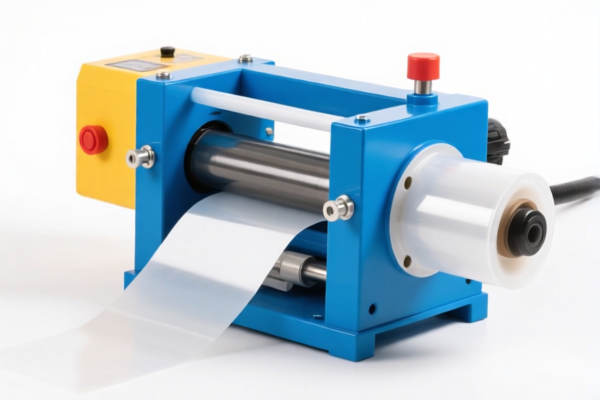
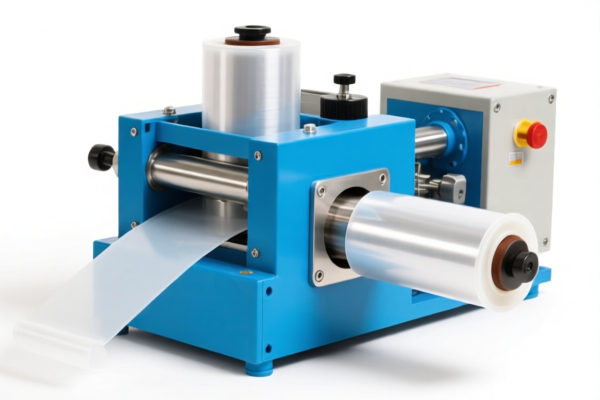
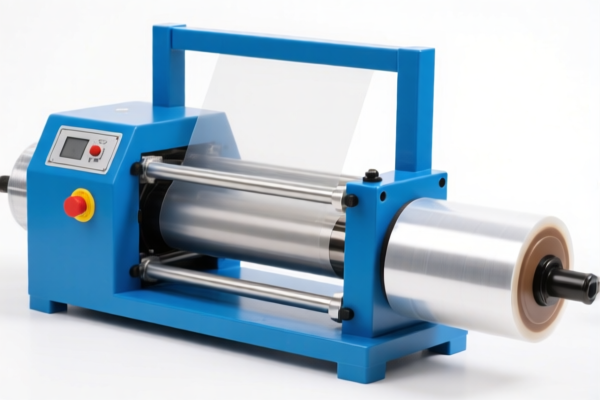
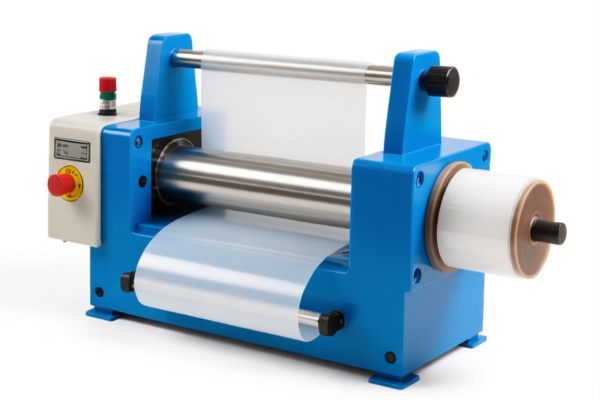
AI Analysis
✂️ Plastic Film Dispenser (Plastic Membrane Cutter)
🌐 HS Code Reference & Customs Clearance Guide | 2026 Latest Tariff Analysis | Professional Strategy for High-Tariff Products
📌 I. Product Definition & Classification: Do You Really Understand the "Film Dispenser"?
A Plastic Film Dispenser (often referred to as a cutter, slitter, or unwinding device) is a mechanical or semi-mechanical device used in packaging, logistics, and manufacturing to cut, unwind, or separate plastic films. Its classification depends heavily on its construction material, driving mechanism, and primary function.
In international trade, ambiguity arises between: 1. Hand Tools (if manually operated, simple blades). 2. Machinery (if motorized, automated, or complex). 3. Parts/Accessories (if it's just a blade component).
⚠️ Key Classification Point:
- If it is a purely plastic manual tool → Likely falls under 8466 (Parts/Accessories) or 8205 (Hand Tools).
- If it is a motorized/mechanical device with independent function → Likely falls under 8479 (Machinery).
- Note: The data provided highlights significant tariff variations based on whether customs views it as a "part," a "machine," or a "hand tool."
📦 II. HS Code Classification Details (Based on Provided Data)
| HS Code | Product Description | Reason for Classification | Total Tax Rate (US/China Origin) |
|---|---|---|---|
| 8466.92.50.90 | Plastic Film Cutter | Classified as an accessory/part to machinery. Material: Plastic. Function: Cutting film. Falls under "Other/Other" catch-all category for parts. | 39.7% |
| 8479.89.65.00 | Mechanical Device with Cutting Function | Classified as an independent mechanical apparatus. It meets the definition of a machine with independent function, falling under "Other Machinery." | 20.3% |
| 8479.82.00.80 | Cutting as a Mixed/Grinding Function | Classified under machinery where cutting is extended to mixing/grinding functions. Follows functional logic of "Other Machinery." | 35.0% |
| 8205.59.55.10 | Bladed Tool (Iron/Steel Edge) | Infered as a hand tool with a blade. The cutting edge is iron or steel. Follows the logic of "Bladed Hand Tools." | 40.3% |
🔍 Critical Observation:
- The lowest tax rate (20.3%) applies to 8479.89.65.00, classified as a mechanical device.
- The highest tax rate (40.3%) applies to 8205.59.55.10, classified as a bladed hand tool.
- 8466.92.50.90 (39.7%) is risky because it treats the product as a "part" rather than a complete machine, often attracting higher duties due to less specific classification.
💰 III. Detailed Tariff Rate Breakdown (2026 Latest)
✅ Applicable Country: United States (US)
✅ Origin: China (CN)
✅ Effective Date: Includes subsequent imports under current trade policies
🎯 1. 8466.92.50.90 – Plastic Film Cutter (Part/Accessory)
Classification Logic: "Other/Other Catch-all"
| Item | Detail |
|---|---|
| Base Duty | 4.7% |
| Additional Duty (Section 301) | +25.0% |
| Section 122 Duty | +10.0% |
| Total Effective Rate | 39.7% |
| Calculation | CIF Value × 39.7% |
| De Minimis Exemption | ❌ Not Eligible (High-risk classification) |
| Legal Basis | General Parts Category + Section 301 + Section 122 Add-ons |
📌 Explanation:
- Classifying as a "part" (8466) often loses specific product benefits.
- The 4.7% base is low, but the 25% + 10% add-ons make the total rate high.
- Risk: Customs may dispute this if the product appears to be a standalone machine rather than a part.
🎯 2. 8479.89.65.00 – Mechanical Device (Independent Function)
Classification Logic: "Machinery with Independent Function"
| Item | Detail |
|---|---|
| Base Duty | 2.8% |
| Additional Duty (Section 301) | +7.5% |
| Section 122 Duty | +10.0% |
| Total Effective Rate | 20.3% |
| Calculation | CIF Value × 20.3% |
| De Minimis Exemption | ❌ Not Eligible |
| Legal Basis | Machinery Category + Lower Section 301 Footnote + Section 122 Add-ons |
📌 Explanation:
- This is the OPTIMAL classification if the device is motorized or mechanically complex.
- The Section 301 rate is only 7.5% (vs 25% for parts/tools).
- Savings: Saves ~19-20% in duties compared to other categories.
- Requirement: Must prove it is a "machine" with "independent function" (e.g., motorized, automated, or complex mechanical operation).
🎯 3. 8479.82.00.80 – Cutting as Mixed/Grinding Function
Classification Logic: "Other Machinery – Functional Extension"
| Item | Detail |
|---|---|
| Base Duty | 0.0% |
| Additional Duty (Section 301) | +25.0% |
| Section 122 Duty | +10.0% |
| Total Effective Rate | 35.0% |
| Calculation | CIF Value × 35.0% |
| De Minimis Exemption | ❌ Not Eligible |
| Legal Basis | Specific Machinery Category + High Section 301 Footnote + Section 122 Add-ons |
📌 Explanation:
- Base duty is 0%, but the 25% Section 301 makes it expensive.
- This classification is only valid if the cutting function is integral to a mixing/grinding process.
- Not recommended for standard film dispensers unless they are part of a larger packaging line.
🎯 4. 8205.59.55.10 – Bladed Hand Tool
Classification Logic: "Bladed Tool with Iron/Steel Edge"
| Item | Detail |
|---|---|
| Base Duty | 5.3% |
| Additional Duty (Section 301) | +25.0% |
| Section 122 Duty | +10.0% |
| Total Effective Rate | 40.3% |
| Calculation | CIF Value × 40.3% |
| De Minimis Exemption | ❌ Not Eligible |
| Legal Basis | Hand Tool Category + High Section 301 Footnote + Section 122 Add-ons |
📌 Explanation:
- Highest Total Rate (40.3%).
- Applies if the product is deemed a simple hand tool (e.g., a plastic handle with a steel blade).
- Risk: If the product has any motor or mechanical complexity, this classification is incorrect and may lead to penalties.
🛠️ IV. Customs Clearance Practical Advice (Pitfall Avoidance)
✅ 1. Preparation Checklist (Must-Haves)
| Document | Required? | Description |
|---|---|---|
| ✅ Product Specification Sheet | ✔️ | Must specify: Is it motorized? What is the power source? Material composition (Plastic vs. Steel blade). |
| ✅ Technical Diagram/Circuit Board | ✔️ | Crucial for proving "Independent Mechanical Function" (to qualify for 8479.89.65.00). |
| ✅ Product Photos | ✔️ | Clear images of the entire device, including any motors, buttons, or blades. |
| ✅ Commercial Invoice | ✔️ | Must clearly state: "Plastic Film Dispenser, Motorized, Model XYZ." Avoid vague terms like "Plastic Cutter." |
| ✅ Origin Certificate | ✔️ | If not from China, to avoid Section 301/122 duties. |
| ✅ Packing List | ✔️ | Include all components to avoid "Split Shipment" penalties. |
✅ 2. Declaration Strategy (Key Rules)
🔥 "Motorized = Machine, Manual = Tool. Prove the Motor!"
| Scenario | Correct HS Code | Why? |
|---|---|---|
| Motorized/ Electric Dispenser | 8479.89.65.00 |
It has independent mechanical function. Lowest Tax (20.3%). |
| Handheld Plastic Tool with Steel Blade | 8205.59.55.10 |
It is a hand tool. Highest Tax (40.3%). |
| Plastic Accessory for a Machine | 8466.92.50.90 |
It is a part. High Tax (39.7%). |
| Part of a Mixing/Grinding Line | 8479.82.00.80 |
Only if cutting is secondary to mixing. High Tax (35.0%). |
✅ 3. Special Handling Tips
| Situation | Advice |
|---|---|
| OEM/White Label | Provide the original manufacturer's technical docs to prove motorization. |
| Plastic Blade vs. Steel Blade | If the blade is plastic, it cannot be 8205 (Hand Tool). Must be 8466 or 8479. |
| Kit Assembly | Do not ship as separate parts (motor + plastic housing + blade). Ship as an assembled unit to qualify as "Machinery" (8479). |
| Origin Shifting | If possible, source from Vietnam/Malaysia to potentially avoid Section 301/122 duties (Check current rules). |
🌍 V. Global Market Comparison (2026 Update)
| Country/Region | Recommended HS Code | Estimated Duty | Notes |
|---|---|---|---|
| 🇺🇸 USA | 8479.89.65.00 |
20.3% | Best Option for motorized units. Avoid 8205 (40.3%). |
| 🇨🇳 China | 8479.89.65.00 |
~5-10% | Lower base duties, no Section 301. |
| 🇪🇺 EU | 8479.89.90 |
~0-2% | Often lower duties if classified as machinery. |
| 🇬🇧 UK | 8479.89.90 |
~0-2% | Post-Brexit, similar to EU. |
| 🇨🇦 Canada | 8479.89.90 |
~0% | Often duty-free for machinery parts. |
📌 Conclusion:
- The USA is the most challenging market due to Section 301 (25%) and Section 122 (10%) add-ons.
- Classification is everything: Motorized =8479(20.3%) vs. Hand Tool =8205(40.3%).
- Savings Potential: Properly declaring as "Machinery" saves ~20% in duties.
📌 VI. Common Mistakes & Pitfalls (Lessons Learned)
❌ Mistake 1: Declaring a motorized dispenser as a "Hand Tool" (8205).
👉 Consequence: 40.3% Tax + Potential Penalties for misclassification.
👉 Fix: Provide technical specs showing motor/power source.
❌ Mistake 2: Declaring a standalone machine as a "Part/Accessory" (8466).
👉 Consequence: 39.7% Tax + Customs may reject as incomplete.
👉 Fix: Prove "Independent Function" to qualify for 8479.
❌ Mistake 3: Using vague descriptions like "Plastic Cutter."
👉 Consequence: Customs has discretion to choose the highest duty rate.
👉 Fix: Use specific terms: "Electric Plastic Film Dispenser, Model XYZ, 110V."
❌ Mistake 4: Ignoring Section 122 duties.
👉 Consequence: Unexpected 10% add-on on all categories.
👉 Fix: Factor 10% into all cost calculations.
✅ Correct Approach:
"Plastic Film Dispenser, Electric, Motor-Driven, for Packaging Industry, Model ABC, FCC Certified."
🎯 VII. Conclusion: Professional Declaration, Cost Saving!
🎯 Remember the Golden Rule:
🔹 "Motorized = Machine (20.3%) | Manual = Tool (40.3%) | Part = Accessory (39.7%)"
🔹 "Prove the Motor, Save the Dollar!"
📌 Pro Tip:
If your product is not motorized, consider redesigning it as a "Mechanical Device" (e.g., adding a gear-driven mechanism) rather than a simple hand tool, to qualify for 8479 categories if possible. However, for purely manual tools, 8205 may be unavoidable.
📣 Immediate Action:
📞 Contact your customs broker with technical diagrams to confirm if your product qualifies for
8479.89.65.00.
🚀 Optimize your supply chain to minimize duty exposure!
✨ Professional Clearance Starts with Accurate Classification!
💼 Every Percent Saved is Pure Profit!
Customer Reviews
About HS Code Classification
The Harmonized System (HS) is an internationally standardized nomenclature developed by the World Customs Organization (WCO) to classify traded products. Over 200 countries use the HS system as the basis for customs tariffs, trade statistics, and import/export regulations.
Each HS code follows a hierarchical structure:
- Chapter (2 digits) — Broad category of goods (e.g., Chapter 84: Machinery and Mechanical Appliances)
- Heading (4 digits) — More specific grouping within the chapter
- Subheading (6 digits) — Internationally standardized breakdown, used by all WCO member countries
- National subdivisions (8-10 digits) — Country-specific extensions for further classification, such as US HTSUS 10-digit codes
Correct HS code classification is essential for smooth customs clearance, accurate duty payment, and compliance with trade regulations. Misclassification can lead to customs delays, overpayment of duties, or penalties.
When importing from CN to US, the applicable tariff rates may include:
- Most-Favored-Nation (MFN) rate — The standard duty rate applied to WTO members
- General rate — Applied to countries without trade agreements
- Trade remedy duties — Additional tariffs such as Section 301 (anti-dumping), Section 232 (national security), or countervailing duties
The information provided on this page is for reference purposes only. For official classification, please consult with your local customs authority or a licensed customs broker.