Plastic Film Roll
CN → US| HS Code | Tariff Rate | Origin | Destination | Doc |
|---|---|---|---|---|
| 3921904090 | 39.2% | CN | US | Official Doc |
| 3920992000 | 39.2% | CN | US | Official Doc |
| 3920620020 | 39.2% | CN | US | Official Doc |
| 3921905050 | 39.8% | CN | US | Official Doc |
| 4811512040 | 35.0% | CN | US | Official Doc |
Product Images
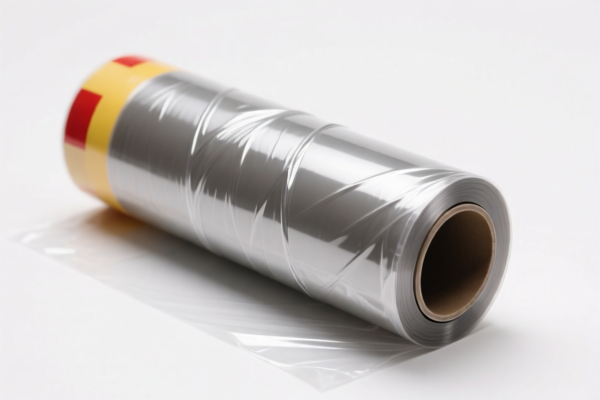

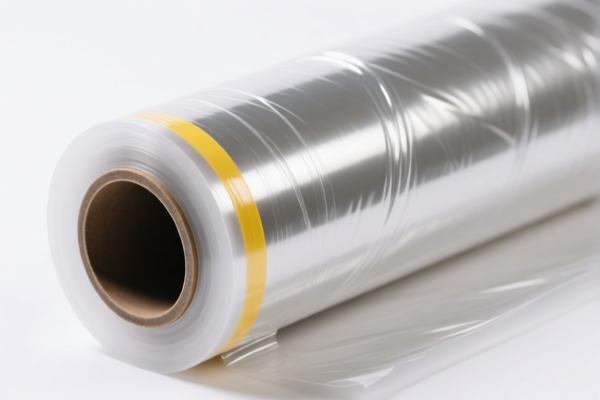
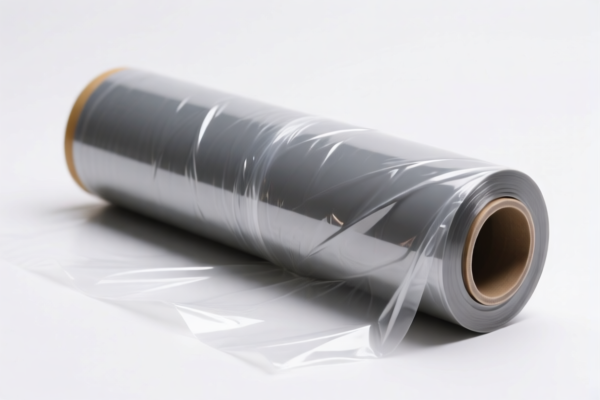
AI Analysis
🎞️ Plastic Film Roll (塑料薄膜卷)
🌐 HS Code Reference & Customs Clearance Guide | 2026 Latest Tariff Analysis | Professional Clearance Strategy
📌 I. Product Definition & Classification: Do You Really Understand "Plastic Film Rolls"?
A "Plastic Film Roll" is a broad term in international trade, covering a wide range of flexible plastic materials used for packaging, insulation, protection, and industrial applications. In customs classification, the key differentiators are material composition, physical form (thickness, width, structure), and specific use.
The data provided indicates that these rolls are subject to significant trade restrictions, specifically involving Section 301 tariffs and Section 122 tariffs, resulting in high total tax rates for products originating from China.
⚠️ Key Distinction Points:
- Base Tariff Rate: Varies by specific HS code (0.0% to 4.8%).
- Section 301 Additional Tariff: Uniformly 25.0% for all listed codes.
- Section 122 Tariff: Uniformly 10.0% for all listed codes.
- Total Effective Rate: Ranges from 35.0% to 39.8%, depending on the base rate.
- Note: All items listed below appear to be classified under Chapter 39 (Plastics) or Chapter 48 (Paper/Paperboard), with specific subheadings for films.
📦 II. HS Code Classification Details (2026 Latest Tariff Authority Reference)
| HS Code | Product Description | Material/Form | Base Tax | Total Tax | Tax Breakdown |
|---|---|---|---|---|---|
3921.90.40.90 |
Plastic Film Roll, Material: Plastic, Form: Film Roll | Plastic, Flexible Film | 4.2% | 39.2% | Base: 4.2%, Sec 301: 25%, Sec 122: 10% |
3920.99.20.00 |
Plastic Film Roll, Material: Plastic, Form: Flexible Film/Tape/Sheet | Plastic, Flexible Sheet | 4.2% | 39.2% | Base: 4.2%, Sec 301: 25%, Sec 122: 10% |
3920.62.00.20 |
Plastic Film Roll, Material: Plastic, Form: Roll, Fits Plastic Film Description | Plastic, Roll Form | 4.2% | 39.2% | Base: 4.2%, Sec 301: 25%, Sec 122: 10% |
3921.90.50.50 |
Plastic Film Roll, Material: Plastic, Form: Film (Rolled), Fits Plastic Film Category | Plastic, Rolled Film | 4.8% | 39.8% | Base: 4.8%, Sec 301: 25%, Sec 122: 10% |
4811.51.20.40 |
Paperboard Film Roll, Material: Paperboard, Form: Rolled, Fits Packaging Original Paper Use | Paperboard, Rolled | 0.0% | 35.0% | Base: 0.0%, Sec 301: 25%, Sec 122: 10% |
🔍 Important Reminder:
- Chapter 39 vs. Chapter 48: Items3921.90.40.90,3920.99.20.00,3920.62.00.20, and3921.90.50.50are Plastic products. Item4811.51.20.40is Paperboard. Misclassification between these chapters can lead to severe penalties.
- Section 122 & 301 Applicability: The presence of a 10% Section 122 tariff and a 25% Section 301 tariff suggests these goods are subject to specific US trade measures against China. Ensure origin documentation is accurate.
- Base Rate Variation: While most plastic films have a 4.2% base rate,3921.90.50.50has a slightly higher base rate of 4.8%.
💰 III. 2026 Latest Tariff Rate Detailed Explanation (Including Additional Taxes, Policy Add-ons)
✅ Applicable Country: United States (US)
✅ Origin: China (CN) (Inferred from Section 301 and 122 tariffs)
✅ Effective Time: Current applicable rates under US Trade Law
🎯 1. 3921.90.40.90 / 3920.99.20.00 / 3920.62.00.20 —— Plastic Film Rolls (Most Common)
| Item | Content |
|---|---|
| Base Tax Rate | 4.2% (ad valorem) |
| Section 301 Additional Tax | +25.0% (US Trade Act Section 301) |
| Section 122 Additional Tax | +10.0% (Trade Expansion Act Section 122) |
| Total Tax Rate | 39.2% |
| Tax Calculation | CIF Value × 39.2% |
| De Minimis Eligibility | ❌ No (Value exceeds $800 threshold for de minimis exemption under current enforcement) |
| Legal Basis Path | HTSUS: 3921/3920 → Section 301: Footnote 9903.88 → Section 122: 19 USC 2122 |
📌 Explanation:
- The 25% Section 301 tariff is imposed on many Chinese-made plastic products as part of the broader trade dispute.
- The 10% Section 122 tariff is a historical provision often applied to specific imports under certain trade remedies or emergency actions.
- Combined at 39.2%, this is a high-cost import category. Businesses must factor this into pricing strategies.
🎯 2. 3921.90.50.50 —— Plastic Film Roll (Rolled, Specific Category)
| Item | Content |
|---|---|
| Base Tax Rate | 4.8% (ad valorem) |
| Section 301 Additional Tax | +25.0% |
| Section 122 Additional Tax | +10.0% |
| Total Tax Rate | 39.8% |
| Tax Calculation | CIF Value × 39.8% |
| De Minimis Eligibility | ❌ No |
| Legal Basis Path | HTSUS: 3921.90.50.50 → Section 301 → Section 122 |
📌 Note:
- This code has a slightly higher base rate (4.8% vs. 4.2%), resulting in a 0.6% higher total tax compared to other plastic film codes.
- Ensure the product description precisely matches "Film (Rolled)" to avoid misclassification.
🎯 3. 4811.51.20.40 —— Paperboard Film Roll (Packaging Original Paper)
| Item | Content |
|---|---|
| Base Tax Rate | 0.0% (ad valorem) |
| Section 301 Additional Tax | +25.0% |
| Section 122 Additional Tax | +10.0% |
| Total Tax Rate | 35.0% |
| Tax Calculation | CIF Value × 35.0% |
| De Minimis Eligibility | ❌ No |
| Legal Basis Path | HTSUS: 4811.51.20.40 → Section 301 → Section 122 |
📌 Note:
- Although the base rate is 0%, the additional tariffs (35%) still apply due to origin.
- This item is classified under Chapter 48 (Paper), not Chapter 39 (Plastics). Ensure the material is correctly identified as paperboard/cardstock to justify this code.
🛠️ IV. Customs Clearance Practical Advice (Practical Pitfall Avoidance Guide)
✅ 1. Preparation Material Checklist (All Required)
| Material | Required | Description |
|---|---|---|
| ✅ Product Specification Sheet | ✔️ | Must specify material (Plastic vs. Paperboard), thickness, width, core size, and intended use. |
| ✅ Material Safety Data Sheet (MSDS) | ✔️ | For plastic films, to confirm chemical composition and safety. |
| ✅ Product Photos (Including Labels) | ✔️ | Clear images of the roll, core, packaging, and any branding or technical labels. |
| ✅ Commercial Invoice | ✔️ | Must clearly state "Plastic Film Roll" or "Paperboard Film Roll," HS Code, and Country of Origin. |
| ✅ Packing List | ✔️ | Detail gross weight, net weight, dimensions, and number of rolls. |
| ✅ Certificate of Origin (CO) | ✔️ | Essential for verifying China origin and applying/additional tariffs. |
| ✅ Importer Security Filing (ISF) | ✔️ | Must be filed 24 hours before loading if imported by ocean. |
✅ 2. Declaration Tips (Key Mantras)
🔥 "Material First, Form Second, Origin Clear, Tariff Less!"
| Situation | Correct Declaration Approach | Wrong Approach |
|---|---|---|
| Plastic Film Roll | 3921.90.40.90 or 3920.99.20.00 |
Misclassifying as 4811.51.20.40 (Paper) → Audit risk |
| Paperboard Film Roll | 4811.51.20.40 |
Declaring as plastic film → Incorrect base rate & potential penalty |
| Mixed Plastic/Paper Rolls | Split by material | Combined declaration → Classification error |
| High-Value Rolls | Declare full CIF value | Under-declaring to avoid tax → Severe penalties & seizure |
✅ 3. Special Cases Handling
| Situation | Handling Advice |
|---|---|
| OEM Custom Rolls | Provide client order + design specs. Ensure material matches the declared HS code. |
| Recycled Plastic Rolls | May require additional environmental compliance documentation. |
| Laminated Films | If multi-layer with plastic and paper, classification becomes complex. Consult a customs broker. |
| Small Samples (De Minimis) | Not eligible for de minimis if total value > $800 or if specifically targeted by Section 301/122. |
🌍 V. Global Market Customs Clearance Comparison (2026 Latest)
| Country/Region | Recommended HS Code | Base Tariff | Additional Tax | Notes |
|---|---|---|---|---|
| 🇺🇸 USA | 3921.90.40.90 etc. |
4.2% / 4.8% / 0.0% | +35% / +39.8% | Section 301 + 122 apply to China-origin goods. |
| 🇨🇳 China | 3921.90.40.90 etc. |
~2.5% - 5% | None | No Section 301/122. Lower entry cost for importers. |
| 🇪🇺 EU | 3920.62.00 etc. |
5.3% - 6.5% | None (If not China-origin) | No Section 301/122. CE marking required. |
| 🇦🇺 Australia | 3921.90.40.90 etc. |
5.0% | None | AANZFTA may apply for ASEAN-origin goods. |
📌 Conclusion:
- USA is the only market imposing these high additional tariffs (30-40%) on China-origin plastic/paper rolls.
- Supply Chain Diversification: Consider sourcing from non-China countries (e.g., Vietnam, Thailand) to avoid Section 301 tariffs, subject to FTAs.
- Pre-Ruling Application: For complex laminated or multi-material rolls, apply for an Advance Ruling from US Customs to avoid disputes.
📌 VI. Common Errors & Pitfall Avoidance Guide (Lessons Learned)
❌ Error 1: Misclassifying Plastic Film as Paper Film (4811.51.20.40)
👉 Consequence: Base rate discrepancy (4.2% vs. 0.0%), but same additional tax. Risk of audit for undervaluation if base rate differences trigger flags.
❌ Error 2: Ignoring Section 301 & 122 applicability
👉 Consequence: Underpayment of tariffs (35-40% vs. 0-5%). Result: Back taxes, interest, and penalties.
❌ Error 3: Incomplete Product Description
👉 Consequence: Customs cannot determine the correct HS code. Delay in clearance or forced reclassification.
❌ Error 4: Assuming De Minimis Exemption Applies
👉 Consequence: Section 301/122 tariffs apply regardless of value if the total shipment exceeds $800 and is not exempted.
✅ Correct Approach:
"Plastic Film Roll, 50 microns, 12 inches wide, Core 1 inch, for Packaging, Made in China, HS Code 3921.90.40.90, CIF Value $10,000"
🎯 VII. Conclusion: Professional Declaration, Time & Cost Saving!
🎯 Remember Mantra:
🔹 "Material Correct, HS Code Precise, Origin Clear, Tariff Predictable!"
🔹 "Section 301 + 122 = 35-40% Tax, Plan Ahead to Avoid Pain!"
📌 Pro Tip:
If your film rolls are originating from Vietnam, Malaysia, or Thailand, you may avoid the Section 301 tariff (25%) and Section 122 tariff (10%), significantly reducing total tax to the base rate only (4.2%-4.8%).
Action: Verify origin certificates and consider supply chain adjustments to optimize costs.
📣 Immediate Action:
📞 Contact a licensed customs broker + Provide product specs + Apply for HS Code Advance Ruling
🚀 Ensure smooth customs clearance, minimize tax burden, and maximize profit margins!
✨ Professional Customs Clearance Starts with Accurate Classification!
💼 Every Cent of Cost Deserves Precision!
Customer Reviews
About HS Code Classification
The Harmonized System (HS) is an internationally standardized nomenclature developed by the World Customs Organization (WCO) to classify traded products. Over 200 countries use the HS system as the basis for customs tariffs, trade statistics, and import/export regulations.
Each HS code follows a hierarchical structure:
- Chapter (2 digits) — Broad category of goods (e.g., Chapter 84: Machinery and Mechanical Appliances)
- Heading (4 digits) — More specific grouping within the chapter
- Subheading (6 digits) — Internationally standardized breakdown, used by all WCO member countries
- National subdivisions (8-10 digits) — Country-specific extensions for further classification, such as US HTSUS 10-digit codes
Correct HS code classification is essential for smooth customs clearance, accurate duty payment, and compliance with trade regulations. Misclassification can lead to customs delays, overpayment of duties, or penalties.
When importing from CN to US, the applicable tariff rates may include:
- Most-Favored-Nation (MFN) rate — The standard duty rate applied to WTO members
- General rate — Applied to countries without trade agreements
- Trade remedy duties — Additional tariffs such as Section 301 (anti-dumping), Section 232 (national security), or countervailing duties
The information provided on this page is for reference purposes only. For official classification, please consult with your local customs authority or a licensed customs broker.