Plastic Fittings
CN → US| HS Code | Tariff Rate | Origin | Destination | Doc |
|---|---|---|---|---|
| 3926305000 | 22.8% | CN | US | Official Doc |
| 9403994080 | 35.0% | CN | US | Official Doc |
| 3926301000 | 24.0% | CN | US | Official Doc |
| 9403993080 | 35.0% | CN | US | Official Doc |
Product Images

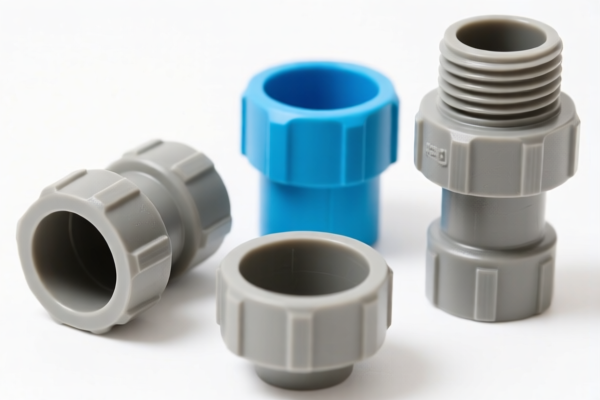
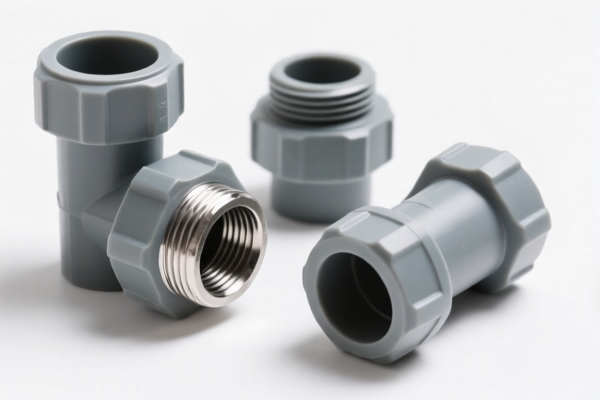
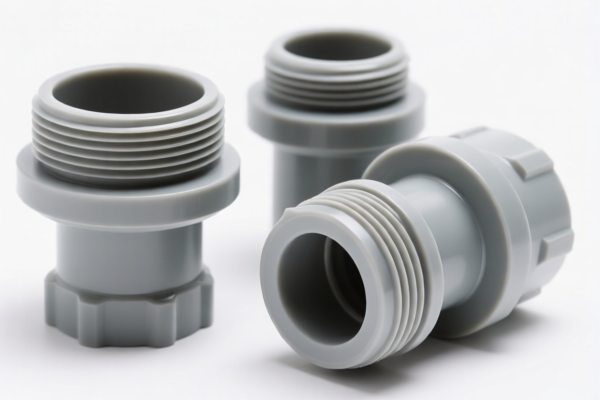
AI Analysis
🪑 Plastic Fittings for Furniture (Plastic Furniture Components)
🌐 HS Code Reference & Customs Clearance Guide | 2026 Latest Tariff Analysis | Professional Entry Strategy
📌 I. Product Definition & Classification: Do You Really Understand "Plastic Furniture Fittings"?
Plastic Fittings are essential auxiliary components used in the assembly, connection, and fixation of furniture. In international trade, they are primarily classified based on their material composition, functional role, and specific application within the furniture category.
According to the harmonized system, these products generally fall into two main conceptual categories: 1. Plastic Articles (Chapter 39): If classified as generic plastic parts or utensils that serve as furniture fittings but do not form an integral part of the furniture structure itself. 2. Parts of Furniture (Chapter 94): If classified specifically as "parts" of furniture items (e.g., legs, handles, connecting brackets, casters) that are exclusively or primarily used with furniture.
⚠️ Key Distinction Point:
- If the item is a general-purpose plastic clip, connector, or fastener not uniquely shaped for a specific furniture type → Tends towards Chapter 39 (Plastic Articles).
- If the item is specifically designed as a furniture part (e.g., plastic drawer slide, plastic chair leg cap, specific joint connector) → Tends towards Chapter 94 (Parts of Furniture).
- Customs Preference Principle: Often leans towards the specific article (Furniture Parts) if it clearly matches the definition of "parts of furniture," leading to HS codes under 9403.
📦 II. HS Code Classification Details (Latest 2026 Tariff Authorities)
| HS Code | Product Description | Application Scenario | Classification Logic |
|---|---|---|---|
3926.30.50.00 |
Plastic furniture fittings, plastic material, furniture accessory usage | General plastic furniture connectors, clips, joints | ✅ Fits "Plastic articles and articles of other materials" + Furniture accessory definition |
9403.99.40.80 |
Plastic furniture fittings, plastic material, form as accessories, for other furniture | Accessories for miscellaneous furniture, fits "Parts" classification | ✅ Fits "Parts of furniture" classification |
3926.30.10.00 |
Plastic furniture fittings, plastic material, furniture accessory usage | Plastic articles defined as furniture utensils/parts | ✅ Fits "Plastic articles and furniture utensils & parts" definition |
9403.99.30.80 |
Plastic furniture fittings, plastic material, furniture accessory usage | General furniture parts, follows default "Parts" matching principle | ✅ Follows default principle for "Parts" category commodities |
🔍 Key Reminder:
- Chapter 94 (9403.99.xx) is often the preferred classification for items explicitly identified as furniture parts/fittings (like handles, legs, brackets), especially when they are integral to the furniture assembly.
- Chapter 39 (3926.30.xx) applies when the items are considered general plastic articles that happen to be used as furniture fittings, or when the "parts" classification is ambiguous.
- The distinction heavily impacts the duty rate due to different base tariff structures and trade policy applications.
💰 III. 2026 Latest Tariff Rate Breakdown (Including Surcharges, Policy Add-ons)
✅ Applicable Country: United States (US)
✅ Origin: China (CN)
✅ Effective Time: Ongoing (Current 2025-2026 Trade Context)
🎯 1. 3926.30.50.00 & 3926.30.10.00 —— Plastic Articles / Furniture Utensils (Chapter 39)
These codes are classified under "Other articles of plastics."
| Item | Content |
|---|---|
| Base Tariff | 5.3% - 6.5% (Ad Valorem) |
| Section 301 Surcharge | +7.5% (Additional Duty) |
| IEEPA / 122 Clause Surcharge | +10% (Specific trade policy surcharge) |
| Total Effective Rate | 22.8% - 24.0% |
| Calculation Method | CIF Value × 22.8%~24.0% |
| De Minimis Exemption | ❌ Not Eligible (Subject to high tariffs) |
| Legal Basis Path | HTSUS: 3926.30 → Section 301 Footnote → IEEPA: 122 Clause |
📌 Explanation:
- The Base Tariff is relatively low for plastic articles.
- However, the Section 301 (7.5%) and 122 Clause/IEEPA (10%) add significant weight.
- Total Duty (~23-24%) is moderate compared to other categories but still a substantial cost factor.
🎯 2. 9403.99.40.80 & 9403.99.30.80 —— Parts of Furniture (Chapter 94)
These codes are classified under "Parts of furniture."
| Item | Content |
|---|---|
| Base Tariff | 0.0% (Ad Valorem) |
| Section 301 Surcharge | +25.0% (High Additional Duty) |
| IEEPA / 122 Clause Surcharge | +10% (Specific trade policy surcharge) |
| Total Effective Rate | 35.0% |
| Calculation Method | CIF Value × 35.0% |
| De Minimis Exemption | ❌ Not Eligible (Subject to high tariffs) |
| Legal Basis Path | HTSUS: 9403.99 → Section 301 Footnote 9903.88.01 → IEEPA: 122 Clause |
📌 Explanation:
- The Base Tariff is 0%, which looks attractive initially.
- However, the Section 301 Surcharge is significantly higher (25%) for furniture parts compared to general plastic articles.
- Total Duty (35%) is much higher than the Chapter 39 options.
- Critical Insight: Misclassifying a high-value furniture part as a generic plastic fitting to save duties can lead to severe penalties. Conversely, correctly identifying it as a "part" means accepting the 35% rate unless a specific exemption applies.
🛠️ IV. Customs Clearance Practical Advice (Real-World Pitfall Guide)
✅ 1. Documentation Checklist (All Mandatory)
| Document | Must Provide | Description |
|---|---|---|
| ✅ Product Specification Sheet | ✔️ | Material (100% Plastic/PP/ABS), Dimensions, Weight, Function |
| ✅ Product Photos | ✔️ | Clear images showing shape, usage context (e.g., installed on a chair), and labels |
| ✅ Commercial Invoice | ✔️ | Clearly state "Plastic Furniture Fittings" or "Parts of Furniture" |
| ✅ Packing List | ✔️ | Detailed breakdown of contents |
| ✅ Certificate of Origin (CO) | ✔️ | Essential for origin verification |
| ✅ Usage Declaration | ✔️ | Statement explaining if items are exclusive to furniture or general use |
✅ 2. Declaration Strategy (Key Mantras)
🔥 "Material Determines Chapter, Function Determines Subheading. Don't Split, Don't Guess!"
| Scenario | Correct Declaration Approach | Wrong Action |
|---|---|---|
| Generic Plastic Clips/Connectors | Use 3926.30.50.00 or 3926.30.10.00 |
Misclassifying as Furniture Parts → 35% Duty |
| Specific Furniture Parts (Legs, Handles) | Use 9403.99.40.80 or 9403.99.30.80 |
Misclassifying as General Plastic → 23% (Risk of penalty if deemed incorrect) |
| Mixed Shipment (Fittings + Furniture) | Declare Separately | Combine → Complex valuation, potential misclassification |
| OEM Custom Plastic Fittings | Provide Design Drawings + Material Spec | Vague description "Plastic Parts" → Customs Review Delay |
✅ 3. Special Situation Handling
| Situation | Handling Suggestion |
|---|---|
| High-Value Decorative Fittings | If value is high, the 35% duty is significant. Verify if they can be considered "Articles of Plastic" (Chapter 39) if not exclusively furniture parts. |
| Plastic Casters/Wheels | Often classified under 9403.99 as furniture parts. Ensure correct subheading to avoid 35% if not intended. |
| Plastic Fasteners/Screws | May fall under Chapter 39 (3926.90) rather than 3926.30. Check exact HTSUS for fasteners. |
| Pre-Approved Rulings | ✅ Strongly Recommended: Apply for an Advance Ruling from CBP if the classification is ambiguous. |
🌍 V. Global Market Comparison (2026 Latest)
| Country/Region | Recommended HS Code | Tariff Rate (China Origin) | Certification Requirements | Notes |
|---|---|---|---|---|
| 🇺🇸 USA | 3926.30.50.00 |
~23% | N/A | Furniture Parts (9403) hit 35% |
| 🇨🇳 China | 3926.30.50.00 |
~5% | N/A | Low import tariff |
| 🇪🇺 EU | 3926.30.50.00 |
~4.5% | CE (if applicable) | Standard plastic tariffs |
| 🇬🇧 UK | 3926.30.50.00 |
~4.5% | UKCA (if applicable) | Post-Brexit tariffs apply |
| 🇯🇵 Japan | 3926.30.50.00 |
~0% | PSE (if electrical) | Generally low tariffs |
📌 Conclusion:
- USA is the critical market due to high Section 301 and IEEPA surcharges.
- Classification Strategy is Key: Choosing Chapter 39 (3926) over Chapter 94 (9403) can save ~11% in duties for many plastic fittings.
- Justification is Crucial: You must prove the item is a "plastic article" and not exclusively a "furniture part" to justify the lower rate.
📌 VI. Common Errors & Pitfall Guide (Lessons Learned)
❌ Error 1: Classifying all plastic furniture components as 9403.99 (Furniture Parts)
👉 Consequence: Paying 35% duty instead of ~23%.
👉 Fix: If the item is a generic connector/clips, use 3926.30.
❌ Error 2: Claiming "Plastic Articles" for highly specific furniture parts (e.g., molded chair legs)
👉 Consequence: Customs rejects classification, imposes 35% + Penalties + Interest.
👉 Fix: Be honest. If it's exclusively a furniture part, declare as 9403.99.
❌ Error 3: Vague Description: "Plastic Parts"
👉 Consequence: Customs holds shipment for Classification Review, causing Delays.
👉 Fix: Use precise descriptions: "PP Plastic Connector for Office Chair Assembly".
✅ Correct Approach:
"Plastic Furniture Connectors, Polypropylene, Used for Assembling Modular Shelving, Not Integral to Furniture Structure" → Supports
3926.30.50.00
🎯 VII. Conclusion: Precision Classification Saves Money!
🎯 Remember the Mantra:
🔹 "Chapter 39: 23%. Chapter 94: 35%. Difference is 12%!"
🔹 "Generic Fittings → 3926. Specific Parts → 9403. Prove it!"
🔹 "Don't guess the code. Document the material and function."
📌 Pro Tip:
If you are importing large volumes, consider:
1. Applying for an Advance Ruling from CBP to lock in the classification.
2. Reviewing Supply Chain: If possible, source from countries exempt from Section 301 (e.g., Vietnam, Malaysia) if the product is complex to classify differently.
3. Product Design: If items are truly generic, design them to be usable in non-furniture applications to support Chapter 39 classification.
📣 Immediate Action:
📞 Consult a Licensed Customs Broker.
📄 Prepare Product Samples and Technical Drawings.
🚀 Optimize your HS Code to maximize profit margins!
✨ Professional Customs Clearance Starts with Accurate Classification!
💼 Every Percentage Point of Duty Saved is Pure Profit!
Customer Reviews
About HS Code Classification
The Harmonized System (HS) is an internationally standardized nomenclature developed by the World Customs Organization (WCO) to classify traded products. Over 200 countries use the HS system as the basis for customs tariffs, trade statistics, and import/export regulations.
Each HS code follows a hierarchical structure:
- Chapter (2 digits) — Broad category of goods (e.g., Chapter 84: Machinery and Mechanical Appliances)
- Heading (4 digits) — More specific grouping within the chapter
- Subheading (6 digits) — Internationally standardized breakdown, used by all WCO member countries
- National subdivisions (8-10 digits) — Country-specific extensions for further classification, such as US HTSUS 10-digit codes
Correct HS code classification is essential for smooth customs clearance, accurate duty payment, and compliance with trade regulations. Misclassification can lead to customs delays, overpayment of duties, or penalties.
When importing from CN to US, the applicable tariff rates may include:
- Most-Favored-Nation (MFN) rate — The standard duty rate applied to WTO members
- General rate — Applied to countries without trade agreements
- Trade remedy duties — Additional tariffs such as Section 301 (anti-dumping), Section 232 (national security), or countervailing duties
The information provided on this page is for reference purposes only. For official classification, please consult with your local customs authority or a licensed customs broker.