Plastic Folder
CN → US| HS Code | Tariff Rate | Origin | Destination | Doc |
|---|---|---|---|---|
| 3926909989 | 22.8% | CN | US | Official Doc |
| 4820300040 | 35.0% | CN | US | Official Doc |
| 3926908700 | 40.3% | CN | US | Official Doc |
| 3923109000 | 38.0% | CN | US | Official Doc |
| 3923900080 | 38.0% | CN | US | Official Doc |
Product Images
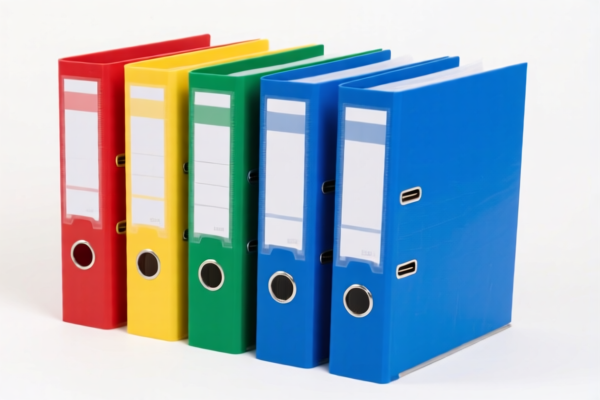
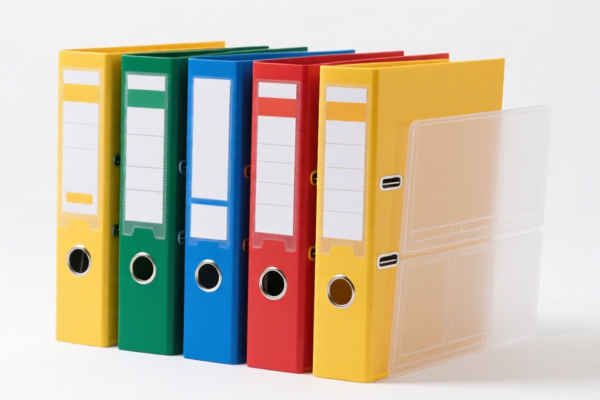
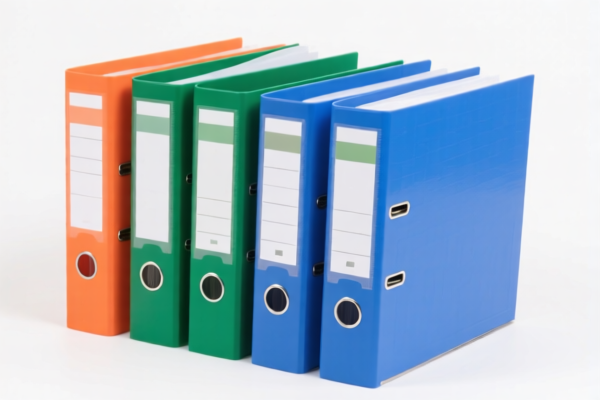

AI Analysis
📂 Plastic Folders: The Ultimate HS Code & Taxation Breakdown (2026 Edition)
🌐 HS Code Reference & Customs Clearance Guide | 2026 Latest Tariff Analysis | Professional Clearance Strategy
📌 Part 1: Product Definition & Classification – What Exactly Is a "Plastic Folder"?
A Plastic Folder is a versatile stationery or packaging item made primarily from polymer materials (PVC, PE, PP, etc.). In international trade, it is not a single entity but falls into different categories based on its structure, function, and specific design features. Misclassification here can lead to massive tariff discrepancies (from 22.8% to 40.3%+).
Key Distinction Points: * Is it a standard stationery folder? (Loose-leaf, document holding) → Likely Chapter 48 or Chapter 39 (Other Articles). * Is it a packaging sleeve/case? (Used for enclosing goods, protection) → Likely Chapter 39 (Packaging Articles). * Is it "flexible" or "rigid"? → Impacts the specific subheading in Chapter 39.
⚠️ Critical Warning:
- Do NOT assume all plastic folders are the same.
- Stationery vs. Packaging is the biggest differentiator.
- Chapter 48 (Paper-based) vs. Chapter 39 (Plastic) must be strictly distinguished by material composition.
📦 Part 2: HS Code Classification Details (2026 Latest Tariff Authority Mapping)
Based on the provided data, here are the five most likely HS Codes for "Plastic Folder" and their precise descriptions.
| HS Code | Product Description & Logic | Why This Code? | Total Tax Rate |
|---|---|---|---|
3926.90.99.89 |
Other Plastic Articles | Generic plastic folder not specified elsewhere. Classified as "Other plastic articles" under Chapter 39. | 22.8% |
4820.30.00.40 |
Other Folders (Non-Binder) | Plastic folder treated as a "folder" analog to paper folders. Specifically excludes binders. | 35.0% |
3926.90.87.00 |
Other Flexible Plastic Articles | Classified as a "flexible plastic article." Often used for thin, soft plastic sleeves. | 40.3% |
3923.10.90.00 |
Boxes, Cases, Clamps for Packing | If the folder is thick/rigid and used primarily for packaging/containing goods (not just documents). | 38.0% |
3923.90.00.80 |
Other Pack/Conveyance Articles | Extension of packaging supplies. For plastic folders used in industrial/commercial packaging contexts. | 38.0% |
🔍 Deep Dive Analysis:
-3926.90.99.89(22.8%): The "cheapest" option. Use this if the folder is a general-purpose plastic accessory that doesn't fit the "packaging" or "paper-folder-analog" definitions.
-4820.30.00.40(35.0%): High risk. Even though it's plastic, if customs classifies it as a "folder" under Chapter 48 (which covers paper/paperboard), the base duty is 0%, but the Section 301 (25%) and 122 (10%) penalties hit hard.
-3926.90.87.00(40.3%): The "expensive" plastic article. This applies if the folder is considered a "flexible" plastic good. The high base duty (5.3%) + 25% + 10% makes this the highest tax bracket.
-3923.10/3923.90(38.0%): The "Packaging" trap. If you declare it as a "document holder" but it's actually used to ship/products protect items, customs may reclassify it as packaging, triggering the 3% base + 25% + 10% structure.
💰 Part 3: 2026 Latest Tariff Rate Breakdown (Including Surcharges)
✅ Applicable Country: United States (US)
✅ Origin: China (CN)
✅ Effective Date: November 10, 2025 (including subsequent imports)
🎯 1. 3926.90.99.89 —— Other Plastic Articles (Lowest Risk/Rate)
| Item | Detail |
|---|---|
| Base Duty | 5.3% (Ad Valorem) |
| Section 301 Surcharge | +7.5% |
| Section 122 Duty | +10% |
| Total Effective Rate | 22.8% |
| Calculation | CIF Value × 22.8% |
| De Minimis Eligible? | ❌ No (Denied for China origin under current trade policies) |
| Legal Basis | Base Tariff → USITC Footnote → IEEPA 10% → Sec 301 7.5% |
📌 Explanation:
- This is the most favorable classification for a generic plastic folder.
- The Section 301 rate is only 7.5%, not the typical 25%. This suggests it may be on an exclusion list or a lower-priority item in this specific subheading.
- Strategy: Always aim for this code if the product is a standard, non-packaging plastic folder.
🎯 2. 4820.30.00.40 —— Other Folders (High Rate)
| Item | Detail |
|---|---|
| Base Duty | 0.0% |
| Section 301 Surcharge | +25.0% |
| Section 122 Duty | +10% |
| Total Effective Rate | 35.0% |
| Calculation | CIF Value × 35.0% |
| De Minimis Eligible? | ❌ No |
| Legal Basis | IEEPA 10% → USITC 8524/4820 logic → Sec 301 25% |
📌 Warning:
- Even though the Base Duty is 0%, the 25% Section 301 penalty applies because "folders" (even plastic ones classified analogously to paper) are often targeted.
- Result: 12.2% higher than3926.90.99.89. Avoid this unless the product is explicitly a "document organizer" and cannot be classified as "other plastic articles."
🎯 3. 3926.90.87.00 —— Other Flexible Plastic Articles (Highest Rate)
| Item | Detail |
|---|---|
| Base Duty | 5.3% |
| Section 301 Surcharge | +25.0% |
| Section 122 Duty | +10% |
| Total Effective Rate | 40.3% |
| Calculation | CIF Value × 40.3% |
| De Minimis Eligible? | ❌ No |
| Legal Basis | Base Tariff → Sec 301 25% → IEEPA 10% |
📌 Critical Alert:
- This is the most expensive option.
- It applies if your folder is thin, flexible, and not considered a "box" or "case."
- Avoid this classification if possible. Re-evaluate product design or description to fit3926.90.99.89or3923.xxxxxx.
🎯 4 & 5. 3923.10.90.00 & 3923.90.00.80 —— Packaging Articles
| Item | Detail |
|---|---|
| Base Duty | 3.0% |
| Section 301 Surcharge | +25.0% |
| Section 122 Duty | +10% |
| Total Effective Rate | 38.0% |
| Calculation | CIF Value × 38.0% |
| De Minimis Eligible? | ❌ No |
📌 Note:
- If the folder is used for shipping protection (e.g., a plastic sleeve for a product), it falls here.
- The base duty is lower (3.0%), but the 25% Section 301 penalty makes it more expensive than3926.90.99.89.
🛠️ Part 4: Customs Clearance Practical Advice (Real-World Pitfall Avoidance)
✅ 1. Documentation Checklist (Non-Negotiable)
| Document | Required | Purpose |
|---|---|---|
| Product Specification Sheet | ✔️ | Must specify material (e.g., "100% Polypropylene"), thickness, and dimensions. |
| High-Resolution Photos | ✔️ | Must show structure: Is it a simple sleeve? Does it have holes? Is it rigid or flexible? |
| Commercial Invoice | ✔️ | Description must match HS Code logic. - For 3926.90.99.89: "Plastic Stationery Folder, General Use"- For 3923.10.90.00: "Plastic Packaging Sleeve for Product Protection" |
| Material Safety Data Sheet (MSDS) | ✔️ | Required for plastic imports to verify chemical composition. |
| Certificate of Origin (CO) | ✔️ | Essential for proving Chinese origin (triggers Section 301/122). |
✅ 2. Declaration Strategy (Key Mantras)
🔥 "Material First, Function Second! Don't Call It a Folder if It's a Sleeve!"
| Scenario | Correct Declaration | Incorrect Declaration | Risk |
|---|---|---|---|
| Thin, flexible plastic sheet | "Plastic Sleeve, Flexible, Chapter 39" | "Plastic Folder" | Customs may assign 3926.90.87.00 (40.3%) |
| Rigid plastic document holder | "Plastic Office Organizer, Other Article" | "Folder" (Chapter 48 analog) | Customs may assign 4820.30.00.40 (35.0%) |
| Thick, protective casing | "Plastic Packaging Case, Chapter 39" | "Folder" | Customs may assign 3923.10.90.00 (38.0%) |
| Generic, multi-use plastic item | "Other Plastic Article, Not Elsewhere Specified" | Vague "Plastic Good" | Best case: 3926.90.99.89 (22.8%) |
📌 Pro Tip:
- Use "Other Plastic Article" in your description to aim for3926.90.99.89.
- Avoid the word "Folder" in the detailed description if you want to avoid Chapter 48 classification (4820.30.00.40).
- If you use "Folder," be prepared to justify why it's not paper-based or why it doesn't fit Chapter 48.
✅ 3. Special Case Handling
| Situation | Advice |
|---|---|
| Customs Questions "Is it Paper or Plastic?" | Provide a material composition statement (e.g., "100% PVC, 0% Cellulose"). |
| Customs Questions "Is it for Packing or Writing?" | If for packing, declare as 3923. If for writing, declare as 3926. Be consistent. |
| Is it a "Binder"? | If it has rings/mechanisms, it might be a binder. If not, it's a folder. Binders have different codes. |
| De Minimis (Section 321) | ❌ Not Eligible. Even for low-value shipments, Chinese plastic folders are subject to full duty collection due to Section 301/122. |
🌍 Part 5: Global Market Comparison (2026)
| Country/Region | Recommended HS Code | Estimated Total Tax | Notes |
|---|---|---|---|
| 🇺🇸 USA | 3926.90.99.89 |
22.8% | Best option. Includes Sec 301 (7.5%) + IEEPA (10%). |
| 🇪🇺 EU | 3926.90.99 |
~6.5% | Lower base duty, no Section 301 equivalent. |
| 🇨🇳 China (Import) | 3926.90.99 |
~6.5% | Standard MFN rate. |
| 🇬🇧 UK | 3926.90.99 |
~6.5% | Post-Brexit tariff aligned with WTO rates. |
| 🇯🇵 Japan | 3926.90.99 |
~6.0% | Low tariff environment. |
📌 Conclusion:
- USA is the most expensive market due to Section 301 and Section 122 duties.
- Optimization Goal: Always aim for3926.90.99.89(22.8%) for the US market.
- Risk: Misclassification as4820or3926.90.87can add 12-17% to your cost.
📌 Part 6: Common Mistakes & Pitfalls (Blood & Tears Lessons)
❌ Mistake 1: Calling every plastic document holder a "Folder"
👉 Consequence: Customs may classify it under Chapter 48 (4820.30.00.40), adding 12.2% to your tax.
👉 Fix: Describe as "Plastic Article" or "Plastic Sleeve" to aim for Chapter 39 (3926.90.99.89).
❌ Mistake 2: Ignoring the "Flexible" vs. "Rigid" distinction
👉 Consequence: Thin, flexible sleeves are often deemed "Other Flexible Plastic Articles" (3926.90.87.00), incurring the highest tax (40.3%).
👉 Fix: If possible, design the product to be slightly more rigid or market it as a "Case" or "Organizer" rather than a "Sleeve."
❌ Mistake 3: Assuming De Minimis Applies
👉 Consequence: Shipments under $800 from China are NOT exempt from Section 301/122 duties for plastic goods.
👉 Fix: Plan for full duty payment from Day 1.
❌ Mistake 4: Inconsistent Product Descriptions
👉 Consequence: Invoice says "Folder," Packing List says "Packaging Sleeve." Customs may reclassify as Packaging (3923), adding 15.2% to tax.
👉 Fix: Ensure all documents use the same functional description.
🎯 Part 7: Conclusion: Professional Declaration, Cost Savings!
🎯 Remember the Mantra:
🔹 "Plastic Article > Folder > Sleeve"
🔹 "Aim for 3926.90.99.89 (22.8%) - Avoid 3926.90.87.00 (40.3%)!"
🔹 "HS Code is King, Tax Difference is $2.50 per $10!"
📌 Pro Tip:
If your plastic folder has unique features (e.g., integrated pockets, reinforced edges, specialized closures), document these features! They may help argue for a more favorable classification under "Other Articles" (3926.90.99.89) rather than generic sleeves or folders.
📣 Immediate Action:
📞 Consult a Customs Broker: Provide product samples and photos.
📝 Request Advance Ruling (PAR): If shipping high volumes, apply for a Pre-Arrival Ruling to lock in3926.90.99.89.
🚀 Optimize Packaging: Ensure your product is clearly a "Plastic Article" and not a "Packaging Material" or "Paper Analog."
✨ Professional Clearance Starts with Precise Classification!
💼 Every Percent Matters in International Trade!
Customer Reviews
About HS Code Classification
The Harmonized System (HS) is an internationally standardized nomenclature developed by the World Customs Organization (WCO) to classify traded products. Over 200 countries use the HS system as the basis for customs tariffs, trade statistics, and import/export regulations.
Each HS code follows a hierarchical structure:
- Chapter (2 digits) — Broad category of goods (e.g., Chapter 84: Machinery and Mechanical Appliances)
- Heading (4 digits) — More specific grouping within the chapter
- Subheading (6 digits) — Internationally standardized breakdown, used by all WCO member countries
- National subdivisions (8-10 digits) — Country-specific extensions for further classification, such as US HTSUS 10-digit codes
Correct HS code classification is essential for smooth customs clearance, accurate duty payment, and compliance with trade regulations. Misclassification can lead to customs delays, overpayment of duties, or penalties.
When importing from CN to US, the applicable tariff rates may include:
- Most-Favored-Nation (MFN) rate — The standard duty rate applied to WTO members
- General rate — Applied to countries without trade agreements
- Trade remedy duties — Additional tariffs such as Section 301 (anti-dumping), Section 232 (national security), or countervailing duties
The information provided on this page is for reference purposes only. For official classification, please consult with your local customs authority or a licensed customs broker.