Plastic Folder with Labels for Office Use
CN → US| HS Code | Tariff Rate | Origin | Destination | Doc |
|---|---|---|---|---|
| 3926100000 | 15.3% | CN | US | Official Doc |
| 3926909989 | 22.8% | CN | US | Official Doc |
| 4820300040 | 35.0% | CN | US | Official Doc |
| 3926908700 | 40.3% | CN | US | Official Doc |
| 3923109000 | 38.0% | CN | US | Official Doc |
| 3923900080 | 38.0% | CN | US | Official Doc |
Product Images
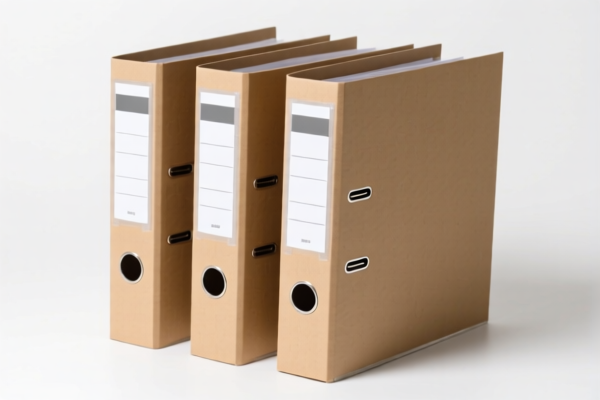
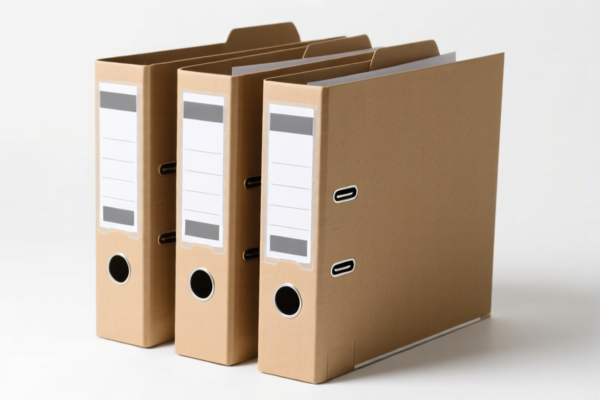
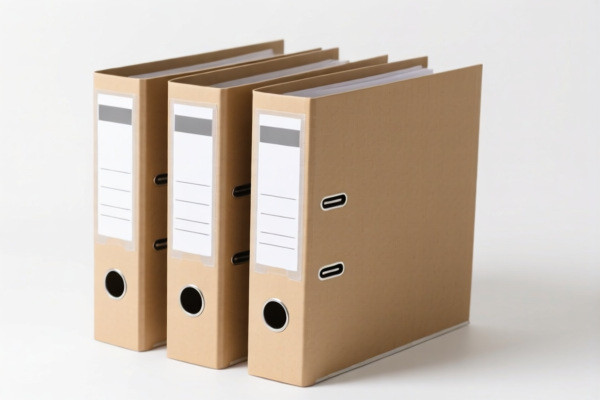
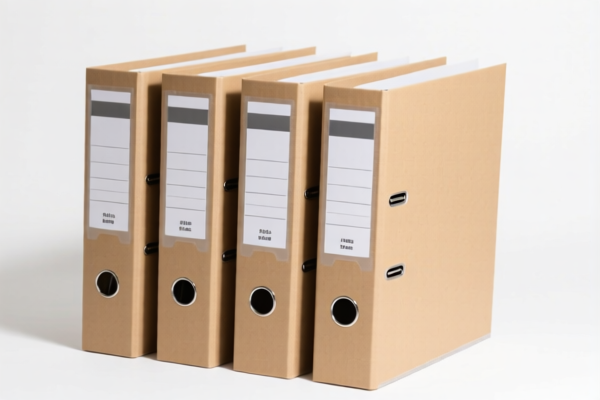
AI Analysis
📂 Plastic Folder with Labels for Office Use
🌐 HS Code Reference & Customs Clearance Guide | 2026 Latest Tariff Analysis | Professional Clearance Strategy
📌 I. Product Definition & Classification: Do You Really Understand "Plastic Folders"?
Plastic folders are ubiquitous office supplies designed for organizing documents. However, in international trade, the HS Code classification depends heavily on three critical factors: 1. Material Composition: Is it purely plastic, or does it contain paper/cardboard? 2. Specific Function: Is it strictly for labeling/office filing, or is it considered packaging? 3. Structure/Form: Is it a rigid "file" or a flexible "bag/pouch"?
⚠️ Key Distinction Points: - If it is a rigid plastic folder with specific labeling functions for office use → Likely 3926.10.00.00. - If it is a general-purpose plastic file without specific "labeling" features → Likely 3926.90.99.89. - If it is considered packaging material (e.g., holding goods for shipment) → Likely 3923.10.90.00 / 3923.90.00.80. - If it has paper/cardboard components (e.g., plastic-coated paper file) → Likely 4820.30.00.40. - If it is flexible (like a plastic sleeve/bag) → Likely 3926.90.87.00.
📦 II. HS Code Classification Details (2026 Latest Tariff Authority Comparison)
| HS Code | Product Description | Applicable Scenario | Key Feature |
|---|---|---|---|
3926.10.00.00 |
Office supplies, plastic folders with labels | Standard office filing, labeled dividers, index tabs | ✅ Specific Office Use with Labels |
3926.90.99.89 |
Other plastic articles, not elsewhere specified | General plastic folders, unbranded, no specific labeling | ✅ General Plastic File |
4820.30.00.40 |
Folders, files, account books, etc., excluding loose-leaf | Plastic-coated paper folders, paper-based files | ✅ Contains Paper/Cardboard |
3926.90.87.00 |
Flexible plastic articles | Plastic sleeves, bags, flexible pouches for documents | ✅ Flexible Form |
3923.10.90.00 |
Plastic articles for packing/transport of goods | Packaging folders, shipping organizers, bulk storage | ✅ Packaging/Transport Purpose |
3923.90.00.80 |
Plastic packaging/containment articles (extended) | Generic plastic packaging solutions, non-standard packaging | ✅ Packaging Purpose |
🔍 Key Reminder: - Strict Office Use vs. Packaging: If the folder is used to ship goods or package products, it falls under Chapter 3923 (Packaging), NOT 3926 (Office Supplies). - Material Mix: If the folder is primarily paper with a plastic coating, it goes to 4820, not 3926. - Labeling Feature: Only folders specifically designed with labels/tab holders for office filing qualify for the lowest tariff (
3926.10.00.00).
💰 III. 2026 Latest Tariff Rate Breakdown (Including Surcharges & Policy Add-ons)
✅ Applicable Country: United States (US)
✅ Origin: China (CN)
✅ Effective Date: From November 10, 2025 (including subsequent imports)
🎯 1. 3926.10.00.00 —— Office Supplies, Plastic Folders with Labels
| Item | Content |
|---|---|
| Base Tariff | 5.3% (ad valorem) |
| Section 301 Surcharge | 0.0% |
| 122 Provision Surcharge | 10.0% |
| Total Tariff | 15.3% |
| Tax Calculation | CIF Value × 15.3% |
| De Minimis Exemption | ❌ Not Eligible |
| Legal Basis Path | Base: 5.3% → 122: 10% → Total: 15.3% |
📌 Explanation:
- This is the most favorable classification for labeled office folders. - No Section 301 surcharge applies to this specific subheading. - Only the 122 Provision (10%) applies. - Total Cost Impact: 15.3% is manageable for low-margin office supplies.
🎯 2. 3926.90.99.89 —— Other Plastic Articles (General Plastic Folders)
| Item | Content |
|---|---|
| Base Tariff | 5.3% |
| Section 301 Surcharge | 7.5% |
| 122 Provision Surcharge | 10.0% |
| Total Tariff | 22.8% |
| Tax Calculation | CIF Value × 22.8% |
| De Minimis Exemption | ❌ Not Eligible |
| Legal Basis Path | Base: 5.3% → 301: 7.5% → 122: 10% → Total: 22.8% |
📌 Note:
- If the folder is not specifically labeled or is a general plastic file, it falls here. - The 7.5% Section 301 surcharge is added, increasing costs significantly.
🎯 3. 4820.30.00.40 —— Folders (Paper/Cardboard Based)
| Item | Content |
|---|---|
| Base Tariff | 0.0% |
| Section 301 Surcharge | 25.0% |
| 122 Provision Surcharge | 10.0% |
| Total Tariff | 35.0% |
| Tax Calculation | CIF Value × 35.0% |
| De Minimis Exemption | ❌ Not Eligible |
| Legal Basis Path | Base: 0.0% → 301: 25.0% → 122: 10% → Total: 35.0% |
📌 Warning:
- If your folder is primarily paper (even with plastic coating), it triggers the 25% Section 301 surcharge. - Despite 0% base tariff, the total 35% is very high.
🎯 4. 3926.90.87.00 —— Flexible Plastic Articles
| Item | Content |
|---|---|
| Base Tariff | 5.3% |
| Section 301 Surcharge | 25.0% |
| 122 Provision Surcharge | 10.0% |
| Total Tariff | 40.3% |
| Tax Calculation | CIF Value × 40.3% |
| De Minimis Exemption | ❌ Not Eligible |
| Legal Basis Path | Base: 5.3% → 301: 25.0% → 122: 10% → Total: 40.3% |
📌 Warning:
- Flexible plastic sleeves/pouches are heavily taxed. - The 25% Section 301 surcharge applies fully.
🎯 5. 3923.10.90.00 & 3923.90.00.80 —— Packaging Articles
| Item | Content |
|---|---|
| Base Tariff | 3.0% |
| Section 301 Surcharge | 25.0% |
| 122 Provision Surcharge | 10.0% |
| Total Tariff | 38.0% |
| Tax Calculation | CIF Value × 38.0% |
| De Minimis Exemption | ❌ Not Eligible |
| Legal Basis Path | Base: 3.0% → 301: 25.0% → 122: 10% → Total: 38.0% |
📌 Warning:
- If customs determines the folder is packaging (e.g., used to ship goods), it falls here. - 38% is a high cost, but 3926.10.00.00 (15.3%) is much better if you can justify "office use with labels."
🛠️ IV. Customs Clearance Practical Advice (Avoid Pitfalls)
✅ 1. Documentation Checklist (Essential)
| Document | Required? | Explanation |
|---|---|---|
| ✅ Product Photos | ✔️ | Must clearly show labels/tabs if claiming 3926.10.00.00 |
| ✅ Specifications Sheet | ✔️ | Detail material (100% plastic vs. paper/plastic mix) |
| ✅ Commercial Invoice | ✔️ | State "Plastic Folder with Labels for Office Use" clearly |
| ✅ Packing List | ✔️ | Ensure no packaging items are mixed in that could trigger "packaging" classification |
| ✅ Origin Certificate | ✔️ | For US origin, no surcharge; for China, surcharges apply |
✅ 2. Declaration Tips (Critical)
🔥 "Labeling is Key, Office Use is King!"
| Scenario | Correct Declaration | Wrong Practice |
|---|---|---|
| Folder with labels/tabs for office | 3926.10.00.00 |
Declaring as "Plastic Folder" → 22.8% |
| General plastic file, no labels | 3926.90.99.89 |
Declaring as "Office Folder" → 22.8% |
| Folder used for shipping goods | 3923.10.90.00 |
Declaring as "Office Supply" → 38% + Risk |
| Folder made of paper | 4820.30.00.40 |
Declaring as "Plastic" → 35% + Penalty |
| Flexible plastic sleeve | 3926.90.87.00 |
Declaring as "Rigid Folder" → 40.3% |
✅ 3. Special Case Handling
| Situation | Recommendation |
|---|---|
| OEM Custom Folders | Provide design specs showing label features to support 3926.10.00.00 |
| Mixed Materials | If >50% paper, declare as 4820.30.00.40; if >50% plastic, declare as 3926 |
| Bundled with Stationery | Declare folders separately to avoid "packaging" classification |
| Flexible vs. Rigid | Rigid folders = 3926.10.00.00 / 3926.90.99.89; Flexible = 3926.90.87.00 |
🌍 V. Global Market Clearance Comparison (2026 Latest)
| Country/Region | Recommended HS Code | Tariff | Certification | Notes |
|---|---|---|---|---|
| 🇺🇸 USA | 3926.10.00.00 |
15.3% (China) | No special | Best for labeled folders |
| 🇨🇳 China | 3926.10.00.00 |
5% | No special | No surcharges |
| 🇪🇺 EU | 3926.10.00.00 |
6.5% | CE (if applicable) | No surcharges |
| 🇬🇧 UK | 3926.10.00.00 |
6.5% | UKCA | No surcharges |
| 🇦🇺 Australia | 3926.10.00.00 |
5% | No special | No surcharges |
📌 Conclusion:
- USA imposes heavy surcharges on Chinese-origin goods. -3926.10.00.00is the only classification with 0% Section 301 surcharge, making it the most cost-effective. - To qualify, the folder must have labels and be clearly for office use.
📌 VI. Common Errors & Pitfalls (Lessons Learned)
❌ Error 1: Declaring a packaging folder as an office folder
👉 Consequence: Customs reclassifies to 3923, resulting in 38% tariff + penalties.
❌ Error 2: Declaring a paper folder as a plastic folder
👉 Consequence: Reclassified to 4820, resulting in 35% tariff + misdeclaration fine.
❌ Error 3: Not highlighting labeling features
👉 Consequence: Falls to 3926.90.99.89, resulting in 22.8% tariff (vs. 15.3%).
❌ Error 4: Mixing flexible sleeves with rigid folders in one shipment
👉 Consequence: Each item taxed at its own rate, leading to complex clearance and potential delays.
✅ Correct Practice:
"Plastic Folder with Labels for Office Use, 100% Polypropylene, Rigid Structure, Includes Index Tabs, Model XYZ, Not for Packaging"
🎯 VII. Conclusion: Precise Classification, Save Costs!
🎯 Remember the Mantra:
🔹 "Labeled = 15.3%, General = 22.8%, Packaging = 38%, Paper = 35%, Flexible = 40.3%!"
🔹 "Office Use + Labels = Lowest Tariff!"
🔹 "Clear Description, Accurate HS Code, Smooth Clearance!"
📌 Pro Tip:
If your folders are originating from Vietnam, Thailand, or Malaysia, you may qualify for IEEPA exemptions, reducing tariffs to 0%~5%.
Recommend applying for an Advance Ruling to secure the 15.3% rate for 3926.10.00.00.
📣 Action Required:
📞 Contact a professional customs broker + Provide product photos + Apply for HS Code Advance Ruling
🚀 Ensure your plastic folders clear customs smoothly, save costs, and boost profits!
✨ Professional Clearance Starts with Accurate Classification!
💼 Every cent of cost should be precisely calculated!
Customer Reviews
About HS Code Classification
The Harmonized System (HS) is an internationally standardized nomenclature developed by the World Customs Organization (WCO) to classify traded products. Over 200 countries use the HS system as the basis for customs tariffs, trade statistics, and import/export regulations.
Each HS code follows a hierarchical structure:
- Chapter (2 digits) — Broad category of goods (e.g., Chapter 84: Machinery and Mechanical Appliances)
- Heading (4 digits) — More specific grouping within the chapter
- Subheading (6 digits) — Internationally standardized breakdown, used by all WCO member countries
- National subdivisions (8-10 digits) — Country-specific extensions for further classification, such as US HTSUS 10-digit codes
Correct HS code classification is essential for smooth customs clearance, accurate duty payment, and compliance with trade regulations. Misclassification can lead to customs delays, overpayment of duties, or penalties.
When importing from CN to US, the applicable tariff rates may include:
- Most-Favored-Nation (MFN) rate — The standard duty rate applied to WTO members
- General rate — Applied to countries without trade agreements
- Trade remedy duties — Additional tariffs such as Section 301 (anti-dumping), Section 232 (national security), or countervailing duties
The information provided on this page is for reference purposes only. For official classification, please consult with your local customs authority or a licensed customs broker.