Plastic Food Storage Bowl
CN → US| HS Code | Tariff Rate | Origin | Destination | Doc |
|---|---|---|---|---|
| 3926100000 | 15.3% | CN | US | Official Doc |
| 6912005000 | 16.0% | CN | US | Official Doc |
| 3924103000 | 22.8% | CN | US | Official Doc |
| 3924104000 | 13.4% | CN | US | Official Doc |
| 3926909989 | 22.8% | CN | US | Official Doc |
| 6912002000 | 38.0% | CN | US | Official Doc |
Product Images

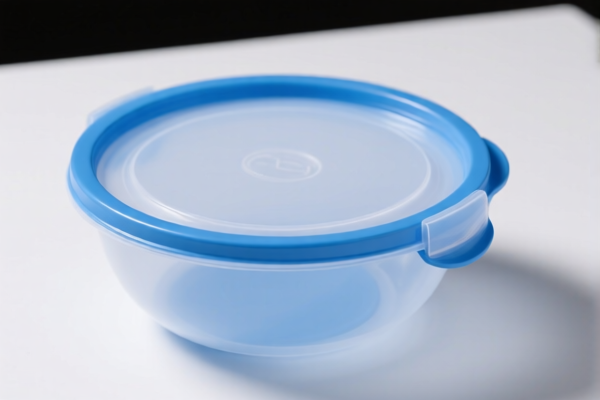
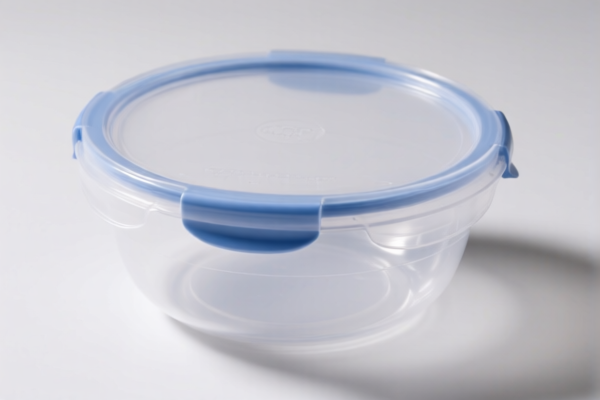
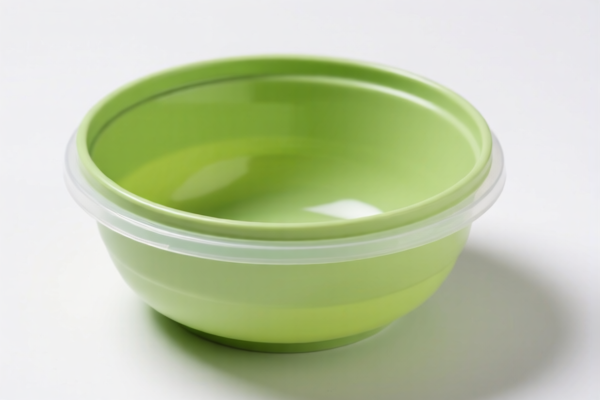
AI Analysis
🍽️ Plastic Food Storage Bowl (Plastic Tableware & Kitchenware)
🌐 HS Code Reference & Customs Clearance Guide | 2026 Latest Tariff Analysis | Professional Clearance Strategy
📌 I. Product Definition & Classification: What is a "Plastic Food Storage Bowl"?
A Plastic Food Storage Bowl refers to containers made primarily of plastic materials, designed for storing, preparing, or serving food. In international trade, these items are generally classified under Chapter 39 (Plastics and Articles Thereof) or Chapter 69 (Ceramic Products), depending on the specific material composition and manufacturing process.
Key Distinction Points: - Pure Plastic Products: Items made entirely from polypropylene (PP), polyethylene (PE), or melamine. These fall under Chapter 39. - Non-Ceramic/Other Materials: If the product is described as "non-porcelain" but not strictly plastic (e.g., certain composite materials or specific ceramic-like plastics), it may be misclassified or fall into broader "other" categories under Chapter 69 or specific subheadings in Chapter 39. - Tableware vs. General Plastic Articles: Items specifically used as tableware (bowls, plates) have dedicated subheadings in Chapter 39 (3924). General plastic containers (like storage tubs) may fall under 3926.
⚠️ Critical Classification Rule:
- If the item is explicitly "Tableware" (used for eating/serving food), it MUST be classified under heading 3924 (Plastic tableware, kitchenware, other household articles and hygiene or toilet articles).
- If the item is a storage container not primarily for immediate consumption but for long-term storage, it may be classified under 3926 (Other articles of plastics).
- Misclassification between 3924 (Tableware) and 3926 (Other Plastic Articles) significantly affects the tariff rate due to different "Section 122" and additional duty calculations.
📦 II. HS Code Classification Details (Based on Provided Data)
| HS Code | Product Description (Summary) | Applicable Scenario | Key Differentiator |
|---|---|---|---|
| 3924.10.30.00 | Plastic tableware and kitchen utensils | Standard plastic bowls for food service, eating, or kitchen use. | Correct for Tableware. Subject to highest additional duties in this dataset. |
| 3924.10.40.00 | Plastic tableware and cookware, other household articles | Plastic bowls used for kitchen storage or general household use. | Correct for Tableware. Lower base tariff than 3924.10.30.00. |
| 3926.10.00.00 | Plastic bowls, classified as other plastic articles | Bowls that do not fit standard "tableware" definitions or are generic plastic articles. | Generic Plastic Article. Lower additional duties than tableware. |
| 3926.90.99.89 | Other plastic articles, conforming to bowl shape | Plastic items shaped like bowls but not primarily for tableware (e.g., industrial bowls, non-food grade). | General "Other" Category. High additional duties apply. |
| 6912.00.50.00 | Bowls, non-porcelain material, classified in other categories | Non-ceramic, non-standard plastic/composite bowls misclassified or categorized as "other ceramic-like". | Non-Ceramic. Higher base tariff. |
| 6912.00.20.00 | Non-porcelain ceramic products for kitchen utensils | Items marketed as "ceramic" but lacking porcelain characteristics, or specific kitchen ware. | Ceramic Alternative. Highest base tariff. |
🔍 Key Insight:
- Heading 3924 is the most appropriate for standard plastic food bowls.
- Heading 3926 is for plastic articles that are not specifically tableware.
- Heading 6912 applies to non-porcelain ceramic or similar materials.
- Misclassification Risk: Declaring a plastic tableware as "other plastic article" (3926) to avoid higher tableware duties is a common compliance risk and can lead to customs penalties.
💰 III. 2026 Latest Tariff Rate Breakdown (Including Surcharges & Policy Add-ons)
✅ Applicable Country: USA (US)
✅ Origin: China (CN)
✅ Effective Date: Current rates reflect recent 122 Clause and Section 301 implications.
🎯 1. 3924.10.30.00 —— Plastic Tableware and Kitchen Utensils
| Item | Details |
|---|---|
| Base Duty | 5.3% |
| Additional Duty | 7.5% (Section 301 / 122 Clause Impact) |
| 122 Clause Duty | 10% (Specific 122 Tariff) |
| Total Tax Rate | 22.8% |
| Calculation | CIF Value × 22.8% |
| De Minimis Exemption | ❌ Not Applicable (Deny De Minimis for China-origin plastic tableware) |
| Legal Path | USITC:3924.10.30.00 → Section 301 → 122 Clause |
📌 Explanation:
- This is the standard tableware classification.
- It incurs the 7.5% additional duty (often associated with broader trade measures) plus the 10% 122 Clause duty.
- Total 22.8% is a significant cost factor for standard plastic bowls.
🎯 2. 3924.10.40.00 —— Plastic Tableware & Other Household Articles
| Item | Details |
|---|---|
| Base Duty | 3.4% |
| Additional Duty | 0.0% |
| 122 Clause Duty | 10% |
| Total Tax Rate | 13.4% |
| Calculation | CIF Value × 13.4% |
| De Minimis Exemption | ❌ Not Applicable |
| Legal Path | USITC:3924.10.40.00 → 122 Clause |
📌 Explanation:
- This subheading often captures specific plastic household items that are tableware but categorized differently under 3924.10.40.
- No additional 7.5% duty is applied here, only the 10% 122 Clause.
- Total 13.4% is significantly lower than 3924.10.30.00, making this a preferred classification if product specs allow.
🎯 3. 3926.10.00.00 —— Plastic Bowls (Other Plastic Articles)
| Item | Details |
|---|---|
| Base Duty | 5.3% |
| Additional Duty | 0.0% |
| 122 Clause Duty | 10% |
| Total Tax Rate | 15.3% |
| Calculation | CIF Value × 15.3% |
| De Minimis Exemption | ❌ Not Applicable |
| Legal Path | USITC:3926.10.00.00 → 122 Clause |
📌 Explanation:
- Classified as other plastic articles rather than tableware.
- Avoids the 7.5% additional duty found in 3924.10.30.00.
- Total 15.3% is moderate, but carries classification risk if the item is clearly used for dining.
🎯 4. 3926.90.99.89 —— Other Plastic Articles (Bowl Shape)
| Item | Details |
|---|---|
| Base Duty | 5.3% |
| Additional Duty | 7.5% |
| 122 Clause Duty | 10% |
| Total Tax Rate | 22.8% |
| Calculation | CIF Value × 22.8% |
| De Minimis Exemption | ❌ Not Applicable |
| Legal Path | USITC:3926.90.99.89 → Section 301 → 122 Clause |
📌 Explanation:
- A generic "other" category.
- Incurs both the 7.5% additional duty and 10% 122 Clause.
- Total 22.8% is the same as the highest tableware rate, offering no tariff advantage over 3924.10.30.00.
🎯 5. 6912.00.50.00 —— Non-Porcelain Bowls
| Item | Details |
|---|---|
| Base Duty | 6.0% |
| Additional Duty | 0.0% |
| 122 Clause Duty | 10% |
| Total Tax Rate | 16.0% |
| Calculation | CIF Value × 16.0% |
| De Minimis Exemption | ❌ Not Applicable |
| Legal Path | USITC:6912.00.50.00 → 122 Clause |
📌 Explanation:
- For non-porcelain items that don't fit standard ceramic or plastic definitions.
- Total 16.0% is moderate.
- Risk: High scrutiny on material composition. If proven to be plastic, customs may reclassify to 3924/3926.
🎯 6. 6912.00.20.00 —— Non-Porcelain Ceramic Kitchen Utensils
| Item | Details |
|---|---|
| Base Duty | 28.0% |
| Additional Duty | 0.0% |
| 122 Clause Duty | 10% |
| Total Tax Rate | 38.0% |
| Calculation | CIF Value × 38.0% |
| De Minimis Exemption | ❌ Not Applicable |
| Legal Path | USITC:6912.00.20.00 → 122 Clause |
📌 Explanation:
- Highest Base Duty (28%).
- Total 38.0% is the most expensive option.
- Avoid unless the product is genuinely non-porcelain ceramic and misclassification of plastic would result in higher penalties.
🛠️ IV. Customs Clearance Practical Advice (Avoid Pitfalls)
✅ 1. Required Documentation Checklist
| Document | Mandatory | Notes |
|---|---|---|
| ✅ Product Specification Sheet | ✔️ | Must specify material (e.g., 100% PP, Melamine, PE). |
| ✅ Product Photos | ✔️ | Show usage (food contact), logo, and material texture. |
| ✅ Commercial Invoice | ✔️ | Clearly describe as "Plastic Food Storage Bowl" or "Plastic Tableware". |
| ✅ Certificate of Origin | ✔️ | Required for duty calculation (China origin triggers surcharges). |
| ✅ FDA Compliance Doc | ✔️ | Critical for Food Contact Items. Must state FDA compliance (21 CFR). |
| ✅ Material Safety Data Sheet (MSDS) | ✔️ | Optional but helpful for chemical composition proof. |
✅ 2. Classification Strategy & Risk Mitigation
| Scenario | Recommended HS Code | Reasoning |
|---|---|---|
| Standard Plastic Dining Bowl | 3924.10.40.00 |
Lowest total duty (13.4%) for true tableware. |
| Plastic Storage Container (Non-Dining) | 3926.10.00.00 |
If not used for immediate dining, classify as general article (15.3%). |
| Melamine Tableware | 3924.10.30.00 or 3924.10.40.00 |
Melamine is a plastic resin. Classify under 3924. |
| "Ceramic-Style" Plastic Bowl | 3924.10.40.00 |
Even if it looks like ceramic, if it's plastic, it must be 3924. Misclassifying as 6912 (38%) is costly. |
🔥 Key Advice:
- Do NOT classify plastic bowls as6912(Ceramic) unless they are actually non-porcelain ceramic. Customs can easily test material composition.
- Choose3924.10.40.00if the product is clearly tableware to save 9.4% compared to3924.10.30.00.
- Avoid3926.90.99.89as it has the same high duty as3924.10.30.00(22.8%) but less specific description.
✅ 3. Special Considerations
| Issue | Solution |
|---|---|
| Food Contact Safety | Ensure products meet FDA 21 CFR 177 regulations. Failure can lead to detention. |
| Material Misstatement | Do not claim "Porcelain" if it is plastic. Use accurate terms like "Polypropylene Bowl". |
| Packaging | Declare main product (Bowl) value. Accessories (lids) should be included in the same HS code if sold together. |
| Country of Origin | Clearly mark "Made in China" on product and packaging to avoid origin fraud penalties. |
🌍 V. Global Market Comparison (2026)
| Region | Recommended HS Code | Est. Total Duty (China Origin) | Notes |
|---|---|---|---|
| 🇺🇸 USA | 3924.10.40.00 |
13.4% | Best for tableware. Includes 10% 122 Clause. |
| 🇪🇺 EU | 3924.10.90 |
0% - 6.5% | No 122 Clause or Section 301. Much lower duty. |
| 🇨🇳 China | 3924.10.00 |
0% - 5% | Export to China is tariff-free or low duty. |
| 🇬🇧 UK | 3924.10.90 |
0% - 6.5% | Post-Brexit rules similar to EU for many plastic goods. |
📌 Conclusion:
- The US market is the most expensive due to Section 301 and 122 Clause surcharges.
- China-origin plastic tableware faces significant tariff barriers.
- Optimize classification to3924.10.40.00to minimize US duty to 13.4% from 22.8%.
📌 VI. Common Mistakes & Pitfalls
❌ Mistake 1: Classifying plastic bowls as "Ceramic" (6912) to avoid plastic tariffs.
👉 Result: Customs tests material, reclassifies, and applies 38% + penalties.
❌ Mistake 2: Using 3926.90.99.89 for tableware.
👉 Result: Pays 22.8% (same as highest tableware rate) but lacks specific legal protection for food-contact items.
❌ Mistake 3: Ignoring FDA compliance.
👉 Result: Product detained at border. Cannot be imported without FDA registration.
✅ Correct Approach:
"Plastic Food Storage Bowl, Made of Polypropylene, FDA Compliant, For Kitchen Use" → HS Code: 3924.10.40.00
🎯 VII. Final Recommendations
- Prioritize
3924.10.40.00: If your product is a bowl for food storage or serving, this is the optimal HS Code with a 13.4% total duty rate. - Ensure FDA Compliance: All plastic food contact items must comply with FDA regulations. Provide certificates to customs.
- Accurate Description: Use terms like "Plastic Tableware" or "Plastic Kitchenware" instead of generic "Plastic Bowls" to align with 3924.
- Avoid High-Tariff Traps: Do not use
6912.00.20.00(38%) or3926.90.99.89(22.8%) unless absolutely necessary and justified by product specs.
📌 Pro Tip:
If you are importing large volumes, consider Advance Ruling from CBP (Customs and Border Protection) to secure the 13.4% classification legally, avoiding post-entry audits and potential back-taxes.
📣 Take Action Now:
📞 Consult a licensed customs broker
📄 Prepare FDA compliance docs
🚀 Optimize your supply chain for 13.4% duty instead of 22.8% or 38%!
✨ Smart Classification, Smarter Profits!
💼 Every percentage point matters in international trade.
Customer Reviews
About HS Code Classification
The Harmonized System (HS) is an internationally standardized nomenclature developed by the World Customs Organization (WCO) to classify traded products. Over 200 countries use the HS system as the basis for customs tariffs, trade statistics, and import/export regulations.
Each HS code follows a hierarchical structure:
- Chapter (2 digits) — Broad category of goods (e.g., Chapter 84: Machinery and Mechanical Appliances)
- Heading (4 digits) — More specific grouping within the chapter
- Subheading (6 digits) — Internationally standardized breakdown, used by all WCO member countries
- National subdivisions (8-10 digits) — Country-specific extensions for further classification, such as US HTSUS 10-digit codes
Correct HS code classification is essential for smooth customs clearance, accurate duty payment, and compliance with trade regulations. Misclassification can lead to customs delays, overpayment of duties, or penalties.
When importing from CN to US, the applicable tariff rates may include:
- Most-Favored-Nation (MFN) rate — The standard duty rate applied to WTO members
- General rate — Applied to countries without trade agreements
- Trade remedy duties — Additional tariffs such as Section 301 (anti-dumping), Section 232 (national security), or countervailing duties
The information provided on this page is for reference purposes only. For official classification, please consult with your local customs authority or a licensed customs broker.