Plastic Food Storage Containers
CN → US| HS Code | Tariff Rate | Origin | Destination | Doc |
|---|---|---|---|---|
| 3924905650 | 20.9% | CN | US | Official Doc |
| 3923900080 | 38.0% | CN | US | Official Doc |
| 3923109000 | 38.0% | CN | US | Official Doc |
| 3924104000 | 13.4% | CN | US | Official Doc |
| 3926901000 | 20.9% | CN | US | Official Doc |
Product Images
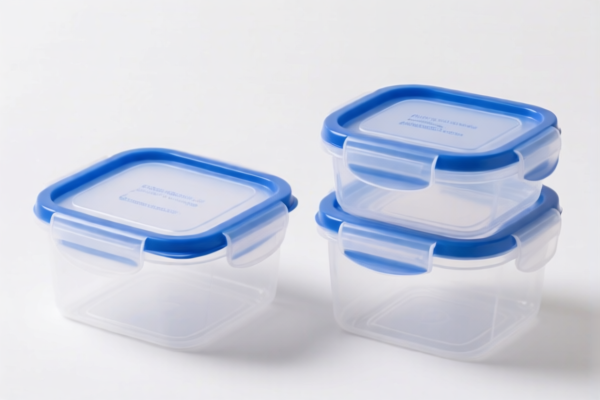
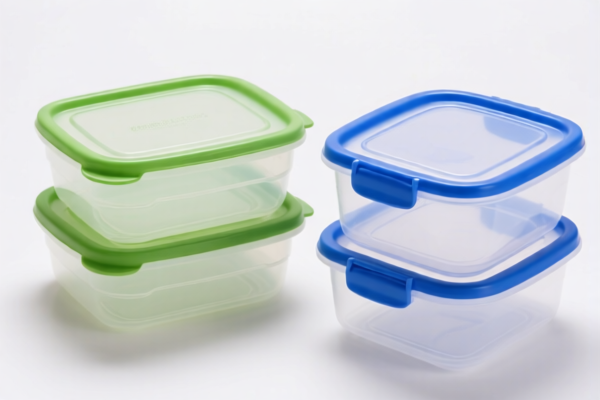
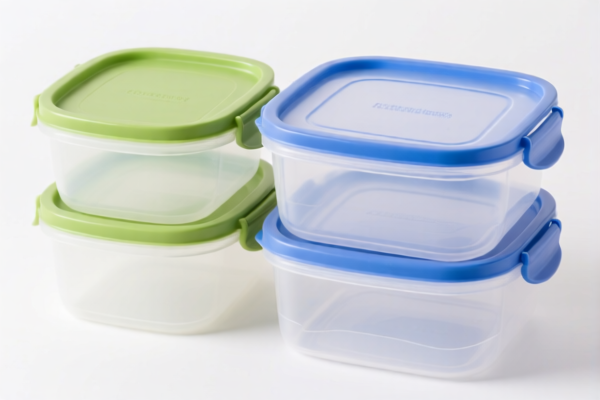
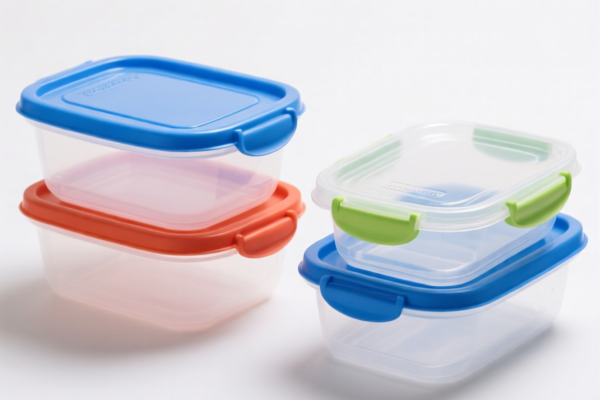
AI Analysis
🥗 Plastic Food Storage Containers: The Ultimate HS Code & Customs Clearance Guide
🌐 HS Code Reference & Customs Clearance Guide | 2026 Latest Tariff Analysis | Professional Clearance Strategy
📌 I. Product Definition & Classification: What Exactly Are "Plastic Food Storage Containers"?
Plastic food storage containers are ubiquitous household items used for organizing, preserving, and transporting food. In international trade, they are often misunderstood. Are they "tableware"? "Packaging"? Or "General Plastic Articles"? The answer depends entirely on material usage, specific form, and intended application.
⚠️ Key Distinction Point:
- If the item is a generic storage box without specific food-contact certification claims or specialized sealing mechanisms, it may fall under general plastic household articles or packaging.
- If it is explicitly designed as tableware (e.g., bowls, plates, cups with lids), it falls under "Plastics: Tableware, Kitchenware, and Hygiene/Cleaning Articles."
- If it is primarily for transport/industrial packaging, it falls under "Plastics: Articles for the Conveyance or Packaging of Goods."
📦 II. HS Code Classification Details (2026 Latest Tariff Authority Comparison)
Based on the provided data, here is the breakdown for Plastic Food Storage Containers, categorized by their functional classification in the tariff schedule:
| HS Code | Product Description & Summary | Applicable Scenario | Total Tax Rate |
|---|---|---|---|
| 3924.90.56.50 | Plastic material, used for storage boxes, belongs to other household articles | General home organization, non-specialized plastic bins | 20.9% |
| 3923.90.00.80 | Plastic material, containers for packaging or storing items, fits plastic goods for packaging | Generic plastic bins used for general storage/packaging | 38.0% |
| 3923.10.90.00 | Plastic material, box-shaped, belongs to other plastic articles for conveyance/packaging of goods | Box-type plastic containers for transport or bulk packaging | 38.0% |
| 3924.10.40.00 | Plastic material, use for household articles/storage boxes, belongs to other household articles | Most accurate for standard food storage containers | 13.4% |
| 3926.90.10.00 | Plastic material, form as articles, use as storage boxes, extension of buckets, pails, etc. | Large-capacity plastic tubs or bucket-like storage | 20.9% |
| 3926.90.99.89 | Plastic material, form as articles, belongs to other plastic articles not elsewhere specified | Catch-all for plastic items that don't fit specific sub-headings | 22.8% |
🔍 Critical Reminder:
-3924.10.40.00is likely the optimal classification for standard plastic food storage containers intended for household use, offering the lowest total tax rate (13.4%) among the provided options.
-3923.x.x.x.xcodes are higher taxed (38.0%) because they are classified as packaging materials, which often attract higher duties due to trade policy distinctions.
-3926.x.x.x.xis a "catch-all" for general plastic articles; while not the lowest, it is safer if the item doesn't strictly fit "tableware" (3924) or "packaging" (3923).
💰 III. 2026 Latest Tariff Rate Breakdown (Including Surtaxes & Policy Add-ons)
✅ Applicable Country: United States (US)
✅ Origin: China (CN)
✅ Effective Time: Post-2025 Import (Current Regulatory Environment)
🎯 1. 3924.10.40.00 —— Plastic Household Articles (Best Rate for Food Storage)
| Item | Content |
|---|---|
| Base Tariff | 3.4% |
| Section 301 Surtax (Trade War) | 0.0% |
| Section 122 Tariff (Specific Policy) | 10.0% |
| Total Tax Rate | 13.4% |
| Tax Calculation | CIF Value × 13.4% |
| De Minimis Exemption | ❌ Not Applicable (Typically, Section 301 and 122 tariffs void de minimis exemptions for Chinese goods) |
| Legal Basis Path | HTSUS:3924.10.40.00 → Section 122 Policy |
📌 Explanation:
- This code falls under "Plastics: Tableware, Kitchenware, and Hygiene/Cleaning Articles."
- Crucially, it is NOT subject to the 25% Section 301 surtax (which applies to many 3923 and 3926 items).
- It IS subject to the 10% Section 122 tariff (specific policy add-on).
- Total: 13.4% is the most cost-effective option for standard plastic food containers.
🎯 2. 3924.90.56.50 & 3926.90.10.00 —— Other Household/General Plastic Articles
| Item | Content |
|---|---|
| Base Tariff | 3.4% |
| Section 301 Surtax | 7.5% |
| Section 122 Tariff | 10.0% |
| Total Tax Rate | 20.9% |
| Tax Calculation | CIF Value × 20.9% |
| De Minimis Exemption | ❌ Not Applicable |
| Legal Basis Path | HTSUS:3924.90.56.50 / 3926.90.10.00 → Section 301 (7.5%) + Section 122 (10%) |
📌 Explanation:
- These items are classified as "Other" household or general plastic articles.
- They attract a 7.5% Section 301 surtax (lower than the 25% on packaging) plus the 10% Section 122 tariff.
- Suitable for larger, bucket-like storage or generic organizational bins.
🎯 3. 3923.90.00.80 & 3923.10.90.00 —— Plastic Packaging/Transport Articles (Highest Risk)
| Item | Content |
|---|---|
| Base Tariff | 3.0% |
| Section 301 Surtax | 25.0% |
| Section 122 Tariff | 10.0% |
| Total Tax Rate | 38.0% |
| Tax Calculation | CIF Value × 38.0% |
| De Minimis Exemption | ❌ Not Applicable |
| Legal Basis Path | HTSUS:3923.x.x.x.x → Section 301 (25%) + Section 122 (10%) |
📌 Explanation:
- Avoid this classification if possible!
- These codes are for packaging and transport containers.
- They incur the full 25% Section 301 surtax (trade war penalty) plus the 10% Section 122 tariff.
- High Risk: Misclassifying a food storage box as "packaging" will increase your costs by 24.6% compared to3924.10.40.00.
🎯 4. 3926.90.99.89 —— Other Plastic Articles (Catch-All)
| Item | Content |
|---|---|
| Base Tariff | 5.3% |
| Section 301 Surtax | 7.5% |
| Section 122 Tariff | 10.0% |
| Total Tax Rate | 22.8% |
| Tax Calculation | CIF Value × 22.8% |
| De Minimis Exemption | ❌ Not Applicable |
📌 Explanation:
- Use only if the item does not fit neatly into household (3924) or packaging (3923) categories.
- Higher base tariff (5.3%) than household articles.
🛠️ IV. Customs Clearance Practical Advice (Battle-Tested Pitfall Avoidance)
✅ 1. Essential Documentation Checklist
| Document | Required? | Notes |
|---|---|---|
| ✅ Product Specification Sheet | ✔️ | Must specify: Material (e.g., PP, PET), Food-Contact Safe (FDA/EFSA compliant if claimed), Dimensions, Capacity. |
| ✅ Product Photos | ✔️ | Clear images of the container, lid, locking mechanism, and any labels. |
| ✅ Commercial Invoice | ✔️ | Clearly state "Plastic Food Storage Container" not just "Plastic Box." |
| ✅ Certificate of Free Sale / Food Contact Compliance | ✔️ | If claiming FDA compliance, this is critical for 3924 classification. |
| ✅ Packing List | ✔️ | Ensure quantity matches invoice. |
✅ 2. Declaration Strategy (Key Tips)
🔥 "Household Use, Not Packaging! Name Precisely, Tax Drops Half!"
| Scenario | Correct Declaration | Wrong Practice | Consequence |
|---|---|---|---|
| Standard Tupperware-style container | 3924.10.40.00 |
Misclassify as 3923.10.90.00 (Packaging) |
Tax jumps from 13.4% to 38.0% |
| Large plastic tote/bin | 3926.90.10.00 or 3924.90.56.50 |
Declare as "Packaging Material" | Unnecessary 25% Surtax |
| Generic plastic box with no specific use | 3926.90.99.89 |
Claim food-safe without proof | Risk of seizure or reclassification |
| Critical | Use "Plastic Kitchenware" or "Household Storage" | Use "Plastic Packaging" | Avoids 25% Surtax |
✅ 3. Special Considerations
| Situation | Handling Advice |
|---|---|
| OEM Custom Containers | Provide design drawings showing household use features (e.g., stacking lids, food-grade marks). |
| Multi-Purpose Use | If used for both food and non-food, declare as Household Article (3924) if primary use is household. |
| Set with Multiple Pieces | Declare as a Set under the primary component's HS code (usually the container). |
| B2B vs. B2C | Even if sold to retailers, if the end-use is household food storage, 3924 is preferred. |
🌍 V. Global Market Comparison (2026 Latest)
| Country/Region | Recommended HS Code | Estimated Duty (China Origin) | Notes |
|---|---|---|---|
| 🇺🇸 USA | 3924.10.40.00 |
13.4% (3.4% Base + 10% Sec 122) | Best Rate! Avoid 3923 (38%). |
| 🇨🇳 China | 3924.10.40.00 |
~9-10% | Standard import duty. |
| 🇪🇺 EU | 3924.10.40.00 |
0-4.5% | No Section 301/122 surcharges. |
| 🇬🇧 UK | 3924.10.40.00 |
0-4.5% | Post-Brexit tariff structure. |
| 🇯🇵 Japan | 3924.10.40.00 |
0-5.5% | No additional surtaxes. |
📌 Conclusion:
- The USA is the most complex market due to Section 301 and Section 122 tariffs.
- Correct classification is money:3924.10.40.00saves 24.6% in tariffs compared to3923codes.
- Avoid labeling these items as "Packaging" or "Transport Containers" in the USA.
📌 VI. Common Mistakes & Pitfall Guide (Blood Lessons)
❌ Mistake 1: Declaring "Plastic Food Storage Boxes" as "Plastic Packaging Materials" (3923)
👉 Result: Tax jumps from 13.4% to 38.0%. Loss: 24.6% of value!
❌ Mistake 2: Using vague terms like "Plastic Box" or "Container" without specifying Household Use
👉 Result: Customs may default to 3926.90.99.89 (22.8%) or demand further inquiry, causing delays.
❌ Mistake 3: Ignoring Section 122 Tariff
👉 Result: Even if base + Section 301 is low, the 10% Sec 122 tariff applies to most plastic articles from China. Factor this into your cost model.
❌ Mistake 4: Claiming De Minimis Exemption ($800)
👉 Result: Do not attempt. Section 301 and 122 tariffs explicitly void de minimis exemptions for Chinese-origin goods. You must pay duties on shipments under $800 if classified under these codes.
✅ Correct Approach:
"Plastic Household Storage Containers, Food-Grade PP, with Lids, Model XYZ, for Home Use Only"
🎯 VII. Conclusion: Precise Classification, Maximum Profit!
🎯 Remember the Golden Rule:
🔹 "Household Use =
3924(13.4%)
🔹 "Packaging Use =3923(38.0%)
🔹 "Don't Package Your Profit Away!"🔹 HS Code is Destiny: A difference of 24.6% in tariffs can make or break your margin.
🔹 Section 122 is Universal: The 10% surtax applies to almost all plastic articles from China. Plan accordingly.
📌 Pro Tip:
If your plastic containers are not for food contact (e.g., craft storage), you might still use
3924or3926, but ensure your description reflects non-food use to avoid FDA-related scrutiny. However,3924.10.40.00remains the lowest rate for general household plastic articles.
📣 Immediate Action:
📞 Contact your Customs Broker: Provide product photos and specify "Household Food Storage."
🚀 Apply for Advance Ruling: If importing large volumes, get a binding tariff opinion to lock in3924.10.40.00.
💼 Your Margin: Protect it with precision.
✨ Professional Clearance Starts with Precise Classification!
💼 Every Percent of Duty Saved is Pure Profit!
Customer Reviews
About HS Code Classification
The Harmonized System (HS) is an internationally standardized nomenclature developed by the World Customs Organization (WCO) to classify traded products. Over 200 countries use the HS system as the basis for customs tariffs, trade statistics, and import/export regulations.
Each HS code follows a hierarchical structure:
- Chapter (2 digits) — Broad category of goods (e.g., Chapter 84: Machinery and Mechanical Appliances)
- Heading (4 digits) — More specific grouping within the chapter
- Subheading (6 digits) — Internationally standardized breakdown, used by all WCO member countries
- National subdivisions (8-10 digits) — Country-specific extensions for further classification, such as US HTSUS 10-digit codes
Correct HS code classification is essential for smooth customs clearance, accurate duty payment, and compliance with trade regulations. Misclassification can lead to customs delays, overpayment of duties, or penalties.
When importing from CN to US, the applicable tariff rates may include:
- Most-Favored-Nation (MFN) rate — The standard duty rate applied to WTO members
- General rate — Applied to countries without trade agreements
- Trade remedy duties — Additional tariffs such as Section 301 (anti-dumping), Section 232 (national security), or countervailing duties
The information provided on this page is for reference purposes only. For official classification, please consult with your local customs authority or a licensed customs broker.