Plastic Foot Mat
CN → US| HS Code | Tariff Rate | Origin | Destination | Doc |
|---|---|---|---|---|
| 3925900000 | 40.3% | CN | US | Official Doc |
| 3925100000 | 41.3% | CN | US | Official Doc |
| 3924104000 | 13.4% | CN | US | Official Doc |
| 3926902500 | 24.0% | CN | US | Official Doc |
| 3926305000 | 22.8% | CN | US | Official Doc |
Product Images
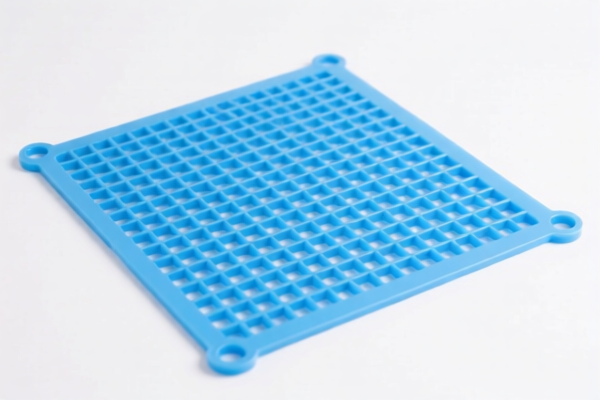
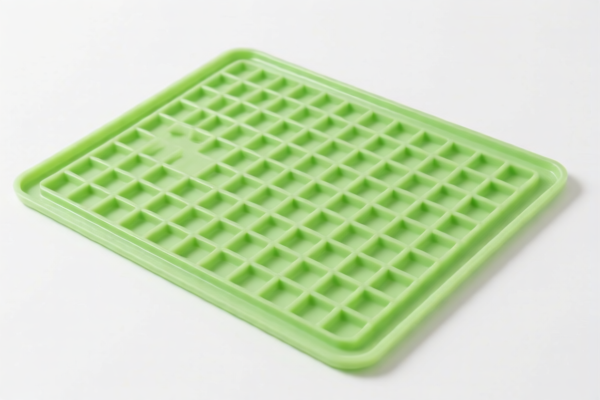
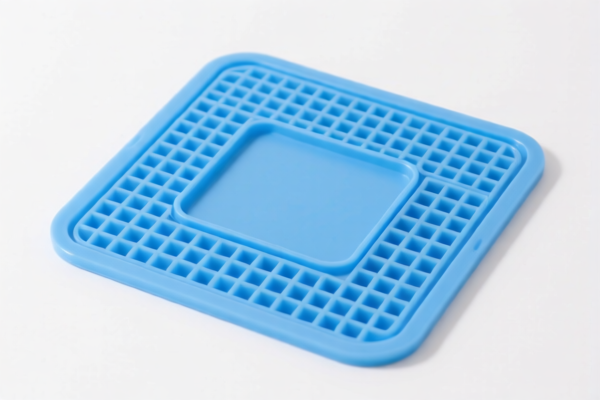
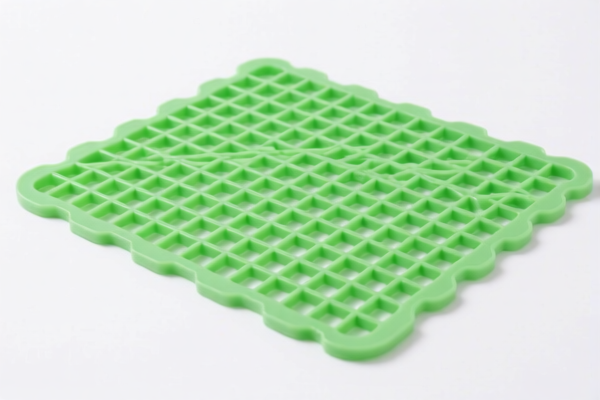
AI Analysis
🌱 Plastic Foot Mat (for Flower Pots)
🌐 HS Code Reference & Clearance Guide | 2026 Latest Tariff Analysis | Professional Customs Strategy
📌 I. Product Definition & Classification: What Exactly Is a "Plastic Foot Mat"?
A Plastic Foot Mat (also known as a flower pot stand, plant saucer, or pot foot) is a small, rigid or semi-rigid plastic component designed to elevate flower pots, providing drainage, preventing water stains on furniture, and improving aesthetic appeal.
In international trade, its classification depends heavily on its structural role and intended use. It is generally considered a "part/accessory" to gardening equipment or a household plastic article, rather than a standalone functional device.
⚠️ Key Distinction:
- If it is a simple support/stand component without drainage function → Often classified under Chapter 39 (Plastics and Articles Thereof) as "Parts" or "Other Articles".
- If it has specific household utility (e.g., part of a kitchen/dining set or general household item) → May fall under 3924 (Household articles).
- If it is a general-purpose plastic component → Falls under 3926 (Other plastic articles).
📦 II. HS Code Classification Details (2026 Latest Tariff Authority Mapping)
| HS Code | Product Description | Application Scenario | Key Classification Criteria |
|---|---|---|---|
3925.90.00.00 |
Plastic pot foot pads; classified as components/parts | General gardening accessories, standalone plastic supports | Categorized as "Other" building/construction or garden hardware components |
3925.10.00.00 |
Plastic pot foot pads; classified as parts/accessories | Replacement parts for garden structures or furniture | Specific "Parts" of plastic building materials or garden fixtures |
3924.10.40.00 |
Plastic pot foot pads; classified as household accessory parts | Used in home decor, indoor gardening, furniture protection | Classified under "Household articles" (specifically parts/accessories) |
3926.90.25.00 |
Plastic pot foot pads; classified as other plastic products | General purpose plastic components, no specific household link | "Other" plastic articles, not elsewhere specified |
3926.30.50.00 |
Plastic pot foot pads; classified as connection/support parts | Structural supports, connectors, or stabilizers for pots | "Fittings" or support components for other articles |
🔍 Key Reminder:
- The primary risk is misclassifying a simple plastic foot as a "building material" (3925) vs. a "household item" (3924) vs. a "general plastic good" (3926).
- Customs authorities often scrutinize 3925 vs. 3926 for agricultural/garden items. If it's not clearly "agricultural machinery," it may default to 3926.
- 3924 is favorable only if it can be clearly linked to a specific household context (e.g., sold as part of a table setting or home decor kit).
💰 III. 2026 Latest Tariff Rate Breakdown (Including Surcharges & Policy Add-ons)
✅ Applicable Country: United States (US)
✅ Country of Origin: China (CN)
✅ Effective Date: From November 10, 2025 (and subsequent imports)
🎯 1. 3925.90.00.00 —— Plastic Pot Foot Pads (Components/Parts)
| Item | Content |
|---|---|
| Base Duty Rate | 5.3% |
| Section 301 Surcharge | +25.0% |
| Section 122 Surcharge | +10.0% |
| Total Duty Rate | 40.3% |
| Tax Calculation | CIF Value × 40.3% |
| De Minimis Eligibility | ❌ No (High duty rate excludes de minimis benefit) |
| Legal Path | USITC:3925.90.00.00 → SECTION 301: 25% → SECTION 122: 10% |
📌 Explanation:
- This classification treats the item as a garden/construction component.
- The 40.3% total rate is driven by the 25% Section 301 tariff (US-China trade war) and 10% Section 122 (likely referring to specific administrative surcharges or recent policy add-ons).
- High duty alert: This is one of the higher-risk classifications for garden plastics.
🎯 2. 3925.10.00.00 —— Plastic Pot Foot Pads (Parts/Accessories)
| Item | Content |
|---|---|
| Base Duty Rate | 6.3% |
| Section 301 Surcharge | +25.0% |
| Section 122 Surcharge | +10.0% |
| Total Duty Rate | 41.3% |
| Tax Calculation | CIF Value × 41.3% |
| De Minimis Eligibility | ❌ No |
| Legal Path | USITC:3925.10.00.00 → SECTION 301: 25% → SECTION 122: 10% |
📌 Note:
- Slightly higher base rate (6.3%) than 3925.90.00.00, leading to a 41.3% total.
- Essentially the same duty burden as above, but classified under a more specific "Parts" subheading.
🎯 3. 3924.10.40.00 —— Plastic Pot Foot Pads (Household Accessory Parts)
| Item | Content |
|---|---|
| Base Duty Rate | 3.4% |
| Section 301 Surcharge | +0.0% |
| Section 122 Surcharge | +10.0% |
| Total Duty Rate | 13.4% |
| Tax Calculation | CIF Value × 13.4% |
| De Minimis Eligibility | ❓ Check (Base rate is low, but 10% surcharge applies) |
| Legal Path | USITC:3924.10.40.00 → SECTION 122: 10% (No Section 301) |
📌 Strategic Advantage:
- THIS IS THE MOST COST-EFFECTIVE CLASSIFICATION!
- Why? Household articles (3924) are often exempt from Section 301 (25% tariff) under certain exclusions or interpretations.
- Only the 10% Section 122 surcharge applies.
- Total: 13.4% vs. 40.3%+ for other codes.
- Requirement: Must prove the item is used in a household context (e.g., indoor gardening, home decor).
🎯 4. 3926.90.25.00 —— Plastic Pot Foot Pads (Other Plastic Articles)
| Item | Content |
|---|---|
| Base Duty Rate | 6.5% |
| Section 301 Surcharge | +7.5% |
| Section 122 Surcharge | +10.0% |
| Total Duty Rate | 24.0% |
| Tax Calculation | CIF Value × 24.0% |
| De Minimis Eligibility | ❌ No |
| Legal Path | USITC:3926.90.25.00 → SECTION 301: 7.5% (Partial) → SECTION 122: 10% |
📌 Note:
- Section 301 rate is only 7.5% for this subheading (not the full 25%). This is likely due to a specific exclusion or lower-risk categorization for "other plastic articles."
- Total 24.0% is moderate, significantly lower than 3925 codes.
- Risk: Customs may challenge this if they argue it should be 25% instead of 7.5%.
🎯 5. 3926.30.50.00 —— Plastic Pot Foot Pads (Connection/Support Parts)
| Item | Content |
|---|---|
| Base Duty Rate | 5.3% |
| Section 301 Surcharge | +7.5% |
| Section 122 Surcharge | +10.0% |
| Total Duty Rate | 22.8% |
| Tax Calculation | CIF Value × 22.8% |
| De Minimis Eligibility | ❌ No |
| Legal Path | USITC:3926.30.50.00 → SECTION 301: 7.5% → SECTION 122: 10% |
📌 Note:
- Similar to 3926.90.25.00, with a 7.5% Section 301 rate.
- Total 22.8% is competitive.
- Classification as "connection/support parts" must be well-documented (e.g., product specs showing how it connects to or supports a pot).
🛠️ IV. Customs Clearance Practical Advice (Battle-Tested Pitfall Avoidance)
✅ 1. Document Checklist (Non-Negotiable)
| Document | Required | Notes |
|---|---|---|
| ✅ Product Specifications | ✔️ | Detail material (PP/PE/PS), dimensions, weight, and usage context (indoor/outdoor, household/commercial) |
| ✅ Product Photos | ✔️ | Show the foot mat with a pot to emphasize its household/support function |
| ✅ Bill of Lading/Invoice | ✔️ | Describe as "Plastic Flower Pot Stand" or "Household Garden Accessory", NOT "Plastic Part" |
| ✅ Country of Origin Certificate | ✔️ | Confirm China origin for accurate surcharge calculation |
| ✅ Usage Declaration | ✔️ | Crucial: Declare intended use as "Household Decoration" or "Indoor Gardening Support" to justify 3924 or favorable 3926 |
| ✅ Structure Diagram | ✔️ | If claiming "support part," show how it interacts with the pot |
✅ 2. Declaration Strategy (Key Mantra)
🔥 "Household Context, Lower Rates; Garden Parts, Higher Taxes!"
| Scenario | Correct Declaration | Wrong Declaration |
|---|---|---|
| Indoor/Home Decor Use | 3924.10.40.00 |
3925.90.00.00 → 40.3% vs 13.4% |
| General Garden Accessory | 3926.90.25.00 or 3926.30.50.00 |
3925.10.00.00 → 24% vs 41.3% |
| Commercial/Industrial Use | 3926.90.25.00 |
3924.10.40.00 → 24% vs 13.4% (Risk of Rejection) |
✅ 3. Special Handling
| Situation | Recommendation |
|---|---|
| OEM Custom Designs | Provide design specs proving it's a decorative household item |
| Sold as Part of a Set | If sold with pots, declare as "Pot Stand Accessory" to support 3924/3926 |
| High-Volume Imports | Consider Advance Ruling (Ruling Request) from CBP to lock in 3924 or 3926 classification |
| Mixed Containers | If mixed with other plastic goods, ensure clear separation in packing list |
🌍 V. Global Market Comparison (2026 Latest)
| Country/Region | Recommended HS Code | Duty Rate (China) | Certification | Notes |
|---|---|---|---|---|
| 🇺🇸 US | 3924.10.40.00 |
13.4% | FDA/CPSC (if food contact) | Best option; 3925/3926 higher |
| 🇨🇳 China | 3924.10.40.00 |
5.0% | None | No surcharges |
| 🇪🇺 EU | 3924.10.40.00 |
0% - 1.7% | CE/RoHS | No Section 301/122 equivalents |
| 🇬🇧 UK | 3924.10.40.00 |
0% - 1.7% | UKCA | Post-Brexit alignment with EU |
| 🇯🇵 Japan | 3924.10.40.00 |
1.5% - 3.0% | JIS | Low duties |
📌 Conclusion:
- USA is the only market with heavy surcharges (Section 301/122).
- China, EU, UK, Japan have low/zero duties.
- Strategy: For US exports, prioritize 3924 classification to save ~27% in duties.
📌 VI. Common Mistakes & Pitfalls (Lessons from Blood & Tears)
❌ Mistake 1: Declaring as "Plastic Part" without context
👉 Consequence: Customs defaults to 3925 or 3926 → 22-41% duty instead of 13.4%.
❌ Mistake 2: Using vague descriptions like "Plastic Foot"
👉 Consequence: Customs rejects clarity → Delay, Inspection, or Re-classification.
❌ Mistake 3: Ignoring Section 122 Surcharge
👉 Consequence: Underpayment → Penalties + Interest.
❌ Mistake 4: Assuming 3924 applies to all plastic household items
👉 Consequence: If not clearly household, customs reclassifies to 3926 → 22-24% duty.
✅ Correct Practice:
"Decorative Plastic Flower Pot Stand, Indoor Use, PP Material, Model XYZ, Household Garden Accessory"
🎯 VII. Conclusion: Professional Declaration, Cost Savings, Efficiency!
🎯 Remember the Mantra:
🔹 "Household Context, 13.4%; Garden Parts, 40%+; Choose Wisely, Save Big!"
🔹 "HS Code Determines Tax, 10% Difference, Declaration Error, Huge Cost!"
📌 Pro Tip:
If your plastic foot mats are sold in bulk to retailers for home decor, clearly label them as "Household Garden Accessories" to qualify for
3924.10.40.00.
Consider Applying for a CBP Advance Ruling to lock in the 13.4% rate and avoid future disputes.
📣 Take Action Now:
📞 Consult a licensed customs broker
📸 Provide product photos showing household use
📜 Request an HS Code Advance Ruling from CBP
🚀 Clear goods smoothly, reduce costs, and boost profits!
✨ Professional Clearance Starts with Accurate Classification!
💼 Every Percent of Duty Saved Is Pure Profit!
Customer Reviews
About HS Code Classification
The Harmonized System (HS) is an internationally standardized nomenclature developed by the World Customs Organization (WCO) to classify traded products. Over 200 countries use the HS system as the basis for customs tariffs, trade statistics, and import/export regulations.
Each HS code follows a hierarchical structure:
- Chapter (2 digits) — Broad category of goods (e.g., Chapter 84: Machinery and Mechanical Appliances)
- Heading (4 digits) — More specific grouping within the chapter
- Subheading (6 digits) — Internationally standardized breakdown, used by all WCO member countries
- National subdivisions (8-10 digits) — Country-specific extensions for further classification, such as US HTSUS 10-digit codes
Correct HS code classification is essential for smooth customs clearance, accurate duty payment, and compliance with trade regulations. Misclassification can lead to customs delays, overpayment of duties, or penalties.
When importing from CN to US, the applicable tariff rates may include:
- Most-Favored-Nation (MFN) rate — The standard duty rate applied to WTO members
- General rate — Applied to countries without trade agreements
- Trade remedy duties — Additional tariffs such as Section 301 (anti-dumping), Section 232 (national security), or countervailing duties
The information provided on this page is for reference purposes only. For official classification, please consult with your local customs authority or a licensed customs broker.