Plastic Footwear
CN → US| HS Code | Tariff Rate | Origin | Destination | Doc |
|---|---|---|---|---|
| 6404112060 | 20.5% | CN | US | Official Doc |
| 3926909989 | 22.8% | CN | US | Official Doc |
| 6402191520 | 22.6% | CN | US | Official Doc |
| 6402191541 | 22.6% | CN | US | Official Doc |
| 6402993165 | 16.0% | CN | US | Official Doc |
Product Images
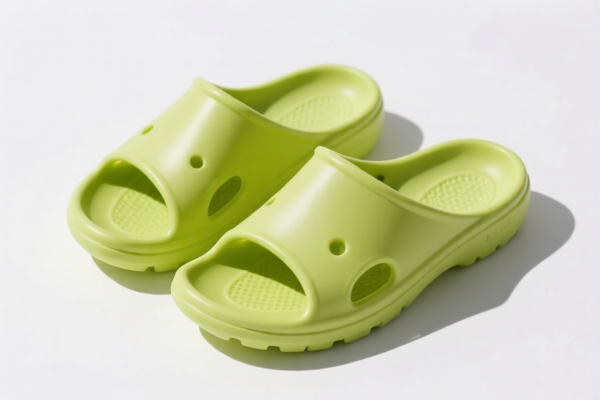
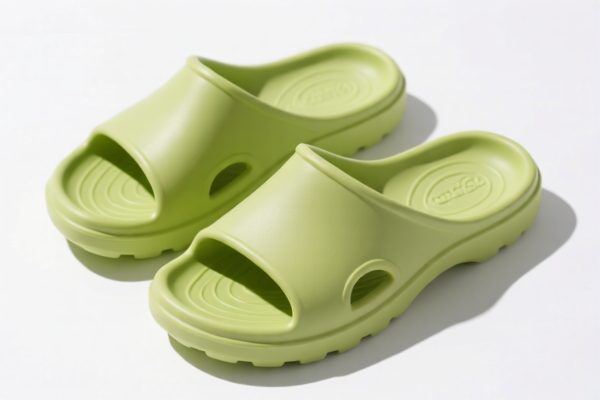
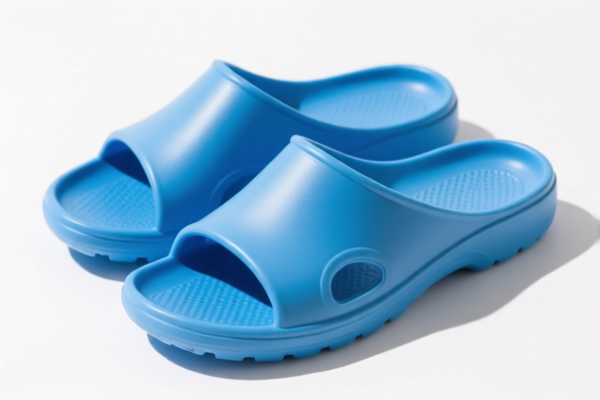
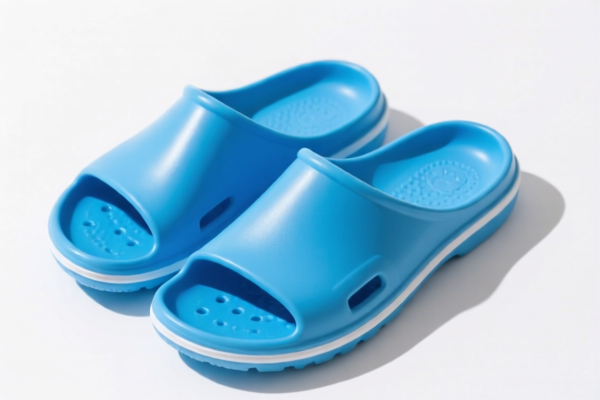
AI Analysis
👟 Plastic Footwear: HS Code Classification & Tariff Deep Dive
🌐 HS Code Reference & Customs Clearance Guide | 2026 Latest Tariff Analysis | Professional Clearance Strategy
📌 I. Product Definition & Classification: What Exactly is "Plastic Footwear"?
"Plastic Footwear" in international trade usually refers to footwear where the outer sole and upper are primarily made of plastic materials (such as PVC, EVA, PE, or PU). It is categorized under Chapter 64 of the Harmonized System.
Key Distinctions: * Sports Footwear (e.g., Basketball Shoes): Designed for athletic performance, often with specific structural requirements for support and grip. Falls under subheading 6404 or 6402. * Travel Shoes / Other Footwear: Designed for general daily use, travel, or casual wear. Falls under subheading 6402.99.
⚠️ Critical Distinction:
- If the item is explicitly a sports shoe (e.g., basketball, running) with plastic upper/sole →归入 6404.11 / 6402.19
- If it is a casual/travel shoe with plastic upper/sole →归入 6402.99
📦 II. HS Code Classification Details (2026 Latest Tariff Data)
Based on the provided data, here are the specific classifications for Plastic Footwear (specifically Plastic Basketball Shoes and Plastic Travel Shoes):
| HS Code | Product Description | Application Scenario | Material Composition |
|---|---|---|---|
6404.11.20.60 |
Plastic Basketball Shoes (Sports Footwear) | Athletic use, plastic material, conforms to sports category | Upper & Sole: Plastic |
3926.90.99.89 |
Plastic Basketball Shoes (As Plastic Article) | Treated as a general plastic article rather than footwear | Plastic material, other articles |
6402.19.15.20 |
Plastic Basketball Shoes (Footwear Category) | Shoes with plastic upper and sole, sports type | Upper & Sole: Plastic |
6402.19.15.41 |
Plastic Basketball Shoes (Sports Type) | Shoes with plastic upper and sole, sports type | Upper & Sole: Plastic |
6402.99.31.65 |
Plastic Travel Shoes (General Footwear) | Daily wear, plastic upper and sole, not classified as sports | Upper & Sole: Plastic |
🔍 Key Insight:
- Sportswear Classification (6404/6402.19): Generally applies to items designed for specific sports activities.
- General Footwear Classification (6402.99): Applies to non-sports plastic shoes (e.g., sandals, casual travel shoes).
- Article Classification (3926): Rarely used for complete footwear unless customs authorities dispute the footwear classification, treating it as a "manufactured plastic article."
💰 III. 2026 Latest Tariff Rate Breakdown (Including Additional Duties)
✅ Applicable Country: United States (US)
✅ Origin: China (CN)
✅ Effective Time: Current rates include 122 Clause Tariffs
🎯 1. 6404.11.20.60 —— Plastic Basketball Shoes (Sports Footwear)
| Item | Content |
|---|---|
| Base Tariff | 10.5% |
| Additional Tariff | 0.0% |
| Section 122 Tariff | 10.0% |
| Total Tax Rate | 20.5% |
| Calculation | CIF Value × 20.5% |
| Legal Basis | Section 122 Tariff applies to specific plastic sports footwear |
📌 Explanation:
- This classification benefits from 0% additional tariff (likely due to specific trade policies or exemptions), but carries a 10% Section 122 tariff. - Total effective rate: 20.5%.
🎯 2. 3926.90.99.89 —— Plastic Basketball Shoes (As Plastic Article)
| Item | Content |
|---|---|
| Base Tariff | 5.3% |
| Additional Tariff | 7.5% |
| Section 122 Tariff | 10.0% |
| Total Tax Rate | 22.8% |
| Calculation | CIF Value × 22.8% |
| Legal Basis | General plastic articles, no special footwear exemption |
📌 Note:
- This is the highest tax rate among the options. - Misclassifying sports shoes as "general plastic articles" leads to higher costs. - Total effective rate: 22.8%.
🎯 3. 6402.19.15.20 & 6402.19.15.41 —— Plastic Basketball Shoes (Sports Footwear)
| Item | Content |
|---|---|
| Base Tariff | 5.1% |
| Additional Tariff | 7.5% |
| Section 122 Tariff | 10.0% |
| Total Tax Rate | 22.6% |
| Calculation | CIF Value × 22.6% |
| Legal Basis | Standard sports footwear classification |
📌 Note:
- Very similar to the3926classification, slightly lower base tariff (5.1% vs 5.3%). - Total effective rate: 22.6%.
🎯 4. 6402.99.31.65 —— Plastic Travel Shoes (General Footwear)
| Item | Content |
|---|---|
| Base Tariff | 6.0% |
| Additional Tariff | 0.0% |
| Section 122 Tariff | 10.0% |
| Total Tax Rate | 16.0% |
| Calculation | CIF Value × 16.0% |
| Legal Basis | General footwear, no Section 301 additional tariff |
📌 Explanation:
- This is the lowest tax rate in the dataset. - Applies to non-sports plastic shoes (e.g., travel shoes, casual wear). - Total effective rate: 16.0%.
🛠️ IV. Customs Clearance Practical Advice (Real-World Pitfall Avoidance)
✅ 1. Preparation Checklist (Essential Documents)
| Document | Required | Description |
|---|---|---|
| ✅ Product Specifications | ✔️ | Material composition (PVC/EVA/PE), sole structure, upper material |
| ✅ Product Photos | ✔️ | Clear images of sole, upper, and any branding |
| ✅ Commercial Invoice | ✔️ | Must clearly state "Plastic Basketball Shoes" or "Plastic Travel Shoes" |
| ✅ Packing List | ✔️ | Quantity, weight, and packaging details |
| ✅ Origin Certificate (CO) | ✔️ | To verify origin as China |
| ✅ Declaration Statement | ✔️ | Confirm if product is for sports or daily use |
✅ 2. Declaration Tips (Key Strategy)
🔥 "Sports or Casual? Choose Wisely!"
| Scenario | Correct HS Code | Error Risk |
|---|---|---|
| Plastic Basketball Shoes | 6404.11.20.60 |
Misclassified as 3926.90.99.89 → +2.3% higher tax |
| Plastic Travel Shoes | 6402.99.31.65 |
Misclassified as sports → Higher tax (20.5% vs 16.0%) |
| Mixed Package | Separate Declaration | Combining sports and travel shoes → Customs delay |
📌 Key Advice:
- Be precise in naming: Use "Plastic Basketball Shoes" for sports items and "Plastic Travel Shoes" for casual items. - Avoid ambiguity: Do not use generic terms like "Plastic Shoes" without specifying type. - Check material: Ensure the upper and sole are indeed primarily plastic (not rubber or leather).
✅ 3. Special Circumstances
| Scenario | Handling Advice |
|---|---|
| OEM Custom Shoes | Provide design specs and order confirmation to prove intended use (sports vs. casual) |
| Mixed Material Shoes | If >50% plastic by weight/value, classify as plastic footwear |
| Seasonal Import | Plan for Section 122 Tariff (10%) which applies regardless of season |
| Small Package (De Minimis) | ❌ Not Eligible: Section 122 tariffs and additional duties apply even to small parcels |
🌍 V. Global Market Comparison (2026 Latest)
| Country/Region | Recommended HS Code | Tariff Rate | Certification | Notes |
|---|---|---|---|---|
| 🇺🇸 USA | 6404.11.20.60 / 6402.99.31.65 |
16.0% - 22.8% | None required | Section 122 Tariff applies |
| 🇨🇳 China | 6404.11 / 6402.19 |
0% - 5% | CCC (if applicable) | Low import duty |
| 🇪🇺 EU | 6402.91 / 6402.99 |
0% - 4% | CE (if applicable) | No Section 122 equivalent |
| 🇬🇧 UK | 6402.91 / 6402.99 |
0% - 5% | UKCA (if applicable) | Post-Brexit rules |
| 🇦🇺 Australia | 6402.91 / 6402.99 |
5% | GTS (if applicable) | No additional tariffs |
📌 Conclusion:
- USA is the most expensive market due to Section 122 tariffs and additional duties. - EU and UK are more favorable with lower base tariffs and no similar additional duties.
📌 VI. Common Errors & Pitfalls (Lessons Learned)
❌ Error 1: Calling "Plastic Basketball Shoes" as "Plastic Travel Shoes" to save tax
👉 Consequence: Customs may reclassify and apply 20.5% tax instead of 16.0% → Overpayment + Penalty
❌ Error 2: Misclassifying as "Plastic Article" (3926.90.99.89)
👉 Consequence: Tax jumps to 22.8% → Unnecessary Cost
❌ Error 3: Not declaring Section 122 Tariff
👉 Consequence: 10% penalty + interest for underpayment
❌ Error 4: Using "Shoes" without material specification
👉 Consequence: Customs delays for further inspection → Storage Fees + Delay
✅ Correct Approach:
"Plastic Basketball Shoes, PVC Upper, EVA Sole, Sports Type, Model XYZ"
OR
"Plastic Travel Shoes, PVC Upper and Sole, Casual Type, Model ABC"
🎯 VII. Conclusion: Precise Classification Saves Money!
🎯 Remember the Key Points:
🔹 "Sports vs. Travel: Classify Correctly"
🔹 "Section 122 Tariff: 10% Always Applies"
🔹 "Plastic Articles: Higher Tax (22.8%)"
🔹 "Travel Shoes: Lowest Tax (16.0%)"
📌 Pro Tip:
- If you sell Plastic Travel Shoes, ensure they are not marketed as sports footwear to qualify for the 16.0% rate.
- For Plastic Basketball Shoes, be prepared for 20.5% - 22.6% depending on exact classification.
- Always verify material composition and intended use with your customs broker.
📣 Immediate Action:
📞 Consult a Professional Customs Broker
📄 Provide Accurate Product Descriptions
🚀 Apply for Advance Ruling (if necessary)
💡 Let Your Plastic Footwear Clear Smoothly, Efficiently, and Profitably!
✨ Professional Clearance Starts with Precise Classification!
💼 Every Cent Saved is Pure Profit!
Customer Reviews
About HS Code Classification
The Harmonized System (HS) is an internationally standardized nomenclature developed by the World Customs Organization (WCO) to classify traded products. Over 200 countries use the HS system as the basis for customs tariffs, trade statistics, and import/export regulations.
Each HS code follows a hierarchical structure:
- Chapter (2 digits) — Broad category of goods (e.g., Chapter 84: Machinery and Mechanical Appliances)
- Heading (4 digits) — More specific grouping within the chapter
- Subheading (6 digits) — Internationally standardized breakdown, used by all WCO member countries
- National subdivisions (8-10 digits) — Country-specific extensions for further classification, such as US HTSUS 10-digit codes
Correct HS code classification is essential for smooth customs clearance, accurate duty payment, and compliance with trade regulations. Misclassification can lead to customs delays, overpayment of duties, or penalties.
When importing from CN to US, the applicable tariff rates may include:
- Most-Favored-Nation (MFN) rate — The standard duty rate applied to WTO members
- General rate — Applied to countries without trade agreements
- Trade remedy duties — Additional tariffs such as Section 301 (anti-dumping), Section 232 (national security), or countervailing duties
The information provided on this page is for reference purposes only. For official classification, please consult with your local customs authority or a licensed customs broker.