Plastic Fragrance Container
CN → US| HS Code | Tariff Rate | Origin | Destination | Doc |
|---|---|---|---|---|
| 3924104000 | 13.4% | CN | US | Official Doc |
| 3923300010 | 38.0% | CN | US | Official Doc |
| 3924905650 | 20.9% | CN | US | Official Doc |
| 3923300090 | 38.0% | CN | US | Official Doc |
| 3924104000 | 13.4% | CN | US | Official Doc |
Product Images

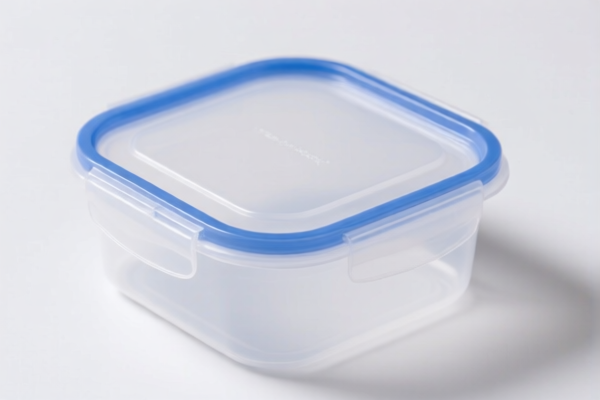

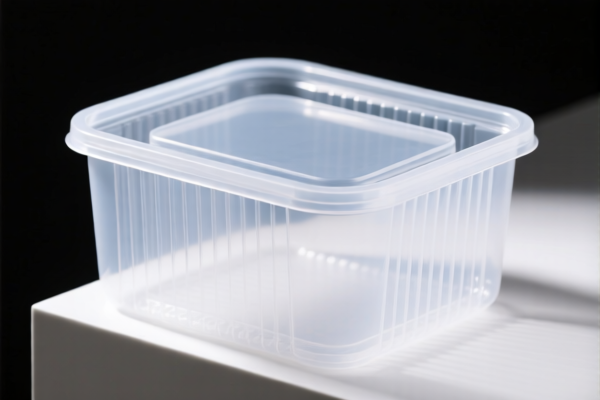
AI Analysis
🧴 Plastic Fragrance Container (Cosmetic & Toilet Articles)
🌐 HS Code Reference & Customs Clearance Guide | 2026 Latest Tariff Analysis | Professional Strategy for US Imports
📌 I. Product Definition: What is a "Plastic Fragrance Container"?
In international trade, "Plastic Fragrance Container" is a broad term that often leads to classification errors. It generally falls under Chapter 39 (Plastics and Articles Thereof). However, the specific HS Code and resulting tariff rate depend entirely on the intended use and physical form of the container.
Key Distinction: * Cosmetic/Toilet Articles (Chapter 39.24): Containers specifically designed for holding perfumes, cosmetics, or toilet preparations, often finished or decorated for direct retail. * General Packaging (Chapter 39.23): Plain plastic bottles or containers used for general packaging purposes, where the container itself is not the primary article of commerce or lacks specific cosmetic finishing.
⚠️ Critical Classification Point:
- If the container is finished, labeled, or shaped specifically for perfume/cosmetics → Likely 3924.10.40.00 (Lower Tax).
- If the container is a generic plastic bottle used for packaging any liquid → Likely 3923.30.00 (Higher Tax).
📦 II. HS Code Classification Details (2026 Authorized List)
Based on the provided data, here are the four potential classifications for plastic fragrance-related containers. Note that 3924.10.40.00 appears twice with identical tax rates but slightly different summaries, indicating robust applicability for finished cosmetic containers.
| HS Code | Product Summary | Key Characteristics | Total Tax Rate |
|---|---|---|---|
3924.10.40.00 |
Plastic material, used for hygiene or toilet articles (e.g., cosmetic/perfume bottles) | Finished perfume/cosmetic containers; "Toilet articles" category | 13.4% |
3923.30.00.10 |
Plastic material, in the form of bottles, for packaging purposes | Generic plastic bottles; not specifically finished for cosmetics; general packaging | 38.0% |
3924.90.56.50 |
Plastic material, belongs to hygiene/toilet articles or household articles | Other plastic hygiene/toilet items not specifically bottles; household plastic goods | 20.9% |
3923.30.00.90 |
Plastic material, bottle articles, no conflict with other categories | Generic plastic bottles; plain, unbranded, or industrial packaging use | 38.0% |
🔍 重点提醒 (Key Reminder):
- Avoid3923.30if possible: This code triggers a 38% total tax rate, which is nearly 3x higher than the cosmetic-specific code (3924.10.40.00).
- Why the difference?3924covers articles for personal care/hygiene.3923covers articles for the transportation or packaging of goods. If your "fragrance container" is a finished product sold to consumers (or sold as a finished cosmetic item),3924is the correct and cheaper classification.
💰 III. 2026 Tariff Rate Breakdown (Detailed Tax Clauses)
✅ Applicable Country: United States (US)
✅ Origin: China (CN)
✅ Effective Time: Current US-China Trade Tariffs (Section 301 + IEEPA)
🎯 1. 3924.10.40.00 — Plastic Toilet/Cosmetic Articles (RECOMMENDED)
| Item | Details |
|---|---|
| Base Duty | 3.4% |
| Section 301 Additional Duty | 0.0% |
| 122 Clause (IEEPA) Duty | 10% |
| Total Tax Rate | 13.4% |
| Calculation | CIF Value × 13.4% |
| De Minimis Exemption | ❌ Not Eligible (Section 301/IEEPA goods excluded from $800 threshold) |
| Legal Basis | USITC:3924.10.40.00 + IEEPA:10% |
📌 Explanation:
- This is the most favorable rate for plastic fragrance/cosmetic containers.
- The "122 Clause" (IEEPA 10%) applies to most Chinese-origin plastic goods.
- Crucially, there is NO additional 25% Section 301 tariff for this specific subheading, making it significantly cheaper than general packaging.
🎯 2. 3923.30.00.10 & 3923.30.00.90 — Plastic Bottles for Packaging (HIGH RISK)
| Item | Details |
|---|---|
| Base Duty | 3.0% |
| Section 301 Additional Duty | 25.0% |
| 122 Clause (IEEPA) Duty | 10% |
| Total Tax Rate | 38.0% |
| Calculation | CIF Value × 38.0% |
| De Minimis Exemption | ❌ Not Eligible |
| Legal Basis | USITC:3923.30.00.xx + USITC:Footnote301 + IEEPA:10% |
📌 Warning:
- If U.S. Customs determines your "fragrance container" is a generic packaging item (e.g., plain white bottles shipped in bulk for third-party filling), it will be classified under3923.30.
- Result: You pay 38% instead of 13.4%.
- Savings Opportunity: Properly classifying as3924.10.40.00saves 24.6% in duties.
🎯 3. 3924.90.56.50 — Other Plastic Hygiene/Household Articles
| Item | Details |
|---|---|
| Base Duty | 3.4% |
| Section 301 Additional Duty | 7.5% |
| 122 Clause (IEEPA) Duty | 10% |
| Total Tax Rate | 20.9% |
| Calculation | CIF Value × 20.9% |
| De Minimis Exemption | ❌ Not Eligible |
📌 Note: This code is for plastic hygiene/toilet articles that are not standard bottles (e.g., plastic combs, sponges, or non-bottle cosmetic applicators). Use only if the product is not a bottle but still a personal care item.
🛠️ IV. Customs Clearance Practical Advice
✅ 1. Documentation Checklist (Must-Haves)
| Document | Required? | Purpose |
|---|---|---|
| ✅ Product Photos (Finished) | ✔️ | Show labels, shape, and intended use (perfume/cosmetic). |
| ✅ Commercial Invoice | ✔️ | Clearly state: "Plastic Cosmetic Bottles for Perfume" (NOT "Plastic Packaging"). |
| ✅ Product Specification Sheet | ✔️ | Detail material (e.g., PET, PP), capacity, and if pre-decorated. |
| ✅ Certificate of Origin | ✔️ | Proves CN origin for tariff calculation. |
| ❌ Generic "Packaging" Label | ❌ | Do NOT describe as "generic packaging material" if it is a finished cosmetic item. |
✅ 2. Classification Strategy (How to Avoid 38% Tax)
| Scenario | Correct HS Code | Tax Rate | Why? |
|---|---|---|---|
| Finished Perfume Bottles (with cap, label, or specific shape for fragrance) | 3924.10.40.00 |
13.4% | Classified as "Toilet Articles/Cosmetic Containers." |
| Plain Plastic Bottles (shipped in bulk, no branding, for third-party filling) | 3923.30.00.10 |
38.0% | Classified as "Packaging Articles." |
| Non-Bottle Cosmetic Items (e.g., plastic makeup sponges, brushes) | 3924.90.56.50 |
20.9% | Classified as "Other Toilet Articles." |
🔥 Pro Tip:
- If you are an OEM manufacturer selling plain bottles to a cosmetics brand, you may be forced to use3923.30.
- Solution: If possible, add custom labeling, specialized shapes, or finishing before export to justify3924.10.40.00. Consult with a customs broker for "Finished Goods" vs. "Semi-Finished" arguments.
✅ 3. Common Mistakes to Avoid
❌ Mistake 1: Declaring "Plastic Fragrance Container" as 3923.30.00.10 when it is a finished cosmetic item.
👉 Consequence: Overpaying 24.6% in duties.
❌ Mistake 2: Using De Minimis ($800) for these items.
👉 Consequence: All these HS codes are excluded from the Section 301/IEEPA de minimis exemption. Even small samples are subject to full duty.
❌ Mistake 3: Ignoring the "122 Clause" (IEEPA 10%).
👉 Consequence: Underpaying duty by 10%, leading to penalties and interest upon audit.
🌍 V. Global Market Comparison (2026)
| Region | Recommended HS Code | Est. Duty (China Origin) | Key Requirement |
|---|---|---|---|
| 🇺🇸 USA | 3924.10.40.00 |
13.4% | IEEPA 10% + Base 3.4% |
| 🇨🇳 China | 3924.10.40.00 |
3.4% | Base rate only (No Section 301) |
| 🇪🇺 EU | 3924.10.40.00 |
4.5% | Standard EU Tariff |
| 🇬🇧 UK | 3924.10.40.00 |
4.5% | Standard UK Tariff |
📌 Conclusion:
- The USA has the highest barrier for general packaging (3923.30at 38%), but offers a competitive rate (13.4%) for finished cosmetic/toilet articles (3924.10.40.00).
- Strategy: Ensure your product is marketed and declared as a "Cosmetic/Toilet Article" rather than a generic "Packaging Material" to benefit from the lower 13.4% rate.
📌 VI. Final Recommendation & Action Plan
-
Review Product Design: Are your plastic containers finished for cosmetic use?
- Yes → Declare as
3924.10.40.00. - No (Plain Bulk) → Prepare for
3923.30.00.10at 38%.
- Yes → Declare as
-
Update Commercial Invoice:
- Wrong: "Plastic Bottles for Packaging"
- Right: "Finished Plastic Cosmetic Containers for Perfume, Model XYZ"
-
Calculate Landed Cost:
- Use 13.4% if classified as cosmetic; 38.0% if packaging.
- Factor in IEEPA 10% regardless of classification.
-
Consult Customs Broker:
- Request a Pre-Ruling from CBP if the product's status (finished vs. generic) is ambiguous. This protects you from retroactive duty assessments.
📣 Immediate Action:
📞 Contact your freight forwarder with product photos and specifications.
📋 Demand a classification recommendation for3924.10.40.00vs.3923.30.00.10.
🚀 Save 24.6% in duties by correctly declaring your fragrance containers as Cosmetic/Toilet Articles.
✨ Precision Classification, Maximum Savings!
💼 Don't let generic terms cost you 38% in duties!
Customer Reviews
About HS Code Classification
The Harmonized System (HS) is an internationally standardized nomenclature developed by the World Customs Organization (WCO) to classify traded products. Over 200 countries use the HS system as the basis for customs tariffs, trade statistics, and import/export regulations.
Each HS code follows a hierarchical structure:
- Chapter (2 digits) — Broad category of goods (e.g., Chapter 84: Machinery and Mechanical Appliances)
- Heading (4 digits) — More specific grouping within the chapter
- Subheading (6 digits) — Internationally standardized breakdown, used by all WCO member countries
- National subdivisions (8-10 digits) — Country-specific extensions for further classification, such as US HTSUS 10-digit codes
Correct HS code classification is essential for smooth customs clearance, accurate duty payment, and compliance with trade regulations. Misclassification can lead to customs delays, overpayment of duties, or penalties.
When importing from CN to US, the applicable tariff rates may include:
- Most-Favored-Nation (MFN) rate — The standard duty rate applied to WTO members
- General rate — Applied to countries without trade agreements
- Trade remedy duties — Additional tariffs such as Section 301 (anti-dumping), Section 232 (national security), or countervailing duties
The information provided on this page is for reference purposes only. For official classification, please consult with your local customs authority or a licensed customs broker.