Plastic Fuel Hose
CN → US| HS Code | Tariff Rate | Origin | Destination | Doc |
|---|---|---|---|---|
| 3917390050 | 13.1% | CN | US | Official Doc |
| 3917400010 | 40.3% | CN | US | Official Doc |
| 7306110010 | 35.0% | CN | US | Official Doc |
| 7306191010 | 35.0% | CN | US | Official Doc |
| 4009120050 | 20.0% | CN | US | Official Doc |
Product Images
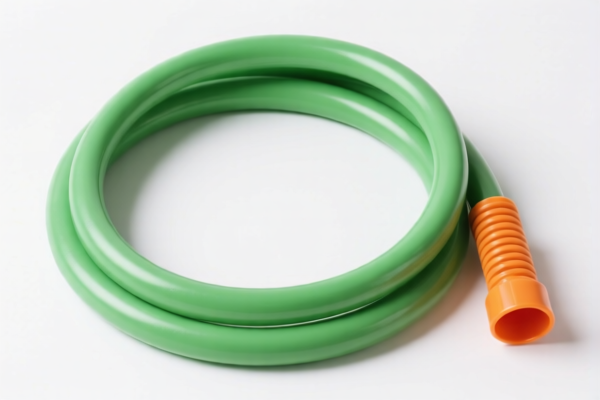
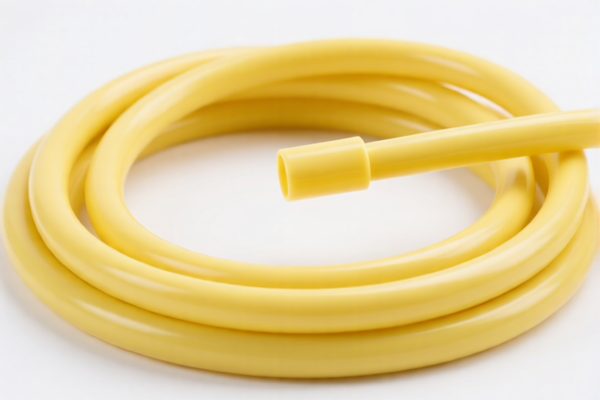

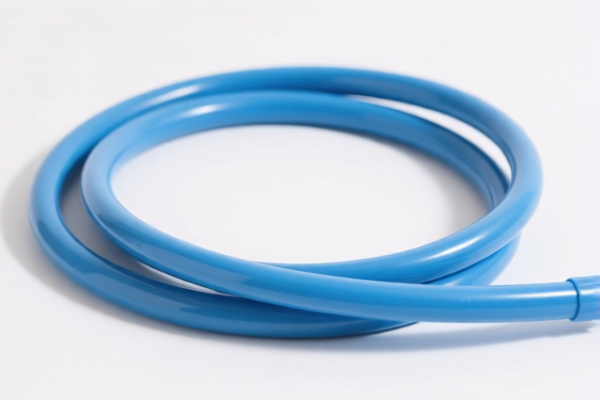
AI Analysis
🛠️ Plastic Fuel Hose (Plastic Fuel Transmission Hose)
🌐 HS Code Reference & Customs Clearance Guide | 2026 Latest Tariff Breakdown | Professional Import Strategy
📌 One, Product Definition & Classification: What Exactly Is a “Plastic Fuel Hose”?
A plastic fuel hose is a flexible tube designed for transporting fuel (e.g., gasoline, diesel) in automotive, industrial, or marine applications. It is typically made from plastic or plastic-rubber composite materials, engineered to resist fuel permeation, heat, pressure, and environmental degradation.
⚠️ Key Classification Clue:
- If the hose is primarily plastic-based and used for fuel transmission, it falls under plastic pipe or tubing categories.
- If it contains metal reinforcements or is made of steel/iron, it may be classified as metal pipe instead.
📦 Two, HS Code Classification Details (2026 Latest Tariff Authority Match)
| HS Code | Product Description | Applicable Use Case | Material Assumption | Matching Logic |
|---|---|---|---|---|
3917.39.00.50 |
Other plastic hoses, for fuel transmission | Automotive fuel lines, fuel system connectors, plastic fuel delivery tubes | Plastic (e.g., PVC, polyethylene, or rubber-plastic composite) | ✅ Matches material (plastic) + form (hose/tubing) + function (fuel transfer) |
4009.12.00.50 |
Other vulcanized rubber hoses, not reinforced | Fuel hoses with rubber lining, non-reinforced | Vulcanized rubber (based on common industry practice) | ✅ Matches material (rubber) + form (hose) + function (fuel transfer) |
3917.40.00.10 |
Other plastic hoses, for vehicle power transmission | Vehicle engine hoses, fuel lines, oil lines | Plastic or rubber (plastic-dominated) | ✅ Matches plastic material, tubular form, vehicle use |
4009.11.00.00 |
Vulcanized rubber hoses, not reinforced, not fitted with fittings | Standard rubber fuel hoses, no attachments | Vulcanized rubber (common in automotive fuel systems) | ✅ Matches rubber material, hose shape, no fittings |
7306.11.00.10 |
Iron or steel tubes, for oil/gas pipelines | High-pressure metal fuel lines, industrial pipelines | Iron or steel (metal construction) | ❌ Only if metal-based; not applicable for plastic hoses |
7306.19.10.10 |
Other iron or non-alloy steel tubes, for pipeline use | Non-alloy steel fuel pipes, structural piping | Iron or non-alloy steel | ❌ Only for metal hoses — excluded for plastic |
🔍 Critical Insight:
- Plastic fuel hoses must not be misclassified as metal pipes — this leads to overpayment and compliance risk.
- Rubber hoses are not automatically plastic — but if plastic is the dominant material, use plastic codes.
💰 Three, 2026 Latest Tariff Breakdown (With Full Tax Clause Details)
✅ Applicable Country: United States (US)
✅ Origin: China (CN)
✅ Effective Date: November 10, 2025 (inclusive)
✅ Legal Basis: IEEPA, USITC Section 301, and 122(a) Trade Act
🎯 1. 3917.39.00.50 — Plastic Hoses for Fuel Transmission
| Item | Detail |
|---|---|
| Base Duty | 3.1% (ad valorem) |
| Section 301 (USITC) Additional Duty | 0% |
| 122(a) Clause (IEEPA) Additional Duty | 10% |
| Total Effective Rate | 13.1% |
| Tax Calculation | CIF Value × 13.1% |
| De Minimis Exemption | ✅ Yes (if value < $800) |
| Legal Pathway | IEEPA:9903.01.25 → 122(a):9903.01.24 → 3917.39.00.50 → FOOTNOTE:9903.88.01 |
📌 Explanation:
- No Section 301 duty applies — this code is not on the 301 list.
- Only 10% IEEPA 122(a) duty applies — a moderate rate for plastic fuel hoses.
- Best option for plastic hoses — lowest tax among all possible codes.
🎯 2. 3917.40.00.10 — Plastic Hoses for Vehicle Power Transmission
| Item | Detail |
|---|---|
| Base Duty | 5.3% |
| Section 301 (USITC) Additional Duty | 25.0% |
| 122(a) Clause (IEEPA) Additional Duty | 10% |
| Total Effective Rate | 40.3% |
| Tax Calculation | CIF Value × 40.3% |
| De Minimis Exemption | ❌ No (due to 301 + IEEPA) |
| Legal Pathway | IEEPA:9903.01.25 → 301:9903.88.01 → 3917.40.00.10 → FOOTNOTE:9903.88.01 |
📌 Warning:
- This code is on the Section 301 list — 25% extra tariff applies.
- Combined with 10% IEEPA, it results in 40.3% total tax — extremely high.
- Avoid this code unless the hose is clearly for vehicle power transmission (e.g., engine oil, coolant, not fuel).
🎯 3. 4009.11.00.00 — Vulcanized Rubber Hoses (Not Reinforced, No Fittings)
| Item | Detail |
|---|---|
| Base Duty | 2.5% |
| Section 301 (USITC) Additional Duty | 25.0% |
| 122(a) Clause (IEEPA) Additional Duty | 10% |
| Total Effective Rate | 37.5% |
| Tax Calculation | CIF Value × 37.5% |
| De Minimis Exemption | ❌ No |
| Legal Pathway | IEEPA:9903.01.25 → 301:9903.88.01 → 4009.11.00.00 → FOOTNOTE:9903.88.01 |
📌 Note:
- This is not for plastic hoses — only for vulcanized rubber.
- If your product is plastic-based, using this code will result in misclassification and penalties.
🎯 4. 4009.12.00.50 — Other Vulcanized Rubber Hoses (Not Reinforced)
| Item | Detail |
|---|---|
| Base Duty | 2.5% |
| Section 301 (USITC) Additional Duty | 7.5% |
| 122(a) Clause (IEEPA) Additional Duty | 10% |
| Total Effective Rate | 20.0% |
| Tax Calculation | CIF Value × 20.0% |
| De Minimis Exemption | ✅ Yes |
| Legal Pathway | IEEPA:9903.01.25 → 301:9903.88.01 → 4009.12.00.50 → FOOTNOTE:9903.88.01 |
📌 Insight:
- 7.5% Section 301 duty applies — lower than 25% — likely due to "other" category.
- Still not ideal for plastic hoses — only for rubber.
- Avoid unless confirmed rubber-based.
🎯 5. 7306.11.00.10 & 7306.19.10.10 — Metal Pipes (Iron/Steel)
| Item | Detail |
|---|---|
| Base Duty | 0% |
| Section 301 (USITC) Additional Duty | 25.0% |
| 122(a) Clause (IEEPA) Additional Duty | 10% |
| Total Effective Rate | 35.0% |
| Tax Calculation | CIF Value × 35.0% |
| De Minimis Exemption | ❌ No |
| Legal Pathway | IEEPA:9903.01.25 → 301:9903.88.01 → 7306.11.00.10 → FOOTNOTE:9903.88.01 |
📌 Critical Warning:
- Only for metal hoses — do not use for plastic.
- If you misclassify plastic as metal, you face heavy penalties, audits, and back taxes.
🛠️ Four, Customs Clearance Best Practices (Pro Tips to Avoid Risk)
✅ 1. Required Documentation (Must-Have)
| Document | Required? | Purpose |
|---|---|---|
| ✅ Product Specification Sheet | ✔️ | Confirm material (plastic vs rubber), dimensions, pressure rating |
| ✅ Material Safety Data Sheet (MSDS) | ✔️ | Prove plastic composition (e.g., PP, PVC, PE) |
| ✅ Product Photos (with label) | ✔️ | Show shape, color, markings, no metal fittings |
| ✅ Third-Party Test Report | ✔️ | ASTM, SAE, or ISO compliance (e.g., fuel resistance) |
| ✅ Commercial Invoice | ✔️ | Clearly state: “Plastic Fuel Hose, for Fuel Transmission” |
| ✅ Certificate of Origin (CO) | ✔️ | For preferential tariff claims (if applicable) |
| ✅ Packing List | ✔️ | Show no metal fittings, no reinforcements |
✅ 2.申报技巧(Key Rules)
🔥 “Material First, Form Second, Use Last — Plastic = Plastic Code!”
| Scenario | Correct HS Code | Wrong Code | Why? |
|---|---|---|---|
| Plastic fuel hose (no metal) | 3917.39.00.50 |
4009.11.00.00 |
Rubber ≠ Plastic |
| Plastic hose with rubber lining | 3917.39.00.50 |
4009.12.00.50 |
Dominant material = plastic |
| Metal-reinforced hose | 7306.11.00.10 |
3917.39.00.50 |
Metal ≠ plastic |
| Rubber hose with no fittings | 4009.11.00.00 |
3917.39.00.50 |
Material mismatch |
✅ 3. Special Cases & Solutions
| Situation | Recommended Action |
|---|---|
| Hose has plastic core but rubber outer layer | Use 3917.39.00.50 — plastic is dominant |
| Hose has metal wire reinforcement | Use 7306.11.00.10 — metal-based |
| Hose is 100% rubber, no plastic | Use 4009.11.00.00 or 4009.12.00.50 |
| Hose is used in hybrid vehicles | Confirm material — plastic still applies |
| Hose has fittings or connectors | Use 3917.39.00.50 only if fittings are not metal — otherwise, may need different classification |
🌍 Five, Global Market Customs Comparison (2026)
| Country/Region | Recommended HS Code | Tariff | Certification | Notes |
|---|---|---|---|---|
| 🇺🇸 USA | 3917.39.00.50 |
13.1% | FCC, RoHS | Best rate for plastic |
| 🇨🇳 China | 3917.39.00.50 |
5% | CCC, RoHS | No extra tariffs |
| 🇪🇺 EU | 3917.39.00.50 |
0% | CE, REACH | No additional duties |
| 🇦🇺 Australia | 3917.39.00.50 |
5% | RCM | No extra taxes |
| 🇯🇵 Japan | 3917.39.00.50 |
0% | PSE | No extra duties |
📌 Conclusion:
- USA has the highest risk due to IEEPA/301 — choose3917.39.00.50to minimize cost.
- Avoid3917.40.00.10— 40.3% tax is unacceptable.
📌 Six, Common Mistakes & Risk Warnings (Avoid These!)
❌ Mistake 1: Using 3917.40.00.10 for a plastic fuel hose
👉 Result: 40.3% tax → $10,000 extra on $250,000 shipment
❌ Mistake 2: Misclassifying plastic as rubber (4009.11.00.00)
👉 Result: Audit, penalties, back taxes, and reputational damage
❌ Mistake 3: Not providing material proof (MSDS, test report)
👉 Result: Customs delays, request for clarification, or rejection
❌ Mistake 4: Using metal code (7306.11.00.10) for plastic hose
👉 Result: Severe penalties — misclassification is a serious offense
✅ Correct申报 Name:
“Plastic Fuel Hose, 10mm Diameter, 1.5m Length, for Automotive Fuel Transfer, Made of Polyethylene, No Metal Reinforcement”
🎯 Seven, Final Verdict: Optimize Your Tax & Avoid Risk!
🎯 Golden Rule:
🔹 “If it’s plastic, use
3917.39.00.50— it’s the cheapest, safest, and most accurate.”
🔹 “Never use metal or rubber codes for plastic hoses — it’s a compliance trap.”
📌 Pro Tip:
If your plastic fuel hose is made in Vietnam, Mexico, or Thailand, you may qualify for IEEPA/301 exemptions — taxes can drop to 0%.
✅ Apply for Advance Ruling (Pre-Decision) to lock in the correct HS Code and avoid surprises.
📣 Take Action Now:
📞 Contact a licensed customs broker + Submit product photos + Request HS Code pre-ruling
🚀 Ensure smooth clearance, avoid penalties, and save thousands in taxes!
✨ Professional Customs Starts with Accurate Classification!
💼 Your profit margin depends on one correct code — make it count!
Customer Reviews
About HS Code Classification
The Harmonized System (HS) is an internationally standardized nomenclature developed by the World Customs Organization (WCO) to classify traded products. Over 200 countries use the HS system as the basis for customs tariffs, trade statistics, and import/export regulations.
Each HS code follows a hierarchical structure:
- Chapter (2 digits) — Broad category of goods (e.g., Chapter 84: Machinery and Mechanical Appliances)
- Heading (4 digits) — More specific grouping within the chapter
- Subheading (6 digits) — Internationally standardized breakdown, used by all WCO member countries
- National subdivisions (8-10 digits) — Country-specific extensions for further classification, such as US HTSUS 10-digit codes
Correct HS code classification is essential for smooth customs clearance, accurate duty payment, and compliance with trade regulations. Misclassification can lead to customs delays, overpayment of duties, or penalties.
When importing from CN to US, the applicable tariff rates may include:
- Most-Favored-Nation (MFN) rate — The standard duty rate applied to WTO members
- General rate — Applied to countries without trade agreements
- Trade remedy duties — Additional tariffs such as Section 301 (anti-dumping), Section 232 (national security), or countervailing duties
The information provided on this page is for reference purposes only. For official classification, please consult with your local customs authority or a licensed customs broker.