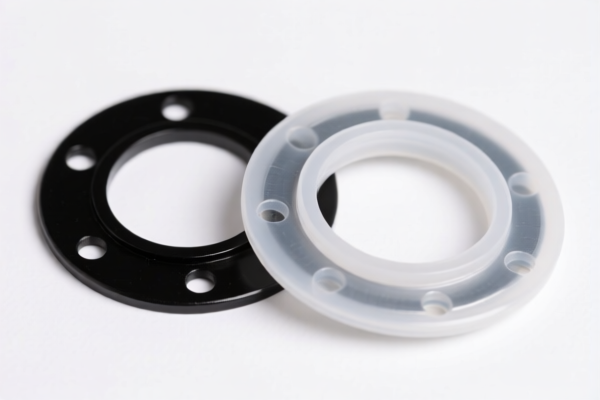
Plastic Gasket
CN → US| HS Code | Tariff Rate | Origin | Destination | Doc |
|---|---|---|---|---|
| 3926904510 | 38.5% | CN | US | Official Doc |
| 3926904590 | 13.5% | CN | US | Official Doc |
| 3917400050 | 15.3% | CN | US | Official Doc |
| 4016935010 | 37.5% | CN | US | Official Doc |
| 3917400095 | 40.3% | CN | US | Official Doc |
Product Images



AI Analysis
🛠️ Plastic Gasket (Plastic Washers & Sealing Components)
🌐 HS Code Reference & Customs Clearance Guide | 2026 Updated Tariff Analysis | Expert-Level Import Strategy
📌 One, Product Definition & Classification: What Exactly Is a "Plastic Gasket"?
A plastic gasket is a sealing component made from thermoplastic or thermosetting polymers, designed to prevent leakage between two mating surfaces—commonly used in plumbing, HVAC, automotive, industrial machinery, and electrical enclosures.
In international trade, the correct classification hinges on material composition, form, and intended use.
⚠️ Critical Distinction:
- If it's a circular or ring-shaped seal made of plastic, used for pipe joints, flanges, or valves → likely 3926.90.45.10 / 3926.90.45.90
- If it's a plastic fitting used in drainage or ventilation systems → may fall under 3917.40.00.50 / 3917.40.00.95
- If it's misclassified as rubber, even if made of plastic → could trigger higher tariffs due to 122条款 (Section 122) logic
📦 Two, HS Code Classification Breakdown (2026 Updated Tariff Authority)
| HS Code | Product Description | Applicable Use Case | Material & Form | Tax Risk |
|---|---|---|---|---|
3926.90.45.10 |
Plastic gasket, matching "gaskets and other seals" category | Used in mechanical assemblies, pumps, valves, industrial equipment | Thermoplastic, ring-shaped, sealing function | 🔴 High (38.5%) |
3926.90.45.90 |
Plastic gasket, fits general "plastic gaskets and seals" classification | General-purpose sealing in appliances, electronics, HVAC | Plastic, non-metallic, gasket form | 🟡 Medium (13.5%) |
3917.40.00.50 |
Plastic pipe fitting accessory, compatible with drainage/ventilation systems | Used in plumbing, sanitary systems, ductwork | Plastic, non-metallic, fitting-like shape | 🟡 Medium (15.3%) |
4016.93.50.10 |
Gasket-shaped item, though made of plastic — falls under "other vulcanized rubber products" via residual classification | Misclassified plastic gasket treated as rubber-based | Plastic, but interpreted as rubber-like under 122条款 logic | 🔴 Very High (37.5%) |
3917.40.00.95 |
Plastic pipe fitting accessory, fits "fittings" category without material conflict | Used in piping systems, industrial plants, HVAC | Plastic, structural, designed for connection | 🔴 High (40.3%) |
🔍 Key Insight:
-3926.90.45= Gaskets & Seals (plastic)
-3917.40.00= Fittings for pipes, tubes, or ducts
-4016.93.50= Other vulcanized rubber products — only applies if plastic is misclassified as rubber under 122条款 logic
- Always verify form and function — shape ≠ function!
💰 Three, 2026 Latest Tariff Breakdown (With Detailed Tax Clauses)
✅ Applicable Country: United States (US)
✅ Origin: China (CN)
✅ Effective Date: November 10, 2025 (and ongoing)
🎯 1. 3926.90.45.10 — Plastic Gasket (Matching Gaskets & Seals)
| Item | Detail |
|---|---|
| Base Tariff | 3.5% (ad valorem) |
| Additional Duty (Section 301) | +25.0% (from USITC) |
| Section 122 Clause Duty | +10.0% (IEEPA-based, applies to China-origin goods) |
| Total Effective Tariff | 38.5% |
| Tax Calculation | CIF Value × 38.5% |
| De Minimis Threshold | ❌ Not eligible (denied under US customs policy) |
| Legal Basis Path | IEEPA:9903.01.25 → USITC:3926.90.45.10 → FOOTNOTE:9903.88.01 |
📌 Explanation:
- The 25% Section 301 tariff applies to all plastic gaskets from China under the USITC’s 301 Investigation on Chinese industrial goods.
- The 10% Section 122 duty is a continuation of the IEEPA emergency powers, targeting products from China under national security concerns.
- Total: 38.5% — extremely high, especially for high-volume shipments.
🎯 2. 3926.90.45.90 — Plastic Gasket (General Plastic Gaskets & Seals)
| Item | Detail |
|---|---|
| Base Tariff | 3.5% |
| Additional Duty (Section 301) | +0.0% (no 301 tariff for this subheading) |
| Section 122 Clause Duty | +10.0% |
| Total Effective Tariff | 13.5% |
| Tax Calculation | CIF × 13.5% |
| De Minimis Threshold | ❌ Not eligible |
| Legal Basis Path | IEEPA:9903.01.24 → 3926.90.45.90 → FOOTNOTE:9903.88.01 |
📌 Note:
- This code is less punitive than the previous one because it does not trigger the 301 tariff.
- However, the 10% IEEPA duty remains due to China origin and Section 122 clause.
- Best choice if your gasket is not specifically targeted under 301.
🎯 3. 3917.40.00.50 — Plastic Pipe Fitting Accessory (Drainage/Ventilation)
| Item | Detail |
|---|---|
| Base Tariff | 5.3% |
| Additional Duty (Section 301) | +0.0% |
| Section 122 Clause Duty | +10.0% |
| Total Effective Tariff | 15.3% |
| Tax Calculation | CIF × 15.3% |
| De Minimis Threshold | ❌ Not eligible |
| Legal Basis Path | IEEPA:9903.01.24 → 3917.40.00.50 → FOOTNOTE:9903.88.01 |
📌 Key Point:
- This code applies when the item is used as a pipe fitting, even if it looks like a gasket.
- No 301 tariff, but 10% IEEPA duty applies due to China origin.
- Ideal for plumbing components — avoid misclassification under gasket codes.
🎯 4. 4016.93.50.10 — Gasket-Shaped Item (Plastic, but Classified as Rubber)
| Item | Detail |
|---|---|
| Base Tariff | 2.5% |
| Additional Duty (Section 301) | +25.0% |
| Section 122 Clause Duty | +10.0% |
| Total Effective Tariff | 37.5% |
| Tax Calculation | CIF × 37.5% |
| De Minimis Threshold | ❌ Not eligible |
| Legal Basis Path | IEEPA:9903.01.25 → 4016.93.50.10 → FOOTNOTE:9903.88.01 |
⚠️ WARNING:
- This code applies only if the plastic gasket is misclassified as a rubber gasket under Section 122 clause logic.
- Even though it's plastic, if form and function resemble rubber gaskets, customs may reclassify it under vulcanized rubber products.
- Result: 37.5% tariff — very high, and risk of audit or penalties.
🎯 5. 3917.40.00.95 — Plastic Pipe Fitting Accessory (Fittings Category)
| Item | Detail |
|---|---|
| Base Tariff | 5.3% |
| Additional Duty (Section 301) | +25.0% |
| Section 122 Clause Duty | +10.0% |
| Total Effective Tariff | 40.3% |
| Tax Calculation | CIF × 40.3% |
| De Minimis Threshold | ❌ Not eligible |
| Legal Basis Path | IEEPA:9903.01.25 → 3917.40.00.95 → FOOTNOTE:9903.88.01 |
📌 Critical Alert:
- This is the highest tariff rate among all five codes.
- Applies when the item is classified as a pipe fitting, but originates from China and falls under Section 301.
- Avoid this code unless your product is clearly a fitting — otherwise, you risk overpayment and audit.
🛠️ Four, Customs Clearance Best Practices (Pro Tips to Avoid Penalties)
✅ 1. Essential Documentation (Must-Have)
| Document | Required? | Why It Matters |
|---|---|---|
| ✅ Product Specification Sheet | ✔️ | Proves material, shape, function |
| ✅ 3D Model / CAD Drawing | ✔️ | Shows whether it's a gasket or fitting |
| ✅ Product Photos (with labeling) | ✔️ | Clear view of shape, size, brand |
| ✅ Third-Party Test Report | ✔️ | RoHS, UL, FDA (if applicable) |
| ✅ Commercial Invoice | ✔️ | Must state "Plastic Gasket" or "Plastic Fitting" clearly |
| ✅ Certificate of Origin (CO) | ✔️ | Required for tariff eligibility |
| ✅ Packing List | ✔️ | Shows quantity, weight, packaging |
✅ 2.申报技巧(Key Rules to Remember)
🔥 “Form ≠ Function, Shape ≠ Tax — Know Your Code!”
| Scenario | Correct HS Code | Wrong Code | Risk |
|---|---|---|---|
| Ring-shaped plastic seal, used between flanges | 3926.90.45.10 or 3926.90.45.90 |
4016.93.50.10 |
37.5% vs 13.5% → 24% overpayment! |
| Plastic connector for drainage pipe | 3917.40.00.50 or 3917.40.00.95 |
3926.90.45.10 |
40.3% vs 15.3% → 25% penalty! |
| Gasket-shaped plastic part, but clearly a fitting | 3917.40.00.50 |
3926.90.45.90 |
Overpaying + audit risk |
| Plastic gasket used in HVAC system | 3926.90.45.90 |
4016.93.50.10 |
37.5% vs 13.5% → huge loss |
✅ 3. Special Cases & Solutions
| Situation | Recommended Action |
|---|---|
| OEM gasket with custom shape | Provide design drawings + function statement |
| Gasket used in medical device | Apply for “non-commercial” exemption (requires documentation) |
| Gasket with metal insert | May qualify for different classification — consult customs |
| Gasket for export to EU or Japan | Tariff is 0%–5% — much lower than US |
| Gasket from Vietnam/Mexico | May qualify for IEEPA exemption — 0% tariff |
🌍 Five, Global Market Tariff Comparison (2026)
| Country/Region | Recommended HS Code | Tariff | Certification | Notes |
|---|---|---|---|---|
| 🇺🇸 USA | 3926.90.45.90 |
13.5% | None (but IEEPA applies) | Avoid 3926.90.45.10 if possible |
| 🇨🇳 China | 3926.90.45.90 |
5% | CCC | No additional duties |
| 🇪🇺 EU | 3926.90.45.90 |
0% | CE | No 301/IEEPA duties |
| 🇦🇺 Australia | 3926.90.45.90 |
5% | RCM | No extra duties |
| 🇯🇵 Japan | 3926.90.45.90 |
0% | PSE | No extra duties |
📌 Takeaway:
- The US is the only market with high附加税 (301 + IEEPA).
- China-origin goods face the highest risk — always verify HS Code.
📌 Six, Common Mistakes & How to Avoid Them (Real-World Pitfalls)
❌ Mistake 1: Using “Plastic Gasket” as the product name without specifying function
👉 Result: Customs may classify it as rubber → 4016.93.50.10 → 37.5% tariff
❌ Mistake 2: Treating all plastic rings as gaskets — even if they're fittings
👉 Result: Misclassification → 3917.40.00.95 → 40.3% tariff
❌ Mistake 3: Not providing CAD drawings or photos
👉 Result: Customs delays, reclassification, or rejection
❌ Mistake 4: Assuming “plastic” means “no extra duty”
👉 Result: Overlook IEEPA 10% and Section 301 — huge cost overrun
✅ Correct Declaration Example:
“Plastic Gasket, Ring-Shaped, 50mm OD, 30mm ID, Material: PTFE, Used in Industrial Valve Sealing, Model XYZ, RoHS Certified, Origin: China”
🎯 Seven, Conclusion: Precision Pays Off!
🎯 Remember the Golden Rule:
🔹 “Shape doesn’t define tax — function and classification do.”
🔹 “A plastic gasket is not a rubber gasket, even if it looks like one.”
🔹 “The right HS Code saves 25%+ in tariffs.”
📌 Pro Tip:
✅ Apply for Advance Ruling (Pre-Ruling) with U.S. Customs before shipment
✅ Use a customs broker with experience in plastic components
✅ Keep all documentation for 5 years — audit-proof!
📣 Act Now!
📞 Contact a licensed customs broker + provide product images + specs
🚀 Get your HS Code pre-approved — avoid delays, penalties, and overpayment!
✨ Smart Classification = Smooth Clearance = Lower Costs = Higher Profits!
💼 Your product’s success starts with the right HS Code.
Customer Reviews
About HS Code Classification
The Harmonized System (HS) is an internationally standardized nomenclature developed by the World Customs Organization (WCO) to classify traded products. Over 200 countries use the HS system as the basis for customs tariffs, trade statistics, and import/export regulations.
Each HS code follows a hierarchical structure:
- Chapter (2 digits) — Broad category of goods (e.g., Chapter 84: Machinery and Mechanical Appliances)
- Heading (4 digits) — More specific grouping within the chapter
- Subheading (6 digits) — Internationally standardized breakdown, used by all WCO member countries
- National subdivisions (8-10 digits) — Country-specific extensions for further classification, such as US HTSUS 10-digit codes
Correct HS code classification is essential for smooth customs clearance, accurate duty payment, and compliance with trade regulations. Misclassification can lead to customs delays, overpayment of duties, or penalties.
When importing from CN to US, the applicable tariff rates may include:
- Most-Favored-Nation (MFN) rate — The standard duty rate applied to WTO members
- General rate — Applied to countries without trade agreements
- Trade remedy duties — Additional tariffs such as Section 301 (anti-dumping), Section 232 (national security), or countervailing duties
The information provided on this page is for reference purposes only. For official classification, please consult with your local customs authority or a licensed customs broker.