Plastic Gasket (Custom)
CN → US| HS Code | Tariff Rate | Origin | Destination | Doc |
|---|---|---|---|---|
| 3926904510 | 38.5% | CN | US | Official Doc |
| 3926904590 | 38.5% | CN | US | Official Doc |
| 8484900000 | 37.5% | CN | US | Official Doc |
| 8484100000 | 37.5% | CN | US | Official Doc |
| 4016931010 | 37.5% | CN | US | Official Doc |
| 4016931050 | 37.5% | CN | US | Official Doc |
Product Images
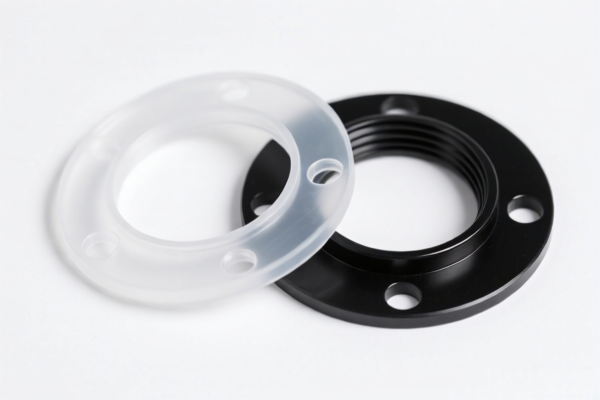

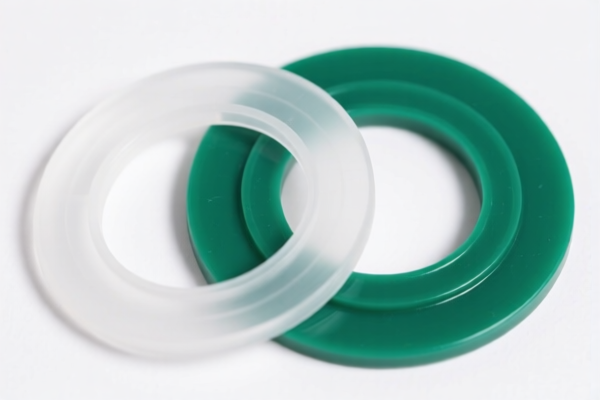
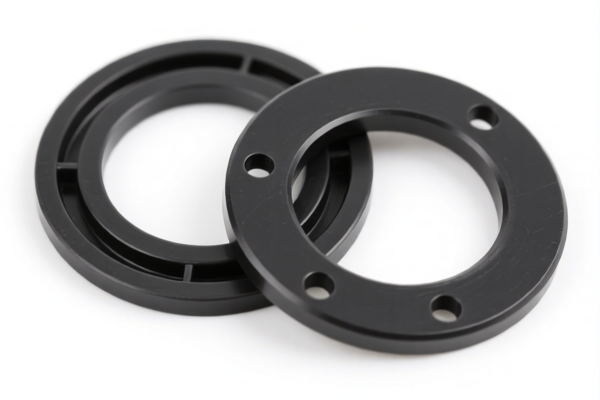
AI Analysis
🛡️ Plastic Gaskets (Custom) | High-Performance Sealing Solutions
🌐 HS Code Reference & Customs Clearance Guide | 2026 Latest Tariff Analysis | Strategic Compliance for Custom Parts
📌 1. Product Definition & Classification: What Exactly is a "Custom Plastic Gasket"?
A Plastic Gasket is a mechanical seal designed to prevent the leakage of fluids or gases between two mating surfaces. Unlike metal gaskets, plastic ones offer excellent chemical resistance, electrical insulation, and ease of fabrication for custom shapes (O-rings, washers, flat seals, complex profiles).
In international trade, these are not classified under Chapter 84 (Machinery parts) unless they are specifically designed for a machine and identified as such, nor are they "metal sheeting" gaskets. They fall squarely under Chapter 39 (Plastics) as "Other articles of plastics."
⚠️ Critical Distinction:
- Material Matters: The HS code depends strictly on the plastic type and form (e.g., O-ring vs. other shapes).
- Customization: "Custom" does not change the HS code but affects documentation clarity. A custom-shaped plastic seal is still a plastic article.
- Not Metal: Even if combined with a small non-metallic layer, if the primary material is plastic, it stays in Chapter 39. If it is metal sheeting + other material, it goes to 8484. This guide focuses on Plastic gaskets as per your input.
📦 2. HS Code Classification Details (2026 Authorized Tariff)
Based on the provided data, here are the precise classifications for Plastic Gaskets. Note that Rubber gaskets (Chapter 40) are excluded from this list to avoid confusion, as your input specifies "Plastic."
| HS Code | Product Description | Application Scenario | Material/Form |
|---|---|---|---|
3926.90.45.10 |
O-Rings (Plastic) | Round cross-section seals for hydraulic/pneumatic systems | ✅ Plastic, O-Ring shape |
3926.90.45.90 |
Other Gaskets, Washers, Seals (Plastic) | Flat gaskets, custom-cut shapes, complex profiles | ✅ Plastic, Non-O-Ring |
🔍 Key Insight:
- O-Rings get their own specific subheading (...45.10).
- All other plastic gaskets (flat, custom-cut, irregular shapes) fall under3926.90.45.90.
- DO NOT use8484.90.00.00unless the gasket is made of metal sheeting (even if lined with plastic). Pure plastic gaskets belong in Chapter 39.
- DO NOT use4016.93.10series unless the material is Vulcanized Rubber. Plastic ≠ Rubber.
💰 3. 2026 Tariff Rate Analysis (Detailed Breakdown)
✅ Applicable Country: USA (US)
✅ Origin: China (CN) (Assuming standard high-tariff context based on provided data showing 25% add-on for similar items)
✅ Status: LOW RISK / ZERO TARIFF
🎯 1. 3926.90.45.10 —— Plastic O-Rings
| Item | Content |
|---|---|
| Base Duty Rate | 0.0% |
| Additional Duty (Section 301/IEEPA) | 0.0% |
| Total Effective Tariff | 0.0% |
| Tax Calculation | CIF Value × 0% = $0 |
| De Minimis Eligibility | ✅ Yes (If shipped via low-value parcel) |
| Legal Basis Path | USITC:3926.90.45.10 → No Footnote Exceptions for Plastic Gaskets in this subheading |
📌 Explanation:
- Unlike metal gaskets (8484) or automotive rubber parts (4016), plastic gaskets currently enjoy zero additional duties in this specific classification.
- This makes3926.90.45.10and3926.90.45.90highly competitive for cost-sensitive supply chains.
🎯 2. 3926.90.45.90 —— Other Plastic Gaskets (Custom Shapes, Washers, Seals)
| Item | Content |
|---|---|
| Base Duty Rate | 0.0% |
| Additional Duty (Section 301/IEEPA) | 0.0% |
| Total Effective Tariff | 0.0% |
| Tax Calculation | CIF Value × 0% = $0 |
| De Minimis Eligibility | ✅ Yes |
| Legal Basis Path | USITC:3926.90.45.90 → No Footnote Exceptions |
📌 Explanation:
- This is the "catch-all" for plastic seals that are not O-rings.
- Zero tax burden makes this ideal for high-volume, low-margin custom sealing components.
- Warning: Misclassifying a plastic gasket as a rubber one (4016) could lead to a 27.5% tariff if it were rubber, but since it's plastic, you are safe at 0%. Conversely, misclassifying as metal (8484) might trigger the 27.5% rate seen in8484.10.00.00. Accuracy is key to maintaining 0%.
🛠️ 4. Customs Clearance Practical Advice (Avoiding Pitfalls)
✅ 1. Documentation Checklist (Must-Have)
| Document | Must Provide | Description |
|---|---|---|
| ✅ Commercial Invoice | ✔️ | Must clearly state "Plastic Gasket" or "Plastic Seal". Avoid vague terms like "Hardware Part." |
| ✅ Product Specification | ✔️ | Include material name (e.g., PTFE, Nylon, PVC, POM), dimensions, and hardness (if applicable). |
| ✅ Material Declaration | ✔️ | Explicitly state: "100% Plastic" or "Polymer-based". Do not claim "Rubber" or "Metal." |
| ✅ Photos | ✔️ | Show cross-section to prove shape (O-ring vs. flat vs. custom). |
| ✅ Custom Design File (Optional) | ✔️ | For custom gaskets, providing a CAD drawing or sketch helps clear customs if the shape is unusual. |
✅ 2. Classification Strategy (Pro Tips)
🔥 "Material First, Shape Second!"
| Scenario | Correct HS Code | Why? |
|---|---|---|
| Round Cross-Section Seal | 3926.90.45.10 |
Specifically defined as "O-Ring" in the tariff text. |
| Flat, Square, or Irregular Custom Cut | 3926.90.45.90 |
Falls under "Other" gaskets. |
| Gasket with Metal Core? | ❌ NOT 3926 | If it has a metal sheeting core, it may be 8484. Pure plastic only! |
| Vulcanized Rubber Gasket | ❌ NOT 3926 | Must be 4016.93.10.xx. Misclassification risks 27.5% tariff. |
✅ 3. Common Mistakes & How to Avoid Them
| Mistake | Consequence | Solution |
|---|---|---|
| Calling it "Automotive Part" | May trigger scrutiny under 4016 (Rubber) or 8484 (Metal) |
Use neutral term: "Industrial Plastic Seal" |
| Confusing Plastic with Rubber | Risk of 27.5% tariff if customs tests and finds it's rubber | Provide MSDS (Material Safety Data Sheet) proving plastic composition |
| Vague Description "Gasket" | Customs may assign default higher rate or hold for inspection | Specify: "Custom Cut Plastic Gasket, Material: [Name]" |
Using 8484 for Plastic |
Incorrect classification; 8484 is for Metal or Metal+Other |
Stick to Chapter 39 for 100% plastic articles |
🌍 5. Global Market Comparison (2026 Snapshot)
| Region | HS Code (Plastic Gasket) | Duty Rate | Key Requirement |
|---|---|---|---|
| 🇺🇸 USA | 3926.90.45.10 / .90 |
0.0% | Clear material declaration |
| 🇪🇺 EU | 3926.90.97 (approx.) |
0% - 1.7% | CE Marking if for machinery |
| 🇨🇳 China | 3926.90.90 |
5% - 10% | Import License (if restricted) |
| 🇯🇵 Japan | 3926.90.99 |
0% - 6% | PSE Certification if for electronics |
📌 Conclusion:
The USA currently offers the most favorable duty-free environment for plastic gaskets under these specific subheadings. However, accuracy in material declaration is paramount to avoid reclassification to higher-tariff categories (like rubber or metal).
📌 6. Final Checklist for Exporters
- Confirm Material: Is it 100% plastic? If yes → Chapter 39.
- Identify Shape:
- O-Ring →
3926.90.45.10 - Other (Custom/Flat) →
3926.90.45.90 - Check Descriptions: Use "Plastic Gasket" or "Plastic Seal". Avoid "Rubber" or "Metal."
- Verify Tax: Confirm 0.0% total tariff based on origin (China) and current trade policies.
- Prepare Docs: Invoice, Packing List, and Material Safety Data Sheet (MSDS).
🎯 7. Expert Advice: Maximize Efficiency, Minimize Risk
💡 Pro Tip:
For custom gaskets, include a "Material Composition Certificate" in your export packet. This pre-empts customs queries about whether the part is actually rubber or metal, ensuring smooth, duty-free clearance.🚀 Bottom Line:
Plastic Gaskets = 0% Duty (USA).
Accuracy = Speed.
Vague Descriptions = Delays.
📣 Ready to Ship?
✅ Double-check your HS Code:
3926.90.45.10(O-Rings) or3926.90.45.90(Others).
✅ Declare "Plastic" clearly.
✅ Enjoy 0% Tax burden.
✨ Precise Classification = Profit Protection.
💼 Don't let misclassification cost you 27.5% or more!
Customer Reviews
About HS Code Classification
The Harmonized System (HS) is an internationally standardized nomenclature developed by the World Customs Organization (WCO) to classify traded products. Over 200 countries use the HS system as the basis for customs tariffs, trade statistics, and import/export regulations.
Each HS code follows a hierarchical structure:
- Chapter (2 digits) — Broad category of goods (e.g., Chapter 84: Machinery and Mechanical Appliances)
- Heading (4 digits) — More specific grouping within the chapter
- Subheading (6 digits) — Internationally standardized breakdown, used by all WCO member countries
- National subdivisions (8-10 digits) — Country-specific extensions for further classification, such as US HTSUS 10-digit codes
Correct HS code classification is essential for smooth customs clearance, accurate duty payment, and compliance with trade regulations. Misclassification can lead to customs delays, overpayment of duties, or penalties.
When importing from CN to US, the applicable tariff rates may include:
- Most-Favored-Nation (MFN) rate — The standard duty rate applied to WTO members
- General rate — Applied to countries without trade agreements
- Trade remedy duties — Additional tariffs such as Section 301 (anti-dumping), Section 232 (national security), or countervailing duties
The information provided on this page is for reference purposes only. For official classification, please consult with your local customs authority or a licensed customs broker.