Plastic Gasket Custom
CN → US| HS Code | Tariff Rate | Origin | Destination | Doc |
|---|---|---|---|---|
| 3926904510 | 38.5% | CN | US | Official Doc |
| 3926904590 | 38.5% | CN | US | Official Doc |
| 8484100000 | 37.5% | CN | US | Official Doc |
| 4016935010 | 37.5% | CN | US | Official Doc |
| 8484900000 | 37.5% | CN | US | Official Doc |
Product Images
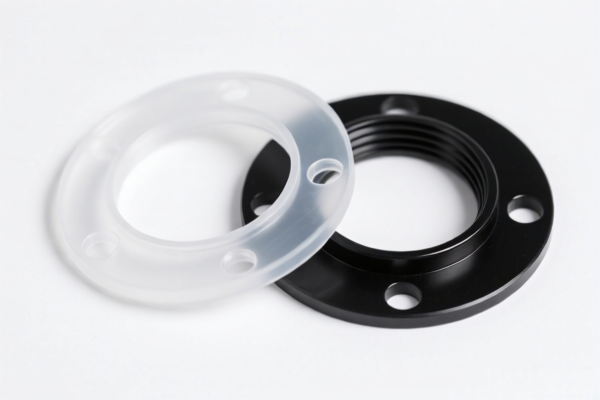

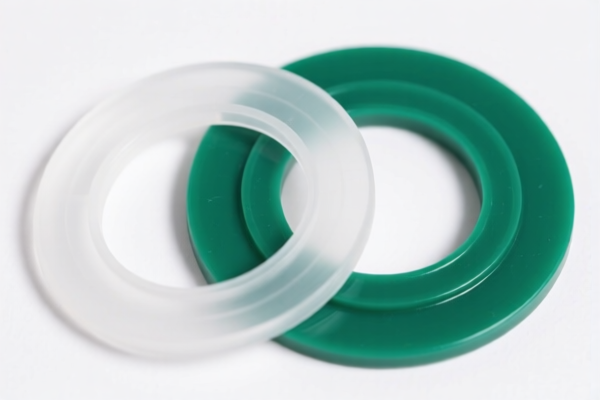
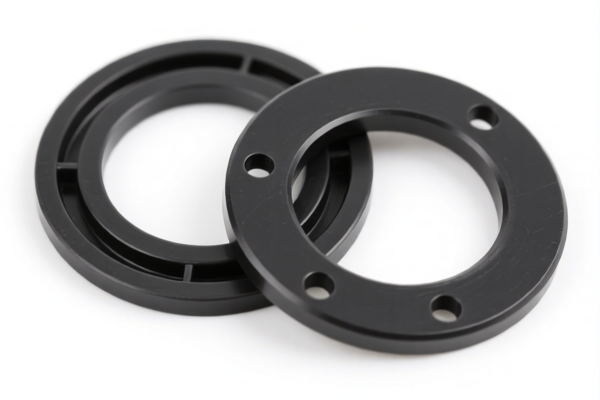
AI Analysis
🛡️ Plastic Gaskets / Custom Seals (Custom Plastic Gaskets)
🌐 HS Code Reference & Customs Clearance Guide | 2026 Latest Tariff Analysis | Professional Entry Strategy
📌 I. Product Definition & Classification: What Exactly Is a "Plastic Gasket"?
A plastic gasket is a mechanical seal used to fill the space between two or mating surfaces, generally to prevent leakage from or into the joined objects while under compression. In international trade, "Custom Plastic Gaskets" often refers to products that are either: 1. Material-Specific: Primarily composed of plastic materials (PE, PP, PVC, PTFE, etc.). 2. Function-Specific: Classified under general "gaskets" if the material is ambiguous or composite.
⚠️ Critical Distinction for Customs:
- If the product is exclusively plastic and defined as a washer/discard/seal → It falls under Chapter 39 (Plastics) or specific Chapter 84 headings depending on the exact definition.
- If the material is unclear or it is a composite (e.g., metal core with plastic coating) → It may fall under Chapter 84 (Machinery Parts) as "Gaskets."
- Customization (e.g., CNC cutting specific shapes) does not change the HS Code if the base material remains plastic.
📦 II. HS Code Classification Details (2026 Latest Tariff Authority Comparison)
Based on the provided data, here are the 5 specific HS Codes for plastic/custom gaskets and why they apply:
| HS Code | Product Description | Application Scenario | Why This Code? |
|---|---|---|---|
3926.90.45.10 |
High-Precision Plastic Gaskets | Specifically defined as "Plastic" material, "Gasket" form. | ✅ Exact Match: Explicitly mentions "Plastic" material and "Gasket" form. Highest specificity. |
3926.90.45.90 |
Other Plastic Gaskets/Seals | Plastic gaskets that fit the general definition of washers/seals but not the "high-precision" sub-category. | ✅ Material Match: "Plastic" material + "Gasket" form. General plastic article category. |
8484.10.00.00 |
Gaskets (General) | Name matches "Gaskets" (washers/seals), material not explicitly stated as plastic in the code itself, but no conflict. | ⚠️ Functional Match: Relies on the term "Gaskets." Used if material origin is ambiguous or if classified as a machinery part. |
4016.93.50.10 |
Gaskets, Washers, Seals | Infers rubber or plastic material under the category of "Sealing elements." | ⚠️ Inferred Material: Often used for rubber, but can apply to plastic if grouped under general sealing articles. |
8484.90.00.00 |
Gaskets (Composite/Metal-Plastic) | Infers a combination of metallic sheeting and other materials (e.g., metal + plastic). | ⚠️ Composite Match: Used if the gasket is not purely plastic but a composite (e.g., spiral wound with plastic fill). |
🔍 Key Takeaway:
- For purely plastic custom gaskets,3926.90.45.10and3926.90.45.90are the most accurate and preferred codes.
- Codes under8484are broader and often used when the material composition is not the primary classifier or when the gasket is considered a "part of machinery."
💰 III. 2026 Latest Tariff Rate Breakdown (Including Surcharges & Policy Add-ons)
✅ Applicable Country: United States (US)
✅ Origin: China (CN)
✅ Effective Date: November 10, 2025 (and onwards)
🎯 1. Plastic Gaskets (3926.90.45.10 & 3926.90.45.90)
| Item | Detail |
|---|---|
| Base Tariff | 3.5% |
| Section 301 Surcharge | +25.0% (USITC Footnote 9903.88.01) |
| Section 122 Tariff | +10.0% (Additional surcharge for specific items) |
| Total Tariff Rate | 38.5% |
| Calculation | CIF Value × 38.5% |
| De Minimis Exemption | ❌ Not Eligible (High duty rate exceeds thresholds) |
| Legal Path | Section 301: 9903.88.01 → Section 122: 10% → USITC: 3926.90.45.10/90 |
📌 Explanation:
- The 3.5% base rate applies to plastic articles.
- The 25% Section 301 tariff is the standard trade war surcharge on Chinese plastic goods.
- The 10% Section 122 tariff is an additional layer for specific categories.
- Total: 38.5%. This is a high-duty item. Customization does not reduce the tariff if the material remains plastic from China.
🎯 2. General Gaskets / Composite (8484.10.00.00, 4016.93.50.10, 8484.90.00.00)
| Item | Detail |
|---|---|
| Base Tariff | 2.5% |
| Section 301 Surcharge | +25.0% |
| Section 122 Tariff | +10.0% |
| Total Tariff Rate | 37.5% |
| Calculation | CIF Value × 37.5% |
| De Minimis Exemption | ❌ Not Eligible |
| Legal Path | Section 301: 9903.88.01 → Section 122: 10% → USITC: 8484.10/90 or 4016.93 |
📌 Note:
- Even if classified under8484(Machinery Parts) or4016(Rubber/Plastic other articles), the 301 and 122 surcharges still apply.
- The base rate is slightly lower (2.5% vs 3.5%), but the total rate is only 1% lower (37.5% vs 38.5%).
- Risk: Misclassifying a plastic gasket as8484to save 1% may lead to customs audits, penalties, and retroactive duty payments if the material is proven to be plastic. Accuracy is key.
🛠️ IV. Customs Clearance Practical Advice (Real-World Pitfall Avoidance)
✅ 1. Required Documentation Checklist
| Document | Required? | Note |
|---|---|---|
| ✅ Product Specification Sheet | ✔️ | Must clearly state Material Composition (e.g., "100% Polypropylene"). |
| ✅ Customization Drawing/Prototype | ✔️ | Proves the "Custom" nature but does not change HS Code if material is unchanged. |
| ✅ Commercial Invoice | ✔️ | Must explicitly list "Plastic Gasket" and HS Code. Avoid vague terms like "Parts." |
| ✅ Certificate of Origin (CO) | ✔️ | Essential for determining Country of Origin (China = High Tariff). |
| ✅ Material Safety Data Sheet (MSDS) | ✔️ | If hazardous materials are used, though rare for standard plastic gaskets. |
| ✅ Packaging List | ✔️ | Match invoice exactly. |
✅ 2. Declaration Tips (Key Mnemonics)
🔥 “Material First, Function Second! Don’t Hide the Plastic!”
| Scenario | Correct Declaration | Incorrect Declaration |
|---|---|---|
| Pure Plastic Gasket | 3926.90.45.10 – "Plastic Gasket, PP Material" |
8484.10.00.00 – "Gasket for Machine" (Risk of reclassification) |
| Composite Gasket (Metal + Plastic) | 8484.90.00.00 – "Composite Gasket" |
3926.90.45.10 – "Plastic Gasket" (Misdeclaration) |
| Custom CNC Cut Gasket | 3926.90.45.10 – "Custom Plastic Gasket" |
"Plastic Parts" (Too vague) |
| Rubber Gasket | 4016.93.50.10 – "Rubber Gasket" |
3926.90.45.10 – Wrong material |
✅ 3. Special Case Handling
| Situation | Recommendation |
|---|---|
| High-Value Custom Gaskets | Consider Advance Ruling from CBP to lock in the HS Code and avoid disputes. |
| Mixed Shipments (Plastic + Rubber) | Separate lines on the invoice. Do not mix 3926 and 4016 codes. |
| Small Quantity Samples | Still subject to 38.5% duty. De Minimis ($800) may apply if value < $800, but check current thresholds. |
| Origin Diversification | If sourced from Vietnam/Mexico, apply for IEEPA Exemption (if eligible) to reduce tariffs. |
🌍 V. Global Market Comparison (2026 Latest)
| Country/Region | Recommended HS Code | Tariff (China Origin) | Certification | Note |
|---|---|---|---|---|
| 🇺🇸 USA | 3926.90.45.10 |
38.5% | None specific | High surcharges apply. |
| 🇨🇳 China | 3926.90.45.10 |
0% (Export) / Varies (Import) | CCC (if applicable) | Low base tariff. |
| 🇪🇺 EU | 3926.90.97 |
6.5% | REACH + RoHS | No Section 301/122 equivalents. |
| 🇬🇧 UK | 3926.90.97 |
6.5% | UKCA | Post-Brexit rules apply. |
| 🇦🇺 Australia | 3926.90.90 |
5% | ACCC | No major surcharges. |
📌 Conclusion:
- USA has the highest barrier for Chinese plastic gaskets due to 301 & 122 tariffs.
- EU/UK/AU have moderate base tariffs but no massive surcharges.
- Strategy: If targeting the US, consider supply chain diversification (e.g., sourcing from non-China origins) or high-value-added processing abroad to potentially alter origin rules.
📌 VI. Common Mistakes & Pitfalls (Lessons Learned)
❌ Mistake 1: Declaring "Plastic Gaskets" as "Plastic Parts" without specifying function.
👉 Consequence: CBP may reclassify under 8484 (if they suspect machinery use) or impose penalties for vague description.
❌ Mistake 2: Assuming "Custom" means a different HS Code.
👉 Consequence: No change in tariff. Customization is a manufacturing process, not a material change.
❌ Mistake 3: Using 8484.10.00.00 for pure plastic gaskets to save 1%.
👉 Consequence: Customs audit. If material is proven plastic, penalties + interest may exceed the 1% savings.
❌ Mistake 4: Ignoring Section 122 (10% tariff).
👉 Consequence: Underpayment. The 10% is automatic for many Chinese goods.
✅ Correct Approach:
"Custom Plastic Gasket, Material: Polypropylene (PP), Hardness: 60 Shore A, Dimensions: 50x30x5mm, HS Code: 3926.90.45.10"
🎯 VII. Conclusion: Professional Declaration, Cost Control, Risk Mitigation
🎯 Remember the Key Points:
🔹 "Plastic Gaskets = 38.5% Total Duty in US"
🔹 "Customization Does Not Change HS Code"
🔹 "Be Specific: Material + Function = Accurate Classification"
🔹 "Don’t Risk 1% Savings for 100% Penalty Risk"
📌 Pro Tip:
If your plastic gaskets are high-precision (e.g., for semiconductor or medical devices), highlight this in the declaration. While it doesn’t lower the tariff, it may qualify for fast-track clearance if all documents are perfect.
📣 Immediate Action:
📞 Consult a Customs Broker to pre-validate your HS Code.
📦 Ensure Your Invoice Matches the Physical Product exactly.
🚀 Plan for 38.5% Duty in your cost sheet. No Surprises!
✨ Precision in Classification, Profit in Clearance!
💼 Your Gasket’s Journey Starts with the Right Code!
Customer Reviews
About HS Code Classification
The Harmonized System (HS) is an internationally standardized nomenclature developed by the World Customs Organization (WCO) to classify traded products. Over 200 countries use the HS system as the basis for customs tariffs, trade statistics, and import/export regulations.
Each HS code follows a hierarchical structure:
- Chapter (2 digits) — Broad category of goods (e.g., Chapter 84: Machinery and Mechanical Appliances)
- Heading (4 digits) — More specific grouping within the chapter
- Subheading (6 digits) — Internationally standardized breakdown, used by all WCO member countries
- National subdivisions (8-10 digits) — Country-specific extensions for further classification, such as US HTSUS 10-digit codes
Correct HS code classification is essential for smooth customs clearance, accurate duty payment, and compliance with trade regulations. Misclassification can lead to customs delays, overpayment of duties, or penalties.
When importing from CN to US, the applicable tariff rates may include:
- Most-Favored-Nation (MFN) rate — The standard duty rate applied to WTO members
- General rate — Applied to countries without trade agreements
- Trade remedy duties — Additional tariffs such as Section 301 (anti-dumping), Section 232 (national security), or countervailing duties
The information provided on this page is for reference purposes only. For official classification, please consult with your local customs authority or a licensed customs broker.