Plastic Gaskets
CN → US| HS Code | Tariff Rate | Origin | Destination | Doc |
|---|---|---|---|---|
| 3926904510 | 38.5% | CN | US | Official Doc |
| 3926904590 | 38.5% | CN | US | Official Doc |
| 3917400050 | 40.3% | CN | US | Official Doc |
| 4016935010 | 37.5% | CN | US | Official Doc |
| 3917400095 | 40.3% | CN | US | Official Doc |
Product Images


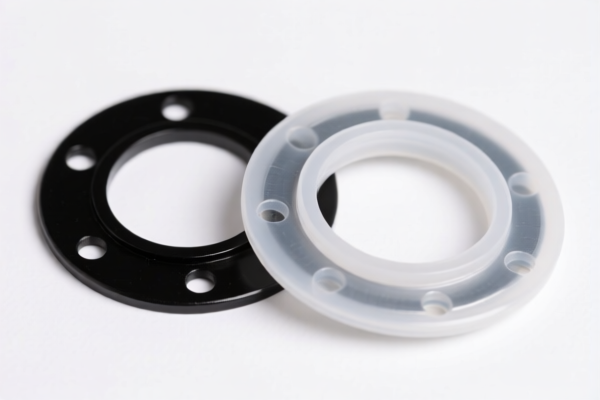

AI Analysis
🛡️ Plastic Gaskets & Seals (Plastic Gaskets)
🌐 HS Code Reference & Customs Clearance Guide | 2026 Latest Tariff Analysis | Professional Compliance Strategy
📌 I. Product Definition & Classification: Do You Really Understand "Plastic Gaskets"?
Plastic gaskets and sealing components are critical accessories in fluid control, piping systems, and industrial assembly. In international trade, they are often misclassified due to the ambiguity between "gaskets" (sealing function) and "pipe fittings" (connection function), or between different material categories (Chapter 39 vs. Chapter 40).
Key Distinctions: * Gaskets/Seals (Gaskets): Designed primarily to prevent leakage between two stationary parts. They rely on compression and material elasticity/plasticity. * Pipe Fittings/Accessories (Fittings): Designed to connect, terminate, or change the direction of pipes (elbows, tees, couplings).
⚠️ Critical Classification Point:
- If the item is a flat or ring-shaped sealing element intended to compress between flanges or threads → Likely HS 3926.90.45 or 4016.93.
- If the item is a structural connector (e.g., bushing, coupling, adapter) for pipes → Likely HS 3917.40.
- Material Conflict: While "Plastic" usually points to Chapter 39, some generic "gaskets" made of synthetic rubber-like plastics might fall under Chapter 40 if the classification logic prioritizes the "sealing article" function over the specific plastic type, though 3926 is the most common for pure plastic gaskets.
📦 II. HS Code Classification Details (2026 Latest Tariff Authority对照)
Based on the provided data, here are the precise HS Codes for plastic gaskets and related plastic pipe accessories.
| HS Code | Product Description | Application Scenario | Classification Logic |
|---|---|---|---|
3926.90.45.10 |
Plastic Gaskets | Flat seals, ring seals, O-rings made of plastic materials | ✅ Direct Match: Specifically for plastic gaskets conforming to material and form requirements. |
3926.90.45.90 |
Other Plastic Gaskets/Seals | Specialized plastic sealing components, non-standard shapes | ✅ Match: Catches other plastic sealing articles not specified in the 10 sub-heading. |
3917.40.00.50 |
Plastic Pipe Accessories | Bushings, adapters, connectors used with drainage/ventilation pipes | ✅ Match: Classifies as "Fittings" for pipes, no conflict with material/use. |
4016.93.50.10 |
Gasket-Form Articles (Plastic/Plastic-like) | Gasket-shaped items where material logic falls into the "catch-all" for sealing articles | ⚠️ Potential Match: Used if the plastic material mimics rubber properties or if classification logic prioritizes the "gasket form" over specific plastic chapter, though less common for pure rigid plastic. |
3917.40.00.95 |
Other Plastic Pipe Fittings | General plastic fittings for pipes, no specific material conflict | ✅ Match: Broad category for plastic pipe accessories/fittings. |
🔍 Key Reminder:
- Gaskets vs. Fittings: A flat disc that squeezes to stop a leak is a Gasket (3926). A piece that screws onto a pipe to connect two pipes is a Fitting (3917).
- Material Note: All codes listed are for Plastic materials. If the gasket is made of rubber, different codes apply.
- Chapter 40 Exception: Code4016.93.50.10is included in the dataset as a "fallback" or specific classification for gasket-shaped items, possibly due to specific material compositions or regulatory interpretations, but 3926 is the standard for most rigid plastic gaskets.
💰 III. 2026 Latest Tariff Rate Details (Including Additional Taxes & Policy Add-ons)
✅ Applicable Country: United States (US)
✅ Country of Origin: China (CN)
✅ Effective Time: Current tariffs apply (2026 context)
The tariff structure for these items from China is highly punitive, combining the Standard MFN rate with Section 301 and Section 301/IEEPA add-ons.
🎯 1. 3926.90.45.10 & 3926.90.45.90 — Plastic Gaskets
| Item | Content |
|---|---|
| Base Duty Rate | 3.5% (Ad Valorem) |
| Section 301 Additional Duty | +25.0% |
| Section 122 / IEEPA Additional Duty | +10.0% |
| Total Effective Rate | 38.5% |
| Tax Calculation | CIF Value × 38.5% |
| De Minimis Eligibility | ❌ No (Section 301 goods are generally exempt from de minimis relief in many contexts, or the high rate makes it irrelevant for commercial shipments) |
| Legal Basis Path | USITC:3926.90.45 → Section 301: Footnote 9903.88.01 → IEEPA:9903.01.24 |
📌 Explanation:
- The 3.5% is the standard US M.F.N. rate for "Other articles of plastics."
- The +25% is the core Section 301 tariff on Chinese goods in this category.
- The +10% is an additional layer often associated with recent trade actions (referred to as "122 clause" in the source data, likely referencing specific IEEPA or supplementary tariffs).
- Total: 38.5%. This is a high-cost item for importers.
🎯 2. 3917.40.00.50 & 3917.40.00.95 — Plastic Pipe Fittings/Accessories
| Item | Content |
|---|---|
| Base Duty Rate | 5.3% (Ad Valorem) |
| Section 301 Additional Duty | +25.0% |
| Section 122 / IEEPA Additional Duty | +10.0% |
| Total Effective Rate | 40.3% |
| Tax Calculation | CIF Value × 40.3% |
| De Minimis Eligibility | ❌ No |
| Legal Basis Path | USITC:3917.40 → Section 301 → IEEPA |
📌 Note:
- Pipe fittings have a slightly higher base rate (5.3% vs 3.5%).
- Therefore, the total tax burden is higher (40.3%) compared to simple gaskets (38.5%).
- Misclassifying a Fitting as a Gasket to save 1.8% is risky and likely to be rejected by Customs if the physical form (connector vs. seal) is evident.
🎯 3. 4016.93.50.10 — Gasket-Form Articles (Plastic-like)
| Item | Content |
|---|---|
| Base Duty Rate | 2.5% (Ad Valorem) |
| Section 301 Additional Duty | +25.0% |
| Section 122 / IEEPA Additional Duty | +10.0% |
| Total Effective Rate | 37.5% |
| Tax Calculation | CIF Value × 37.5% |
| De Minimis Eligibility | ❌ No |
| Legal Basis Path | USITC:4016.93 → Section 301 → IEEPA |
📌 Note:
- This code offers the lowest total rate (37.5%).
- Risk: It is a "catch-all" or fallback code. Using it for standard rigid plastic gaskets (which clearly belong in Chapter 39) may trigger a Customs audit for misclassification. Only use if the material/physical properties justify Chapter 40 (e.g., highly elastic, rubber-like plastic).
🛠️ IV. Customs Clearance Practical Advice (Real-World Pitfall Avoidance Guide)
✅ 1. Documentation Checklist (All Required)
| Document | Must Provide | Description |
|---|---|---|
| ✅ Product Specification Sheet | ✔️ | Material composition (e.g., PP, PE, PVC), hardness, temperature resistance. |
| ✅ Technical Diagram | ✔️ | Show if it's a seal (flat/ring) or a connector (threaded/press-fit). Critical for 3926 vs 3917. |
| ✅ Product Photos | ✔️ | Clear images of the item in use (installed in a flange vs. connected in a pipe). |
| ✅ Commercial Invoice | ✔️ | Must explicitly state "Plastic Gaskets" or "Plastic Pipe Fittings" – do not use generic terms like "Plastic Parts". |
| ✅ Packing List | ✔️ | Item count, weight, and packaging details. |
| ✅ Certificate of Origin (CO) | ✔️ | Confirm China origin to apply correct Section 301/IEEPA rates. |
✅ 2. Declaration Tips (Key Mnemonic)
🔥 “Form Defines Function, Function Defines Code. Don’t Mix Gaskets and Fittings!”
| Scenario | Correct Declaration | Wrong Approach |
|---|---|---|
| Flat/Ring Seal | 3926.90.45.10 (Plastic Gaskets) |
Calling it "Fitting" → 40.3% (Higher) |
| Pipe Connector/Adapter | 3917.40.00.95 (Plastic Fittings) |
Calling it "Gasket" → 38.5% (Risk of Misclassification) |
| Elastic/Rubber-like Plastic Seal | 4016.93.50.10 (Only if justified) |
Forcing 4016 for rigid plastic → Audit Risk |
| Mixed Shipment (Gaskets + Fittings) | Split Line Items | Mixing in one line → Potential penalty for inaccurate valuation/classification |
✅ 3. Special Situation Handling
| Situation | Handling Advice |
|---|---|
| OEM Custom Gaskets | Provide customer specs. If the shape is unique, provide 3D drawings to prove it’s a "gasket" and not a "part of a machine." |
| Gaskets with Metal Inserts | If the metal content > significant threshold, classification may shift to Chapter 73 or 74. Pure plastic is 3926. |
| High-Value Fittings | At 40.3%, ensure the declared value is accurate. Over-declaring increases tax; under-declaring triggers penalties. |
| Section 301 Exclusions | Check if your specific HS Code was excluded from Section 301 in recent years. (Most plastics are not excluded). |
🌍 V. Global Market Comparison (2026 Latest)
| Country/Region | Recommended HS Code | Tariff Rate (China Origin) | Certification Requirements | Notes |
|---|---|---|---|---|
| 🇺🇸 USA | 3926.90.45.10 / 3917.40.00.95 |
38.5% - 40.3% | None specific for plastic | Highest Duty: Includes 301 + 122/IEEPA. Costly. |
| 🇨🇳 China | 3926.90.45 / 3917.40.00 |
~6.5% - 8.0% | None | Low import duty, but high VAT (13%). |
| 🇪🇺 EU | 3926.90.97 / 3917.23.00 |
~6.5% - 8.0% | REACH Compliance | No 301 tariffs. REACH registration may be required. |
| 🇦🇺 Australia | 3926.90.00 |
~5% | None | Low duty, no major trade barriers for plastic. |
| 🇯🇵 Japan | 3926.90.90 |
~6.0% | JIS Standards (if applicable) | Stable tariffs, no punitive add-ons. |
📌 Conclusion:
- The US market is exceptionally expensive for Chinese plastic gaskets/fittings due to the ~40% total duty.
- EU, Australia, and Japan offer much lower entry costs (~6-8%).
- Strategy: If targeting the US, consider supply chain diversification (e.g., Vietnam, Mexico) to avoid Section 301/IEEPA tariffs, or negotiate cost-sharing with US buyers.
📌 VI. Common Mistakes & Pitfall Guide (Lessons Learned)
❌ Mistake 1: Classifying a Pipe Connector as a Gasket to save 1.8%
👉 Consequence: Customs may reclassify it upon inspection. If deemed intentional misclassification, penalties and back-taxes apply.
👉 Savings: Temporary. Risk is high.
❌ Mistake 2: Using 4016.93.50.10 for Rigid Plastic Gaskets
👉 Consequence: Customs will argue that Chapter 39 (Plastics) takes precedence over Chapter 40 (Rubber/Plastic-like) for rigid plastics. Misclassification penalty.
👉 Fix: Use 3926.90.45 for rigid plastic.
❌ Mistake 3: Ignoring the 122/IEEPA +10% in Cost Calculations
👉 Consequence: Budgeting only for 301 (25%) or Base (3.5%) leads to massive profit erosion.
👉 Fix: Always use the Total Effective Rate (38.5% or 40.3%).
❌ Mistake 4: Vague Description "Plastic Parts"
👉 Consequence: Customs may assign a default higher rate or hold the shipment for detailed review.
👉 Fix: Use precise terms: "PP Plastic Gasket" or "PVC Pipe Fitting."
✅ Correct Practice:
"Polypropylene (PP) Flat Gasket, 2-inch, for Water Pipe Flanges, HS 3926.90.45.10, Origin China"
🎯 VII. Conclusion: Precise Classification Saves Money!
🎯 Remember the Mnemonic:
🔹 “Gasket is 3926 (38.5%), Fitting is 3917 (40.3%), Don’t Mix Them or Pay the Price!”
🔹 “US Tariff is ~40%, Plan Your Supply Chain or Absorb the Cost!”
📌 Pro Tip:
If your plastic gaskets are shaped like seals but made of rubber, consider 4016.93. If they are plastic connectors, use 3917.40.
Recommendation: For US imports, explore Section 301 Exclusion Requests if your specific product was historically eligible, or consider transshipment (if legal and compliant) or third-country manufacturing.
📣 Immediate Action:
📞 Consult a licensed customs broker + Provide product photos + Confirm Material Composition
🚀 Avoid Misclassification Penalties, Calculate Taxes Accurately, and Optimize Your Landed Cost!
✨ Professional Customs Clearance Starts with Accurate Classification!
💼 Your Every Dollar is Worth Precise Calculation!
Customer Reviews
About HS Code Classification
The Harmonized System (HS) is an internationally standardized nomenclature developed by the World Customs Organization (WCO) to classify traded products. Over 200 countries use the HS system as the basis for customs tariffs, trade statistics, and import/export regulations.
Each HS code follows a hierarchical structure:
- Chapter (2 digits) — Broad category of goods (e.g., Chapter 84: Machinery and Mechanical Appliances)
- Heading (4 digits) — More specific grouping within the chapter
- Subheading (6 digits) — Internationally standardized breakdown, used by all WCO member countries
- National subdivisions (8-10 digits) — Country-specific extensions for further classification, such as US HTSUS 10-digit codes
Correct HS code classification is essential for smooth customs clearance, accurate duty payment, and compliance with trade regulations. Misclassification can lead to customs delays, overpayment of duties, or penalties.
When importing from CN to US, the applicable tariff rates may include:
- Most-Favored-Nation (MFN) rate — The standard duty rate applied to WTO members
- General rate — Applied to countries without trade agreements
- Trade remedy duties — Additional tariffs such as Section 301 (anti-dumping), Section 232 (national security), or countervailing duties
The information provided on this page is for reference purposes only. For official classification, please consult with your local customs authority or a licensed customs broker.