Plastic Graduated Cylinder
CN → US| HS Code | Tariff Rate | Origin | Destination | Doc |
|---|---|---|---|---|
| 392310 | 0.0% | CN | US | Official Doc |
| 902480 | 0.0% | CN | US | Official Doc |
| 392310 | 0.0% | CN | US | Official Doc |
| 902490 | 0.0% | CN | US | Official Doc |
Product Images

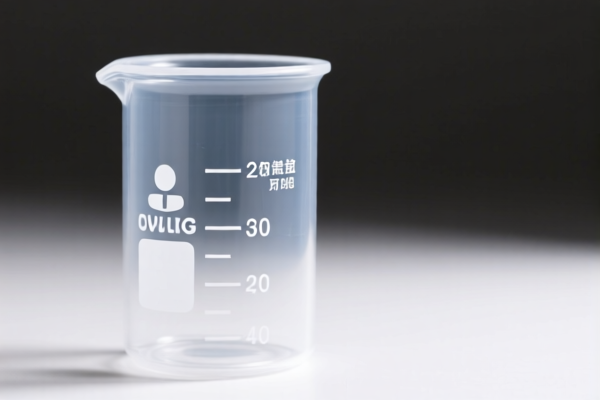
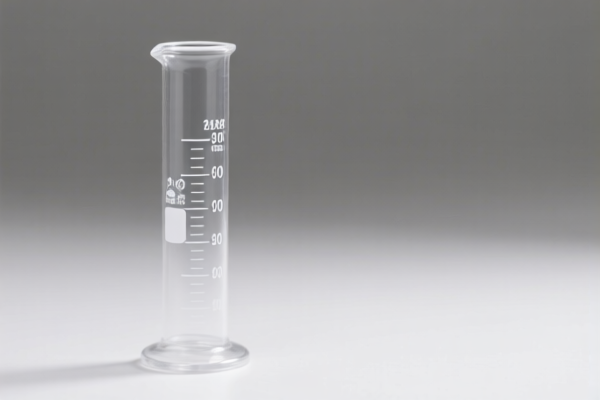
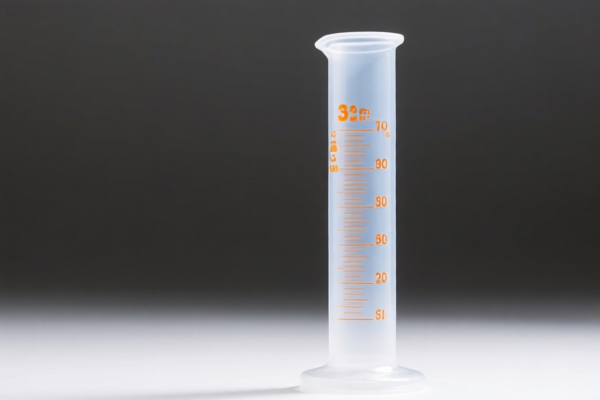
AI Analysis
🧪 Plastic Graduated Cylinders: The Ultimate Lab Measurement Guide
🌐 HS Code Reference & Customs Clearance Guide | 2026 Latest Tariff Analysis | Professional Entry Strategy
📌 I. Product Definition & Classification: What Exactly is a "Plastic Graduated Cylinder"?
A Plastic Graduated Cylinder is a laboratory vessel, typically cylindrical in shape, made primarily from plastic materials (such as Polypropylene or Polystyrene). It features precise volume markings (graduations) along its side, designed specifically for measuring liquid volumes in scientific, medical, or educational settings.
In international trade, these items are generally classified into two main categories based on their material and function:
1. Laboratory Plasticware (Container/Packaging Classification):
These are viewed as "containers" for plastics. If the cylinder is considered a simple plastic container for holding or measuring liquids without complex mechanical parts, it often falls under Chapter 39 (Plastics).
2. Laboratory Glassware/Apparatus (Instrument Classification):
Although made of plastic, if the item is specifically designed as scientific apparatus for measuring/containing liquids in a controlled scientific application, customs authorities may classify it under Chapter 90 (Optical, Photographic, Cinematographic, Measuring, Checking, Precision, Medical or Surgical Instruments and Apparatus).
⚠️ Key Distinction Point:
- If viewed as a plastic container with measurement markings →归入 3923.10
- If viewed as scientific apparatus for liquid measurement → 归入 9024.80 or 9024.90
- Note: There is significant ambiguity here. The description "Laboratory glassware" often triggers Chapter 90 even if made of plastic, due to its specific scientific function.
📦 II. HS Code Classification Details (Based on Provided Data)
| HS Code | Product Description | Source Context | Tax Status |
|---|---|---|---|
3923.10 |
Plastic graduated cylinders, made of plastic, designed for measuring liquid volumes, typically used in laboratory settings. | Viewed as Plastic Containers/Articles for the Conveyance or Packing of Goods | ⚠️ Failed to retrieve tax information |
9024.80 |
Laboratory glassware and equipment, including plastic graduated cylinders, used for measuring and containing liquids in scientific applications. | Viewed as Measuring/Checking Instruments (Scientific Apparatus) | ⚠️ Failed to retrieve tax information |
9024.90 |
Laboratory glassware and apparatus, including plastic graduated cylinders, used for measuring and containing liquids in scientific applications. | Viewed as Parts/Accessories or Other Scientific Apparatus | ⚠️ Failed to retrieve tax information |
🔍 Critical Observation:
- The dataset contains duplicate entries for3923.10and similar descriptions for9024.80and9024.90.
- All tax fields return "Error" / "Failed to retrieve". This indicates that specific duty rates cannot be determined from this dataset alone.
- Risk: Misclassification between Chapter 39 (Plastics) and Chapter 90 (Instruments) is common. Chapter 90 often attracts different duty rates and regulatory requirements (e.g., FDA, ISO standards) compared to Chapter 39.
💰 III. Tax Rate Analysis (Critical Warning)
⚠️ IMPORTANT:
The provided<DATA>explicitly states:
"tax_detail": "Failed to retrieve tax information"
"total_tax": "Error"This means NO specific tax rates (Base Duty, VAT, Additional Tariffs) are available in this data set.
Do NOT assume 0% or any standard rate.
✅ Recommendation:
- You MUST consult a local customs broker or the official customs tariff database (e.g., HTSUS for USA, TARIC for EU, HS Code search for China) for the specific duty rate applicable to your country of import.
- Typical general rates for3923.10(Plastic articles) range from 0% to 10% depending on the country.
- Typical general rates for9024.80/90(Scientific instruments) vary widely; some countries offer 0% for scientific equipment, while others charge 5-15%.
- Check for Anti-Dumping Duties (ADD) or Section 301 Tariffs if originating from certain countries (e.g., China to USA).
🛠️ IV. Customs Clearance Practical Advice (Avoiding Pitfalls)
✅ 1. Essential Documentation Checklist
| Document | Required? | Purpose |
|---|---|---|
| ✅ Commercial Invoice | ✔️ | Must clearly state "Plastic Graduated Cylinder" and HS Code. |
| ✅ Packing List | ✔️ | Details quantity, weight, and packaging. |
| ✅ Product Photograph | ✔️ | Show graduations, material (plastic), and scale. |
| ✅ Material Declaration | ✔️ | Specify plastic type (e.g., PP, PS) to confirm Chapter 39 vs. 90. |
| ✅ Certificate of Analysis (COA) | ✔️ | Proves accuracy of graduation marks (important for Chapter 90). |
| ✅ Intended Use Statement | ✔️ | Confirm "Laboratory Use" to support Chapter 90 classification if desired. |
✅ 2. Classification Strategy (Chapter 39 vs. Chapter 90)
| Scenario | Recommended HS Code | Rationale | Risk Level |
|---|---|---|---|
| Bulk, Low-Cost, Educational Use | 3923.10 |
Simpler plastic container with markings. Lower regulatory scrutiny. | Low |
| High-Precision, Scientific/Lab Use | 9024.80 |
Classified as "Measuring Apparatus." May require quality certifications (ISO 17025). | Medium |
| Parts/Accessories for Instruments | 9024.90 |
If sold as replaceable parts for other lab equipment. | Medium |
📌 Tip:
- If your product is simple plastic with basic markings,3923.10is often safer and easier to clear.
- If it is high-precision, calibrated, and marketed as "Scientific Apparatus,"9024.80is more accurate but may trigger stricter quality checks.
✅ 3. Common Mistakes & How to Avoid Them
| Mistake | Consequence | Solution |
|---|---|---|
| ❌ Using "Glassware" in Description for Plastic Items | Customs may reject or question the accuracy. | Use "Plastic Laboratory Ware" or "Plastic Graduated Cylinder". |
| ❌ Failing to Specify Material | Misclassification between Chapter 39 (Plastic) and Chapter 70 (Glass). | Always state "Made of Polypropylene (PP)" or similar. |
| ❌ Ignoring Graduation Accuracy | If classified under 9024, accuracy is critical. | Provide Calibration Certificate if using 9024.80. |
| ❌ Assuming Tax Rates | Unexpected duties due to "Error" in data. | Always verify rates with a licensed customs broker. |
🌍 V. Global Market Insights (General Trends)
| Region | Typical HS Code Trend | Duty Note |
|---|---|---|
| 🇺🇸 USA | 3923.10.00 or 9024.80.00 |
Check Section 301 tariffs if from China. |
| 🇪🇺 EU | 3923.10 or 9024.80 |
CE Marking may be required if classified as measuring instrument. |
| 🇨🇳 China | 3923.10 or 9024.80 |
Import Duty depends on trade agreements (RCEP, etc.). |
| 🇬🇧 UK | 3923.10 or 9024.80 |
Post-Brexit rules apply; check UK Tariff. |
📌 Conclusion:
- Plastic Graduated Cylinders sit on the boundary between Plastics (Ch 39) and Scientific Instruments (Ch 90).
- Tax Data is Unavailable in this dataset. You must conduct independent research for accurate duty rates.
- Documentation is Key: Clear descriptions, material specs, and intended use statements are vital for smooth clearance.
📌 VI. Final Checklist for Exporters/Importers
- Confirm Material: Is it 100% plastic? (Yes → Ch 39 or Ch 90)
- Confirm Precision: Is it calibrated? (Yes → Lean towards Ch 90)
- Verify Tax Rate: DO NOT USE THIS DATA FOR PAYMENT. Use official government tariff tools.
- Prepare Docs: Invoice, Packing List, Photo, Material Spec.
- Consult Broker: For high-value shipments, get a Binding Tariff Information (BTI) or Advance Ruling if possible.
✨ Professional Clearance, Start with Accurate Classification!
💼 Your Cost Efficiency Depends on Right HS Code Choice!
🚨 Disclaimer:
This guide is for informational purposes only. Tax rates and HS codes are subject to change. Always consult with a licensed customs broker or legal expert for final classification and duty calculation. The provided data contains no valid tax information ("Error"), so independent verification is mandatory.
Customer Reviews
About HS Code Classification
The Harmonized System (HS) is an internationally standardized nomenclature developed by the World Customs Organization (WCO) to classify traded products. Over 200 countries use the HS system as the basis for customs tariffs, trade statistics, and import/export regulations.
Each HS code follows a hierarchical structure:
- Chapter (2 digits) — Broad category of goods (e.g., Chapter 84: Machinery and Mechanical Appliances)
- Heading (4 digits) — More specific grouping within the chapter
- Subheading (6 digits) — Internationally standardized breakdown, used by all WCO member countries
- National subdivisions (8-10 digits) — Country-specific extensions for further classification, such as US HTSUS 10-digit codes
Correct HS code classification is essential for smooth customs clearance, accurate duty payment, and compliance with trade regulations. Misclassification can lead to customs delays, overpayment of duties, or penalties.
When importing from CN to US, the applicable tariff rates may include:
- Most-Favored-Nation (MFN) rate — The standard duty rate applied to WTO members
- General rate — Applied to countries without trade agreements
- Trade remedy duties — Additional tariffs such as Section 301 (anti-dumping), Section 232 (national security), or countervailing duties
The information provided on this page is for reference purposes only. For official classification, please consult with your local customs authority or a licensed customs broker.