Plastic Greenhouse Fittings
CN → US| HS Code | Tariff Rate | Origin | Destination | Doc |
|---|---|---|---|---|
| 9403994080 | 35.0% | CN | US | Official Doc |
| 3926305000 | 22.8% | CN | US | Official Doc |
| 3926301000 | 24.0% | CN | US | Official Doc |
| 9403993080 | 35.0% | CN | US | Official Doc |
Product Images
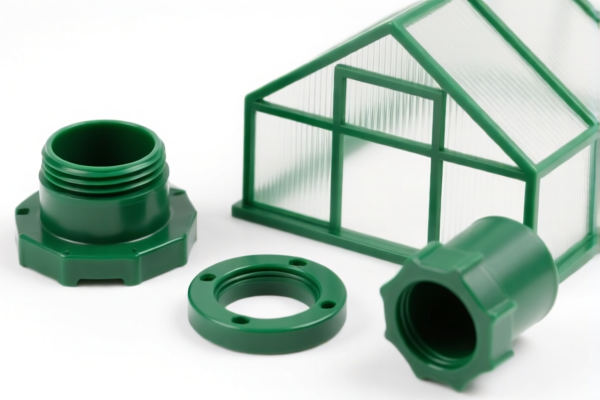


AI Analysis
🌿 Plastic Greenhouse Fittings (Plastic Accessories for Greenhouses)
🌐 HS Code Reference & Clearance Guide | 2026 Latest Tariff Analysis | Professional Entry Strategy
📌 I. Product Definition & Classification: Do You Really Understand "Plastic Greenhouse Fittings"?
Plastic Greenhouse Fittings are critical components used to assemble, connect, or reinforce greenhouse structures. In international trade, these items are often ambiguous because they fall between "plastic articles" and "furniture parts." To ensure accurate classification, we must distinguish between structural accessories (which may be treated as furniture parts) and general plastic industrial/commercial parts.
⚠️ Key Distinction Point:
- If the item is explicitly a part of a furniture structure (even if used in a greenhouse setting) → Likely classified under 9403.99 (Parts of Furniture).
- If the item is a general plastic component not specific to furniture machinery but used in greenhouse assembly → Likely classified under 3926.30 (Other Plastic Articles).
📦 II. HS Code Classification Details (2026 Latest Tariff Authority Comparison)
Based on the provided data, here are the four most relevant HS Codes for "Plastic Greenhouse Fittings," ranging from strict "Furniture Part" classification to broader "Plastic Article" classification.
| HS Code | Product Description | Application Scenario | Tax Rate (Total) | Tax Detail Breakdown |
|---|---|---|---|---|
9403.99.40.80 |
Plastic Furniture Accessories | Materials are plastic, form is accessory, purpose is "other furniture." | 35.0% | Base: 0.0%, Section 301: 25.0%, Section 122: 10% |
3926.30.50.00 |
Plastic Articles (Furniture Accessories Included) | Explicitly includes plastic material and furniture accessory usage. | 22.8% | Base: 5.3%, Section 301: 7.5%, Section 122: 10% |
3926.30.10.00 |
Plastic Articles (Furniture Use/Accessory Defined) | Meets the attribute definition of furniture utensils and accessories. | 24.0% | Base: 6.5%, Section 301: 7.5%, Section 122: 10% |
9403.99.30.80 |
Furniture Parts (Default Inclination) | Material matches plastic, purpose matches furniture accessories, default tendency is parts. | 35.0% | Base: 0.0%, Section 301: 25.0%, Section 122: 10% |
🔍 Critical Note:
- Codes 9403.99.40.80 and 9403.99.30.80 fall under Chapter 94 (Furniture), implying the customs authority views these fittings as integral to "furniture" structures. This results in a 0% Base Duty but high additive tariffs.
- Codes 3926.30.x0.00 fall under Chapter 39 (Plastics), viewing them as general plastic articles. This has a Base Duty (5.3%-6.5%) but significantly lower Section 301 tariffs (7.5%).
💰 III. 2026 Latest Tariff Rate Detailed Explanation (Including Add-ons & Policy Add-ons)
✅ Applicable Country: United States (US)
✅ Origin: China (CN)
✅ Effective Date: From November 10, 2025 (including subsequent imports)
🎯 1. 9403.99.40.80 & 9403.99.30.80 —— Plastic Furniture Parts/Accessories
| Item | Content |
|---|---|
| Base Tariff | 0.0% (Ad Valorem) |
| Section 301 Tariff | +25.0% (USITC Footnote related to Section 301 List 4) |
| Section 122 Tariff | +10.0% (Targeting China/HK products, effective from Nov 10, 2025) |
| Total Tariff | 35.0% |
| Tax Calculation | CIF Value × 35% |
| De Minimis Eligibility | ❌ No (Deny De Minimis) |
| Legal Basis Path | IEEPA:9903.01.25 → USITC:9403.99.40.80 → FOOTNOTE:Section 122 |
📌 Explanation:
- Although the base tariff is 0%, the Section 301 tariff is a flat 25%, and the new Section 122 adds 10%.
- Total: 35%. This is a high tariff for plastic accessories.
- Why so high? Customs classifies these as "Furniture Parts." Chapter 94 parts often have lower base rates but are heavily penalized by trade remedy tariffs.
🎯 2. 3926.30.50.00 —— Plastic Articles (Furniture Accessories Included)
| Item | Content |
|---|---|
| Base Tariff | 5.3% |
| Section 301 Tariff | +7.5% |
| Section 122 Tariff | +10.0% |
| Total Tariff | 22.8% |
| Tax Calculation | CIF Value × 22.8% |
| De Minimis Eligibility | ❌ No (Deny De Minimis) |
| Legal Basis Path | IEEPA:9901.25 → USITC:3926.30.50.00 → FOOTNOTE:Section 122 |
📌 Note:
- This classification is more favorable than the 9403 codes.
- The Section 301 tariff is only 7.5% (compared to 25% for furniture parts).
- Total: 22.8%. This is the recommended low-tariff pathway if the product can be justified as a general plastic article rather than a strict furniture part.
🎯 3. 3926.30.10.00 —— Plastic Articles (Furniture Use/Accessory Defined)
| Item | Content |
|---|---|
| Base Tariff | 6.5% |
| Section 301 Tariff | +7.5% |
| Section 122 Tariff | +10.0% |
| Total Tariff | 24.0% |
| Tax Calculation | CIF Value × 24.0% |
| De Minimis Eligibility | ❌ No (Deny De Minimis) |
| Legal Basis Path | IEEPA:9901.25 → USITC:3926.30.10.00 → FOOTNOTE:Section 122 |
📌 Note:
- Very similar to3926.30.50.00, but with a slightly higher base rate (6.5% vs 5.3%).
- Total: 24.0%. Use this if the "furniture accessory" description is more accurate but you still want to stay in Chapter 39.
🛠️ IV. Clearance Practical Advice (Battle-Hardened Pitfall Avoidance Guide)
✅ 1. Preparation Checklist (Nothing is Optional)
| Document | Required | Explanation |
|---|---|---|
| ✅ Product Specs | ✔️ | Include material composition (100% Plastic), dimensions, and connection method. |
| ✅ Photos | ✔️ | Clear images showing the item is not a finished furniture piece but a connector/clamp/fitting. |
| ✅ Bill of Lading | ✔️ | Ensure "Greenhouse Fittings" or "Plastic Accessories" is used, not "Furniture Parts." |
| ✅ Commercial Invoice | ✔️ | Value must reflect the fitting cost, not the greenhouse structure. |
| ✅ Origin Certificate | ✔️ | Proof of Chinese origin is mandatory for Section 122/301 application. |
✅ 2. Declaration Strategy (Key Mantras)
🔥 “Plastic is King, Furniture is Trap! Classify under 39, Save 12%!”
| Situation | Correct Declaration | Wrong Practice |
|---|---|---|
| Plastic Clamps/Connectors | 3926.30.50.00 (Plastic Articles) |
Misclassify as 9403.99 (Furniture Parts) → 35% Tax |
| Greenhouse Frame Joints | 3926.30.50.00 |
Declare as "Furniture" → 35% Tax |
| Decorative Plastic Covers | 3926.90.98 (Other Plastic Articles) |
Overcomplicating with Furniture Codes → Risk of Audit |
💡 Pro Tip:
- Avoid using the word "Furniture" in your English description if possible. Use "Greenhouse Components," "Plastic Connectors," or "Industrial Plastic Fittings."
- If customs insists on "Furniture," argue that greenhouses are agricultural structures, not furniture, thus pushing them toward 3926.
✅ 3. Special Scenarios
| Scenario | Handling Advice |
|---|---|
| Mixed Containers | If plastic fittings are shipped with actual furniture (e.g., patio chairs), declare separately. Do not bundle under one HS Code. |
| Kit Sets | If sold as a "Greenhouse Kit," the main structure may be Chapter 39 or 73, but plastic fittings should still be declared under 3926.30. |
| Customs Audit | If audited, provide engineering diagrams showing the item is a connector, not a seat/leg of a chair. |
🌍 V. Global Main Market Comparison (2026 Latest)
| Country/Region | Recommended HS Code | Tariff | Certification | Notes |
|---|---|---|---|---|
| 🇺🇸 USA | 3926.30.50.00 |
22.8% | None Specific | Avoid 9403 (35%) |
| 🇨🇳 China | 3926.30.50.00 |
~5-6% | None | Low base duty |
| 🇪🇺 EU | 3926.90.97 |
4.4% | CE/RoHS | Different Chapter structure |
| 🇨🇦 Canada | 3926.30.00 |
5.25% | None | Lower Section 301 impact |
📌 Conclusion:
- USA is the most critical market due to Section 301 and Section 122.
- Choosing 3926 over 9403 saves ~12% in total duties.
- Always opt for 3926.30 for plastic greenhouse fittings to minimize costs.
📌 VI. Common Mistakes & Pitfall Guide (Blood & Tears Lessons)
❌ Mistake 1: Declaring plastic greenhouse clips as "Furniture Parts"
👉 Consequence: You pay 35% duty instead of 22.8%. Loss: 12.2% per unit!
❌ Mistake 2: Using vague terms like "Plastic Parts" without specifying application
👉 Consequence: Customs may assign a higher default rate or request more documentation, causing delays.
❌ Mistake 3: Believing "Greenhouse = Agricultural Equipment = 0% Duty"
👉 Consequence: Greenhouse fittings are rarely classified as agricultural machinery. They are plastic articles. Expect 22.8%+.
✅ Correct Practice:
"Plastic Greenhouse Fittings, Connector Type, Model XYZ, Material: PP/PE, Not Furniture"
🎯 VII. Conclusion: Precise Classification, Cost Saving!
🎯 Remember the Mantra:
🔹 "Plastic is 39, Furniture is 94. 39 is cheaper, 94 is a trap!"
🔹 "Use 3926.30.50.00 to save 12.2% on every shipment."
📌 Tips:
- If your fittings are metal, the classification changes completely (likely Chapter 73 or 83).
- For plastic, stick to 3926.30.
- Consider applying for an Advance Ruling from US Customs (CBP) if you are shipping large volumes.
📣 Immediate Action:
📞 Consult your customs broker with the 3926.30.50.00 code.
🚀 Optimize your supply chain, reduce duties, and maximize profit!
✨ Professional Clearance Starts with Accurate Classification!
💼 Every Percent Saved is Pure Profit!
Customer Reviews
About HS Code Classification
The Harmonized System (HS) is an internationally standardized nomenclature developed by the World Customs Organization (WCO) to classify traded products. Over 200 countries use the HS system as the basis for customs tariffs, trade statistics, and import/export regulations.
Each HS code follows a hierarchical structure:
- Chapter (2 digits) — Broad category of goods (e.g., Chapter 84: Machinery and Mechanical Appliances)
- Heading (4 digits) — More specific grouping within the chapter
- Subheading (6 digits) — Internationally standardized breakdown, used by all WCO member countries
- National subdivisions (8-10 digits) — Country-specific extensions for further classification, such as US HTSUS 10-digit codes
Correct HS code classification is essential for smooth customs clearance, accurate duty payment, and compliance with trade regulations. Misclassification can lead to customs delays, overpayment of duties, or penalties.
When importing from CN to US, the applicable tariff rates may include:
- Most-Favored-Nation (MFN) rate — The standard duty rate applied to WTO members
- General rate — Applied to countries without trade agreements
- Trade remedy duties — Additional tariffs such as Section 301 (anti-dumping), Section 232 (national security), or countervailing duties
The information provided on this page is for reference purposes only. For official classification, please consult with your local customs authority or a licensed customs broker.