Plastic Grid
CN → US| HS Code | Tariff Rate | Origin | Destination | Doc |
|---|---|---|---|---|
| 3920992000 | 39.2% | CN | US | Official Doc |
| 3917290090 | 38.1% | CN | US | Official Doc |
| 3917400095 | 40.3% | CN | US | Official Doc |
| 3920995000 | 40.8% | CN | US | Official Doc |
| 3926305000 | 22.8% | CN | US | Official Doc |
Product Images
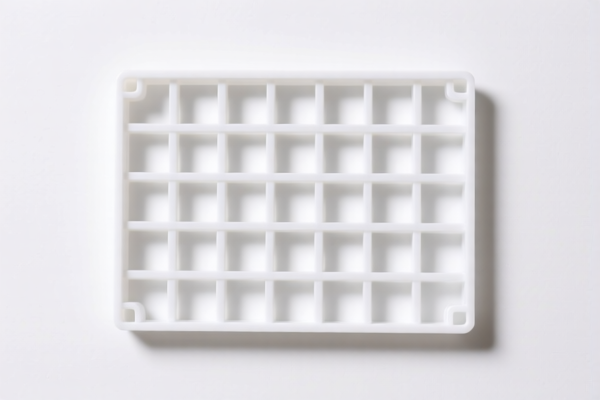
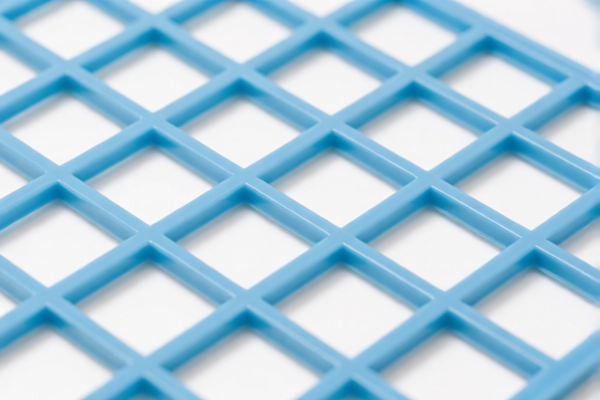
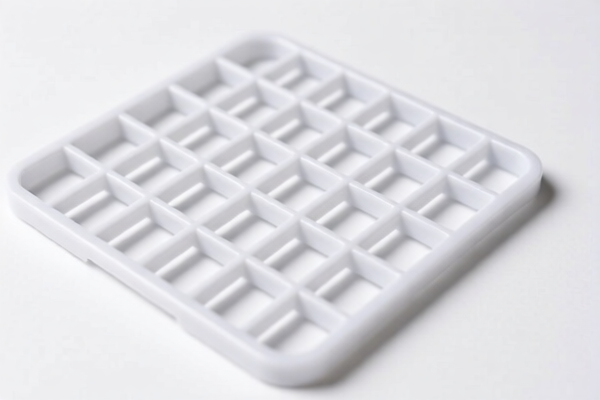
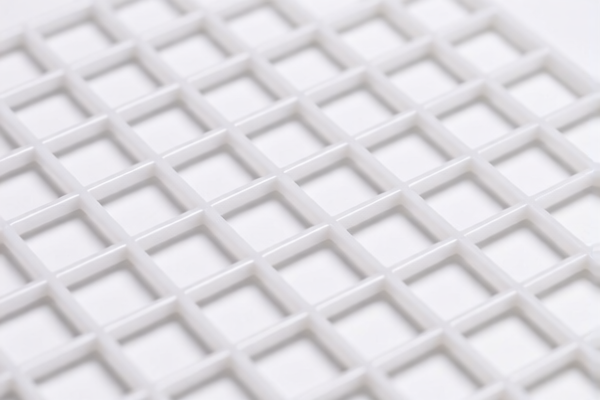
AI Analysis
🏗️ Plastic Grids: HS Code Classification, Tax Breakdown & Customs Clearance Guide
🌐 HS Code Reference & Customs Clearance Guide | 2026 Latest Tariff Analysis | Professional Entry Strategy
📌 I. Product Definition: What Exactly is a "Plastic Grid"?
In international trade, "Plastic Grid" is a generic term that can cover a wide range of structural components. The critical factor for customs classification is not just the material (plastic), but the form and function of the specific product.
Depending on the manufacturing shape and intended use, a plastic grid may be classified as: 1. Sheet/Plate-like Structures: Flat or corrugated grids resembling sheets or plates. 2. Structural Piping Components: Rigid conduits or structural tubes. 3. Accessories/Attachments: Parts used in conjunction with pipes or ducts. 4. General Plastic Articles: Other molded plastic items that don't fit specific structural categories.
⚠️ Key Distinction Point:
- Is it a flat sheet with holes/cutouts? → Likely Chapter 39.01-39.14 (Plastics and Articles Thereof, Plates/Sheets/Film).
- Is it a rigid tube/conduit with a grid structure? → Likely Chapter 39.17 (Plastic Pipes/Hoses/Accessories).
- Is it a general molded part not fitting the above? → Likely Chapter 39.26 (Other Plastic Articles).
📦 II. HS Code Classification Details (2026 Latest Tariff Authority Reference)
Based on the provided data, here are the 5 possible HS Codes for "Plastic Grids," categorized by their structural form:
| HS Code | Product Description | Structural Form | Typical Application |
|---|---|---|---|
| 3920.99.20.00 | Plastic Grid (Variant of Sheets/Plates) | Sheet/Plate-like | Flooring grids, wall panels, protective mats |
| 3917.29.00.90 | Plastic Grid (Structural Component) | Rigid Pipe/Conduit | Cable management, structural ducts, ventilation |
| 3917.40.00.95 | Plastic Grid (Pipe Accessory) | Pipe Fitting/Attachment | Connectors, supports, grid-like fittings for pipes |
| 3920.99.50.00 | Plastic Grid (Variant of Film/Foil) | Thin Sheet/Membrane | Geotextiles, drainage mats, light protective layers |
| 3926.30.50.00 | Plastic Grid (Other Plastic Articles) | General Molded Article | Packaging trays, general-purpose grid containers, non-structural parts |
🔍 Critical Note:
- 3920 Series applies to flat products (plates, sheets, film, foil, strips) that have been further worked (e.g., cut into grids).
- 3917 Series applies to tubular/conduit products or accessories to pipes.
- 3926 Series is a "catch-all" for other plastic articles not specified elsewhere. Misclassification here is common.
💰 III. 2026 Latest Tariff Rate Breakdown (Including Additional Taxes)
✅ Applicable Country: United States (US)
✅ Origin: China (CN)
✅ Effective Time: Current rates apply (2025-2026)
All items listed below are subject to a cumulative tariff structure consisting of: 1. Basic Tariff (MFN Rate) 2. Section 301 Additional Tariff (25%) 3. Section 122 Tariff (10%)
🎯 1. 3920.99.20.00 – Plastic Grid (Sheet/Plate Variant)
| Item | Content |
|---|---|
| Basic Tariff | 4.2% |
| Section 301 Additional Tariff | +25.0% |
| Section 122 Tariff | +10.0% |
| Total Tax Rate | 39.2% |
| Tax Calculation | CIF Value × 39.2% |
| De Minimis Exemption | ❌ Not Eligible (Deny de minimis) |
| Legal Basis Path | 3920.99.20.00 → 301 Footnote → 122 Footnote |
📌 Explanation:
- This code applies to plastic grids that are essentially flat sheets with grid-like cutouts or structures.
- Total 39.2% is high due to the 25% Section 301 and 10% Section 122 tariffs.
- No de minimis exemption: Even small shipments are fully taxed.
🎯 2. 3917.29.00.90 – Plastic Grid (Structural Component)
| Item | Content |
|---|---|
| Basic Tariff | 3.1% |
| Section 301 Additional Tariff | +25.0% |
| Section 122 Tariff | +10.0% |
| Total Tax Rate | 38.1% |
| Tax Calculation | CIF Value × 38.1% |
| De Minimis Exemption | ❌ Not Eligible |
| Legal Basis Path | 3917.29.00.90 → 301 Footnote → 122 Footnote |
📌 Explanation:
- This code applies if the plastic grid is a rigid structural component, such as a conduit or duct with a grid-like internal structure.
- Slightly lower base tariff (3.1%) but same additional tariffs, resulting in 38.1% total.
🎯 3. 3917.40.00.95 – Plastic Grid (Pipe Accessory)
| Item | Content |
|---|---|
| Basic Tariff | 5.3% |
| Section 301 Additional Tariff | +25.0% |
| Section 122 Tariff | +10.0% |
| Total Tax Rate | 40.3% |
| Tax Calculation | CIF Value × 40.3% |
| De Minimis Exemption | ❌ Not Eligible |
| Legal Basis Path | 3917.40.00.95 → 301 Footnote → 122 Footnote |
📌 Explanation:
- This code applies if the plastic grid is an accessory or fitting for pipes/tubes.
- Highest base tariff among the 3917 codes, leading to the highest total rate of 40.3%.
🎯 4. 3920.99.50.00 – Plastic Grid (Film/Foil Variant)
| Item | Content |
|---|---|
| Basic Tariff | 5.8% |
| Section 301 Additional Tariff | +25.0% |
| Section 122 Tariff | +10.0% |
| Total Tax Rate | 40.8% |
| Tax Calculation | CIF Value × 40.8% |
| De Minimis Exemption | ❌ Not Eligible |
| Legal Basis Path | 3920.99.50.00 → 301 Footnote → 122 Footnote |
📌 Explanation:
- This code applies to plastic grids made from thin films, foils, or strips (e.g., geotextile grids).
- Highest base tariff (5.8%) among all options, resulting in the highest total rate of 40.8%.
🎯 5. 3926.30.50.00 – Plastic Grid (Other Plastic Articles)
| Item | Content |
|---|---|
| Basic Tariff | 5.3% |
| Section 301 Additional Tariff | +7.5% |
| Section 122 Tariff | +10.0% |
| Total Tax Rate | 22.8% |
| Tax Calculation | CIF Value × 22.8% |
| De Minimis Exemption | ❌ Not Eligible (Check specific de minimis rules) |
| Legal Basis Path | 3926.30.50.00 → 301 Footnote (Lower Rate) → 122 Footnote |
📌 Explanation:
- This is the LOWEST tax rate option!
- Applies if the plastic grid is considered a general plastic article (e.g., molded trays, general-purpose containers).
- Crucially, the Section 301 additional tariff is only 7.5% (not 25%) for this specific subheading, likely due to its classification under "Other plastic articles" which may have different trade remedy considerations.
- Total Rate: 22.8% – significantly cheaper than the other options.
🛠️ IV. Customs Clearance Practical Advice (Avoid Pitfalls)
✅ 1. Preparation Checklist (Essential Documents)
| Document | Required | Notes |
|---|---|---|
| Product Specification Sheet | ✅ Yes | Must clearly describe: Material (e.g., HDPE, PP), Form (Sheet, Pipe, Molded Part), Dimensions, Weight |
| Technical Drawings | ✅ Yes | Show cross-section to prove if it's a "sheet" (3920), "pipe" (3917), or "other article" (3926) |
| Product Photos | ✅ Yes | Clear photos of the grid structure, packaging, and labeling |
| Commercial Invoice | ✅ Yes | Must specify "Plastic Grid" and include HS Code, CIF value, Country of Origin (China) |
| Packing List | ✅ Yes | Detail net/gross weight, dimensions, number of pieces |
| Material Certificate | ✅ Yes | Proof of plastic type (e.g., Polypropylene, Polyethylene) |
✅ 2. Classification Strategy (Key Tips)
🔥 “Shape Determines HS Code, Rate Determines Profit!”
| Scenario | Recommended HS Code | Tax Rate | Why? |
|---|---|---|---|
| Flat plastic sheet with holes/grid cutouts | 3920.99.20.00 |
39.2% | Fits definition of "plates, sheets, film" |
| Rigid pipe/conduit with grid structure | 3917.29.00.90 |
38.1% | Fits definition of "plastic pipes/conduits" |
| Grid used as a pipe fitting/connector | 3917.40.00.95 |
40.3% | Fits definition of "accessories to pipes" |
| Thin plastic film grid (geotextile) | 3920.99.50.00 |
40.8% | Fits definition of "film/foil products" |
| Molded grid tray or general container | 3926.30.50.00 |
22.8% | Fits definition of "other plastic articles" |
📌 Important:
- Try to classify under3926.30.50.00if possible. It offers the lowest tax rate (22.8%) due to the lower Section 301 rate (7.5%).
- However, you must prove that the product is a "general plastic article" and not a sheet, pipe, or accessory.
- If the product is clearly a sheet or pipe, you must use the higher-rate codes to avoid misclassification penalties.
✅ 3. Special Cases & Handling
| Situation | Recommendation |
|---|---|
| Mixed Products (Sheet + Pipe) | Declare separately or choose the primary function. If mixed, consult a customs broker for composite goods ruling. |
| Customs Audit | Provide technical drawings showing the product's structure. If it looks like a sheet, don't declare it as a pipe. |
| De Minimis (Section 321) | ❌ Not Applicable for China-origin goods subject to Section 301/122 tariffs. All shipments are taxed. |
| Pre-Ruling | ✅ Strongly Recommended. Apply for an Advance Ruling from CBP to confirm the correct HS Code and tax rate before shipment. |
🌍 V. Global Market Comparison (2026)
| Country/Region | Recommended HS Code | Tariff Rate | Notes |
|---|---|---|---|
| 🇺🇸 USA | 3926.30.50.00 |
22.8% | Lowest rate due to 7.5% Section 301 |
| 🇺🇸 USA | 3920.99.20.00 |
39.2% | Higher due to 25% Section 301 |
| 🇪🇺 EU | Varies | 6.5% - 7% | No Section 301/122. Standard MFN rates apply. |
| 🇨🇳 China | Varies | 5% - 10% | Import tariff for plastic grids into China. |
| 🇯🇵 Japan | Varies | 6% - 10% | Standard MFN rates. No additional tariffs. |
📌 Conclusion:
- USA is the most complex market due to Section 301 and 122 tariffs.
- Classifying under3926.30.50.00can save 17%+ in duties compared to other codes.
- EU, Japan, and other markets do not have these punitive tariffs, so standard MFN rates apply.
📌 VI. Common Mistakes & Pitfalls (Lessons Learned)
❌ Mistake 1: Declaring a sheet as a pipe to avoid tariffs
👉 Consequence: Misclassification → Penalties + Back Taxes + Delayed Clearance
❌ Mistake 2: Assuming de minimis applies to small shipments from China
👉 Consequence: All shipments from China are taxed at full rate due to Section 301/122
❌ Mistake 3: Using vague descriptions like "Plastic Item" on Invoice
👉 Consequence: Customs may reclassify to a higher-tax code or request additional information → Delays
❌ Mistake 4: Ignoring Section 122 (10%) in total cost calculation
👉 Consequence: Underestimating landed cost → Profit loss
✅ Correct Approach:
"HDPE Plastic Grid Sheet, 1m x 1m, 10mm thickness, for flooring, Made in China, HS Code: 3920.99.20.00"
🎯 VII. Conclusion: Smart Classification, Save Money, Ensure Clearance
🎯 Key Takeaways:
🔹 "Shape is Key" – Sheet vs. Pipe vs. Other Article determines HS Code.
🔹 "3926.30.50.00 is the Golden Code" – Lowest tax rate (22.8%) if applicable.
🔹 "No De Minimis for China" – All shipments are taxed.
🔹 "Get an Advance Ruling" – Avoid disputes and delays with CBP.
📌 Pro Tip:
If your plastic grid can be reasonably described as a general molded article (not a sheet, pipe, or accessory), always aim for
3926.30.50.00. The 17%+ savings in duties are worth the extra documentation effort.
📣 Immediate Action:
📞 Consult a Customs Broker – Provide product samples/photos.
📄 Apply for Pre-Ruling – Get CBP confirmation before shipping.
📦 Accurate Documentation – Clear descriptions, correct HS Code, full CIF value.
✨ Professional Customs Clearance Starts with Accurate Classification!
💼 Every Percentage Point Saved is Pure Profit!
Customer Reviews
About HS Code Classification
The Harmonized System (HS) is an internationally standardized nomenclature developed by the World Customs Organization (WCO) to classify traded products. Over 200 countries use the HS system as the basis for customs tariffs, trade statistics, and import/export regulations.
Each HS code follows a hierarchical structure:
- Chapter (2 digits) — Broad category of goods (e.g., Chapter 84: Machinery and Mechanical Appliances)
- Heading (4 digits) — More specific grouping within the chapter
- Subheading (6 digits) — Internationally standardized breakdown, used by all WCO member countries
- National subdivisions (8-10 digits) — Country-specific extensions for further classification, such as US HTSUS 10-digit codes
Correct HS code classification is essential for smooth customs clearance, accurate duty payment, and compliance with trade regulations. Misclassification can lead to customs delays, overpayment of duties, or penalties.
When importing from CN to US, the applicable tariff rates may include:
- Most-Favored-Nation (MFN) rate — The standard duty rate applied to WTO members
- General rate — Applied to countries without trade agreements
- Trade remedy duties — Additional tariffs such as Section 301 (anti-dumping), Section 232 (national security), or countervailing duties
The information provided on this page is for reference purposes only. For official classification, please consult with your local customs authority or a licensed customs broker.