Plastic Handle
CN → US| HS Code | Tariff Rate | Origin | Destination | Doc |
|---|---|---|---|---|
| 3926902500 | 24.0% | CN | US | Official Doc |
| 8205513060 | 38.7% | CN | US | Official Doc |
| 3926301000 | 24.0% | CN | US | Official Doc |
| 8205595560 | 40.3% | CN | US | Official Doc |
| 8481909085 | 85.0% | CN | US | Official Doc |
Product Images
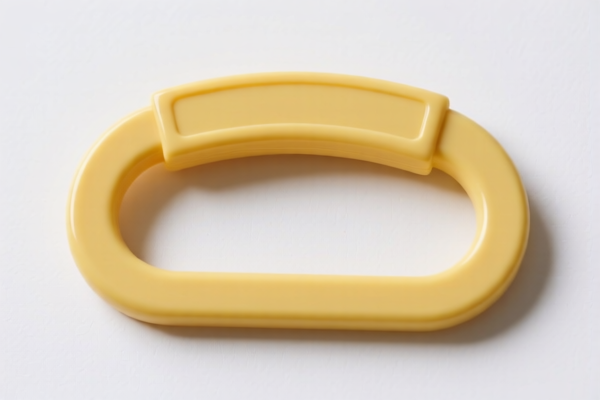
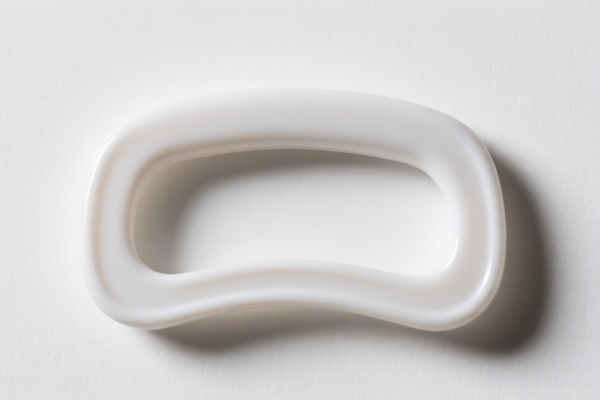
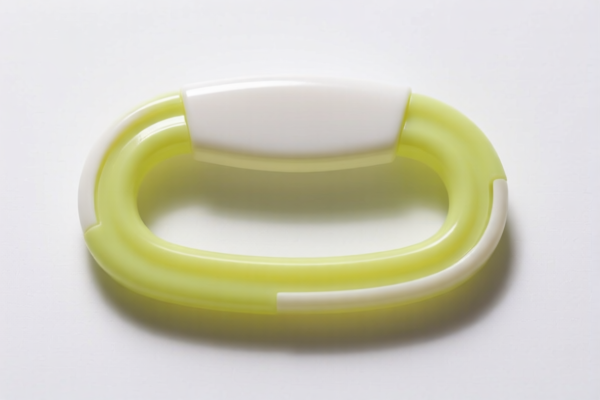
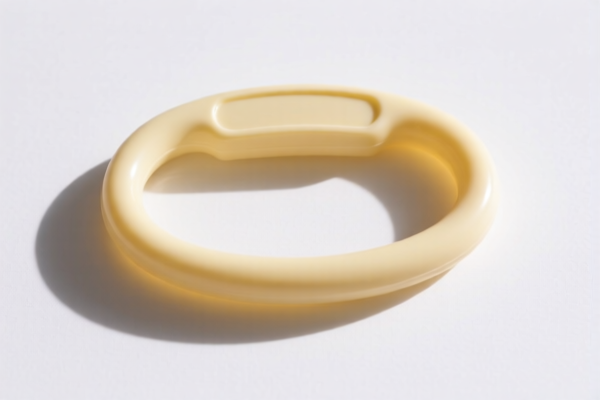
AI Analysis
🖐️ Plastic Handles (Plastic Grips & Knobs)
🌐 HS Code Reference & Customs Clearance Guide | 2026 Latest Tariff Analysis | Professional Clearance Strategy
📌 I. Product Definition & Classification: What Exactly is a "Plastic Handle"?
A "Plastic Handle" is a generic term that can refer to vastly different products depending on its material composition, specific application, and structural integration. In international trade, this single common name can lead to five different HS Codes, with tax rates ranging from 24.0% to 85.0%.
The core distinction lies in whether the item is: 1. A standalone plastic component (General Use): Classified under Chapter 39. 2. A part of a hand tool (Metal Tool Accessory): Classified under Chapter 82. 3. A valve component (Industrial Mechanical Part): Classified under Chapter 84.
⚠️ Key Distinction Point:
- If it is simply a grip or knob made of plastic, intended for general use or as part of a non-metal tool → Chapter 39.
- If it is explicitly a part of a hand tool (like a hammer, screwdriver, or wrench), even if made of plastic → Chapter 82.
- If it is a lever/handle for a valve or mechanical device → Chapter 84.
📦 II. HS Code Classification Details (2026 Latest Tariff Authority Comparison)
Based on the provided data, here are the 5 possible classifications for "Plastic Handles." The choice depends entirely on the specific product description and usage.
| HS Code | Product Description (Summary) | Primary Category | Key Characteristic |
|---|---|---|---|
3926.90.25.00 |
Plastic handle, material is plastic, used as handles and knobs | Plastic Articles | General use, standalone plastic parts. |
3926.30.10.00 |
Plastic handle, material is plastic, form and use as handles and knobs | Plastic Articles | Similar to above; often interchangeable based on specific sub-heading interpretation. |
8205.51.30.60 |
Plastic handle, inferred as a part of other hand tools (metal tool配套 plastic handle) | Hand Tool Parts | Crucial: Even if plastic, if it's a part of a hand tool, it goes here. |
8205.59.55.60 |
Plastic handle, belonging to hand tool parts, inferred as plastic material based on common sense | Hand Tool Parts | Other parts of hand tools; higher tax due to specific "other parts" designation. |
8481.90.90.85 |
Plastic valve handle, part of valve category, material is plastic | Valve Parts | Specific to mechanical/industrial valves. |
🔍 Critical Reminder:
- Do not assume all plastic handles are3926. If the handle is integral to a hand tool (e.g., the grip of a pair of pliers or a chisel), it must be declared under 8205.
- If the handle is for a valve (e.g., a ball valve lever), it must be declared under 8481.
- Misclassification can lead to significant tax discrepancies (e.g., 24% vs. 85%).
💰 III. 2026 Latest Tariff Rate Detail (Including Surcharges & Policy Additions)
✅ Applicable Country: United States (US)
✅ Origin: China (CN)
✅ Effective Time: Current (2025-2026 Tariff Structure)
🎯 1. 3926.90.25.00 & 3926.30.10.00 —— General Plastic Handles/Knobs
These are classified as "Other articles of plastics." They benefit from the lowest base tariff but still incur significant surcharges.
| Item | Content |
|---|---|
| Base Tariff | 6.5% |
| Section 301 Surcharge | +7.5% |
| Section 122 Tariff | +10% |
| Total Tax Rate | 24.0% |
| Tax Calculation | CIF Value × 24% |
| De Minimis Exemption | ❌ Not Applicable (High tariffs usually exclude de minimis relief for China origin) |
| Legal Basis Path | Base: 6.5% + 301: 7.5% + 122: 10% |
📌 Explanation:
- This is the most favorable rate for simple plastic handles/knobs not tied to specific tools or valves.
- Section 122 refers to specific administrative tariffs often applied to certain plastic imports.
- Total 24% is moderate compared to tool parts, making3926the preferred classification if the product qualifies.
🎯 2. 8205.51.30.60 & 8205.59.55.60 —— Parts of Hand Tools (Plastic Handles)
Even though the material is plastic, if the item is a part of a hand tool, it falls under Chapter 82. The base tariff is low, but the Section 301 surcharge is much higher.
| Item | Content |
|---|---|
| Base Tariff | 3.7% (for 8205.51) / 5.3% (for 8205.59) |
| Section 301 Surcharge | +25.0% |
| Section 122 Tariff | +10% |
| Total Tax Rate | 38.7% (8205.51) / 40.3% (8205.59) |
| Tax Calculation | CIF Value × 38.7% or 40.3% |
| De Minimis Exemption | ❌ Not Applicable |
| Legal Basis Path | Base + 301: 25% + 122: 10% |
📌 Explanation:
- The 25% Section 301 surcharge on hand tools (or parts thereof) drastically increases the cost.
- Difference:8205.51(Saws, hammers, etc. parts) is 3.7% base, while8205.59(Other parts) is 5.3% base. Both have the same 25% surcharge.
- Total ~40%: This is significantly higher than the 24% for general plastic parts.
- Strategy: If the product is a standalone knob not specifically identified as a "hand tool part," argue for3926to save 16%.
🎯 3. 8481.90.90.85 —— Plastic Valve Handles
This is the most expensive classification due to the specific nature of valve parts and additional steel/aluminum surcharges (though this item is plastic, the category may inherit broader sector penalties or simply have a high base due to trade restrictions).
| Item | Content |
|---|---|
| Base Tariff | 0.0% |
| Section 301 Surcharge | +25.0% |
| Section 122 Tariff | +10% |
| Steel/Al/Cu Surcharge | +50% (If applicable to broader category or misclassified) |
| Total Tax Rate | 85.0% |
| Tax Calculation | CIF Value × 85.0% |
| De Minimis Exemption | ❌ Not Applicable |
| Legal Basis Path | Base: 0% + 301: 25% + 122: 10% + Steel/Al/Cu: 50% |
📌 Explanation:
- Total 85% is extremely high.
- The 50% additional surcharge for "Steel, Aluminum, Copper products" might seem contradictory for a plastic handle, but if the customs authority interprets the valve assembly or the specific HS code sub-category as part of the "Metal Goods" tariff wars, this rate applies.
- Warning: Only use this code if it is unequivocally a valve part. Otherwise, the risk of reclassification and penalty is high.
🛠️ IV. Customs Clearance Practical Advice (Real-World Pitfall Avoidance)
✅ 1. Document Preparation Checklist (Non-Negotiable)
| Document | Must Provide | Explanation |
|---|---|---|
| ✅ Product Specifications | ✔️ | Detail: Material (100% Plastic?), Weight, Dimensions, Color. |
| ✅ Usage Statement | ✔️ | Explicitly state: "General purpose knob," "Part of hand tool," or "Valve lever." |
| ✅ Product Photos | ✔️ | Show the handle alone vs. attached to the tool/valve. |
| ✅ Structure Diagram | ✔️ | Critical if claiming it's a "general plastic part" to avoid "hand tool part" classification. |
| ✅ Commercial Invoice | ✔️ | Accurate description: Avoid vague "Handle." Use "Plastic Grip for General Use" or "Plastic Lever for Ball Valve." |
| ✅ Packing List | ✔️ | Ensure units match the HS Code definition. |
✅ 2. Declaration Tips (Critical Keywords)
🔥 "Context is King! Don't just say 'Plastic Handle'!"
| Scenario | Correct Declaration | Incorrect Declaration | Consequence |
|---|---|---|---|
| Standalone Knob | "Plastic Thumb Knob, General Purpose" | "Handle" | Risk of being classified as 8205 (38.7%) instead of 3926 (24.0%). |
| Tool Grip | "Plastic Grip Part for Hammer" | "Plastic Handle" | Must use 8205.51 or 8205.59. Declaring as 3926 leads to penalty. |
| Valve Lever | "Plastic Lever for Industrial Valve" | "Plastic Handle" | Must use 8481.90.90.85. High tax (85%) but mandatory if it's a valve part. |
✅ 3. Special Situation Handling
| Situation | Recommendation |
|---|---|
| OEM Custom Parts | Provide the original design drawing to prove if it's a generic part or tool-specific. |
| Mixed Shipments | If a shipment contains both hand tools and plastic knobs, separate them on the invoice. Do not lump them under one HS Code. |
| "Handle" vs. "Knob" | Customs may treat "Knobs" (for opening doors/cabinets) as 3926 more easily than "Handles" (for tools). Use precise terminology. |
| Valve Assemblies | If the plastic handle is integral to a metal valve, the entire assembly might be classified under the valve's HS Code, potentially triggering the 85% rate. Consider separating if possible. |
🌍 V. Global Market Comparison (2026 Latest)
| Country/Region | Recommended HS Code | Estimated Tariff (China Origin) | Certification Req. | Notes |
|---|---|---|---|---|
| 🇺🇸 USA | 3926.90.25.00 |
24.0% | None usually | Avoid 8205 if possible to save 14.7%. |
| 🇨🇳 China | 3926.90.90.00 |
5-10% (Variable) | None | Lower base tariffs. |
| 🇪🇺 EU | 3926.90.97 |
3-5% | REACH/RoHS | No Section 301-style surcharges. |
| 🇬🇧 UK | 3926.90.97 |
3-5% | UKCA/RoHS | Post-Brexit tariffs differ slightly from EU. |
| 🇦🇺 Australia | 3926.90.00 |
5% | SAA Standards | Generally low tariffs. |
📌 Conclusion:
- The US market is uniquely punitive due to Section 301 and Section 122 tariffs.
- Classification Strategy: For simple plastic handles/knobs, always argue for3926(24%) rather than8205(38.7%) unless it is strictly a tool part.
- For Valve Handles, the 85% rate is unavoidable if correctly classified. Consider sourcing non-US origins for such parts to mitigate duty.
📌 VI. Common Errors & Pitfalls (Lessons Learned)
❌ Error 1: Declaring a Tool Grip as a "Plastic Handle" to avoid the 25% surcharge.
👉 Consequence: Customs audit reveals it's a tool part. Back taxes + Penalties (38.7% - 24% = 14.7% difference + interest).
❌ Error 2: Using the term "Handle" for a Valve Lever and trying to classify it as 3926.
👉 Consequence: Customs insists on 8481. Rate jumps from 24% to 85%. Massive unexpected cost.
❌ Error 3: Vague Invoice Description ("Plastic Handles").
👉 Consequence: CBP requests a binding ruling or delays shipment for inspection. Delays cost money.
✅ Correct Practice:
"Plastic Thumb Knob, Non-Tool Related, General Purpose Use, Model ABC"
"Plastic Lever, 2-inch, for Industrial Ball Valve, Material: PP"
🎯 VII. Conclusion: Professional Declaration, Cost Optimization!
🎯 Key Takeaways:
🔹 "Is it a Tool Part?" → If Yes, expect ~38-40%.
🔹 "Is it a Valve Part?" → If Yes, expect ~85%.
🔹 "Is it General Plastic?" → If Yes, aim for 24%.🔹 "HS Code is Life. One word difference (Knob vs. Handle vs. Lever) changes tax by 50%!"
📌 Pro Tip:
If you are exporting to the US and the product is a generic plastic knob (e.g., for furniture, electronics, or machinery that isn't a "hand tool"), insist on 3926. Provide clear photos and descriptions proving it is not a part of a manual hand tool. This can save you 14.7% on every shipment.
📣 Immediate Action:
📞 Audit your current HS Codes.
📝 Update your Invoice Descriptions to be specific (Knob/Lever/Grip).
🚀 Clarify the "End Use" in your product specifications to justify the lower3926rate where possible.
✨ Customs Clearance Starts with Precise Classification!
💼 Your Profit Margin Depends on the Last Digit of the HS Code!
Customer Reviews
About HS Code Classification
The Harmonized System (HS) is an internationally standardized nomenclature developed by the World Customs Organization (WCO) to classify traded products. Over 200 countries use the HS system as the basis for customs tariffs, trade statistics, and import/export regulations.
Each HS code follows a hierarchical structure:
- Chapter (2 digits) — Broad category of goods (e.g., Chapter 84: Machinery and Mechanical Appliances)
- Heading (4 digits) — More specific grouping within the chapter
- Subheading (6 digits) — Internationally standardized breakdown, used by all WCO member countries
- National subdivisions (8-10 digits) — Country-specific extensions for further classification, such as US HTSUS 10-digit codes
Correct HS code classification is essential for smooth customs clearance, accurate duty payment, and compliance with trade regulations. Misclassification can lead to customs delays, overpayment of duties, or penalties.
When importing from CN to US, the applicable tariff rates may include:
- Most-Favored-Nation (MFN) rate — The standard duty rate applied to WTO members
- General rate — Applied to countries without trade agreements
- Trade remedy duties — Additional tariffs such as Section 301 (anti-dumping), Section 232 (national security), or countervailing duties
The information provided on this page is for reference purposes only. For official classification, please consult with your local customs authority or a licensed customs broker.