Plastic Holiday Decorations
CN → US| HS Code | Tariff Rate | Origin | Destination | Doc |
|---|---|---|---|---|
| 3926400010 | 15.3% | CN | US | Official Doc |
| 3926400090 | 15.3% | CN | US | Official Doc |
| 7018105000 | 35.0% | CN | US | Official Doc |
| 9503000073 | 10.0% | CN | US | Official Doc |
| 3926400010 | 15.3% | CN | US | Official Doc |
Product Images



AI Analysis
🎄 Plastic Holiday Decorations (Decorative Articles of Plastic)
🌐 HS Code Reference & Customs Clearance Guide | 2026 Latest Tariff Analysis | Professional Clearance Strategy
📌 I. Product Definition & Classification: What Exactly Are "Plastic Holiday Decorations"?
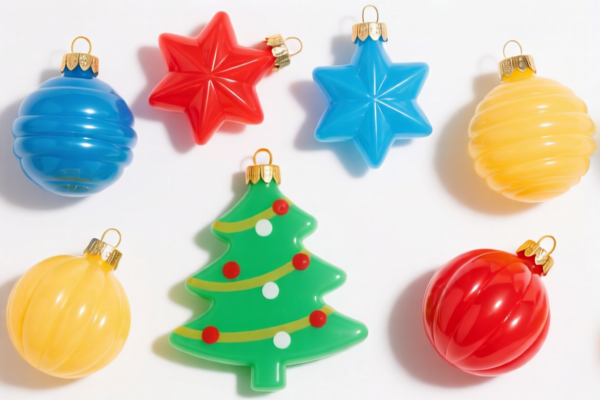
Plastic holiday decorations are artificial items made primarily from plastic materials, designed for festive adornment during holidays (e.g., Christmas trees, ornaments, figurines, garlands, or cartoon character displays). In international trade, their classification depends heavily on material composition (plastic), form/shape, and specific use case.
⚠️ Key Distinction Points:
- If the item is primarily a general decorative article (e.g., generic ornaments, garlands) → Classified under Chapter 39 (Articles of Plastics).
- If the item resembles a toy/model (e.g., cartoon character figurines, action figures) → Classified under Chapter 95 (Toys, Games, and Sports Equipment).
- If the material classification is ambiguous but clearly non-metallic and non-jewelry → May fall under Chapter 70 (Glass Articles) based on tolerance rules for minor material deviations.
📦 II. HS Code Classification Details (2026 Latest Tariff Authority Comparison)
Based on the provided <DATA>, here are the specific HS Codes matched to "Plastic Holiday Decorations":
| HS Code | Product Description | Match Logic from <DATA> |
Total Tax Rate |
|---|---|---|---|
3926.40.00.10 |
Decorative articles of plastic (Specific category) | Matches material (plastic) and use (decorations); classified as decorative articles. | 15.3% |
3926.40.00.90 |
Other decorative articles of plastic (Other category) | Matches material (plastic) and form/use (decorations); classified as other decorative items. | 15.3% |
7018.10.50.00 |
Glass or other non-metallic small articles (Tolerance Rule) | Based on material tolerance rules for non-metallic/non-jewelry small items. | 35.0% |
9503.00.00.73 |
Toys, models, and accessories (Cartoon/Character figures) | Matches material (plastic) and form (cartoon character decorations); classified under toys/models as "Other". | 10.0% |
🔍 Key Insight:
- General plastic ornaments (baubles, tinsel, generic shapes) →3926.40.00.10or3926.40.00.90.
- Cartoon/Character Figurines (e.g., Santa Claus, Disney characters) →9503.00.00.73(Lower tax rate!).
- Ambiguous Material Declarations → Risk of misclassification to7018.10.50.00(Highest tax rate!).
💰 III. 2026 Latest Tariff Rate Breakdown (Including Surcharges & Policy Add-ons)
✅ Applicable Country: United States (US)
✅ Origin: China (CN)
✅ Effective Time: From November 10, 2025 (including subsequent imports)
🎯 1. 3926.40.00.10 & 3926.40.00.90 —— General Plastic Decorative Articles
| Item | Content |
|---|---|
| Base Tariff | 5.3% (ad valorem) |
| Section 301 Surcharge | 0.0% |
| Section 122 Tariff | 10.0% (Specific Chinese import surcharge) |
| Total Tax Rate | 15.3% |
| Tax Calculation | CIF Value × 15.3% |
| De Minimis Exemption | ❌ Not Eligible (Deny De Minimis) |
| Legal Basis Path | IEEPA:9903.01.25 → Section 122: 10% → USITC:3926.40.00.10/90 |
📌 Explanation:
- The 5.3% is the standard MFN base rate for plastic articles.
- The 10% is a specific "122 Clause" tariff targeting certain Chinese imports.
- No Section 301 surcharge applies to these specific subheadings, making them moderately expensive but manageable.
🎯 2. 9503.00.00.73 —— Toy-Style Decorations (Cartoon Characters)
| Item | Content |
|---|---|
| Base Tariff | 0.0% |
| Section 301 Surcharge | 0.0% |
| Section 122 Tariff | 10.0% (Specific Chinese import surcharge) |
| Total Tax Rate | 10.0% |
| Tax Calculation | CIF Value × 10.0% |
| De Minimis Exemption | ❌ Not Eligible (Deny De Minimis) |
| Legal Basis Path | IEEPA:9903.01.24 → Section 122: 10% → USITC:9503.00.00.73 |
📌 Advantage:
- This is the lowest tax rate among the matched codes.
- If your plastic decoration is a recognizable character (e.g., Mickey Mouse, Spider-Man, Santa Claus), classify it here to save 5.3% compared to general decorations.
🎯 3. 7018.10.50.00 —— Ambiguous/Non-Metallic Small Articles (Risk Category)
| Item | Content |
|---|---|
| Base Tariff | 0.0% |
| Section 301 Surcharge | 25.0% |
| Section 122 Tariff | 10.0% |
| Total Tax Rate | 35.0% |
| Tax Calculation | CIF Value × 35.0% |
| De Minimis Exemption | ❌ Not Eligible (Deny De Minimis) |
| Legal Basis Path | IEEPA:9901.25 → USITC:7018.10.50.00 → FOOTNOTE:9903.88.01 |
🚨 Warning:
- This classification arises from "material tolerance rules" when the plastic nature is ambiguous or misdeclared.
- It incurs a 25% Section 301 surcharge, making it the most expensive option.
- Avoid this code unless the item is genuinely glass or ceramic with minor plastic components.
🛠️ IV. Customs Clearance Practical Advice (Risk Avoidance Guide)
✅ 1. Required Documentation Checklist
| Document | Must Provide | Description |
|---|---|---|
| ✅ Product Specifications | ✔️ | Material composition (e.g., "100% PVC", "ABS Plastic"), dimensions, weight. |
| ✅ Product Photos | ✔️ | Clear images showing if it's a generic ornament or a cartoon character. |
| ✅ Commercial Invoice | ✔️ | Must clearly state "Plastic Decorative Articles" or "Plastic Toy Figures". |
| ✅ Packing List | ✔️ | Detail contents to avoid mixed classification in one shipment. |
| ✅ Material Test Report | ✔️ | Proof of plastic composition (e.g., SGS report) to avoid 7018 classification. |
| ✅ Origin Certificate | ✔️ | If not China-origin, may reduce taxes. |
✅ 2. Declaration Strategy (Key Mnemonic)
🔥 "Character = Toy (10%), Generic = Decor (15.3%), Ambiguous = Glass (35%)"
| Scenario | Correct Declaration | Wrong Practice |
|---|---|---|
| Cartoon/Character Figurine | 9503.00.00.73 (Toy) |
Declare as "Plastic Ornament" → 15.3% |
| Generic Ornament/Garland | 3926.40.00.10 (Decor) |
Declare as "Toy" without character features → Risk of rejection |
| Mixed Materials (Plastic + Metal Hanger) | 3926.40.00.10 |
Declare as "Glass" → 35.0% |
| Ambiguous Material (Is it Plastic or Glass?) | Provide Material Test Report | Guessing → Customs assigns 7018 → 35.0% |
✅ 3. Special Circumstances Handling
| Situation | Handling Advice |
|---|---|
| OEM Custom Decorations | Provide design files proving "Cartoon Character" status for 9503 classification. |
| Set of Decorations | Declare the primary character/item if mixed; otherwise, use the highest tax rate item. |
| Plastic + Metal Parts | If metal parts are minor (hangers), still classify as Plastic (3926); do not declare as Metal. |
| Pre-Assembly vs. Flat-Pack | Both are treated as finished articles; ensure packaging shows the final decorative form. |
🌍 V. Global Market Comparison (2026 Latest)
| Country/Region | Recommended HS Code | Tariff Rate | Certification | Remarks |
|---|---|---|---|---|
| 🇺🇸 USA | 9503.00.00.73 (Toy) |
10.0% | CPC (Children's Product) | Best for cartoon characters. |
| 🇺🇸 USA | 3926.40.00.10 (Decor) |
15.3% | None Specific | For generic plastic ornaments. |
| 🇨🇳 China | 3926.40.00.10 |
5.0% | CCC (if applicable) | Lower base rate. |
| 🇪🇺 EU | 3926.90.97 |
4.5% | CE + REACH | No Section 122 equivalent. |
| 🇬🇧 UK | 3926.90.97 |
4.0% | UKCA | Post-Brexit rates. |
📌 Conclusion:
- USA is the most complex market due to "122 Clause" and "Section 301" surcharges.
- Classifying as Toys (9503) saves 5.3% vs. General Decorations (3926).
- Avoid Ambiguity to prevent the 35.0% penalty rate.
📌 VI. Common Mistakes & Pitfalls (Lessons Learned)
❌ Mistake 1: Declaring Cartoon Characters as "Plastic Ornaments" (3926)
👉 Consequence: Pay 15.3% instead of 10.0% → Lost Profit!
❌ Mistake 2: Declaring Generic Ornaments as "Toys" (9503)
👉 Consequence: Customs rejects declaration due to lack of toy characteristics → Delay + Inspection Costs!
❌ Mistake 3: Misdeclaring Plastic as Glass (or vice versa)
👉 Consequence: Assigned 7018.10.50.00 → 35.0% Tax!
❌ Mistake 4: Ignoring Section 122 Tariff
👉 Consequence: All these codes incur a 10% surcharge for China-origin goods. Do not assume 0% tariffs!
✅ Correct Practice:
"Plastic Santa Claus Figurine, Height: 10cm, Material: ABS, Model: Xmas-01" →
9503.00.00.73
"Plastic Bauble Ornament, Red, Diameter: 3cm, No Specific Character" →3926.40.00.10
🎯 VII. Conclusion: Precision Classification Saves Money!
🎯 Remember the Mnemonic:
🔹 "Character = Toy (10%), Generic = Decor (15.3%), Ambiguous = Glass (35%)"
🔹 "122 Clause Applies to All: +10% for China-Origin!"
🔹 "HS Code Choice = 5.3% Difference = Significant Savings!"
📌 Pro Tip:
If your plastic decorations are not China-origin (e.g., made in Vietnam or Malaysia), you may exempt the 122 Clause tariff, reducing the total rate to 5.3% (Toy) or 5.3% (Decor) + any other applicable rates.
Recommendation: Apply for Advance Ruling to confirm classification before bulk shipment.
📣 Take Action Now:
📞 Contact a Professional Customs Broker + Provide Product Photos + Apply for HS Code Advance Ruling
🚀 Let your plastic decorations clear smoothly, save costs, and boost profits!
✨ Professional Clearance Starts with Accurate Classification!
💼 Every Cent of Tax Saved is Pure Profit!
Customer Reviews
About HS Code Classification
The Harmonized System (HS) is an internationally standardized nomenclature developed by the World Customs Organization (WCO) to classify traded products. Over 200 countries use the HS system as the basis for customs tariffs, trade statistics, and import/export regulations.
Each HS code follows a hierarchical structure:
- Chapter (2 digits) — Broad category of goods (e.g., Chapter 84: Machinery and Mechanical Appliances)
- Heading (4 digits) — More specific grouping within the chapter
- Subheading (6 digits) — Internationally standardized breakdown, used by all WCO member countries
- National subdivisions (8-10 digits) — Country-specific extensions for further classification, such as US HTSUS 10-digit codes
Correct HS code classification is essential for smooth customs clearance, accurate duty payment, and compliance with trade regulations. Misclassification can lead to customs delays, overpayment of duties, or penalties.
When importing from CN to US, the applicable tariff rates may include:
- Most-Favored-Nation (MFN) rate — The standard duty rate applied to WTO members
- General rate — Applied to countries without trade agreements
- Trade remedy duties — Additional tariffs such as Section 301 (anti-dumping), Section 232 (national security), or countervailing duties
The information provided on this page is for reference purposes only. For official classification, please consult with your local customs authority or a licensed customs broker.