Plastic Hotel Wall Covering with Artificial Fiber Backing
CN → US| HS Code | Tariff Rate | Origin | Destination | Doc |
|---|---|---|---|---|
| 3921121100 | 39.2% | CN | US | Official Doc |
| 3921121500 | 41.5% | CN | US | Official Doc |
| 5905009000 | 35.0% | CN | US | Official Doc |
| 5905001000 | 35.0% | CN | US | Official Doc |
| 3918103150 | 39.2% | CN | US | Official Doc |
Product Images
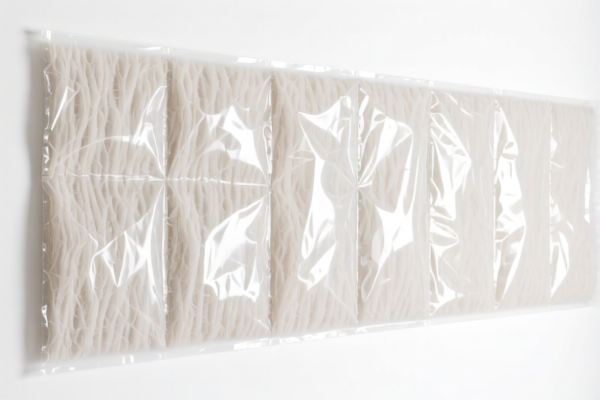
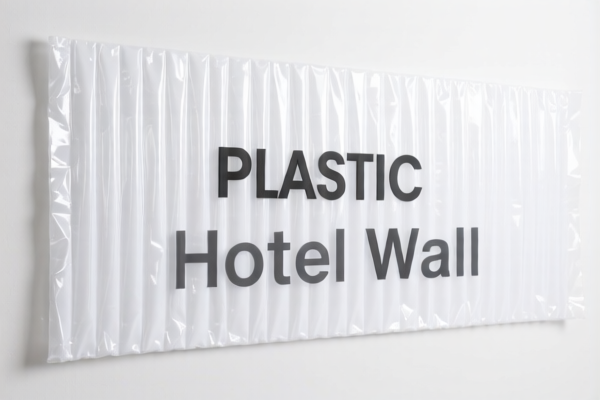
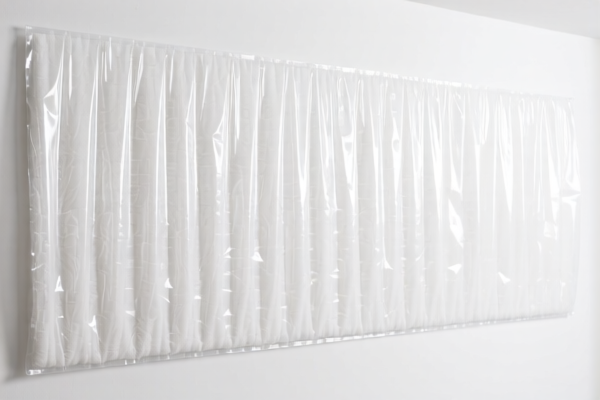

AI Analysis
🏨 Plastic Hotel Wall Covering with Artificial Fiber Backing
🌐 HS Code Reference & Customs Clearance Guide | 2026 Latest Tariff Analysis | Professional Compliance Strategy
📌 I. Product Definition & Classification: What Exactly is "Plastic Wall Covering with Fiber Backing"?
Wall coverings for hotels are decorative materials applied to interior walls. When the primary material is PVC (Polyvinyl Chloride) combined with an Artificial Fiber backing (e.g., polyester, nylon), the classification becomes critical. The key distinction lies in whether the product is classified as a Plastic Sheet/Foil (Chapter 39) or a Textile Wallpaper (Chapter 59).
Key Classification Criteria: * Plastic-Based (Chapter 39): If the PVC layer is the dominant structural element, even with a fiber backing, it may fall under plastic articles. * Textile-Based (Chapter 59): If the product exhibits the characteristics of "textile wallpapers" where the fabric backing is integral to the structure and the weight/proportion of artificial fibers is significant, it falls under textile categories.
⚠️ Critical Distinction:
- If the PVC is merely a coating on a heavy textile base → Chapter 59 (Lower Base Duty, but still high Surtax).
- If the PVC is a continuous layer with a fiber backing used for reinforcement → Chapter 39 (Higher Base Duty + Surtax).
- Hotel Use: Does not change the HS Code, but requires clear commercial description to avoid misclassification as "carpet" or "floor covering."
📦 II. HS Code Classification Details (2026 Latest Tariff Authoritative Comparison)
| HS Code | Product Description | Application Scenario | Material Dominance |
|---|---|---|---|
3921.12.11.00 |
Wall coverings, PVC material, with artificial fiber backing. Fits the definition of plates, films, foils, and strips. | Decorative wall panels with plastic front and fiber back. | PVC Dominant (Fiber weight high but secondary to plastic structure) |
3921.12.15.00 |
PVC material wall coverings, combined with textile materials, artificial fiber weight exceeds other single fibers. | Composite wallpapers where fiber content is technically significant but still plastic-primary. | PVC + Textile Hybrid (Specific composite rule) |
5905.00.90.00 |
Wall coverings of PVC and artificial fiber, exhibiting characteristics of textile wallpapers. | Traditional textile-based wallpaper with PVC face layer. | Textile Dominant (Classified as textile wallpaper) |
5905.00.10.00 |
PVC material wall coverings with backing, exhibiting characteristics of textile wall coverings. | Heavy-duty hotel wallpaper where fabric backing is the core substrate. | Textile Dominant (Explicit textile wallpaper classification) |
3918.10.31.50 |
PVC material wall coverings with artificial fiber backing, fully meeting the definition of this code regarding material, backing, and use. | Standard PVC wall panels for hotels, explicitly defined in this subheading. | PVC Dominant (Specific "Plastic Panels for Walls" category) |
🔍 Key Reminder:
- Chapter 59 Codes (5905.00...) generally have a 0% Base Duty, making them attractive if the product strictly meets "textile wallpaper" criteria.
- Chapter 39 Codes (3921...,3918...) have Base Duties (4.2% - 6.5%), adding to the total tax burden.
- All Codes Listed Above are Subject to Aggressive Surtaxes (see Section III).
💰 III. 2026 Latest Tariff Rate Breakdown (Including Surtaxes & Policy Add-ons)
✅ Applicable Country: United States (US)
✅ Country of Origin: China (CN)
✅ Effective Date: November 10, 2025 (and subsequent imports)
🎯 1. 3921.12.11.00 & 3918.10.31.50 —— PVC Wall Coverings (Plastic Category)
| Item | Detail |
|---|---|
| Base Tariff Rate | 4.2% (ad valorem) |
| Section 301 Surtax | +25.0% (USITC Footnote 9903.88.01) |
| IEEPA Surtax | +10.0% (Targeting China/HK products, effective Nov 2025) |
| Total Effective Rate | 39.2% |
| Tax Calculation | CIF Value × 39.2% |
| De Minimis Eligibility | ❌ Not Eligible (deny_de_minimis) |
| Legal Basis Path | IEEPA:9903.01.25 → IEEPA:9903.01.24 → USITC:3921.12.11.00 / 3918.10.31.50 → FOOTNOTE:9903.88.01 |
📌 Explanation:
- These codes fall under plastic articles. The base duty is already higher than textile wallpapers.
- The 39.2% total rate is punitive. Even small shipments incur significant costs.
- Risk: If misclassified as textile (0% base), customs may audit and demand back taxes + penalties.
🎯 2. 3921.12.15.00 —— Composite PVC/Textile Wall Coverings
| Item | Detail |
|---|---|
| Base Tariff Rate | 6.5% (ad valorem) |
| Section 301 Surtax | +25.0% |
| IEEPA Surtax | +10.0% |
| Total Effective Rate | 41.5% |
| Tax Calculation | CIF Value × 41.5% |
| De Minimis Eligibility | ❌ Not Eligible |
| Legal Basis Path | IEEPA:9901.25 → IEEPA:9903.01.24 → USITC:3921.12.15.00 → FOOTNOTE:9903.88.01 |
📌 Note:
- This is the highest tax rate among the options due to the higher base duty (6.5%).
- Use only if the product composition strictly meets the "artificial fiber weight exceeds other single fibers" criterion for this specific subheading.
🎯 3. 5905.00.90.00 & 5905.00.10.00 —— Textile Wallpapers (PVC Face)
| Item | Detail |
|---|---|
| Base Tariff Rate | 0.0% (ad valorem) |
| Section 301 Surtax | +25.0% |
| IEEPA Surtax | +10.0% |
| Total Effective Rate | 35.0% |
| Tax Calculation | CIF Value × 35.0% |
| De Minimis Eligibility | ❌ Not Eligible |
| Legal Basis Path | IEEPA:9903.01.25 → IEEPA:9903.01.24 → USITC:5905.00.90.00 / 5905.00.10.00 → FOOTNOTE:9903.88.01 |
📌 Critical Advantage:
- Lowest Total Tax (35.0%) among all listed codes.
- Condition: The product MUST be verifiably classified as a textile wallpaper.
- Evidence Required: Proof that the fabric backing is the primary structural element, not just a thin backing layer. If the PVC layer is thick and dominant, customs will reclassify to Chapter 39, resulting in back taxes.
🛠️ IV. Customs Clearance Practical Advice (Battle-Tested Pitfall Avoidance)
✅ 1. Documentation Checklist (Mandatory)
| Document | Required | Explanation |
|---|---|---|
| ✅ Product Specification Sheet | ✔️ | Must detail material layers: PVC thickness, fiber type (polyester/nylon), backing weight. |
| ✅ Material Composition Proof | ✔️ | Lab test or manufacturer declaration proving fiber vs. PVC weight ratio. Critical for Chapter 59 vs 39. |
| ✅ Product Photos (Labeled) | ✔️ | Show cross-section to reveal PVC/Fiber interface. |
| ✅ Commercial Invoice | ✔️ | Clear description: "Textile Wallpaper with PVC Coating" (if aiming for 5905) or "PVC Wall Panel with Fiber Backing" (if 3921). |
| ✅ Packing List | ✔️ | Ensure no mixed HS codes in one shipment unless declared separately. |
| ✅ Import License/Agreement | ✔️ | For hotel projects, proof of end-use may help argue for specific classification if challenged. |
✅ 2. Declaration Strategy (Key Mnemonics)
🔥 “Look at the Backbone: If it’s Textile, Aim for 5905. If it’s Plastic, Accept 39%. Don’t Split, Don’t Hide!”
| Scenario | Correct Declaration | Wrong Declaration | Consequence |
|---|---|---|---|
| Heavy Fabric Backing + Thin PVC Face | 5905.00.10.00 (Textile Wallpaper) |
3921.12.11.00 (Plastic) |
Higher Tax (39.2% vs 35.0%) + Audit Risk |
| Thick PVC Layer + Thin Fiber Backing | 3921.12.11.00 or 3918.10.31.50 |
5905.00.90.00 (Textile) |
Back Taxes + Penalties (Misclassification) |
| Composite with Equal Weight | 3921.12.15.00 |
Any other | Highest Tax (41.5%) – Avoid if possible |
| Mixed Shipment (Hotel Renovation) | Split by HS Code | Single HS Code | Confiscation or Delay |
✅ 3. Special Case Handling
| Situation | Handling Advice |
|---|---|
| OEM Hotel Branding | Provide customer PO + design specs. Ensure "Wall Covering" is the primary function, not "Decorative Sticker." |
| Fire-Retardant Treatment | If treated, ensure safety certs (UL, NFPA) are attached. Does NOT change HS Code, but prevents clearance delays. |
| Sample Shipments | Even for samples, declare full value. No de minimis exemption for China-origin goods under IEEPA. |
| Third-Party Logistics (3PL) | Ensure 3PL warehouse in US accepts textile/plastic composites. Some warehouses restrict PVC due to chemical handling. |
🌍 V. Global Market Comparison (2026 Latest)
| Country/Region | Recommended HS Code | Tariff Rate (China Origin) | Certification | Remarks |
|---|---|---|---|---|
| 🇺🇸 USA | 5905.00.10.00 (Preferred) |
35.0% (Total) | FCC/RoHS (if applicable) | Lowest tax among options. High scrutiny on "Textile" claim. |
| 🇨🇳 China | 5905.00.90.00 |
~5-10% | CCC (if applicable) | No Section 301/IEEPA taxes. Ideal for export destination. |
| 🇪🇺 EU | 5905.00.90.00 |
0-4% | CE/REACH | No major surtaxes. Green compliance (VOCs) critical. |
| 🇬🇧 UK | 5905.00.90.00 |
0-4% | UKCA | Post-Brexit rules similar to EU. |
| 🇦🇺 Australia | 3921.12.11.00 |
5% | RCM | Lower surtaxes than US. |
📌 Conclusion:
- The US Market is the Hardest due to cumulative 35-41.5% tariffs.
- Strategy: If your product qualifies as Textile Wallpaper (5905), it saves 4.2-6.5% in base duty compared to plastic codes.
- Caution: Misclassifying plastic as textile to save 4.2% is high-risk. Ensure material proofs are robust.
📌 VI. Common Errors & Pitfall Guide (Blood Lessons)
❌ Error 1: Declaring "PVC Wall Panel" but shipping "Textile Wallpaper"
👉 Consequence: Customs rejects entry, demands redeclaration, or seizes goods.
👉 Fix: Ensure description matches physical evidence (cross-section photos).
❌ Error 2: Ignoring IEEPA 10% Surtax
👉 Consequence: Underpayment of duties, leading to penalties and potential blacklisting.
👉 Fix: Always include +10% IEEPA in cost calculations for China-origin goods.
❌ Error 3: Using "Wallpaper" Generic Term Without Material Spec
👉 Consequence: CBP may assign highest risk code (3921.12.15.00 at 41.5%).
👉 Fix: Specify "PVC Face with Polyester Backing" or "Fabric Substrate with PVC Coating."
❌ Error 4: Assuming "De Minimis" Applies
👉 Consequence: Packages held at border, returned, or destroyed.
👉 Fix: NO de minimis for China-origin goods under current IEEPA/301 rules.
✅ Correct Practice:
"Textile-Based Wall Covering, 100% Polyester Backing, PVC Coating Face, for Hotel Interiors, Compliant with ASTM Fire Standards"
🎯 VII. Conclusion: Professional Declaration, Save Costs, Ensure Compliance!
🎯 Remember This Mnemonic:
🔹 "Fabric Backbone = 5905 (35%). Plastic Core = 3921 (39.2%). Composite = 3921 (41.5%). Never Guess, Always Prove!"
🔹 "US Tariffs are Brutal: 35-41%. Documentation is Your Shield."
📌 Pro Tip:
If your product is manufactured in Vietnam, Malaysia, or Thailand, apply for Certificate of Origin to potentially avoid IEEPA/301 surtaxes (verify current rules).
Consider applying for an Advance Ruling (CBP Ruling) if importing large volumes. This legally binds CBP to your HS Code classification, eliminating audit risk.
📣 Immediate Action:
📞 Engage a Licensed Customs Broker + Provide Material Test Reports + Request CBP Advance Ruling
🚀 Ensure Your Hotel Wall Coverings Clear Customs Smoothly, Avoid Penalties, and Maximize Margin!
✨ Professional Customs Clearance Starts with Accurate Classification!
💼 Every Percentage Point of Duty is Profit Lost!
Customer Reviews
About HS Code Classification
The Harmonized System (HS) is an internationally standardized nomenclature developed by the World Customs Organization (WCO) to classify traded products. Over 200 countries use the HS system as the basis for customs tariffs, trade statistics, and import/export regulations.
Each HS code follows a hierarchical structure:
- Chapter (2 digits) — Broad category of goods (e.g., Chapter 84: Machinery and Mechanical Appliances)
- Heading (4 digits) — More specific grouping within the chapter
- Subheading (6 digits) — Internationally standardized breakdown, used by all WCO member countries
- National subdivisions (8-10 digits) — Country-specific extensions for further classification, such as US HTSUS 10-digit codes
Correct HS code classification is essential for smooth customs clearance, accurate duty payment, and compliance with trade regulations. Misclassification can lead to customs delays, overpayment of duties, or penalties.
When importing from CN to US, the applicable tariff rates may include:
- Most-Favored-Nation (MFN) rate — The standard duty rate applied to WTO members
- General rate — Applied to countries without trade agreements
- Trade remedy duties — Additional tariffs such as Section 301 (anti-dumping), Section 232 (national security), or countervailing duties
The information provided on this page is for reference purposes only. For official classification, please consult with your local customs authority or a licensed customs broker.