Plastic Hotel Wall Coverings with Man Made Fiber Backing
CN → US| HS Code | Tariff Rate | Origin | Destination | Doc |
|---|---|---|---|---|
| 3921121100 | 39.2% | CN | US | Official Doc |
| 3921121500 | 41.5% | CN | US | Official Doc |
| 5905009000 | 35.0% | CN | US | Official Doc |
| 5905001000 | 35.0% | CN | US | Official Doc |
| 3918103150 | 39.2% | CN | US | Official Doc |
Product Images
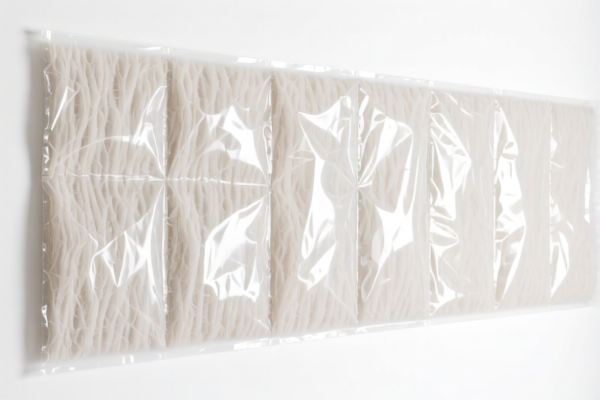
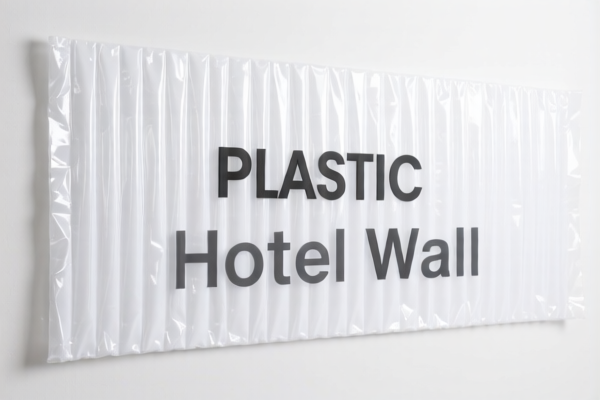
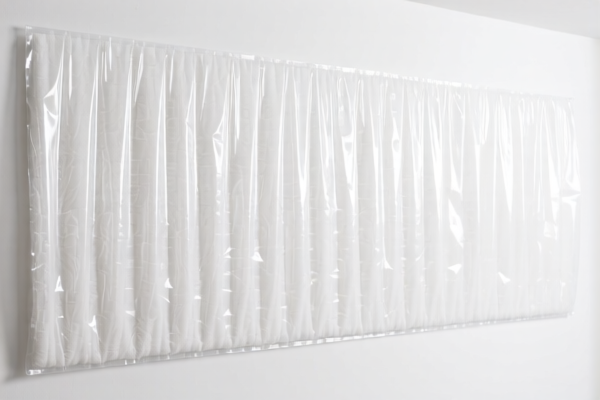

AI Analysis
🧱 Plastic Hotel Wall Coverings with Man Made Fiber Backing
🌐 HS Code Reference & Customs Clearance Guide | 2026 Latest Tariff Analysis | Strategic Classification for PVC Textile Composites
📌 I. Product Definition: What Exactly Is This Product?
"Plastic Hotel Wall Coverings with Man Made Fiber Backing" refers to composite wall materials used in hospitality and interior decoration. Structurally, they consist of a PVC (Polyvinyl Chloride) face layer laminated onto a Man-Made Fiber (Synthetic) backing layer.
In international trade classification, this product sits at the intersection of Chapter 39 (Plastics) and Chapter 59 (Textile Articles Impregnated, Coated, Covered, or Stratified). The correct classification depends on whether the textile backing is considered merely structural support (leading to Chapter 39) or if the product meets the definition of "wallpaper/wall coverings" with textile characteristics (leading to Chapter 59).
⚠️ Key Classification Divergence:
- If classified under Chapter 39, the product is viewed primarily as a plastic sheet/film with a temporary or secondary textile layer → Higher Duty (39.2% - 41.5%).
- If classified under Chapter 59, the product is viewed as a textile-based wall covering with plastic coating → Lower Base Duty (0.0%), but subject to high punitive tariffs.
📦 II. HS Code Classification Details (Authoritative 2026 Mapping)
| HS Code | Product Description | Classification Logic | Total Tax Rate |
|---|---|---|---|
3921.12.11.00 |
PVC Wall Covering with Man-Made Fiber Backing (Composite Sheet) | Classified as plastic sheets/films (3921). The man-made fiber backing is treated as part of the composite plastic material. Shape: Strip/Sheet composite. | 39.2% |
3921.12.15.00 |
PVC Wall Covering with Man-Made Fiber Backing (Textile-Heavy) | Also plastic sheets (3921), but specifically defined where the man-made fiber weight is high, yet it retains the primary character of a plastic product. Shape: Wall covering. | 41.5% |
3918.10.31.50 |
PVC Wall Covering with Man-Made Fiber Backing (Flooring/Wall Variant) | Classified under plastic floor/wall coverings (3918). Specific to products with backing, fitting the definition of plastic wall coverings. | 39.2% |
5905.00.90.00 |
Man-Made Fiber Backed PVC Wall Covering (Wallpaper Type) | Classified as textile wall coverings (5905). The product meets the definition of wallpaper where the textile backing is integral. Base duty is low. | 35.0% |
5905.00.10.00 |
Man-Made Fiber Backed PVC Wall Covering (Textile Wallpaper) | Classified as textile wall coverings (5905). Specifically "textile wall coverings" with backing. Fits the textile wallpaper definition. Base duty is low. | 35.0% |
🔍 Critical Distinction:
- HS 3921/3918: Views the item as Plastic. The textile is secondary.
- HS 5905: Views the item as Textile/Wallpaper. The plastic is a coating/impregnation.
- Why it matters: Although Chapter 59 has a 0% base duty, the Total Tax Rate (35%) is still significant due to additional tariffs, but HS 5905 is generally preferred by importers if the textile content is substantial, as it avoids the higher base duties of Chapter 39. However, ALL these codes are subject to severe US punitive tariffs.
💰 III. 2026 Latest Tariff Rate Breakdown (US Imports from China)
✅ Applicable Country: United States (US)
✅ Origin: China (CN)
✅ Effective Date: 2025/2026 (Current Enforcement)
The tax calculation for all HS Codes listed above includes three components: 1. Base Tariff (Standard MFN rate for the HS Code) 2. Section 301 Tariff (25% punitive tariff on Chinese goods) 3. IEEPA Tariff (10% additional tariff under International Emergency Economic Powers Act)
🎯 1. 3921.12.11.00 & 3918.10.31.50 —— Plastic-Based Classification
| Component | Rate | Legal Basis |
|---|---|---|
| Base Tariff | 4.2% | Standard US HTS duty for plastic sheets/wall coverings |
| Section 301 Tariff | +25.0% | US Trade Act Section 301 (China-specific) |
| IEEPA Tariff | +10.0% | Executive Order on IEEPA (China-specific) |
| Total Tax Rate | 39.2% | 4.2 + 25.0 + 10.0 |
| De Minimis Exemption | ❌ None | Value exceeds $800 threshold; full duty applies |
📌 Explanation:
- These codes are treated as plastic products. The 4.2% base rate is moderate, but the 35% punitive load makes it expensive.
- Legal Path:USITC:3921.12.11.00→USITC:301→IEEPA:9903.01.24
🎯 2. 3921.12.15.00 —— High-Content Plastic/Textile Composite
| Component | Rate | Legal Basis |
|---|---|---|
| Base Tariff | 6.5% | Higher base rate for specific plastic composites |
| Section 301 Tariff | +25.0% | US Trade Act Section 301 |
| IEEPA Tariff | +10.0% | Executive Order on IEEPA |
| Total Tax Rate | 41.5% | 6.5 + 25.0 + 10.0 |
| De Minimis Exemption | ❌ None | Full duty applies |
📌 Explanation:
- This is the most expensive classification. It applies when the product is deemed primarily plastic but has significant textile weight.
- Strategy: Avoid this code if possible; it offers no advantage over3921.12.11.00.
🎯 3. 5905.00.90.00 & 5905.00.10.00 —— Textile/Wallpaper Classification
| Component | Rate | Legal Basis |
|---|---|---|
| Base Tariff | 0.0% | No duty for textile wall coverings under standard MFN |
| Section 301 Tariff | +25.0% | US Trade Act Section 301 |
| IEEPA Tariff | +10.0% | Executive Order on IEEPA |
| Total Tax Rate | 35.0% | 0.0 + 25.0 + 10.0 |
| De Minimis Exemption | ❌ None | Full duty applies |
📌 Explanation:
- This is the most cost-effective classification if the customs authority accepts it as a "textile wall covering."
- The 0% base rate saves you 4.2–6.5% compared to Chapter 39 codes.
- Risk: Customs may reclassify it as3921if they determine the PVC layer is the essential character. You must prove the textile backing is integral to the product's identity as "wallpaper."
🛠️ IV. Customs Clearance Practical Advice (Avoiding Pitfalls)
✅ 1. Documentation Checklist (Critical for Chapter 59 vs 39)
| Document | Required? | Purpose |
|---|---|---|
| Product Specification Sheet | ✔️ | Must describe the laminated structure: PVC layer thickness vs. Man-Made Fiber backing thickness. |
| Bill of Materials (BOM) | ✔️ | Shows weight ratio of PVC to Fiber. If Fiber weight is high, argue for 5905. |
| Commercial Invoice | ✔️ | Use clear description: "Textile-Backed PVC Wall Covering, for Hotel Interior Use" (Avoid generic "Plastic Sheet"). |
| Material Safety Data Sheet (MSDS) | ✔️ | To confirm chemical composition (PVC + Synthetic Fiber). |
| Photo of Product (Cross-Section) | ✔️ | Visual proof of the composite structure. |
| Customs Ruling Request | ✔️ | Highly Recommended. Apply for an Advance Ruling to confirm 5905 vs 3921. |
✅ 2. Classification Strategy: The "Textile Argument"
To argue for HS 5905 (35% Total Tax) instead of HS 3921 (39.2-41.5% Total Tax):
- Emphasize the Backing: Highlight that the man-made fiber backing provides structural integrity and is essential for hanging/installation.
- Industry Usage: State clearly that the product is "Wallpaper" or "Wall Covering" used in interior design, not a raw plastic sheet for industrial lining.
- Weight Ratio: If the textile backing constitutes a significant portion of the weight or volume, cite GRI 3(b) (Essential Character) or Chapter 59 Notes which cover textile articles impregnated with plastics.
🔥 Key Phrase for Invoice:
"Wall covering consisting of PVC coated on a man-made fiber textile backing, suitable for interior decoration."
✅ 3. Special Cases
| Scenario | Recommendation |
|---|---|
| Thin PVC Layer on Thick Fiber | Strongly argue for 5905.00.10.00 (Textile Wallpaper). |
| Thick PVC Layer with Thin Fiber Backing | Likely 3921.12.11.00 (Plastic Sheet). Accept the higher duty. |
| Sample for Review | Send actual samples to US Customs or a broker before bulk shipment to get a preliminary opinion. |
| Dropshipping/De Minimis | ❌ Do NOT attempt. With 35%+ duty, packages >$800 will be seized or heavily taxed. |
🌍 V. Global Market Comparison (2026 Outlook)
| Market | Recommended HS Code | Total Tax Rate (China Origin) | Notes |
|---|---|---|---|
| 🇺🇸 USA | 5905.00.10.00 |
35.0% | Best rate if classified as textile. Avoid 3921.12.15.00 (41.5%). |
| 🇨🇳 China | 5905.00.90.00 |
0% | No punitive tariffs. Base duty 0%. Ideal for domestic sales. |
| 🇪🇺 EU | 5905.00.90.00 |
0% | Generally duty-free for textile wallpapers. No 301 tariffs. |
| 🇬🇧 UK | 5905.00.90.00 |
0% | Post-Brexit, UK follows similar tariffs to EU. |
| 🇦🇺 Australia | 5905.00.90.00 |
5% | Low duty. No major punitive tariffs on this category. |
📌 Insight:
The US market is the only major destination imposing such high punitive tariffs (35-41.5%). For EU/UK/Asia, classification as5905results in 0% tax.
Strategy: If selling to the US, ensure your commercial invoice and product description lean heavily into the "Textile Wallpaper" aspect to争取 the 35% rate. If you cannot prove textile character, you will face 39.2-41.5%.
📌 VI. Common Mistakes & Pitfalls (Blood & Tears)
❌ Mistake 1: Calling it "PVC Sheet" on the invoice.
👉 Result: Customs will classify it under 3921 (Plastic) → 39.2-41.5% Duty.
👉 Fix: Call it "Textile-Backed Wall Covering."
❌ Mistake 2: Ignoring the IEEPA 10% Tariff.
👉 Result: Underpayment of duties → Penalties + Interest.
👉 Fix: Always calculate Base + 25% + 10%.
❌ Mistake 3: Assuming "Wallpaper" automatically means 0% tax.
👉 Result: In the US, "Wallpaper" (5905) still has 35% total tax. It’s cheaper than Plastic (3921), but not free.
👉 Fix: Budget for 35% duty, not 0%.
✅ Correct Declaration:
"Wall Covering, PVC Surface with Man-Made Fiber Backing, for Interior Hotel Use, HTS 5905.00.10.00"
🎯 VII. Conclusion: Optimize Your Customs Strategy
🎯 Key Takeaway:
🔹 For US Imports: Aim for HS 5905.00.10.00 (35% Total Tax). It is 4.2-6.5% cheaper than the plastic codes.
🔹 Evidence is Key: You must provide proof (spec sheets, photos, BOM) that the textile backing is integral to the product's identity as a "wall covering" and not just a plastic sheet with a temporary label.
🔹 Avoid "Plastic" Terminology: Do not use "Plastic Sheet" or "PVC Film" as the primary description. Use "Textile-Backed Wall Covering."
📌 Pro Tip:
If your product has a high percentage of man-made fiber weight, file for an Advance Ruling with US Customs. A pre-classification opinion confirming 5905 can save you thousands of dollars per container and prevent delays at the border.
📣 Immediate Action:
📞 Contact your freight forwarder with the product structure details.
📄 Update your commercial invoice to emphasize "Textile Backing."
🚀 Secure the 35% Tax Rate, not the 41.5% Penalty Rate.
✨ Precision Classification Saves Money!
💼 Don't let "Plastic" semantics cost you profit!
Customer Reviews
About HS Code Classification
The Harmonized System (HS) is an internationally standardized nomenclature developed by the World Customs Organization (WCO) to classify traded products. Over 200 countries use the HS system as the basis for customs tariffs, trade statistics, and import/export regulations.
Each HS code follows a hierarchical structure:
- Chapter (2 digits) — Broad category of goods (e.g., Chapter 84: Machinery and Mechanical Appliances)
- Heading (4 digits) — More specific grouping within the chapter
- Subheading (6 digits) — Internationally standardized breakdown, used by all WCO member countries
- National subdivisions (8-10 digits) — Country-specific extensions for further classification, such as US HTSUS 10-digit codes
Correct HS code classification is essential for smooth customs clearance, accurate duty payment, and compliance with trade regulations. Misclassification can lead to customs delays, overpayment of duties, or penalties.
When importing from CN to US, the applicable tariff rates may include:
- Most-Favored-Nation (MFN) rate — The standard duty rate applied to WTO members
- General rate — Applied to countries without trade agreements
- Trade remedy duties — Additional tariffs such as Section 301 (anti-dumping), Section 232 (national security), or countervailing duties
The information provided on this page is for reference purposes only. For official classification, please consult with your local customs authority or a licensed customs broker.