Plastic Industrial Drum
CN → US| HS Code | Tariff Rate | Origin | Destination | Doc |
|---|---|---|---|---|
| 3923900012 | 38.0% | CN | US | Official Doc |
| 3923900014 | 38.0% | CN | US | Official Doc |
| 3926901000 | 20.9% | CN | US | Official Doc |
| 3926909989 | 22.8% | CN | US | Official Doc |
| 3917290050 | 38.1% | CN | US | Official Doc |
| 3917290090 | 38.1% | CN | US | Official Doc |
| 3923900080 | 38.0% | CN | US | Official Doc |
Product Images
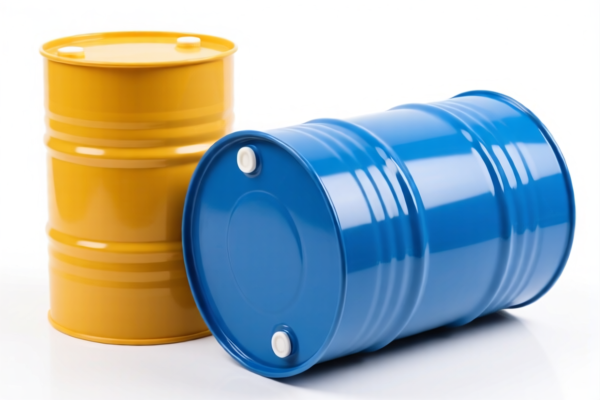
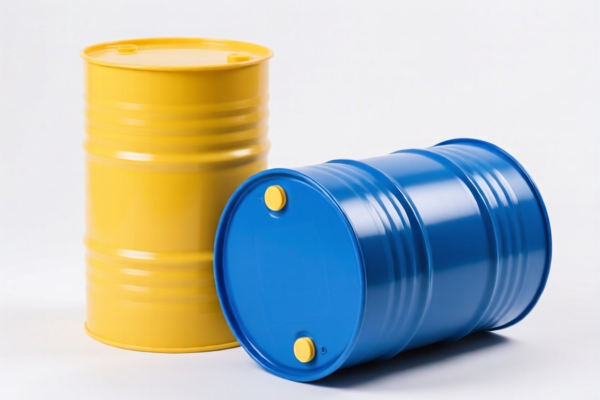
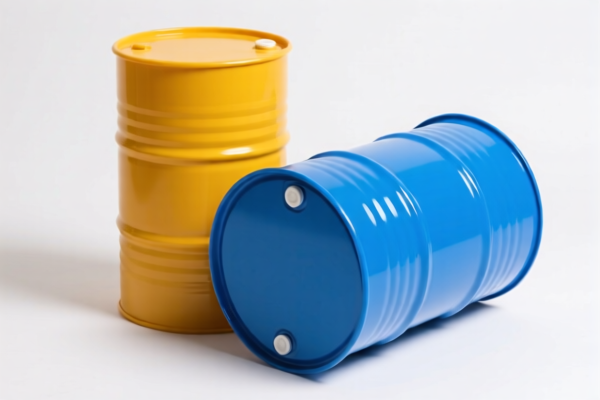
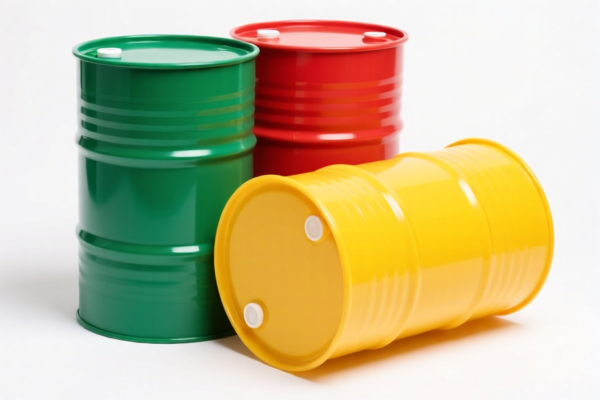
AI Analysis
🛢️ Plastic Industrial Drum (Plastic Chemical Drum)
🌐 HS Code Reference & Customs Clearance Guide | 2026 Latest Tariff Analysis | Professional Clearance Strategy
📌 Part 1: Product Definition & Classification: What Exactly is a "Plastic Industrial Drum"?
Plastic Industrial Drums are rigid or semi-rigid containers made primarily of plastic, designed for the storage, transport, and handling of bulk liquids, chemicals, powders, or granules. In international trade, they are not a single unified category but are classified based on their specific material composition, form factor, and end-use. Misclassification here is critical because it triggers vastly different tariff structures due to US-China trade tensions (Section 301, IEEPA, and Section 122 tariffs).
Key Distinctions: * Packaging Containers (Headings 3923/3926): Most "drums" used for general chemical or industrial packaging fall here. * Pipes/Tubes (Heading 3917): Rarely, if the "drum" is actually a large-diameter flexible pipe or tube assembly, it may be misclassified here, but true rigid drums do not belong here. * General Plastic Articles: If it doesn't fit specific packaging definitions, it falls under "Other" plastic articles.
⚠️ Critical Distinction Point:
- If the item is a container for goods (buckets, tanks, jerrycans, drums) → Look at 3923.90 or 3926.90.
- If the item is part of a fluid transport system (tubes, hoses) → Look at 3917.29.
- Note: Even though the user input is "Plastic Industrial Drum," the data shows multiple HS codes. We must map each potential classification to its specific tariff impact.
📦 Part 2: HS Code Classification Details (2026 Latest Tariff Authority Comparison)
Based on the provided data, here are the specific HS Codes applicable to "Plastic Industrial Drums" or similar plastic containers, along with their detailed tax breakdowns.
| HS Code | Product Description & Summary | Primary Use Case | Tax Rate (China to US) |
|---|---|---|---|
3923.90.00.12 |
Plastic drum, material: plastic, form: drum, use: chemical packaging. | Standard chemical packaging drums. | 38.0% |
3923.90.00.14 |
Plastic drum, material: plastic, form: drum, use: chemical packaging. | Standard chemical packaging drums (variant). | 38.0% |
3926.90.10.00 |
Plastic drum, material: plastic, form: drum, use: water or oil drum. | Water/Oil storage drums. | 20.9% |
3926.90.99.89 |
Plastic container, material: plastic, form: container, classified as other plastic articles. | General plastic containers not specifically "drums" for chemicals/water. | 22.8% |
3917.29.00.50 |
Plastic drum-like structure, material: plastic, form: pipe fittings or container class. | High Risk: If misclassified as pipe/fitting. | 38.1% |
3917.29.00.90 |
Plastic container/pipe fitting, material: plastic, classified as other category. | High Risk: If misclassified as pipe/fitting. | 38.1% |
3923.90.00.80 |
Plastic industrial packaging, material: plastic, use: industrial packaging. | Broad industrial packaging solutions. | 38.0% |
🔍 Key Insight:
- The lowest tariff (20.9%) applies if the drum is specifically identified as a "Water or Oil Drum" (3926.90.10.00).
- The highest tariff (38.1%) applies if the item is mistakenly classified under Pipes/Fittings (3917.29) or heavily regulated Chemical Packaging (3923.90).
- Most "Plastic Chemical Drums" fall into the 38% range due to Section 301 and IEEPA tariffs.
💰 Part 3: 2026 Latest Tariff Rate Breakdown (Including Surcharges & Policy Surcharges)
✅ Applicable Country: United States (US)
✅ Origin: China (CN)
✅ Effective Date: Current regulations apply (post-2025 adjustments)
🎯 1. 3923.90.00.12 / 3923.90.00.14 / 3923.90.00.80 — Plastic Chemical/Industrial Packaging
| Item | Content |
|---|---|
| Base Tariff | 3.0% – 5.3% (varies by subheading detail) |
| Section 301 Surcharge | +25.0% (USITC Footnote) |
| Section 122 Tariff | +10.0% (Specific to certain plastic containers/packaging) |
| Total Rate | 38.0% |
| Tax Calculation | CIF Value × 38.0% |
| De Minimis Eligibility | ❌ No (Deny De Minimis) |
| Legal Basis Path | USITC:3923.90.00 → FOOTNOTE:301 → IEEPA/Section 122 |
📌 Explanation:
- Base Tariff (3.0%): Standard MFN rate for plastic packaging articles.
- Section 301 (25%): Applied to plastics and articles of plastics from China.
- Section 122 (10%): A specific additional tariff often applied to certain plastic packaging materials.
- Total: 38.0%. This is a high-cost category. Importers must budget accordingly.
🎯 2. 3926.90.10.00 — Plastic Water or Oil Drum
| Item | Content |
|---|---|
| Base Tariff | 3.4% |
| Section 301 Surcharge | +7.5% |
| Section 122 Tariff | +10.0% |
| Total Rate | 20.9% |
| Tax Calculation | CIF Value × 20.9% |
| De Minimis Eligibility | ❌ No |
| Legal Basis Path | USITC:3926.90.10 → FOOTNOTE:301 → IEEPA/Section 122 |
📌 Note:
- This is the most favorable rate in the dataset.
- To qualify, the product description MUST explicitly state it is used for Water or Oil. Using it for general chemicals may force reclassification to the 38% bracket.
- Section 301 is lower (7.5%) for this specific subheading compared to others (25%), making it a strategic classification if the use case allows.
🎯 3. 3926.90.99.89 — Other Plastic Containers (General)
| Item | Content |
|---|---|
| Base Tariff | 5.3% |
| Section 301 Surcharge | +7.5% |
| Section 122 Tariff | +10.0% |
| Total Rate | 22.8% |
| Tax Calculation | CIF Value × 22.8% |
| De Minimis Eligibility | ❌ No |
| Legal Basis Path | USITC:3926.90.99 → FOOTNOTE:301 → IEEPA/Section 122 |
📌 Note:
- Falls under "Other" plastic articles.
- Slightly higher base tariff than water/oil drums, but same Section 301 rate (7.5%).
- Total 22.8% is a mid-tier cost.
🎯 4. 3917.29.00.50 / 3917.29.00.90 — Misclassified as Pipe Fittings/Accessories
| Item | Content |
|---|---|
| Base Tariff | 3.1% |
| Section 301 Surcharge | +25.0% |
| Section 122 Tariff | +10.0% |
| Total Rate | 38.1% |
| Tax Calculation | CIF Value × 38.1% |
| De Minimis Eligibility | ❌ No |
| Legal Basis Path | USITC:3917.29 → FOOTNOTE:301 → IEEPA/Section 122 |
⚠️ Warning:
- Do NOT classify a drum as a pipe/fitting unless it is literally a large flexible hose or tube assembly.
- If Customs determines a "drum" is a container, misclassification as 3917 can lead to penalties, seizures, and back taxes.
- The rate (38.1%) is the highest, offering no benefit.
🛠️ Part 4: Customs Clearance Practical Advice (Real-World Pitfall Avoidance)
✅ 1. Required Documentation Checklist
| Document | Mandatory? | Description |
|---|---|---|
| ✅ Product Specification Sheet | ✔️ | Must detail capacity, material (e.g., HDPE, PP), and intended use (Water, Oil, Chemical). |
| ✅ Product Photos | ✔️ | Clear images showing the drum shape, closures, and any labels. |
| ✅ Commercial Invoice | ✔️ | Must specify "Plastic Drum" and clarify usage (e.g., "for Water Storage" vs. "for Chemicals"). |
| ✅ Packing List | ✔️ | Quantity, weight, dimensions. |
| ✅ Material Safety Data Sheet (MSDS) | ✔️ | If storing hazardous chemicals, required for safety clearance. |
| ✅ Proof of Origin | ✔️ | To apply for any potential exemptions (though unlikely for China origin). |
✅ 2. Declaration Strategy (Key Tips)
🔥 “Be Specific: Water/Oil = Lower Tax; Chemical = Higher Tax; Don’t Lie!”
| Scenario | Correct Declaration | Wrong Declaration | Consequence |
|---|---|---|---|
| Drum for Water/Oil | 3926.90.10.00 |
3923.90.00.12 (Chemical) |
Save 17.1% (38% vs 20.9%) |
| Drum for General Chemicals | 3923.90.00.12 or 80 |
3917.29.00.50 (Pipe) |
Avoid Penalty: Misclassification leads to fines. |
| Drum for General Packaging | 3923.90.00.80 |
3926.90.99.89 |
Risk: Customs may audit usage claims. |
| Any Plastic Container | Clear description of form | "Plastic Bucket" (Vague) | Delay: Customs requests clarification. |
✅ 3. Special Situations
| Situation | Handling Advice |
|---|---|
| Used Drums | Ensure they are "clean and empty." If contaminated, they may be rejected or require special disposal fees. |
| Stackable/Nesting Drums | Specify "Nestable" in description. Some rates may vary if form factor changes. |
| UN-Rated Drums | If the drum is certified for dangerous goods (UN 1A1, 1H1, etc.), declare this explicitly. It may affect safety reviews but not necessarily the HS code itself. |
| Mixed Containers | If a drum contains chemicals, ensure the drum itself is declared correctly. The contents are declared separately. |
🌍 Part 5: Global Market Clearance Comparison (2026 Latest)
| Country/Region | Recommended HS Code | Estimated Tariff (China Origin) | Key Requirements | Notes |
|---|---|---|---|---|
| 🇺🇸 USA | 3926.90.10.00 (Best) |
20.9% (Water/Oil) | FDA/USDA (if food contact), EPA (if chemicals) | Highest tariffs globally due to Section 301 & 122. |
| 🇺🇸 USA | 3923.90.00.12 (Chemical) |
38.0% | EPA Registration | High cost for chemical packaging. |
| 🇪🇺 EU | 3923.90.00 |
~6-8% | REACH Compliance | No Section 301 equivalent. |
| 🇨🇳 China | 3923.90.00 |
~5-10% | CCC (if applicable) | Lower import duty, but check environmental regulations. |
| 🇯🇵 Japan | 3923.90.00 |
~5-10% | JIS Standards | No major retaliatory tariffs. |
📌 Conclusion:
- USA is the most expensive market for plastic drums due to layered tariffs (Base + 301 + 122).
- Strategy: If your product can be legitimately described as a "Water or Oil Drum," classify under 3926.90.10.00 to save 17.1% in duties.
- Never misclassify a drum as a pipe/fitting to save costs; the penalty risk outweighs the benefit.
📌 Part 6: Common Mistakes & Pitfall Guide (Lessons Learned)
❌ Mistake 1: Classifying all plastic drums under the same code (3923.90.00.12) regardless of use.
👉 Result: You pay 38% when you could have paid 20.9% by specifying "Water/Oil Use."
👉 Fix: Update invoice and product description to reflect specific end-use.
❌ Mistake 2: Using vague terms like "Plastic Container" without specifying material or form.
👉 Result: Customs delays for classification review; potential audit.
👉 Fix: Use precise language: "HDPE Plastic Drum, 55-Gallon, for Water Storage."
❌ Mistake 3: Misclassifying a rigid drum as a flexible pipe/fitting (3917.29).
👉 Result: Customs rejects the declaration; goods held; penalties applied.
👉 Fix: Stick to packaging headings (3923 or 3926) for rigid containers.
❌ Mistake 4: Ignoring Section 122 Tariffs.
👉 Result: Underestimating total landed cost by 10%.
👉 Fix: Always calculate: Base + 301 + 122.
✅ Correct Approach:
"Plastic Drum, HDPE, 55 Gallon, Used for Industrial Water Storage, Model XYZ, UN-Rated if applicable."
🎯 Part 7: Conclusion: Professional Declaration, Time-Saving, Cost-Effective!
🎯 Remember the Mantra:
🔹 "Water/Oil = 20.9%; Chemical = 38%; Pipes = No!"
🔹 "HS Code determines the cost; describe use accurately."
🔹 "17% Savings is easy if you know the code!"
📌 Pro Tip:
If you are importing large volumes, consider applying for a Section 301 Exclusion if applicable (though currently limited for plastics). Always consult a licensed customs broker to review your specific product design and intended use before shipment.
📣 Immediate Action:
📞 Contact your customs broker + Provide Product Photos + Specify Intended Use (Water/Oil/Chemical)
🚀 Ensure your Commercial Invoice matches the HS Code exactly.
💰 Save up to 17.1% on tariffs by accurate classification!
✨ Professional Clearance Starts with Accurate Classification!
💼 Every percent of duty counts!
Customer Reviews
About HS Code Classification
The Harmonized System (HS) is an internationally standardized nomenclature developed by the World Customs Organization (WCO) to classify traded products. Over 200 countries use the HS system as the basis for customs tariffs, trade statistics, and import/export regulations.
Each HS code follows a hierarchical structure:
- Chapter (2 digits) — Broad category of goods (e.g., Chapter 84: Machinery and Mechanical Appliances)
- Heading (4 digits) — More specific grouping within the chapter
- Subheading (6 digits) — Internationally standardized breakdown, used by all WCO member countries
- National subdivisions (8-10 digits) — Country-specific extensions for further classification, such as US HTSUS 10-digit codes
Correct HS code classification is essential for smooth customs clearance, accurate duty payment, and compliance with trade regulations. Misclassification can lead to customs delays, overpayment of duties, or penalties.
When importing from CN to US, the applicable tariff rates may include:
- Most-Favored-Nation (MFN) rate — The standard duty rate applied to WTO members
- General rate — Applied to countries without trade agreements
- Trade remedy duties — Additional tariffs such as Section 301 (anti-dumping), Section 232 (national security), or countervailing duties
The information provided on this page is for reference purposes only. For official classification, please consult with your local customs authority or a licensed customs broker.