Plastic Kitchen Plate
CN → US| HS Code | Tariff Rate | Origin | Destination | Doc |
|---|---|---|---|---|
| 3924102000 | 24.0% | CN | US | Official Doc |
| 3924104000 | 13.4% | CN | US | Official Doc |
| 6911103510 | 43.5% | CN | US | Official Doc |
| 6912003910 | 14.5% | CN | US | Official Doc |
| 6911103710 | 25.5% | CN | US | Official Doc |
Product Images
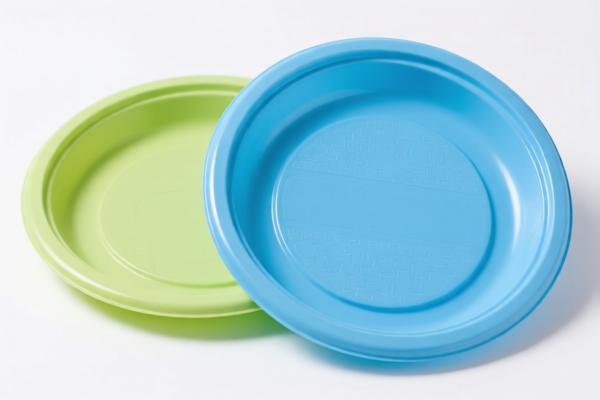
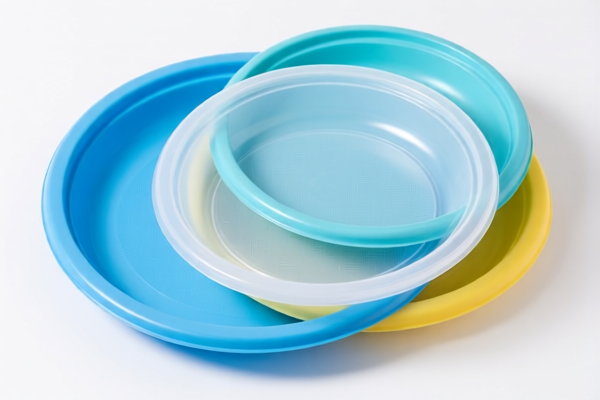

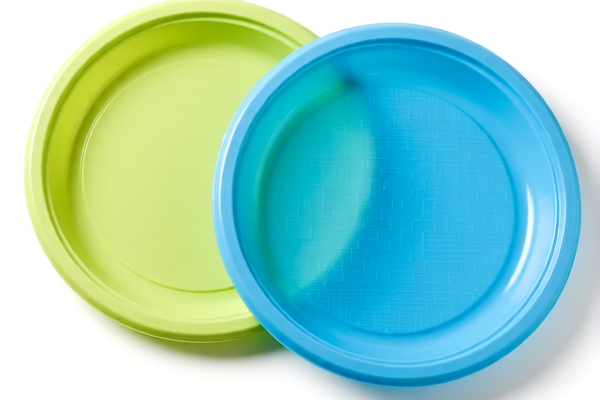
AI Analysis
🍽️ Plastic Kitchen Plates (Plastic Tableware)
🌐 HS Code Reference & Customs Clearance Guide | 2026 Updated Tariff Structure | Professional Level Compliance Strategy
📌 I. Product Definition and Classification: What Are You Really Importing?
"Plastic Kitchen Plates" are everyday tableware items made primarily of synthetic polymers. In international trade, the classification of these items hinges strictly on material composition and intended use. While they may look similar, the specific plastic type or manufacturing process can shift the HS Code, significantly impacting duty rates.
⚠️ Key Distinction:
- If the item is a rigid plate intended for dining/food service → Chapter 39 (Plastics)
- If the item is made of ceramic/porcelain instead → Chapter 69 (Ceramics)
- Note: The user specified "Plastic," so we focus on Chapter 39. However, misdeclaring ceramic as plastic is a common customs error.
📦 II. HS Code Classification Details (2026 Latest Tariff Alignment)
Based on the provided data, there are two potential HS Codes for plastic plates, differentiated by specific sub-headings and tariff structures.
| HS Code | Product Description | Application/Context | Total Tax Rate |
|---|---|---|---|
3924.10.20.00 |
Plastic Dinner Plates Material: Plastic Use: Plates/Tableware |
Standard rigid plastic plates for dining. Falls under "Tableware and kitchenware." | 24.0% |
3924.10.40.00 |
Plastic Kitchenware/Utensils Material: Plastic Use: Kitchenware |
Broader category for plastic kitchen tools. May include plates if classified as general kitchenware rather than specific "plates." | 13.4% |
🔍 Critical Analysis:
- Why two codes?3924.10.20.00is often stricter for "plates" specifically, while3924.10.40.00might apply if the product is deemed more general "kitchenware" or if specific sub-notions for plates aren't met in certain jurisdictions.
- Tax Impact: The difference is 10.6% ($24.0\% - 13.4\%$). Misclassification can lead to significant underpayment penalties or overpayment costs.
💰 III. 2026 Latest Tariff Rate Breakdown (Including Additional Duties)
✅ Applicable Market: United States (US)
✅ Origin: China (CN)
✅ Effective Date: 2025 onwards (Current Trade Policy)
🎯 1. 3924.10.20.00 —— Plastic Dinner Plates (Higher Tax Bracket)
This classification attracts a higher total duty rate due to specific "Section 301" and "122 Section" additional tariffs.
| Item | Detail |
|---|---|
| Base Tariff | 6.5% (Standard MFN Rate) |
| Retaliatory / Section 301 Tariff | 7.5% (Additional duty on Chinese goods) |
| 122 Section Tariff | 10.0% (Specific administrative tariff layer) |
| Total Effective Tax Rate | 24.0% |
| Calculation Base | CIF Value × 24.0% |
| De Minimis Exemption | ❌ NOT Eligible Plastic tableware from China generally does not qualify for the $800 de minimis exemption under current enforcement guidelines for Section 301 goods. |
| Legal Authority Path | USITC:3924.10.20.00 → Section 301: +7.5% → 122 Section: +10% |
📌 Explanation:
- The 6.5% base rate is standard for plastics.
- The 7.5% is the standard Section 301 surcharge for many plastic consumer goods.
- The 10% "122 Section Tariff" is a specific administrative levy often applied to certain plastic imports from China.
- Total: 24.0%. This is a high-cost category. Importers must price this in.
🎯 2. 3924.10.40.00 —— Plastic Kitchenware (Lower Tax Bracket)
If your product can be legally justified as "Kitchenware" rather than strict "Plates," the tax burden is significantly lower.
| Item | Detail |
|---|---|
| Base Tariff | 3.4% (Standard MFN Rate) |
| Retaliatory / Section 301 Tariff | 0.0% (Exempted or lower bracket for this specific subheading) |
| 122 Section Tariff | 10.0% (Still applies) |
| Total Effective Tax Rate | 13.4% |
| Calculation Base | CIF Value × 13.4% |
| De Minimis Exemption | ❌ NOT Eligible (Generally same enforcement applies) |
| Legal Authority Path | USITC:3924.10.40.00 → 122 Section: +10% |
📌 Note:
- The base rate is lower (3.4% vs 6.5%).
- Crucially, the Section 301 tariff is 0.0% for this code, saving 7.5% immediately.
- The 122 Section tariff (10%) still applies, but the total is much more competitive.
🛠️ IV. Customs Clearance Practical Advice (Avoid Pitfalls)
✅ 1. Documentation Checklist (Mandatory)
| Document | Required? | Purpose |
|---|---|---|
| Product Specification Sheet | ✔️ | Define material (e.g., PP, PS, Melamine). Specify if "Plate" or "Kitchenware." |
| Product Photos | ✔️ | Show shape, usage, and any markings. Must prove it is plastic. |
| Commercial Invoice | ✔️ | Must state: "Plastic Dinner Plate" or "Plastic Kitchenware." Do not use vague terms like "Plastic Item." |
| Packing List | ✔️ | Item weight, dimensions, and quantity. |
| Material Declaration | ✔️ | Confirm no restricted substances (e.g., BPA, Phthalates) if sold for food contact. |
| FCC/CE/RoHS (if applicable) | ✔️ | Proof of safety for food-contact plastics. |
✅ 2. Classification Strategy (Key Mnemonic)
🔥 "Plates are 24%, Kitchenware is 13.4%. Choose wisely!"
| Scenario | Recommended HS Code | Risk Level |
|---|---|---|
| Rigid, flat, circular dish for eating | 3924.10.20.00 |
⚠️ High Cost (24%) But likely correct for standard dinner plates. |
| General plastic kitchen tools, trays, or non-standard "plates" | 3924.10.40.00 |
✅ Lower Cost (13.4%) Only if description supports "kitchenware" over "plate." |
| Ceramic/Porcelain Plates | 6911.10.35.10 or 6911.10.37.10 |
❌ Do Not Use Plastic Codes Misdeclaration leads to seizure. See 6911 data for details. |
| Non-Ceramic Ceramic Plates | 6912.00.39.10 |
❌ Do Not Use Plastic Codes Misdeclaration leads to seizure. |
📌 Warning:
- If you declare a standard dinner plate as3924.10.40.00to save taxes, customs may audit and reclassify it as3924.10.20.00, issuing a bill for the 10.6% difference + penalties.
- Pre-clearance ruling is recommended if the product shape is ambiguous (e.g., irregularly shaped serving dish).
✅ 3. Special Considerations
| Situation | Advice |
|---|---|
| Melamine Plates | Still classified under 3924.10. Ensure material is declared as "Plastic" (Melamine is a thermoset plastic). |
| Bamboo Fiber Plates | If >10% bamboo, it may not be plastic. Risk of reclassification to wood/bamboo chapter (different tariffs). |
| Food Contact Safety | Ensure compliance with FDA 21 CFR (for US) or EFSA (for EU). Non-compliance leads to detention, not just tariff issues. |
| Packaging | Include protective plastic bags/packaging in the declaration if they are part of the sale unit. |
🌍 V. Global Market Comparison (2026)
| Country | Recommended HS Code | Est. Total Duty | Notes |
|---|---|---|---|
| 🇺🇸 USA | 3924.10.20.00 |
24.0% | High tariffs due to 122 Section + Sec 301. |
| 🇺🇸 USA | 3924.10.40.00 |
13.4% | Lower duty if classified as general kitchenware. |
| 🇪🇺 EU | 3924.10 |
~6.5% | No Section 301. Lower base rates. |
| 🇨🇳 China | 3924.10 |
~6.5% | Standard import duty. |
| 🇯🇵 Japan | 3924.10 |
~6.0% | No additional trade tariffs. |
📌 Conclusion:
The US market is the most expensive due to complex additional tariffs.
For US imports, every 1% of tariff savings equals significant margin protection.
If the product design allows, consider if it can be more accurately described as "Kitchenware" (3924.10.40.00) to save 10.6%.
📌 VI. Common Errors & Pitfalls (Lessons Learned)
❌ Error 1: Declaring "Plastic Plates" as 3924.10.40.00 without justification.
👉 Result: Customs reclassification → Back duties + Penalty (~10.6% + interest).
❌ Error 2: Confusing "Plastic" with "Bamboo Fiber" or "Wood."
👉 Result: If material is natural fiber, HS Code changes entirely. Tariff may be lower or higher, but declaration is false.
❌ Error 3: Ignoring the "122 Section Tariff."
👉 Result: Underpayment. The 10% is not optional. It applies to both 3924.10.20.00 and 3924.10.40.00.
❌ Error 4: Using "Tableware" as a generic term in the invoice.
👉 Result: Ambiguity leads to delayed customs release. Use specific terms: "Plastic Dinner Plate, Model XYZ."
✅ Correct Approach:
"Plastic Dinner Plate, Polypropylene (PP), 10-inch, White, Model ABC, FDA Compliant for Food Contact"
🎯 VII. Conclusion: Precision Saves Money
🎯 Remember the Formula:
🔹 Plates = 24.0% (
3924.10.20.00)
🔹 Kitchenware = 13.4% (3924.10.40.00)
🔹 Ceramic = 25.5% - 43.5% (See6911data)
📌 Pro Tip:
If you are importing large volumes, apply for an Advance Ruling from US Customs and Border Protection (CBP). Paying a small fee for a ruling can save tens of thousands in potential underpayments.
📣 Immediate Action:
📞 Confirm Material: Is it 100% plastic?
📝 Review Description: Can it be called "Kitchenware"?
📊 Calculate:
- If3924.10.20.00: Cost = CIF × 1.24
- If3924.10.40.00: Cost = CIF × 1.134
✨ Professional Clearance Starts with Accurate Classification!
💼 Don't let a 10% tariff gap eat your profit margin!
Customer Reviews
About HS Code Classification
The Harmonized System (HS) is an internationally standardized nomenclature developed by the World Customs Organization (WCO) to classify traded products. Over 200 countries use the HS system as the basis for customs tariffs, trade statistics, and import/export regulations.
Each HS code follows a hierarchical structure:
- Chapter (2 digits) — Broad category of goods (e.g., Chapter 84: Machinery and Mechanical Appliances)
- Heading (4 digits) — More specific grouping within the chapter
- Subheading (6 digits) — Internationally standardized breakdown, used by all WCO member countries
- National subdivisions (8-10 digits) — Country-specific extensions for further classification, such as US HTSUS 10-digit codes
Correct HS code classification is essential for smooth customs clearance, accurate duty payment, and compliance with trade regulations. Misclassification can lead to customs delays, overpayment of duties, or penalties.
When importing from CN to US, the applicable tariff rates may include:
- Most-Favored-Nation (MFN) rate — The standard duty rate applied to WTO members
- General rate — Applied to countries without trade agreements
- Trade remedy duties — Additional tariffs such as Section 301 (anti-dumping), Section 232 (national security), or countervailing duties
The information provided on this page is for reference purposes only. For official classification, please consult with your local customs authority or a licensed customs broker.