Plastic Kitchen Plates
CN → US| HS Code | Tariff Rate | Origin | Destination | Doc |
|---|---|---|---|---|
| 3924102000 | 24.0% | CN | US | Official Doc |
| 3924104000 | 13.4% | CN | US | Official Doc |
| 6912003510 | 19.8% | CN | US | Official Doc |
| 6911103510 | 43.5% | CN | US | Official Doc |
| 6912003910 | 14.5% | CN | US | Official Doc |
Product Images
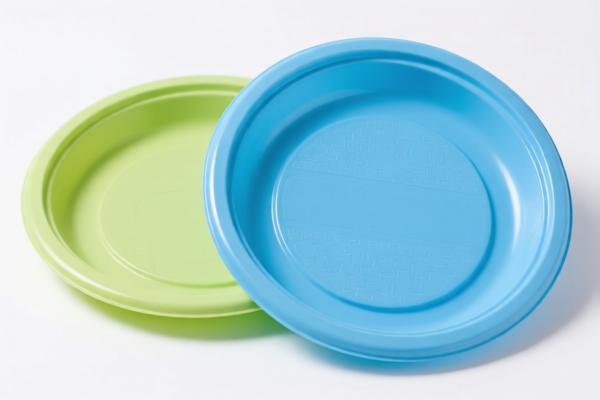
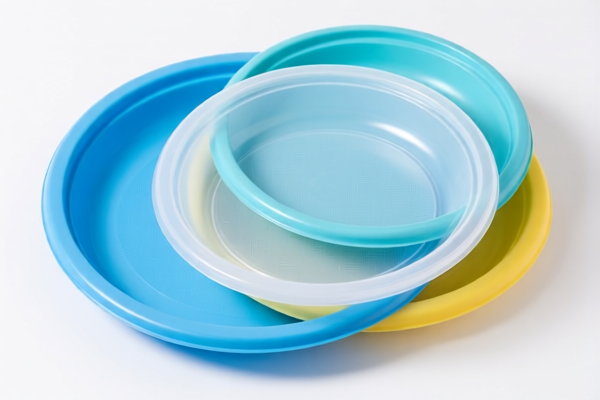

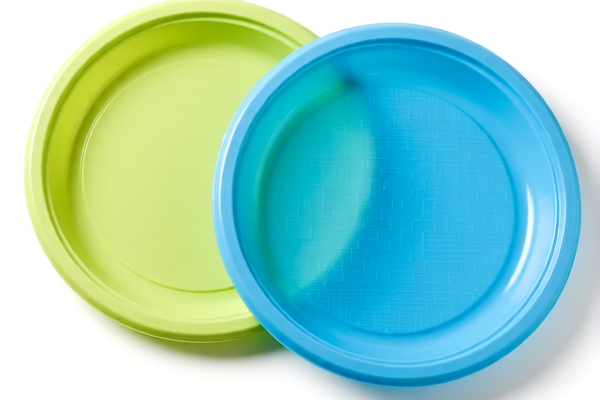
AI Analysis
🍽️ Plastic Kitchen Plates: The Ultimate HS Code & Tariff Guide (2026 Edition)
🌐 HS Code Reference & Customs Clearance Guide | 2026 Latest Tariff Analysis | Professional Strategy
📌 1. Product Definition & Classification: Do You Really Know "Plastic Kitchen Plates"?
Plastic kitchen plates are everyday tableware items primarily made of various polymers (PP, PS, melamine, etc.). In international trade, the classification strictly depends on the material composition and specific application. Although the user input is "Plastic Kitchen Plates," customs authorities scrutinize the actual material declared.
⚠️ Critical Distinction:
- If the material is genuinely plastic (polymer), it falls under Chapter 39.
- If the product is actually ceramic but mislabeled as "plastic" (or vice versa), it falls under Chapter 69.
- Do not guess: The HS Code and Tariff rates differ significantly based on the exact material description.
📦 2. HS Code Classification Details (2026 Latest Tariff Authority对照)
Based on the provided data, here are the specific HS Codes, descriptions, and corresponding tax rates for Plastic Kitchen Plates (and related ceramic alternatives for comparison):
| HS Code | Product Description | Material/Use | Total Tariff Rate |
|---|---|---|---|
| 3924.10.20.00 | Plastic plates, for table/kitchen use | Plastic (Explicitly stated) | 24.0% |
| 3924.10.40.00 | Plastic plates, for table/kitchen use | Plastic (Inferred) | 13.4% |
| 6911.10.35.10 | Ceramic plates, for table/kitchen use | Ceramic (Porcelain) | 43.5% |
| 6911.10.37.10 | Ceramic plates, for table/kitchen use | Ceramic (Porcelain) | 25.5% |
| 6912.00.35.10 | Non-porcelain ceramic plates, for table/kitchen use | Ceramic (Non-porcelain) | 19.8% |
🔍 Key Reminder:
- The user input is "Plastic Kitchen Plates."
- The primary HS Codes to consider are 3924.10.20.00 and 3924.10.40.00.
- Codes 6911 and 6912 apply only if the product is actually ceramic, not plastic.
- Do not mix plastic and ceramic classifications.
💰 3. 2026 Latest Tariff Rate Details (Including Surcharges & Policy Add-ons)
✅ Applicable Country: United States (US)
✅ Origin: China (CN)
✅ Effective Time: From November 10, 2025 (including subsequent imports)
🎯 1. HS Code 3924.10.20.00 – Plastic Plates, for Table/Kitchen Use (Plastic Material Explicit)
| Item | Details |
|---|---|
| Base Tariff | 6.5% (Ad Valorem) |
| Section 301 Surcharge | 7.5% (From USITC Footnote 9903.88.01) |
| 122 Clause Surcharge | 10% (Section 122 of the Trade Act) |
| Total Tariff Rate | 24.0% |
| Tax Calculation | CIF Value × 24.0% |
| De Minimis Exemption | ❌ Not Eligible (deny_de_minimis) |
| Legal Basis Path | Base: 3924.10.20.00 → Section 301: 7.5% → 122 Clause: 10% |
📌 Explanation:
- Base Tariff (6.5%): Standard Most Favored Nation (MFN) rate for plastic tableware.
- Section 301 Surcharge (7.5%): Additional tariff on Chinese goods under US trade law.
- 122 Clause Surcharge (10%): Additional tariff under Section 122 for national security/trade balance reasons.
- Total 24.0%: This is the actual cost burden for this specific classification.
🎯 2. HS Code 3924.10.40.00 – Plastic Plates, for Table/Kitchen Use (Plastic Material Inferred)
| Item | Details |
|---|---|
| Base Tariff | 3.4% (Ad Valorem) |
| Section 301 Surcharge | 0.0% |
| 122 Clause Surcharge | 10% (Section 122 of the Trade Act) |
| Total Tariff Rate | 13.4% |
| Tax Calculation | CIF Value × 13.4% |
| De Minimis Exemption | ❌ Not Eligible (deny_de_minimis) |
| Legal Basis Path | Base: 3924.10.40.00 → 122 Clause: 10% |
📌 Note:
- Base Tariff (3.4%): Lower base rate for this sub-category.
- Section 301 Surcharge (0.0%): No additional 7.5% surcharge for this specific code.
- 122 Clause Surcharge (10%): Still applies the 10% Section 122 tariff.
- Total 13.4%: Significantly cheaper than 3924.10.20.00 (24.0%).🔥 Critical Insight:
- Why the difference? The distinction between .20.00 and .40.00 lies in the specific plastic type or manufacturing process defined in the Harmonized Tariff Schedule.
- Strategy: If your plastic plates qualify for 3924.10.40.00, you save 10.6% in total tariffs compared to 3924.10.20.00.
- Action: Verify if your product meets the criteria for the lower base rate (3.4%) to avoid paying the 7.5% Section 301 surcharge.
🛠️ 4. Customs Clearance Practical Advice (Pitfall Avoidance Guide)
✅ 1. Documentation Checklist (Mandatory)
| Document | Required | Notes |
|---|---|---|
| ✅ Product Specification Sheet | ✔️ | Must state material (e.g., PP, PS, Melamine), food-safe certification. |
| ✅ Material Test Report | ✔️ | Confirm it is plastic, not ceramic or other materials. |
| ✅ Product Photos | ✔️ | Show the plate, any markings, and packaging. |
| ✅ Commercial Invoice | ✔️ | Clearly describe as "Plastic Plates for Table/Kitchen Use." |
| ✅ Packing List | ✔️ | Match invoice quantities and weights. |
| ✅ Origin Certificate | ✔️ | If applicable for preferential rates (not applicable here due to US-China tariffs). |
✅ 2. Declaration Tips (Key Mantra)
🔥 "Material First, Code Second, Tariff Check!"
| Scenario | Correct Declaration | Wrong Practice |
|---|---|---|
| Plastic Plates | 3924.10.40.00 (if eligible) or 3924.10.20.00 | Misdeclare as Ceramic (6911) → Risk of penalty. |
| Ceramic Plates | 6911.10.35.10 or 6912.00.35.10 | Misdeclare as Plastic → Risk of penalty. |
| Mixed Materials | Separate declaration by material | Combine plastic and ceramic → Complex review. |
📌 Important:
- Ensure the material description on the invoice matches the HS Code.
- If unsure, apply for an Advance Ruling from CBP (Customs and Border Protection) to confirm the correct HS Code.
✅ 3. Special Cases
| Case | Advice |
|---|---|
| Melamine Plates | Often classified under 3924.10.20.00 or 3924.10.40.00, depending on specific composition. Verify with a customs broker. |
| Biodegradable Plastic Plates | May still fall under 3924, but check for any environmental exemptions (rare for US imports from China). |
| Sets with Cutlery | If plastic plates are sold with non-plastic cutlery, the set may be classified based on the essential character. |
🌍 5. Global Market Comparison (2026 Latest)
| Country/Region | Recommended HS Code (Plastic) | Tariff (China Origin) | Notes |
|---|---|---|---|
| 🇺🇸 USA | 3924.10.40.00 / 3924.10.20.00 | 13.4% / 24.0% | High tariffs due to Section 301 & 122. |
| 🇨🇳 China | 3924.10.40.00 / 3924.10.20.00 | ~6-9% | Lower tariffs, no Section 301. |
| 🇪🇺 EU | 3924.10.40.00 / 3924.10.20.00 | ~6.5% | No Section 301, but may have anti-dumping duties. |
| 🇬🇧 UK | 3924.10.40.00 / 3924.10.20.00 | ~6.5% | Post-Brexit tariffs apply. |
📌 Conclusion:
- The US market has the highest tariff burden for plastic tableware from China.
- Cost Optimization: Aim for 3924.10.40.00 (13.4%) instead of 3924.10.20.00 (24.0%) if product specifications allow.
📌 6. Common Mistakes & Pitfall Guide (Lessons Learned)
❌ Mistake 1: Declaring ceramic plates as "plastic" to avoid higher tariffs.
👉 Consequence: Customs inspection will reveal the true material → Penalties + Back Taxes + Delay.
❌ Mistake 2: Ignoring the Section 122 10% surcharge.
👉 Consequence: Unexpected cost increase of 10% on all plastic tableware.
❌ Mistake 3: Using vague descriptions like "Dinnerware" without specifying material.
👉 Consequence: Customs may classify under a higher-rate code or demand additional documentation.
✅ Correct Approach:
"Plastic Plates, PP Material, for Table Use, Model XYZ, Food-Grade Certified"
🎯 7. Conclusion: Precise Declaration, Cost Efficiency!
🎯 Remember the Mantra:
🔹 "Plastic or Ceramic? Check the Code!
🔹 3924.10.40.00 saves 10.6% vs 3924.10.20.00!
🔹 122 Clause applies to all – Plan for 10% extra!"
📌 Pro Tip:
If your plastic plates are originally from Vietnam, Malaysia, or Thailand, they may be eligible for lower or zero Section 301 tariffs.
- Action: Verify origin and apply for preferential tariff rates if applicable.
- Recommendation: Request a binding ruling from CBP to confirm the correct HS Code and tariff rate before shipment.
📣 Immediate Action:
📞 Contact a licensed customs broker.
📄 Provide material specifications and product photos.
🚀 Ensure smooth customs clearance and maximize profit margins!
✨ Professional clearance starts with accurate classification!
💼 Every percentage point saved is pure profit!
Customer Reviews
About HS Code Classification
The Harmonized System (HS) is an internationally standardized nomenclature developed by the World Customs Organization (WCO) to classify traded products. Over 200 countries use the HS system as the basis for customs tariffs, trade statistics, and import/export regulations.
Each HS code follows a hierarchical structure:
- Chapter (2 digits) — Broad category of goods (e.g., Chapter 84: Machinery and Mechanical Appliances)
- Heading (4 digits) — More specific grouping within the chapter
- Subheading (6 digits) — Internationally standardized breakdown, used by all WCO member countries
- National subdivisions (8-10 digits) — Country-specific extensions for further classification, such as US HTSUS 10-digit codes
Correct HS code classification is essential for smooth customs clearance, accurate duty payment, and compliance with trade regulations. Misclassification can lead to customs delays, overpayment of duties, or penalties.
When importing from CN to US, the applicable tariff rates may include:
- Most-Favored-Nation (MFN) rate — The standard duty rate applied to WTO members
- General rate — Applied to countries without trade agreements
- Trade remedy duties — Additional tariffs such as Section 301 (anti-dumping), Section 232 (national security), or countervailing duties
The information provided on this page is for reference purposes only. For official classification, please consult with your local customs authority or a licensed customs broker.