Plastic Kitchen Tray
CN → US| HS Code | Tariff Rate | Origin | Destination | Doc |
|---|---|---|---|---|
| 3926909989 | 22.8% | CN | US | Official Doc |
| 3926901000 | 20.9% | CN | US | Official Doc |
| 3923109000 | 38.0% | CN | US | Official Doc |
| 3923900080 | 38.0% | CN | US | Official Doc |
Product Images
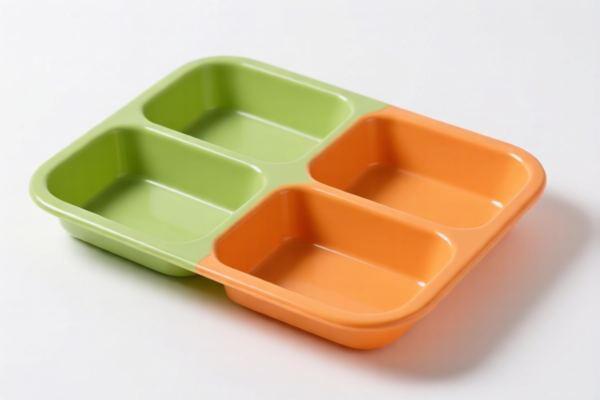
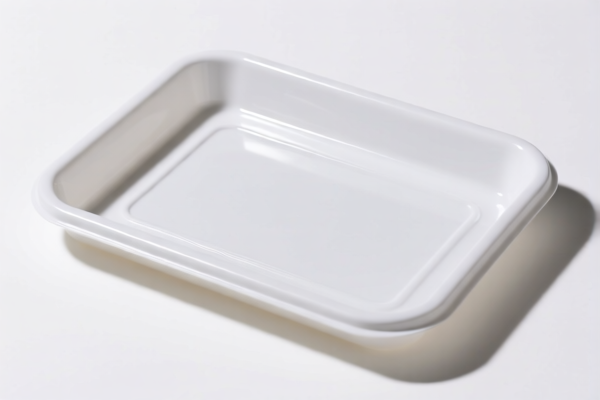
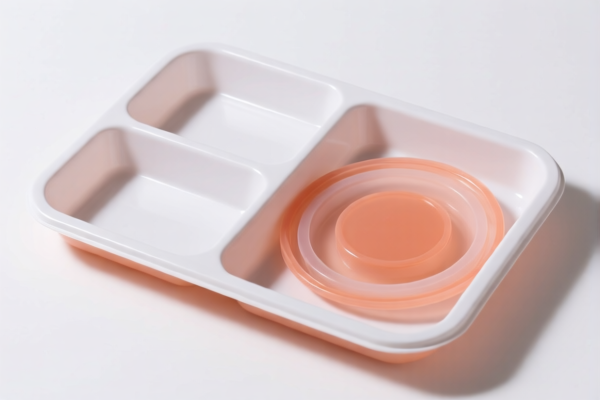
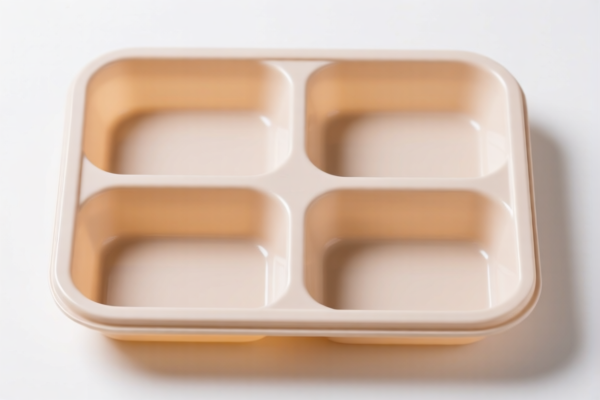
AI Analysis
🍽️ Plastic Kitchen Tray (Plastic Food Containers & Utensils)
🌐 HS Code Reference & Customs Clearance Guide | 2026 Latest Tariff Analysis | Professional-Level Clearance Strategy
📌 I. Product Definition and Classification: Do You Really Understand "Plastic Kitchen Trays"?
A "Plastic Kitchen Tray" is a broad term in international trade. It generally falls under Chapter 39 (Plastics and Articles Thereof). However, the specific HS Code depends entirely on its function and design:
- Packing/Conveyance Articles: Trays used to hold, transport, or package goods (e.g., takeout trays, bakery display trays). These fall under Heading 39.23.
- Other Household Articles: Trays used as serving ware, storage, or general household utility that do not fit the strict definition of "packing/conveyance" for commerce. These often fall under Heading 39.26 (Other articles of plastics).
⚠️ Key Distinction:
- If the item is designed primarily for packaging, shipping, or retail display of other goods → It is a "Conveyance/Packing Article" (39.23).
- If the item is a finished consumer good for household use (e.g., a solid serving tray, a bathroom organizer tray) → It is an "Other Article of Plastic" (39.26).
📦 II. HS Code Classification Details (2026 Latest Tariff Authoritative Comparison)
Based on the provided data, here are the applicable HS Codes for "Plastic Kitchen Trays":
| HS Code | Product Description | Applicable Scenario | Key Characteristics |
|---|---|---|---|
3923.10.90.00 |
Articles for conveyance or packing of goods, of plastics: Boxes, cases, crates and similar articles: Other | Food service packaging, bakery trays, deli containers, takeout trays. | Designed to contain or protect goods during transport/sale. Not finished consumer ware. |
3923.90.00.80 |
Articles for the conveyance or packing of goods, of plastics; stoppers, lids, caps and other closures, of plastics: Other Other | Generic plastic packaging items not specified elsewhere (e.g., certain plastic crates, large bulk packaging trays). | Broad "catch-all" for packing/conveyance items not in 3923.10. |
3926.90.99.89 |
Other articles of plastics and articles of other materials of headings 3901 to 3914: Other: Other Other | Solid serving trays, bathroom organizers, decorative plastic trays, finished household storage bins. | Finished consumer goods. Not intended for disposable packaging. |
3926.90.10.00 |
Other articles of plastics and articles of other materials of headings 3901 to 3914: Other: Buckets and pails | Plastic buckets or pails with handles. | Note: Only applicable if the "tray" is structurally a bucket/pail. Standard flat trays do NOT belong here. |
🔍 Critical Reminder:
- Packaging vs. Consumer Goods: A disposable pizza box/tray is3923.10.90.00. A reusable, rigid plastic tray for serving cheese is likely3926.90.99.89.
- Misclassification Risk: Declaring a finished consumer tray as "packaging" (3923) might reduce tax but risks customs rejection if the item is clearly retail-ready consumer ware. Conversely, declaring disposable packaging as a consumer good (3926) may result in lower duty but could be challenged if the primary function is containment for sale.
💰 III. 2026 Latest Tariff Rate Details (Including Additional Taxes, Policy Add-ons)
✅ Applicable Country: United States (US)
✅ Origin: China (CN)
✅ Effective Time: 2025/2026 (Current Tariff Structure)
🎯 1. 3923.10.90.00 —— Packaging/Conveyance Trays (e.g., Takeout, Bakery)
| Item | Content |
|---|---|
| Base Tariff | 0.0% (ad valorem) |
| Additional Tariff (Section 301) | 0.0% |
| Total Tax Rate | 0.0% |
| Tax Calculation | CIF Value × 0% = $0 |
| De Minimis Exemption Eligible | ✅ Yes (If value <$800) |
| Legal Basis | Standard HTSUS 3923.10.90.00, No Section 301 Footnote Applies. |
📌 Explanation:
- This code has zero duty.
- Ideal for bulk packaging materials exported to the US.
- No additional USITC or IEEPA surcharges apply to this specific subheading for Chinese origin.
🎯 2. 3923.90.00.80 —— Other Conveyance/Packing Articles (Generic Plastic Packaging)
| Item | Content |
|---|---|
| Base Tariff | 3.0% |
| Additional Tariff (Section 301) | 25.0% |
| Total Tax Rate | 28.0% |
| Tax Calculation | CIF Value × 28% |
| De Minimis Exemption Eligible | ❌ No (Subject to Section 301) |
| Legal Basis | Standard HTSUS 3923.90.00.80 + USITC Footnote 301. |
📌 Explanation:
- This is a high-tax category.
- Applies to generic plastic crates, bulk packaging trays, or items not classified under 3923.10.
- 28% total duty significantly impacts margin. Must consider supply chain cost implications.
🎯 3. 3926.90.99.89 —— Other Plastic Articles (Finished Household Trays, Organizers)
| Item | Content |
|---|---|
| Base Tariff | 5.3% |
| Additional Tariff (Section 301) | 7.5% |
| Total Tax Rate | 12.8% |
| Tax Calculation | CIF Value × 12.8% |
| De Minimis Exemption Eligible | ❌ No (Subject to Section 301) |
| Legal Basis | Standard HTSUS 3926.90.99.89 + USITC Footnote 301. |
📌 Explanation:
- Applies to finished consumer goods like serving trays, bathroom organizers, or decorative plastic trays.
- 12.8% total duty is moderate but higher than packaging.
- Often confused with 3923 codes. Must prove "finished consumer use" vs. "packaging use."
🎯 4. 3926.90.10.00 —— Buckets and Pails (If the "Tray" is a Bucket)
| Item | Content |
|---|---|
| Base Tariff | 0.0% |
| Additional Tariff (Section 301) | 0.0% |
| Total Tax Rate | 0.0% |
| Tax Calculation | CIF Value × 0% = $0 |
| De Minimis Exemption Eligible | ✅ Yes |
| Legal Basis | Standard HTSUS 3926.90.10.00. |
📌 Explanation:
- Zero Duty.
- Only if the product is structurally a bucket or pail (with handle, cylindrical/conical shape).
- Do not use this code for flat trays. Misclassification leads to penalties.
🛠️ IV. Customs Clearance Practical Advice (Battle-Tested Pitfall Guide)
✅ 1. Documentation Checklist (Essential for Clearance)
| Document | Must Provide | Description |
|---|---|---|
| ✅ Product Specifications | ✔️ | Dimensions, material type (PP, PS, PET), food-grade certification (FDA/LFGB). |
| ✅ Product Photos | ✔️ | Clear images of the tray, showing if it has handles, lids, or is disposable. |
| ✅ Commercial Invoice | ✔️ | Accurate description: "Plastic Food Service Trays" (not generic "Plastic Parts"). |
| ✅ Packing List | ✔️ | Weight, volume, number of units. |
| ✅ Food Contact Declaration | ✔️ | If used for food, state compliance with FDA 21 CFR 177.1520 (Polymers) or equivalent. |
| ✅ Origin Certificate | ✔️ | Required for Section 301 tax determination. |
✅ 2. Classification Strategy (Key Mantra)
🔥 "Packaging is Zero, Household is Taxed, Buckets are Free, Don't Mix Them!"
| Scenario | Correct HS Code | Risk if Misclassified |
|---|---|---|
| Disposable Takeout Trays | 3923.10.90.00 (0%) |
If declared as consumer good (3926.90.99.89) → 12.8% Surcharge. |
| Reusable Plastic Serving Tray | 3926.90.99.89 (12.8%) |
If declared as packaging (3923) → Customs may reject as "finished goods," demand 12.8% + penalties. |
| Plastic Storage Crate/Bin | 3923.90.00.80 (28%) |
High tax! Check if it can be classified as 3923.10 if used for conveyance. |
| Plastic Bucket/Pail | 3926.90.10.00 (0%) |
Only if it has a handle and is container-shaped. Flat trays = No. |
✅ 3. Special Case Handling
| Situation | Handling Advice |
|---|---|
| Food-Grade Certification | Ensure FDA compliance documentation is ready. Customs may inspect for chemical migration issues. |
| Mixed Containers | If shipping both trays (3923) and buckets (3926.90.10), declare separately. Do not average the duty. |
| OEM Custom Trays | Provide client design files. If the tray is molded for a specific retailer, it’s still 3923 if for packaging. |
| Labeling | Clearly label "Food Contact Safe" if applicable. Avoid ambiguous terms like "Plastic Part." |
🌍 V. Global Market Clearance Comparison (2026 Latest)
| Country/Region | Recommended HS Code | Duty Rate (China Origin) | Certification Requirements | Notes |
|---|---|---|---|---|
| 🇺🇸 USA | 3923.10.90.00 |
0% | FDA Compliance | Best for packaging. Avoid 3923.90 (28%). |
| 🇺🇸 USA | 3926.90.99.89 |
12.8% | FDA Compliance | For finished consumer trays. |
| 🇪🇺 EU | 3924.10 (Food Service) |
0-6.5% | FDA/EU 10/2011 | EU often uses Chapter 39.24 for tableware. |
| 🇨🇳 China | 3923.10 / 3926.90 |
Varies (Low) | GB Standards | Import tax differs. |
| 🇬🇧 UK | 3924.10 |
0-6.5% | UKCA/FDA | Post-Brexit rules may vary. |
📌 Conclusion:
- USA Market: The distinction between Packaging (0%) and Consumer Goods (12.8-28%) is critical.
- Optimization Strategy: If the tray is used for retail packaging, aggressively classify under 3923.10.90.00 to achieve 0% duty.
- Avoid:3923.90.00.80(28%) unless no other packaging classification fits.
📌 VI. Common Errors & Pitfalls Guide (Lessons Learned)
❌ Error 1: Declaring a reusable serving tray as "Plastic Packaging" (3923)
👉 Consequence: Customs may determine it’s a "finished good," assess 12.8% duty + penalties.
👉 Fix: Prove it’s disposable or intended for containment of goods for transport, not consumer use.
❌ Error 2: Using 3926.90.10.00 (Buckets) for flat trays
👉 Consequence: Customs Rejection. Flat trays are not buckets.
👉 Fix: Use 3923.10.90.00 (Packaging) or 3926.90.99.89 (Consumer).
❌ Error 3: Ignoring Food-Contact Compliance
👉 Consequence: Hold at Port for FDA testing. Delays and storage fees.
👉 Fix: Provide FDA Letter of Guarantee or test reports from accredited labs.
❌ Error 4: Mixing High-Tax and Low-Tax Items in One Declaration
👉 Consequence: Customs may apply the higher tax rate to the entire shipment.
👉 Fix: Separate shipments or clear items with different HS codes on separate lines.
✅ Correct Practice:
"Disposable PP Plastic Food Service Trays, Size 10x15 inches, FDA Compliant, For Takeout Use" →
3923.10.90.00(0%)
"Rigid Plastic Bathroom Organizer Tray, Reusable" →3926.90.99.89(12.8%)
🎯 VII. Conclusion: Precise Classification Saves Money!
🎯 Remember the Mantra:
🔹 "Packaging is Free, Buckets are Free, Consumer Goods Pay Tax!"
🔹 "0% vs 28% is a huge difference. Get the HS Code right!"
📌 Pro Tip:
If you are exporting disposable food trays, ensure they are clearly marketed as packaging/conveyance items. This allows you to benefit from the 0% duty rate under 3923.10.90.00. If they are marketed as "serving ware" for home use, expect 12.8% duty.
📣 Immediate Action:
📞 Verify your product’s primary use (Packaging vs. Consumer).
📄 Prepare FDA compliance documents.
🚀 Choose the correct HS Code to minimize tax liability.
✨ Professional Clearance Starts with Accurate Classification!
💼 Your Profit Margin Depends on This 0.0% vs 12.8% Decision!
Customer Reviews
About HS Code Classification
The Harmonized System (HS) is an internationally standardized nomenclature developed by the World Customs Organization (WCO) to classify traded products. Over 200 countries use the HS system as the basis for customs tariffs, trade statistics, and import/export regulations.
Each HS code follows a hierarchical structure:
- Chapter (2 digits) — Broad category of goods (e.g., Chapter 84: Machinery and Mechanical Appliances)
- Heading (4 digits) — More specific grouping within the chapter
- Subheading (6 digits) — Internationally standardized breakdown, used by all WCO member countries
- National subdivisions (8-10 digits) — Country-specific extensions for further classification, such as US HTSUS 10-digit codes
Correct HS code classification is essential for smooth customs clearance, accurate duty payment, and compliance with trade regulations. Misclassification can lead to customs delays, overpayment of duties, or penalties.
When importing from CN to US, the applicable tariff rates may include:
- Most-Favored-Nation (MFN) rate — The standard duty rate applied to WTO members
- General rate — Applied to countries without trade agreements
- Trade remedy duties — Additional tariffs such as Section 301 (anti-dumping), Section 232 (national security), or countervailing duties
The information provided on this page is for reference purposes only. For official classification, please consult with your local customs authority or a licensed customs broker.