Plastic Kitchen Utensil Set
CN → US| HS Code | Tariff Rate | Origin | Destination | Doc |
|---|---|---|---|---|
| 3924104000 | 13.4% | CN | US | Official Doc |
| 9503000073 | 10.0% | CN | US | Official Doc |
| 9503000071 | 10.0% | CN | US | Official Doc |
| 3924103000 | 22.8% | CN | US | Official Doc |
| 3924102000 | 24.0% | CN | US | Official Doc |
Product Images
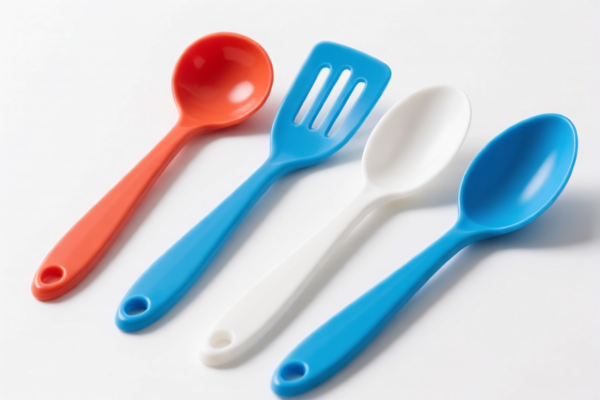

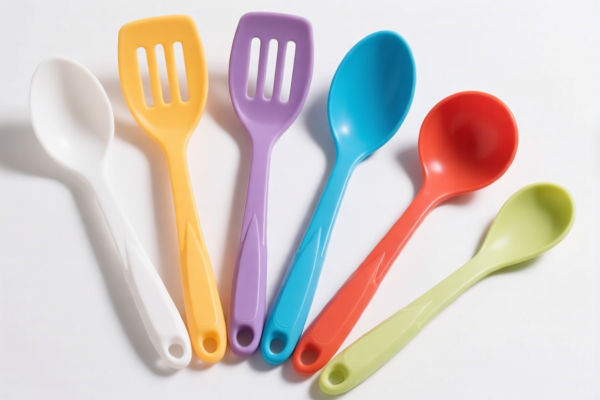
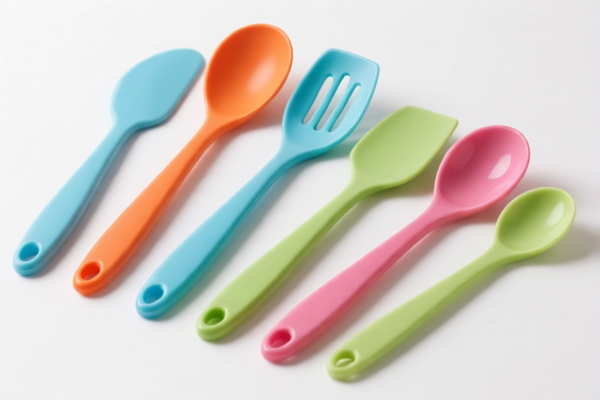
AI Analysis
🍳 Plastic Kitchen Utensil Set (Plastic Kitchenware)
🌐 HS Code Reference & Customs Clearance Guide | 2026 Latest Tariff Analysis | Professional-Level Entry Strategy
📌 I. Product Definition & Classification: Do You Really Know "Plastic Kitchen Utensils"?
A "Plastic Kitchen Utensil Set" typically refers to a collection of tools made primarily from plastic, used for cooking, serving, or storing food. In international trade, the classification depends heavily on material composition and intended use. The key distinction lies in whether the item is strictly for kitchen/culinary use or if it falls under the category of a toy (e.g., a play kitchen set for children).
⚠️ Critical Distinction Point:
- If the set is made of plastic and intended for actual kitchen use (cooking, stirring, serving) → Classify under Chapter 39 (Plastics).
- If the set is designed as a toy (e.g., a doll’s kitchen accessory or a child’s playset) → Classify under Chapter 95 (Toys).
- If the material is ambiguous or contains mixed materials not clearly defined as plastic → May fall under General/Residual Categories under Chapter 39.
📦 II. HS Code Classification Details (2026 Latest Tariff Authority Comparison)
| HS Code | Product Description | Application Scenario | Primary Material |
|---|---|---|---|
3924.10.40.00 |
Plastic Kitchen Utensils | Direct plastic kitchen tools (spatulas, spoons, ladles) | ✅ Plastic |
9503.00.00.73 |
Toy Kitchen Set | Children’s play kitchen accessories, dolls’ items | ✅ Toy Category |
9503.00.00.71 |
Toy Kitchen Set | Other toy kitchen sets, finished consumer toy goods | ✅ Toy Category |
3924.10.30.00 |
Kitchen Set (Residual) | Sets with unclear material dominance, potentially plastic-heavy | ⚠️ Mixed/Plastic |
3924.10.20.00 |
Kitchen Set (Dining/Cooking) | Sets containing both cutlery and cookware items | ⚠️ Dining/Cooking |
🔍 Key Reminder:
- Real Kitchenware: Items used for actual food preparation must be classified under 3924.10. The specific subheading depends on the exact composition and whether it’s for dining or cooking.
- Toys: If the product is marketed as a toy (e.g., "Kids Cooking Set"), it must be classified under 9503.00. Do not misclassify toys as kitchenware to avoid customs penalties.
- Set Composition: If a set contains both plastic and non-plastic items, or if the primary material is not clearly plastic, customs may apply residual rules, potentially leading to different tax rates.
💰 III. 2026 Latest Tariff Rate Details (Including Surtaxes & Policy Surcharges)
✅ Applicable Country: United States (US)
✅ Country of Origin: China (CN)
✅ Effective Date: From November 10, 2025 (including subsequent imports)
🎯 1. 3924.10.40.00 —— Plastic Kitchen Utensils (Direct Plastic Use)
| Item | Content |
|---|---|
| Base Tariff | 3.4% (ad valorem) |
| Section 301 Surtax | 0.0% |
| 122 Clause Tariff | 10.0% |
| Total Tax Rate | 13.4% |
| Tax Calculation | CIF Value × 13.4% |
| De Minimis Eligibility | ❌ Not Applicable (Deny De Minimis) |
| Legal Basis Path | Base: 3.4% → 122 Clause: 10% → Total: 13.4% |
📌 Explanation:
- This is the most favorable rate for pure plastic kitchen utensils.
- The 122 Clause Tariff adds an additional 10% for Chinese-origin plastic products.
- No Section 301 tariff is applied to this specific subheading, keeping the total cost significantly lower than other kitchenware categories.
🎯 2. 9503.00.00.73 & 9503.00.00.71 —— Toy Kitchen Sets
| Item | Content |
|---|---|
| Base Tariff | 0.0% (ad valorem) |
| Section 301 Surtax | 0.0% |
| 122 Clause Tariff | 10.0% |
| Total Tax Rate | 10.0% |
| Tax Calculation | CIF Value × 10.0% |
| De Minimis Eligibility | ❌ Not Applicable (Deny De Minimis) |
| Legal Basis Path | Base: 0.0% → 122 Clause: 10% → Total: 10.0% |
📌 Note:
- Toy kitchen sets benefit from a 0% base tariff.
- However, the 122 Clause Tariff of 10% still applies to Chinese-origin toys.
- Total Rate: 10.0%, which is lower than the standard plastic kitchen utensil rate (13.4%).
- Caution: Only classify as "Toy" if the product is genuinely intended for play. Misclassification can lead to severe penalties.
🎯 3. 3924.10.30.00 —— Kitchen Set (Residual/Other Plastic)
| Item | Content |
|---|---|
| Base Tariff | 5.3% |
| Section 301 Surtax | 7.5% |
| 122 Clause Tariff | 10.0% |
| Total Tax Rate | 22.8% |
| Tax Calculation | CIF Value × 22.8% |
| De Minimis Eligibility | ❌ Not Applicable (Deny De Minimis) |
| Legal Basis Path | Base: 5.3% → Section 301: 7.5% → 122 Clause: 10% → Total: 22.8% |
📌 Explanation:
- This category applies when the material is not clearly plastic or falls under a "other" or "residual" classification.
- It attracts both Section 301 (7.5%) and 122 Clause (10%) surcharges, plus a higher base tariff.
- High Risk: If you misclassify a standard plastic utensil as this residual category, you will pay more than necessary.
🎯 4. 3924.10.20.00 —— Kitchen Set (Dining/Cooking Combo)
| Item | Content |
|---|---|
| Base Tariff | 6.5% |
| Section 301 Surtax | 7.5% |
| 122 Clause Tariff | 10.0% |
| Total Tax Rate | 24.0% |
| Tax Calculation | CIF Value × 24.0% |
| De Minimis Eligibility | ❌ Not Applicable (Deny De Minimis) |
| Legal Basis Path | Base: 6.5% → Section 301: 7.5% → 122 Clause: 10% → Total: 24.0% |
📌 Explanation:
- This classification is for sets that include both dining (cutlery) and cooking (utensils) items.
- It has the highest total tax rate (24.0%) due to the combination of base, Section 301, and 122 Clause tariffs.
- Avoid: Only use this if your product truly contains a mix of dining and cooking utensils in one set.
🛠️ IV. Customs Clearance Practical Advice (Real-World Pitfall Avoidance Guide)
✅ 1. Required Documentation Checklist (Non-Negotiable)
| Document | Must Provide | Description |
|---|---|---|
| ✅ Product Specification Sheet | ✔️ | Material composition, dimensions, weight, intended use |
| ✅ Product Photos (Including Labels) | ✔️ | Clear images showing the set, material, and any "Toy" or "Kitchen Use" labels |
| ✅ Commercial Invoice | ✔️ | Must clearly state "Plastic Kitchen Utensils" or "Toy Kitchen Set" based on classification |
| ✅ Packing List | ✔️ | Itemize contents to verify material and type consistency |
| ✅ Certificate of Origin (CO) | ✔️ | To determine eligibility for any potential exemptions or surcharges |
| ✅ Third-Party Test Report | ✔️ | FDA/FCN for food contact, or CPSIA for toys, to prove intended use |
✅ 2. Declaration Tips (Key Mantra)
🔥 "Material Defines Code, Use Defines Category, Accuracy Saves Money!"
| Scenario | Correct Declaration | Wrong Practice |
|---|---|---|
| Pure plastic kitchen tools | 3924.10.40.00 |
Misclassifying as Toy → 10% vs 13.4% (Risk of penalty) |
| Children’s play kitchen | 9503.00.00.71/73 |
Misclassifying as Kitchenware → 10% vs 24% (Risk of penalty) |
| Mixed material set | 3924.10.30.00 |
Claiming 100% plastic without proof → 22.8% vs 13.4% |
| Dining + Cooking Combo | 3924.10.20.00 |
Splitting into two separate shipments incorrectly → Complexity & Risk |
✅ 3. Special Case Handling
| Scenario | Handling Advice |
|---|---|
| OEM Custom Plastic Utensils | Provide detailed material specs to ensure classification under 3924.10.40.00 (lowest plastic rate). |
| Toy vs. Kitchenware Ambiguity | If the product is marketed to adults but resembles toys, classify as Kitchenware to avoid "Toy" regulations, but ensure it’s clearly for culinary use. |
| Set with Metal Handles | If plastic is dominant, still classify under 3924.10, but disclose metal content to avoid "Mixed Material" residual classification. |
| Food Contact Safety | For 3924.10 items, ensure FDA compliance documentation is ready; for 9503 toys, ensure CPSIA compliance. |
🌍 V. Global Market Customs Comparison (2026 Latest)
| Country/Region | Recommended HS Code | Tariff Rate | Certification Requirements | Notes |
|---|---|---|---|---|
| 🇺🇸 USA | 3924.10.40.00 |
13.4% (China) | FDA/FCN | Toy toys: 10.0% |
| 🇪🇺 EU | 3924.10.40.00 |
4.2% (China) | LFGB/Food Grade | No 122 Clause |
| 🇨🇳 China | 3924.10.40.00 |
7.5% | GB Standards | Import duty |
| 🇯🇵 Japan | 3924.10.40.00 |
3.4% | Food Contact Standards | Low base rate |
📌 Conclusion:
- The USA has unique surcharges (122 Clause) that significantly impact Chinese-origin plastic products.
- Toy classification (9503) offers a lower rate (10%) in the US but comes with strict regulatory definitions.
- Europe and Japan do not have the 122 Clause surcharge, making their tariffs more predictable.
📌 VI. Common Errors & Pitfall Guide (Blood-Lessons)
❌ Error 1: Classifying a real plastic kitchen set as a Toy to get 10% tax.
👉 Consequence: Customs may reject the declaration, impose penalties, and reassess at 13.4% or higher. Misdeclaration of intent is serious.
❌ Error 2: Classifying a Toy Kitchen Set as Kitchenware (3924.10.40.00).
👉 Consequence: You pay 13.4% instead of 10%. While not illegal, it’s financially inefficient. Also, toys may require different safety certifications.
❌ Error 3: Ignoring the 122 Clause Tariff.
👉 Consequence: All plastic kitchen items and toys from China face a 10% surcharge. Failing to account for this leads to underpayment and delays.
❌ Error 4: Using vague descriptions like "Kitchen Set" without specifying material.
👉 Consequence: Customs may classify under the Residual Category (3924.10.30.00 or 3924.10.20.00), resulting in 22.8%-24.0% tax.
✅ Correct Practice:
"Plastic Kitchen Utensil Set, 100% Polypropylene, for Cooking and Serving, FDA Compliant, Model XYZ"
OR
"Children’s Play Kitchen Set, Plastic, Educational Toy, CPSIA Compliant, Model ABC"
🎯 VII. Conclusion: Professional Declaration, Time-Saving, Cost-Effective!
🎯 Remember the Mantra:
🔹 "Plastic Kitchenware: 13.4% (122 Clause). Toys: 10% (122 Clause). Residual: 22.8-24.0%. Be Precise!"
🔹 "HS Code Determines Fate, Tariff Differs by 13.4%, Declaration Differs by Dollar!"
📌 Pro Tip:
If your product is originating from Vietnam, Mexico, or Thailand, you may be eligible for IEEPA Exemptions, reducing the total tax significantly.
Recommend Advance Ruling Application for uncertain classifications to avoid customs risks.
📣 Immediate Action:
📞 Contact a professional customs broker + Provide Product Photos + Apply for HS Code Advance Ruling
🚀 Let your Kitchen Utensils Clear Smoothly, Export Efficiently, and Maximize Profits!
✨ Professional Customs Clearance Starts with Accurate Classification!
💼 Every Cent of Your Cost Deserves Precise Calculation!
Customer Reviews
About HS Code Classification
The Harmonized System (HS) is an internationally standardized nomenclature developed by the World Customs Organization (WCO) to classify traded products. Over 200 countries use the HS system as the basis for customs tariffs, trade statistics, and import/export regulations.
Each HS code follows a hierarchical structure:
- Chapter (2 digits) — Broad category of goods (e.g., Chapter 84: Machinery and Mechanical Appliances)
- Heading (4 digits) — More specific grouping within the chapter
- Subheading (6 digits) — Internationally standardized breakdown, used by all WCO member countries
- National subdivisions (8-10 digits) — Country-specific extensions for further classification, such as US HTSUS 10-digit codes
Correct HS code classification is essential for smooth customs clearance, accurate duty payment, and compliance with trade regulations. Misclassification can lead to customs delays, overpayment of duties, or penalties.
When importing from CN to US, the applicable tariff rates may include:
- Most-Favored-Nation (MFN) rate — The standard duty rate applied to WTO members
- General rate — Applied to countries without trade agreements
- Trade remedy duties — Additional tariffs such as Section 301 (anti-dumping), Section 232 (national security), or countervailing duties
The information provided on this page is for reference purposes only. For official classification, please consult with your local customs authority or a licensed customs broker.