Plastic Kitchenware Combination
CN → US| HS Code | Tariff Rate | Origin | Destination | Doc |
|---|---|---|---|---|
| 3924101000 | 13.4% | CN | US | Official Doc |
| 3924102000 | 24.0% | CN | US | Official Doc |
Product Images
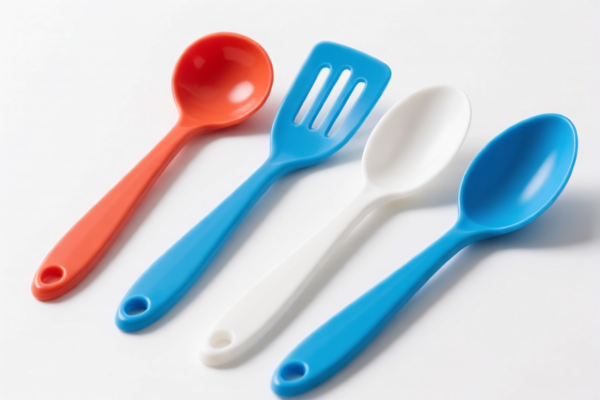

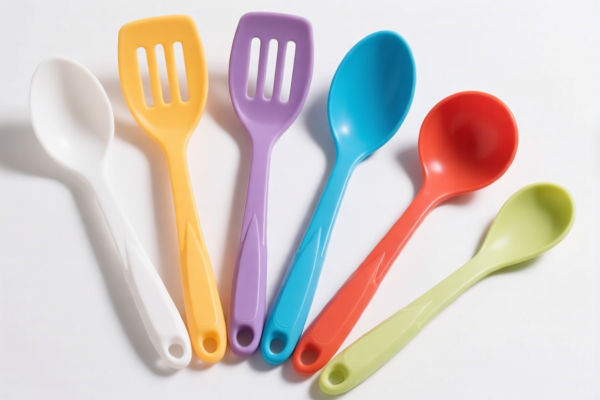
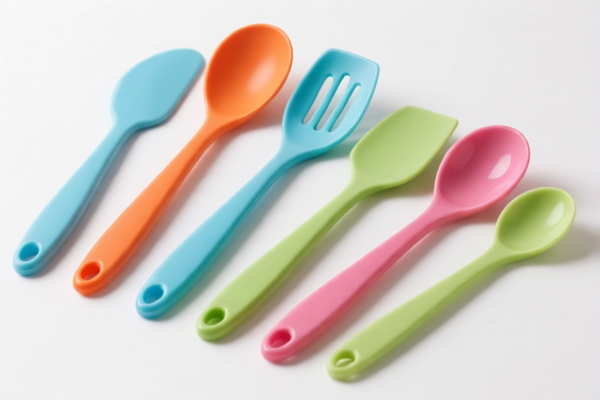
AI Analysis
🍽️ Plastic Kitchenware Combination (Tableware & Dispensers)
🌐 HS Code Reference & Customs Clearance Guide | 2026 Latest Tariff Analysis | Strategic Entry Strategies
📌 Part 1: Product Definition & Classification: Are You Sure It’s Just "Plastic"?
Plastic kitchenware covers a wide range of household items used for food preparation, serving, and storage. In international trade, this category is strictly divided based on function and specific use. The two primary classifications under HS Code 3924 are:
1. General Tableware & Kitchenware (3924.10.20):
Items like plates, bowls, cups, and serving dishes. These are generic containers for food or drink.
2. Specific Dispensers (3924.10.10):
Specialized containers with mechanisms for dispensing condiments (salt, pepper, mustard, ketchup). These are distinct from general containers due to their functional design.
⚠️ Key Distinction Point:
- If the item is a plate, bowl, cup, or generic serving dish → Classify under 3924.10.20.00
- If the item is a dispenser (with a spout, shaker top, or pump) for condiments → Classify under 3924.10.10.00
📦 Part 2: Detailed HS Code Classification (2026 Latest Tariff Alignment)
| HS Code | Product Description | Applicable Scenario | Tax Rate (US Import from China) |
|---|---|---|---|
3924.10.10.00 |
Salt, pepper, mustard, and ketchup dispensers and similar dispensers | Condiment bottles, salt shakers, pepper grinders, ketchup squeeze bottles | 3.4% |
3924.10.20.00 |
Plates, cups, saucers, soup bowls, cereal bowls, sugar bowls, creamers, gravy boats, serving dishes, and platters | Dinner plates, drinking cups, salad bowls, serving platters, generic creamers | 14.0% |
🔍 Critical Reminder:
- Dispensers (3924.10.10) have a significantly lower tariff (3.4%) compared to general tableware (14.0%).
- Misclassifying a dispenser as a plate/cup could lead to underpayment of duties, while misclassifying a plate as a dispenser is rare but possible if the product design is ambiguous.
- Do not combine these two distinct categories in a single line item if they have different tariff rates, as it may trigger customs audits.
💰 Part 3: 2026 Tariff Rate Breakdown (Detailed Tax Clauses)
✅ Applicable Country: United States (US)
✅ Country of Origin: China (CN)
✅ Effective Date: 2025–2026 Period
🎯 1. 3924.10.10.00 —— Plastic Dispensers (Condiment Dispensers)
| Item | Detail |
|---|---|
| Base Tariff Rate | 3.4% (Ad Valorem) |
| Section 301 Additional Tariff | 0.0% (Not subject to additional tariffs) |
| Total Tariff Rate | 3.4% |
| Tax Calculation | CIF Value × 3.4% |
| De Minimis Eligibility | ✅ Yes (If value ≤ $800, may enter duty-free under Section 321) |
| Legal Basis | HS 3924.10.10.00 → Base Rate 3.4% → No Additional Footnotes Applied |
📌 Explanation:
- This HS code falls under a lower tariff bracket for specific plastic dispensers.
- It is not subject to the high Section 301 tariffs that affect many other plastic goods.
- Cost Advantage: This is a cost-effective category for importing condiment dispensers.
🎯 2. 3924.10.20.00 —— General Plastic Tableware (Plates, Cups, Bowls)
| Item | Detail |
|---|---|
| Base Tariff Rate | 6.5% (Ad Valorem) |
| Section 301 Additional Tariff | 7.5% (Subject to Section 301 List 4B) |
| Total Tariff Rate | 14.0% |
| Tax Calculation | CIF Value × 14.0% |
| De Minimis Eligibility | ✅ Yes (If value ≤ $800, may enter duty-free under Section 321) |
| Legal Basis | HS 3924.10.20.00 → Base Rate 6.5% + Section 301 (7.5%) → Total 14.0% |
📌 Explanation:
- This HS code includes most standard plastic tableware (plates, cups, bowls).
- It is subject to an additional 7.5% tariff under Section 301, bringing the total to 14.0%.
- Cost Impact: This is a higher-cost category due to the additional tax. Importers must factor this into their pricing strategy.
🛠️ Part 4: Customs Clearance Practical Advice (Real-World Pitfall Guide)
✅ 1. Documentation Checklist (Essential for Smooth Clearance)
| Document | Required | Description |
|---|---|---|
| ✅ Product Specifications | ✔️ | Detailed description: "Plastic Salt Dispenser" vs. "Plastic Plate" |
| ✅ Product Photos | ✔️ | Clear images showing if the item has a dispensing mechanism (spout, shaker, pump) |
| ✅ Commercial Invoice | ✔️ | Must clearly state the correct HS Code and product name |
| ✅ Packing List | ✔️ | Itemized list of goods, ensuring no mixed HS codes on one line unless justified |
| ✅ Material Declaration | ✔️ | Confirm the material is 100% plastic (e.g., PP, PE, PS) |
✅ 2. Declaration Tips (Key Strategies)
🔥 "Name it Right, Classify it Right, Save the 10%!"
| Scenario | Correct Declaration | Incorrect Declaration | Consequence |
|---|---|---|---|
| Condiment Dispenser | "Plastic Ketchup Dispenser, Model XYZ" → 3924.10.10.00 |
"Plastic Kitchen Container" → 3924.10.20.00 |
Overpaying 10.6% extra tax |
| Generic Plate | "Plastic Dinner Plate, Model ABC" → 3924.10.20.00 |
"Plastic Dispenser" → 3924.10.10.00 |
Risk of customs audit for misclassification |
| Mixed Shipment | Split into two lines: One for dispensers, one for plates | Combine all plastic items into one line | Customs may disallow different rates, leading to delays |
✅ 3. Special Cases & Handling
| Scenario | Handling Advice |
|---|---|
| Multi-Piece Sets | If a set includes both dispensers and plates, separate them on the invoice. Assign each item its correct HS Code. Do not average the rates. |
| Custom/Unique Shapes | If a plate has a unique dispensing feature (e.g., a pour-spout bowl), consult a customs broker. It may still be classified as a dispenser if the primary function is dispensing. |
| Material Composition | Ensure the item is primarily plastic. If it contains significant metal parts (e.g., a metal lid on a plastic container), classification may change to Chapter 73 or 83, which have different tax rates. |
| Hygiene/Toilet Articles | Items like plastic toothbrush holders or soap dishes are classified under 3924.90, not 3924.10. Do not confuse kitchenware with hygiene articles. |
🌍 Part 5: Global Market Comparison (2026 Update)
| Country/Region | Recommended HS Code | Tariff Rate (China Origin) | Notes |
|---|---|---|---|
| 🇺🇸 USA | 3924.10.10.00 / 3924.10.20.00 |
3.4% / 14.0% | High tariff for general tableware due to Section 301 |
| 🇨🇳 China | 3924.10.10.00 / 3924.10.20.00 |
0% / 0% | No import duty for plastic tableware (MFN Rate) |
| 🇪🇺 EU | 3924.10.10.00 / 3924.10.20.00 |
0% / 0% | Generally duty-free for plastic tableware |
| 🇬🇧 UK | 3924.10.10.00 / 3924.10.20.00 |
0% / 0% | Post-Brexit tariff: Generally low or zero |
| 🇯🇵 Japan | 3924.10.10.00 / 3924.10.20.00 |
0% / 0% | Generally duty-free for plastic tableware |
📌 Conclusion:
- USA is the only major market with significant tariffs on plastic tableware, especially general tableware (14.0%).
- Canada, Mexico, and EU generally offer better tariff conditions for this category.
- Consider supply chain diversification if targeting the US market with high-volume tableware.
📌 Part 6: Common Mistakes & Pitfalls (Lessons Learned)
❌ Mistake 1: Treating all plastic kitchenware as one category
👉 Consequence: Misclassification → Overpayment of 10.6% for dispensers or underpayment for plates → Audits & Penalties.
❌ Mistake 2: Using generic terms like "Plastic Kitchen Items" on invoices
👉 Consequence: Customs lacks clarity → Delays in clearance → Storage fees.
❌ Mistake 3: Ignoring the "Dispenser" definition
👉 Consequence: A simple salt shaker is a dispenser (3.4%), but a generic salt bowl is tableware (14.0%). Precision matters!
✅ Correct Approach:
Be Specific!
- "Plastic Salt Shaker with Perforated Lid" →3924.10.10.00
- "Plastic Soup Bowl" →3924.10.20.00
🎯 Part 7: Conclusion: Smart Classification, Lower Costs!
🎯 Remember This Rule:
🔹 "Dispensers are cheaper (3.4%), Plates are expensive (14%).
🔹 "Name it correctly, and you save 10% on every dollar!"
📌 Pro Tip:
If you are importing a mixed set (e.g., a kitchen organizer with both dispensers and plates), separate the items on your commercial invoice. Do not lump them together. This ensures you pay the correct 3.4% for dispensers and 14.0% for plates, avoiding penalties.
📣 Immediate Action:
📞 Consult a Customs Broker if you are unsure about the classification.
📄 Provide Clear Product Photos and Detailed Descriptions.
🚀 Optimize Your Tariff Costs by accurate HS Code selection!
✨ Professional Classification, Efficient Clearance, Maximized Profit!
💼 Every Percentage Point Matters in International Trade!
Customer Reviews
About HS Code Classification
The Harmonized System (HS) is an internationally standardized nomenclature developed by the World Customs Organization (WCO) to classify traded products. Over 200 countries use the HS system as the basis for customs tariffs, trade statistics, and import/export regulations.
Each HS code follows a hierarchical structure:
- Chapter (2 digits) — Broad category of goods (e.g., Chapter 84: Machinery and Mechanical Appliances)
- Heading (4 digits) — More specific grouping within the chapter
- Subheading (6 digits) — Internationally standardized breakdown, used by all WCO member countries
- National subdivisions (8-10 digits) — Country-specific extensions for further classification, such as US HTSUS 10-digit codes
Correct HS code classification is essential for smooth customs clearance, accurate duty payment, and compliance with trade regulations. Misclassification can lead to customs delays, overpayment of duties, or penalties.
When importing from CN to US, the applicable tariff rates may include:
- Most-Favored-Nation (MFN) rate — The standard duty rate applied to WTO members
- General rate — Applied to countries without trade agreements
- Trade remedy duties — Additional tariffs such as Section 301 (anti-dumping), Section 232 (national security), or countervailing duties
The information provided on this page is for reference purposes only. For official classification, please consult with your local customs authority or a licensed customs broker.