Plastic Knife
CN → US| HS Code | Tariff Rate | Origin | Destination | Doc |
|---|---|---|---|---|
| 8211915060 | 0.0% | CN | US | Official Doc |
| 3924104000 | 13.4% | CN | US | Official Doc |
| 3924102000 | 24.0% | CN | US | Official Doc |
| 8211924060 | 0.0% | CN | US | Official Doc |
| 3926909989 | 22.8% | CN | US | Official Doc |
| 3926909910 | 22.8% | CN | US | Official Doc |
Product Images
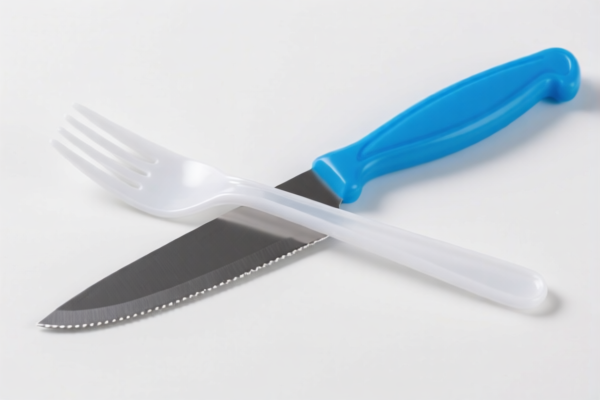
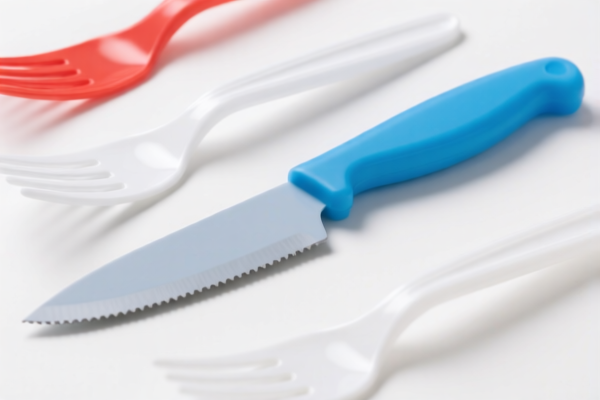
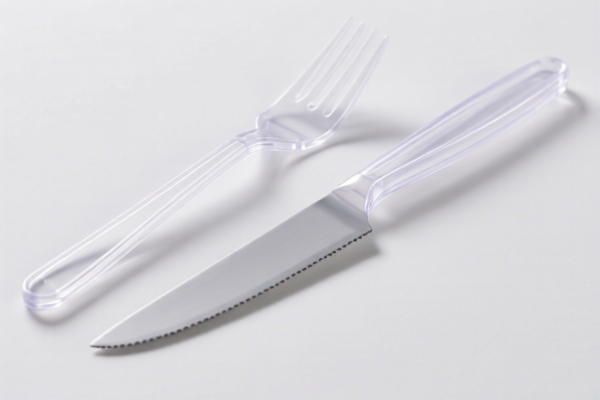
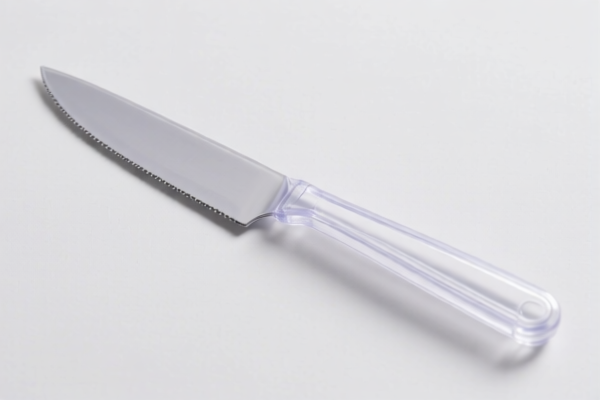
AI Analysis
🔪 Plastic Knife: HS Code Classification, Tax Analysis & Clearance Strategy
🌐 HS Code Reference & Clearance Guide | 2026 Latest Tariff Analysis | Professional Customs Strategy
📌 I. Product Definition & Classification: Do You Really Understand "Plastic Knife"?
A "Plastic Knife" is a broad term in international trade that can cover various items depending on its structure, usage, and material composition. In customs classification, it is not treated as a single entity but split into distinct categories based on its functional design:
1. Kitchen/Tableware Cutlery (Plastic Utensils)
Plastic knives designed for eating, serving, or kitchen use. These are classified under Chapter 39 (Plastics and Articles Thereof) because the primary characteristic is the plastic material.
2. Hand Tools with Plastic Handles (Knives with Fixed Blades)
If the knife has a metal blade (even if small or serrated) and a plastic handle, it is often classified as a hand tool or knife under Chapter 82 (Articles of Iron or Steel) or Chapter 84/90 depending on the blade material. The presence of a metal cutting edge significantly changes the classification.
⚠️ Key Distinction Point:
- If entirely plastic (no metal blade) → Used as tableware/kitchen tool → Chapter 39.
- If plastic handle + metal blade (fixed) → Classified as a knife/tool → Chapter 82.
- If plastic handle + non-metal blade (e.g., ceramic/plastic serrated) → Still often treated as plastic article unless specifically listed elsewhere.
📦 II. HS Code Classification Details (2026 Latest Tariff Authority Comparison)
| HS Code | Product Description | Application Scenario | Material Structure |
|---|---|---|---|
3924.10.40.00 |
Tableware and kitchenware of plastics, specifically plastic cutlery | Disposable dining, casual dining, party supplies | ✅ Entirely plastic, designed for eating/serving |
3924.10.20.00 |
Other tableware and kitchenware of plastics, shape conforms to cutlery features | Reusable plastic knives, molded plastic cutlery | ✅ Entirely plastic, structural form of knife |
8211.92.40.60 |
Knives with fixed blades, with handles of plastic | Kitchen knives with plastic grips, utility knives | ❌ No (Includes metal blade, plastic handle) |
3926.90.99.89 |
Other articles of plastics, not specified elsewhere | Plastic knife blanks, unfinished parts, non-cutting plastic blades | ✅ Entirely plastic, not specifically tableware |
3926.90.99.10 |
Other articles of plastics, general plastic products | Plastic knife handles only, plastic knife covers | ✅ Entirely plastic, component/part only |
🔍 Key Reminder:
- Purely plastic knives used for eating or kitchen prep fall under 3924 (Tableware).
- Knives with metal blades (even with plastic handles) fall under 8211 (Cutting tools).
- Components (like handles alone) fall under 3926 (Other plastic articles).
💰 III. 2026 Latest Tariff Rate Details (Including Surtaxes, Policy Surcharges)
✅ Applicable Country: United States (US)
✅ Origin: China (CN)
✅ Effective Date: 2025 November 10 onwards (including subsequent imports)
🎯 1. 3924.10.40.00 —— Plastic Tableware/Kitchenware (Disposable/Casual)
| Item | Content |
|---|---|
| Basic Tariff | 3.4% (ad valorem) |
| Section 301 Surcharge | 0.0% |
| Section 122 Tariff | +10.0% (Targeting specific Chinese plastic imports) |
| Total Rate | 13.4% |
| Tax Calculation | CIF Value × 13.4% |
| De Minimis Eligibility | ❌ No (deny_de_minimis) |
| Legal Basis Path | HTSUS:3924.10.40.00 → Section 122:10% |
📌 Explanation:
- This code applies to fully plastic cutlery (knives, forks, spoons) used for dining.
- The 10% Section 122 tariff is critical for plastic tableware from China.
- Total burden: 13.4%.
🎯 2. 3924.10.20.00 —— Plastic Tableware/Kitchenware (Other/Reusable)
| Item | Content |
|---|---|
| Basic Tariff | 6.5% |
| Section 301 Surcharge | +7.5% |
| Section 122 Tariff | +10.0% |
| Total Rate | 24.0% |
| Tax Calculation | CIF Value × 24.0% |
| De Minimis Eligibility | ❌ No |
| Legal Basis Path | HTSUS:3924.10.20.00 → Section 301:7.5% → Section 122:10% |
📌 Explanation:
- This code covers non-disposable or structurally distinct plastic tableware.
- Higher basic rate (6.5%) + Section 301 (7.5%) + Section 122 (10%) = 24%.
- Common for reusable plastic knives or bulk packaging.
🎯 3. 8211.92.40.60 —— Knives with Fixed Blades (Plastic Handle)
| Item | Content |
|---|---|
| Basic Tariff | 1¢ each + 4.6% |
| Section 301 Surcharge | 0.0% |
| Section 122 Tariff | +10.0% |
| Total Rate | 1¢ each + 4.6% + 10% = ~14.6% + per-unit fee |
| Tax Calculation | (CIF Value × 14.6%) + (Number of knives × $0.01) |
| De Minimis Eligibility | ❌ No |
| Legal Basis Path | HTSUS:8211.92.40.60 → Section 122:10% |
📌 Explanation:
- This is for knives with metal blades and plastic handles.
- The 1¢ per unit fee is a specific duty often overlooked.
- Total effective rate can exceed 14.6%, which is lower than pure plastic tableware (24%) but includes a per-unit charge.
🎯 4. 3926.90.99.89 & 3926.90.99.10 —— Other Plastic Articles (Components/Unspecified)
| Item | Content |
|---|---|
| Basic Tariff | 5.3% |
| Section 301 Surcharge | +7.5% |
| Section 122 Tariff | +10.0% |
| Total Rate | 22.8% |
| Tax Calculation | CIF Value × 22.8% |
| De Minimis Eligibility | ❌ No |
| Legal Basis Path | HTSUS:3926.90.99.xx → Section 301:7.5% → Section 122:10% |
📌 Explanation:
- Used for plastic knife handles alone, unformed plastic knife parts, or general plastic items not classified as tableware.
- High tariff burden (22.8%).
- Risk: Misclassifying tableware as "other plastic articles" to avoid Section 122 is illegal and will result in penalties.
🛠️ IV. Clearance Practical Advice (Battle-Proven Pitfall Avoidance Guide)
✅ 1. Required Documentation Checklist (All Mandatory)
| Document | Required? | Notes |
|---|---|---|
| ✅ Product Specification Sheet | ✔️ | Must specify: Material (100% plastic? plastic handle + metal blade?), Usage (Dining? Utility?), Dimensions |
| ✅ Product Photos (Clear) | ✔️ | Show blade material (metal vs. plastic), handle material, and any markings |
| ✅ Commercial Invoice | ✔️ | Clearly state: "Plastic Knife for Tableware" OR "Knife with Plastic Handle and Metal Blade" |
| ✅ Packing List | ✔️ | Specify units, weight, and packaging type |
| ✅ Certificate of Origin (CO) | ✔️ | If applicable, for potential preferential treatment (though limited for US/China) |
| ✅ FCC/CE/RoHS Reports | ✔️ | If electronic components (e.g., heated knife), additional certs needed |
✅ 2. Declaration Tips (Key Mnemonic)
🔥 “Blade Metal? Code 82. Blade Plastic? Code 39. Handle Only? Code 3926. Name Precise, Tax Saves!”
| Scenario | Correct HS Code | Wrong Declaration | Consequence |
|---|---|---|---|
| 100% Plastic Knife (Dining) | 3924.10.40.00 or 3924.10.20.00 |
Declared as "Knife" (8211) | Overpayment? No, but under-declared material if metal suspected |
| Plastic Handle + Metal Blade | 8211.92.40.60 |
Declared as "Plastic Knife" (3924) | Underpayment Risk! Penalty + Back Taxes |
| Plastic Knife Handle Only | 3926.90.99.10 |
Declared as "Tableware" (3924) | Classification Error! Penalty |
| Unspecified Plastic Item | 3926.90.99.89 |
Declared as "Tableware" | Section 122 Avoidance Attempt! High Penalty |
✅ 3. Special Case Handling
| Scenario | Handling Advice |
|---|---|
| Disposable Plastic Knives | Clearly state "Disposable" in invoice. Use 3924.10.40.00 (13.4% total) |
| Reusable Plastic Knives | Use 3924.10.20.00 (24.0% total). Provide material certification |
| Knife with Plastic Handle + Ceramic Blade | Often still 8211 or 3926 depending on blade hardness. Consult Pre-Ruling |
| Bulk vs. Retail Packaging | Does not change HS code, but affects packaging description |
| OEM/White Label | Provide client order + design specs to prove end-use |
🌍 V. Global Market Clearance Comparison (2026 Latest)
| Country/Region | Recommended HS Code | Tariff (China Origin) | Certification Required | Notes |
|---|---|---|---|---|
| 🇺🇸 United States | 3924.10.40.00 |
13.4% (Plastic) 8211.92.40.60: ~14.6%+ |
FDA (if food contact), Prop 65 | Section 122 & 301 apply |
| 🇨🇳 China | 3924.10.40.00 |
5% - 9% | GB Standards | No surtaxes |
| 🇪🇺 EU | 3924.10.40.00 |
0% - 4% (if CE) | CE, LFGB (Food Contact) | No surtaxes |
| 🇬🇧 UK | 3924.10.40.00 |
0% - 4% | UKCA, Food Safety | Post-Brexit rules apply |
| 🇯🇵 Japan | 3924.10.40.00 |
0% - 5% | JIS, Food Hygiene | No surtaxes |
📌 Conclusion:
- US has the highest tariff burden due to Section 122 and 301.
- EU/UK/JP are more favorable for plastic tableware (0-5%).
- Metal-bladed knives (8211) face different regimes globally.
📌 VI. Common Errors & Pitfall Guide (Blood Lessons)
❌ Error 1: Declaring a metal-bladed knife as "Plastic Knife" (3924)
👉 Consequence: Customs will reclassify to 8211, assess 14.6% + 1¢, plus penalties for under-declaration.
❌ Error 2: Using "Other Plastic Articles" (3926) for actual tableware to avoid Section 122
👉 Consequence: Customs audit reveals end-use, back taxes + 10% Section 122 + penalty.
❌ Error 3: Ignoring the 1¢ per unit duty in 8211.92.40.60
👉 Consequence: Minor error in bulk shipments leads to accumulated underpayment.
❌ Error 4: Not specifying "Food Contact" on invoice
👉 Consequence: FDA hold in US, 11182 seizure, or destruction.
✅ Correct Declaration Example:
"Plastic Table Knife, Disposable, PP Material, FDA Approved, Model XYZ, 100pcs/Box"
🎯 VII. Conclusion: Precise Classification, Cost Saving, Risk Reduction
🎯 Remember the Mnemonic:
🔹 "Blade Metal? Code 82. Blade Plastic? Code 39. Handle Only? Code 3926. Section 122 Hits All!"
🔹 "HS Code is Destiny, Tax Difference is Cost, Misdeclaration is Penalty!"
📌 Pro Tip:
- If your plastic knives are originally manufactured in Vietnam, Mexico, or Thailand, you may qualify for IEEPA exemptions or lower tariffs.
- For high-volume imports, apply for a Binding Tariff Information (BTI) or US CBP Ruling to lock in the correct HS code and avoid audits.
📣 Immediate Action:
📞 Contact a Professional Customs Broker + Provide Product Photos + Apply for HS Code Pre-Ruling
🚀 Let your Plastic Knives Clear Smoothly, Export Efficiently, Profit Maximally!
✨ Professional Clearance Starts with Accurate Classification!
💼 Every Cent of Cost Deserves Precision Calculation!
Customer Reviews
About HS Code Classification
The Harmonized System (HS) is an internationally standardized nomenclature developed by the World Customs Organization (WCO) to classify traded products. Over 200 countries use the HS system as the basis for customs tariffs, trade statistics, and import/export regulations.
Each HS code follows a hierarchical structure:
- Chapter (2 digits) — Broad category of goods (e.g., Chapter 84: Machinery and Mechanical Appliances)
- Heading (4 digits) — More specific grouping within the chapter
- Subheading (6 digits) — Internationally standardized breakdown, used by all WCO member countries
- National subdivisions (8-10 digits) — Country-specific extensions for further classification, such as US HTSUS 10-digit codes
Correct HS code classification is essential for smooth customs clearance, accurate duty payment, and compliance with trade regulations. Misclassification can lead to customs delays, overpayment of duties, or penalties.
When importing from CN to US, the applicable tariff rates may include:
- Most-Favored-Nation (MFN) rate — The standard duty rate applied to WTO members
- General rate — Applied to countries without trade agreements
- Trade remedy duties — Additional tariffs such as Section 301 (anti-dumping), Section 232 (national security), or countervailing duties
The information provided on this page is for reference purposes only. For official classification, please consult with your local customs authority or a licensed customs broker.