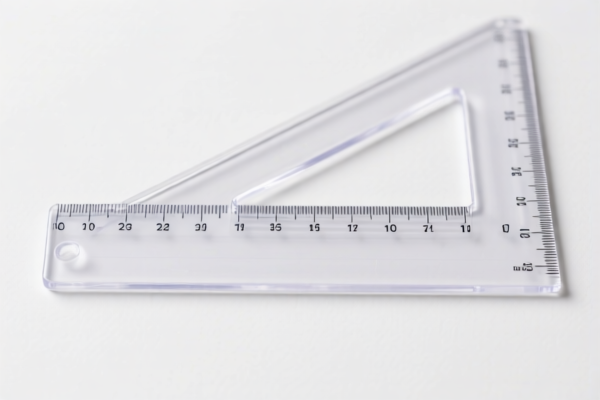
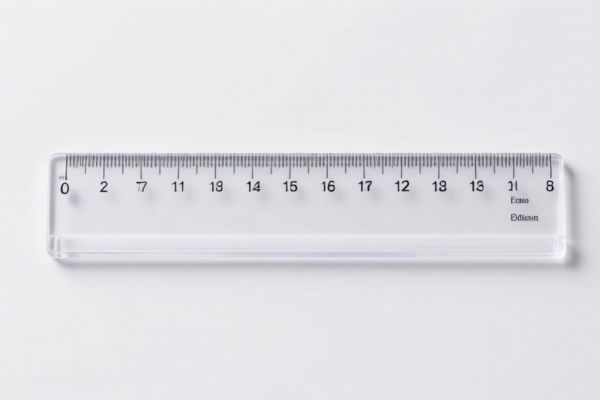
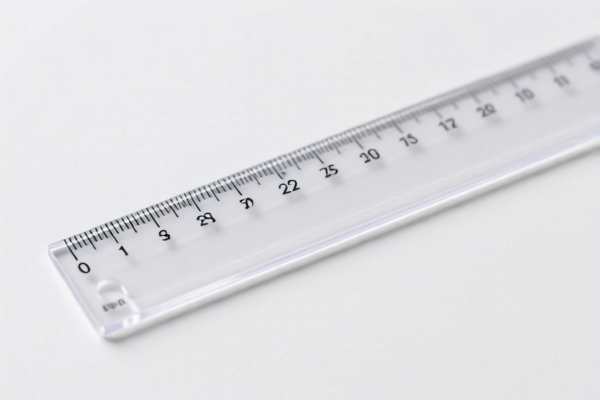
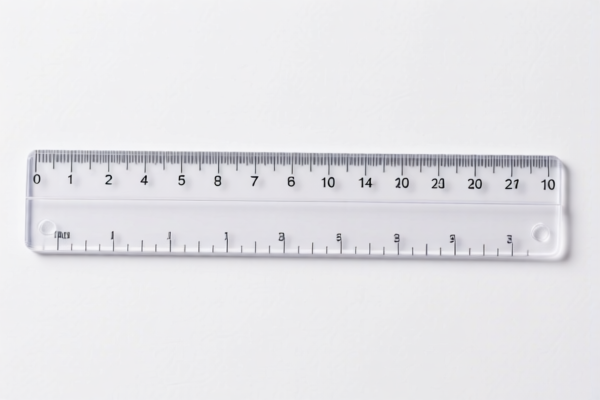
Plastic L Square Ruler
CN → US| HS Code | Tariff Rate | Origin | Destination | Doc |
|---|---|---|---|---|
| 9017800000 | 40.3% | CN | US | Official Doc |
| 3926100000 | 15.3% | CN | US | Official Doc |
| 3926901000 | 20.9% | CN | US | Official Doc |
| 9017108000 | 38.9% | CN | US | Official Doc |
| 9017208080 | 39.6% | CN | US | Official Doc |
Product Images
AI Analysis
📏 Plastic L Square Ruler (Drafting Instrument)
🌐 HS Code Reference & Customs Clearance Guide | 2026 Latest Tariff Analysis | Professional Clearance Strategy
📌 I. Product Definition: What Exactly is an "L Square Ruler"?
An L Square Ruler (also known as an L-Square, Try Square, or Set Square) is a fundamental drafting tool used in technical drawing, carpentry, and construction. It typically consists of two plastic blades joined at a 90-degree angle.
Key Classification Dilemma:
Is it a measuring instrument (Chapter 90) or a plastic article (Chapter 39)?
This distinction determines the tariff rate, which can vary from 15.3% to 40.3%.
⚠️ Critical Distinction:
- If the primary function is precise measurement/alignment (e.g., calibration, technical drafting) → Chapter 90 (Higher Duty).
- If the primary function is a general-purpose plastic tool for office/school use or simple marking → Chapter 39 (Lower Duty).
📦 II. HS Code Classification Details (Based on Provided Data)
| HS Code | Product Description | Logic/Summary | Total Tax Rate |
|---|---|---|---|
9017.80.00.00 |
Other measuring instruments (Plastic L Square) | Classified as a drafting/measuring instrument. Material is plastic, but function dominates. Fallback logic for "Other Instruments." | 40.3% |
9017.10.80.00 |
Drawing, Marking-out or Mathematical Calculating Instruments | Specifically for length measurement instruments. Plastic material does not conflict. | 38.9% |
9017.20.80.80 |
Drawing, Marking-out or Mathematical Calculating Instruments (Transparent Plastic L Square) | Classified under drafting instruments. Transparent plastic form fits "Other Instruments." | 39.6% |
3926.10.00.00 |
Office or School Supplies (Plastic L Square) | Material is plastic; used as an office/school item. Shape fits plastic product requirements. | 15.3% |
3926.90.10.00 |
Other Plastic Articles (Plastic L Square) | Material is plastic; classified as other plastic articles for daily use. | 20.9% |
🔍 Key Insight:
- Chapter 90 Codes (9017.x.x): Impose higher taxes (38.9%–40.3%). Customs may argue that an L Square is a precision instrument.
- Chapter 39 Codes (3926.x.x): Offer significantly lower taxes (15.3%–20.9%). This is preferred if the ruler is a low-precision, mass-produced plastic tool for educational or general office use.
💰 III. 2026 Latest Tariff Rate Breakdown (Including Surcharges)
✅ Applicable Country: United States (US)
✅ Origin: China (CN)
✅ Effective Date: Post-2025 (Includes Section 301 & IEEPA Surcharges)
🎯 1. 9017.80.00.00 – Other Measuring Instruments (Highest Duty)
| Item | Detail |
|---|---|
| Base Duty | 5.3% |
| Section 301 Surcharge | +25.0% (USITC Footnote) |
| IEEPA Surcharge | +10.0% (Section 122/China-specific) |
| Total Effective Rate | 40.3% |
| Calculation | CIF Value × 40.3% |
| De Minimis Exemption | ❌ Not Eligible (deny_de_minimis) |
| Legal Path | IEEPA:122 → USITC:9017.80.00.00 |
📌 Explanation:
- This is the most expensive classification.
- The 25% Section 301 duty is standard for many Chapter 90 items from China.
- The 10% IEEPA surcharge is additional, pushing the total over 40%.
🎯 2. 9017.10.80.00 – Drawing/Math Instruments
| Item | Detail |
|---|---|
| Base Duty | 3.9% |
| Section 301 Surcharge | +25.0% |
| IEEPA Surcharge | +10.0% |
| Total Effective Rate | 38.9% |
| Calculation | CIF Value × 38.9% |
| De Minimis Exemption | ❌ Not Eligible |
| Legal Path | IEEPA:122 → USITC:9017.10.80.00 |
📌 Note:
- Slightly lower than9017.80due to a lower base rate (3.9% vs 5.3%), but the surcharges remain the same.
🎯 3. 9017.20.80.80 – Transparent Drafting Instruments
| Item | Detail |
|---|---|
| Base Duty | 4.6% |
| Section 301 Surcharge | +25.0% |
| IEEPA Surcharge | +10.0% |
| Total Effective Rate | 39.6% |
| Calculation | CIF Value × 39.6% |
| De Minimis Exemption | ❌ Not Eligible |
| Legal Path | IEEPA:122 → USITC:9017.20.80.80 |
🎯 4. 3926.10.00.00 – Office/School Plastic Supplies (Lowest Duty)
| Item | Detail |
|---|---|
| Base Duty | 5.3% |
| Section 301 Surcharge | 0.0% (No Section 301 for this subheading) |
| IEEPA Surcharge | +10.0% |
| Total Effective Rate | 15.3% |
| Calculation | CIF Value × 15.3% |
| De Minimis Exemption | ❌ Not Eligible (IEEPA 10% still applies) |
| Legal Path | IEEPA:122 → USITC:3926.10.00.00 |
📌 Strategic Advantage:
- Tax Savings: 25% lower than Chapter 90 codes!
- Why? Office/school plastic supplies often escape Section 301 tariffs, retaining only the 10% IEEPA surcharge.
🎯 5. 3926.90.10.00 – Other Plastic Articles
| Item | Detail |
|---|---|
| Base Duty | 3.4% |
| Section 301 Surcharge | +7.5% |
| IEEPA Surcharge | +10.0% |
| Total Effective Rate | 20.9% |
| Calculation | CIF Value × 20.9% |
| De Minimis Exemption | ❌ Not Eligible |
| Legal Path | IEEPA:122 → USITC:3926.90.10.00 |
📌 Note:
- Mid-range option. Higher than3926.10due to Section 301 surcharge, but still much lower than Chapter 90.
🛠️ IV. Customs Clearance Practical Advice (Avoid Pitfalls)
✅ 1. Documentation Checklist (Must-Haves)
| Document | Required | Notes |
|---|---|---|
| ✅ Product Specifications | ✔️ | Material (Plastic), Dimensions, Precision Level |
| ✅ Product Photos | ✔️ | Clear view of the L-Shape, markings, and packaging |
| ✅ Commercial Invoice | ✔️ | Description must align with HS Code choice (see below) |
| ✅ Packing List | ✔️ | Weight, dimensions, quantity |
| ✅ Usage Declaration | ✔️ | Explicitly state: "For general office/school use, not for precision calibration" |
✅ 2. Declaration Strategy (Critical!)
🔥 "Call it an Office Tool, Not a Precision Instrument!"
| Scenario | Recommended HS Code | Reasoning |
|---|---|---|
| Mass-produced plastic rulers for schools/offices | 3926.10.00.00 |
Emphasize "Office/ School Supply" use. Avoid words like "Calibration" or "Precision." |
| High-precision metal/plastic squares for engineering | 9017.10.80.00 or 9017.80.00.00 |
If it’s used for technical drafting with verified accuracy, Chapter 90 is more defensible. |
| General plastic tools | 3926.90.10.00 |
Fallback if 3926.10 is rejected, but still cheaper than Chapter 90. |
⚠️ Warning:
- Do NOT describe the product as "Precision Drafting Instrument" if you are claiming3926.10.00.00. Customs will reclassify it to Chapter 90 and demand the higher tax.
- Use terms like: "Plastic L-Square for General Office/School Use," "Plastic Carpentry Square," or "Plastic Marking Tool."
✅ 3. Special Cases
| Case | Advice |
|---|---|
| Transparent Plastic L-Square | Still eligible for 3926.10.00.00 if marketed as office/school supply. Transparency does not automatically make it a Chapter 90 instrument. |
| Set of Rulers | If sold as a set, classify the entire set based on the principal value or function. If the L-square is the main item, use its code. |
| OEM Orders | Ensure the customer’s specification sheet supports the "Office/School" classification. |
🌍 V. Global Market Comparison (2026)
| Region | Recommended HS Code | Est. Duty | Notes |
|---|---|---|---|
| 🇺🇸 USA | 3926.10.00.00 |
15.3% | Best option. Avoid Chapter 90 unless necessary. |
| 🇺🇸 USA | 9017.80.00.00 |
40.3% | High risk. Only use if product is definitively a precision instrument. |
| 🇨🇳 China | 9017.80.00 |
~5-6% | Lower duties in China. Chapter 39 also available. |
| 🇪🇺 EU | 9017.20 |
~2.7% | EU treats drafting instruments differently. Check TARIC for exact rate. |
| 🇬🇧 UK | 9017.20 |
~4% | Post-Brexit tariffs may vary. |
📌 Conclusion for US Imports:
- Aim for3926.10.00.00to save 25% in duties.
- Justification: The product is a common plastic office/school supply, not a high-precision calibrated instrument.
📌 VI. Common Mistakes & Pitfalls (Learn from Others’ Losses)
❌ Mistake 1: Describing the product as "Precision Drafting Tool"
👉 Result: Customs reclassifies to 9017.80.00.00 → 40.3% Tax.
👉 Fix: Use "Plastic Office Square" or "School Supplies."
❌ Mistake 2: Using 9017.10.80.00 for a cheap plastic ruler
👉 Result: Unjustified high duty (38.9% vs 15.3%).
👉 Fix: If it’s not a calibrated instrument, use Chapter 39.
❌ Mistake 3: Ignoring IEEPA Surcharges
👉 Result: Even with low base duty, the 10% IEEPA surcharge applies to both Chapter 39 and 90.
👉 Fix: Factor this into your cost analysis.
✅ Best Practice:
"Plastic L-Square Ruler, 30cm, Transparent, for Office and School Use, Model XYZ"
🎯 VII. Conclusion: Optimize Your Classification!
🎯 Key Takeaway:
🔹 Chapter 39 (
3926.10.00.00) is the Golden Ticket for plastic L-squares.
🔹 Tax Savings: ~25% compared to Chapter 90.
🔹 Strategy: Emphasize "Office/School Use" and "General Purpose" in documentation.
🔹 Avoid: Words like "Precision," "Calibrated," or "Technical Drafting" if you want to stay in Chapter 39.
📌 Pro Tip:
If your L-Square has metal inserts or high-precision engravings, Customs may insist on Chapter 90. In that case, prepare for the ~40% duty.
For standard plastic rulers, stick to 3926.10.00.00 and save significantly.
📣 Immediate Action:
📞 Consult with your customs broker.
📄 Review your product description.
🚀 Declare as "Plastic Office/School Supply" to maximize savings!
✨ Smart Classification, Smarter Profits!
💼 Every percentage point in duty rate matters!
Customer Reviews
About HS Code Classification
The Harmonized System (HS) is an internationally standardized nomenclature developed by the World Customs Organization (WCO) to classify traded products. Over 200 countries use the HS system as the basis for customs tariffs, trade statistics, and import/export regulations.
Each HS code follows a hierarchical structure:
- Chapter (2 digits) — Broad category of goods (e.g., Chapter 84: Machinery and Mechanical Appliances)
- Heading (4 digits) — More specific grouping within the chapter
- Subheading (6 digits) — Internationally standardized breakdown, used by all WCO member countries
- National subdivisions (8-10 digits) — Country-specific extensions for further classification, such as US HTSUS 10-digit codes
Correct HS code classification is essential for smooth customs clearance, accurate duty payment, and compliance with trade regulations. Misclassification can lead to customs delays, overpayment of duties, or penalties.
When importing from CN to US, the applicable tariff rates may include:
- Most-Favored-Nation (MFN) rate — The standard duty rate applied to WTO members
- General rate — Applied to countries without trade agreements
- Trade remedy duties — Additional tariffs such as Section 301 (anti-dumping), Section 232 (national security), or countervailing duties
The information provided on this page is for reference purposes only. For official classification, please consult with your local customs authority or a licensed customs broker.