Plastic Laboratory Fittings
CN → US| HS Code | Tariff Rate | Origin | Destination | Doc |
|---|---|---|---|---|
| 3926909910 | 22.8% | CN | US | Official Doc |
| 3926305000 | 22.8% | CN | US | Official Doc |
Product Images
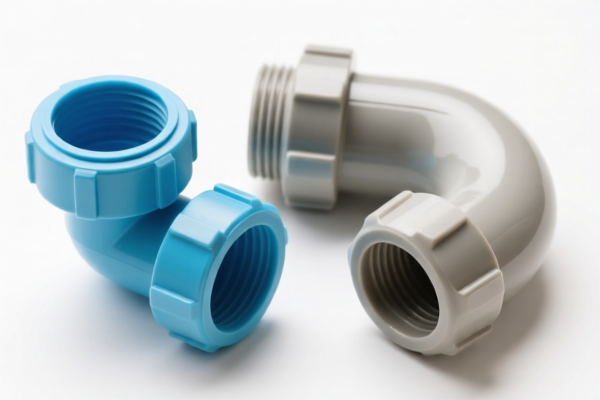
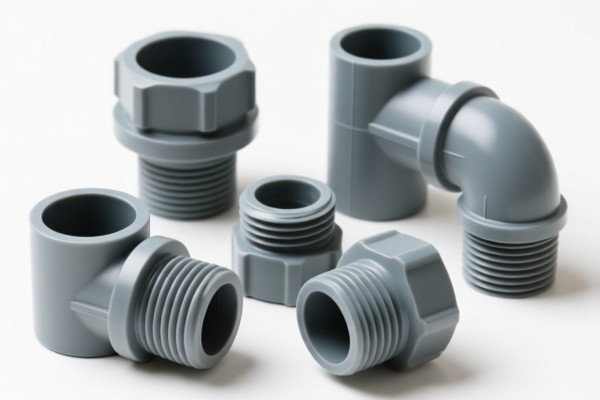

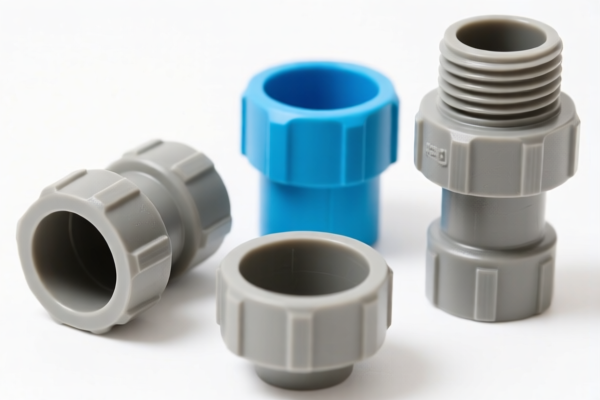
AI Analysis
🧪 Plastic Laboratory Fittings (Lab Ware)
🌐 HS Code Reference & Customs Clearance Guide | 2026 Latest Tariff Analysis | Professional Compliance Strategy
📌 Part I: Product Definition & Classification: What Exactly Are "Plastic Laboratory Fittings"?
In international trade, "Plastic Laboratory Fittings" or "Laboratory Ware" refers to containers, apparatus, and accessories made primarily of plastics used in scientific, medical, or industrial laboratory settings. These items are distinct from general plastic household goods because they serve a specialized functional purpose in handling chemicals, biological samples, or precise measurements.
The key distinction in classification lies in whether the item is: 1. General Laboratory Ware: Items like beakers, flasks, funnels, or generic storage containers. 2. Fittings for Furniture/Coachwork: Items that serve a mounting, connecting, or decorative purpose akin to hardware, even if used in a lab environment.
⚠️ Critical Distinction Point:
- If the item is a container or apparatus for holding, measuring, or mixing (e.g., plastic beakers, reagent bottles, pipette tips), it falls under "Other Laboratory ware".
- If the item is a mounting bracket, handle, knob, or decorative trim attached to lab furniture or equipment, it falls under "Fittings for furniture...".
- General Rule: Pure functional lab vessels →3926.90.99.10; Hardware-like attachments →3926.30.50.00.
📦 Part II: HS Code Classification Details (2026 Latest Tariff Authority对照)
| HS Code | Product Description | Application Scenario | Functional Characteristic |
|---|---|---|---|
3926.90.99.10 |
Other articles of plastics and articles of other materials of headings 3901 to 3914: Other: Other Laboratory ware | Plastic beakers, flasks, funnels, wash bottles, generic lab storage jars | ✅ Functional vessel/apparatus |
3926.30.50.00 |
Other articles of plastics and articles of other materials of headings 3901 to 3914: Fittings for furniture, coachwork or the like: Other | Plastic knobs, handles, hinges, brackets, or decorative panels for lab benches/equipment | ✅ Hardware/Mounting component |
🔍 Key Reminder:
-3926.90.99.10is the primary code for actual lab consumables and vessels. If your product is a plastic tube, cup, or container used in a lab, this is likely the correct code.
-3926.30.50.00is for attachments. Do not misclassify a simple plastic lid or container as a "fitting" just because it attaches to something. It only qualifies if it is structurally a "fitting" (like a handle or bracket) for furniture/equipment.
- Packaging: If lab ware is packaged with furniture fittings, they must be declared separately to avoid misclassification.
💰 Part III: 2026 Latest Tariff Rate Details (Including Surtaxes & Policy Add-ons)
✅ Applicable Country: United States (US)
✅ Origin: China (CN)
✅ Effective Date: Current (Based on provided data)
🎯 1. 3926.90.99.10 —— Other Laboratory Ware (Plastic)
| Item | Content |
|---|---|
| Base Tariff Rate | 0.0% (ad valorem) |
| Section 301 Surtax | 0.0% |
| IEEPA Surtax | 0.0% |
| Total Tariff Rate | 0.0% |
| Tax Calculation | CIF Value × 0% = $0.00 |
| De Minimis Eligibility | ✅ Yes (If applicable under $800 threshold, though generally not needed for 0% rate) |
| Legal Basis Path | HTSUS:3926.90.99.10 → No Additional Surtaxes Applied |
📌 Explanation:
- According to the provided data, Plastic Laboratory Ware (3926.90.99.10) is exempt from both the base tariff and any additional Section 301 or IEEPA surcharges.
- This makes it a highly favorable HS code for importers compared to other plastic articles.
- Zero Duty means no financial risk from tariff volatility.
🎯 2. 3926.30.50.00 —— Fittings for Furniture, Coachwork or the Like (Other)
| Item | Content |
|---|---|
| Base Tariff Rate | 0.0% (ad valorem) |
| Section 301 Surtax | 0.0% |
| IEEPA Surtax | 0.0% |
| Total Tariff Rate | 0.0% |
| Tax Calculation | CIF Value × 0% = $0.00 |
| De Minimis Eligibility | ✅ Yes |
| Legal Basis Path | HTSUS:3926.30.50.00 → No Additional Surtaxes Applied |
📌 Explanation:
- Plastic Fittings for Furniture (3926.30.50.00) also carries a 0.0% total tariff.
- Like lab ware, these items are not subject to the aggressive surtaxes often applied to other plastic products.
- Note: Ensure the product is indeed a "fitting" and not a general plastic good. Misclassification here is low-risk financially but still carries compliance risks.
🛠️ Part IV: Customs Clearance Practical Advice (Real-World Pitfall Guide)
✅ 1. Preparation Checklist (Non-negotiable)
| Document | Must Provide | Explanation |
|---|---|---|
| ✅ Product Description | ✔️ | Must clearly state material (e.g., "100% Polypropylene") and function (e.g., "Laboratory Beaker" or "Furniture Knob"). |
| ✅ Technical Drawings/Photos | ✔️ | Crucial to prove it is "Lab Ware" (vessel) vs. "Fitting" (hardware). |
| ✅ Intended Use Declaration | ✔️ | State clearly: "For use in scientific laboratories" or "For attachment to lab benches." |
| ✅ Commercial Invoice | ✔️ | Must match HS Code description precisely. Avoid vague terms like "Plastic Parts." |
| ✅ Material Safety Data Sheet (MSDS) | ✔️ | If the lab ware holds chemicals, an MSDS may be required by customs or EPA. |
✅ 2. Declaration Tips (Key Mnemonics)
🔥 "Function Defines Code, Vessel is Lab, Hardware is Fitting!"
| Scenario | Correct Declaration | Wrong Practice |
|---|---|---|
| Plastic Beaker/Flask | 3926.90.99.10 (Laboratory Ware) |
Labeling as "Plastic Container" → Risk of rejection |
| Plastic Knob/Handle on Lab Bench | 3926.30.50.00 (Fitting) |
Labeling as "Lab Ware" → Misclassification |
| Mixed Shipment (Beakers + Knobs) | Separate Line Items | Combining into one generic "Plastic Goods" line |
📌 Warning:
- If you ship both lab ware and furniture fittings in one container, declare them separately. Combining them can lead to duty assessment errors or customs audits.
- 0% Tariff Advantage: Since both codes have 0% tax, the main risk is administrative delay due to unclear descriptions, not financial penalty.
✅ 3. Special Case Handling
| Situation | Handling Advice |
|---|---|
| Glass vs. Plastic | Ensure the product is predominantly plastic. If it has glass components, it may fall under Chapter 70. |
| Sterile/Labeled | If labeled "Sterile," ensure it complies with FDA regulations (if medical) or general lab safety standards. |
| Custom Branding | If branded for a specific lab, provide proof of custom manufacturing to support "Laboratory Ware" classification. |
| Furniture Integration | If the "fitting" is sold installed on a lab bench, declare as part of the furniture? No. Plastic parts are generally classified by their own material/characteristic under Chapter 39 unless integral to the machine/furniture structure. |
🌍 Part V: Global Market Customs Comparison (2026 Latest)
| Country/Region | Recommended HS Code | Tariff | Certification Requirements | Notes |
|---|---|---|---|---|
| 🇺🇸 USA | 3926.90.99.10 |
0% | None specific for plastic lab ware | No surtaxes. Zero duty advantage. |
| 🇪🇺 EU | 3926.90.99 |
0-4.5% | CE, REACH Compliance | Check specific member state rules. |
| 🇨🇳 China | 3926.90.99 |
0-5% | None specific | Low entry barrier. |
| 🇬🇧 UK | 3926.90.99 |
0-5% | UKCA (if applicable) | Post-Brexit rules apply. |
| 🇯🇵 Japan | 3926.90.99 |
0-5% | PSE (if electrical), JIS standards | Non-electrical plastic lab ware is easy. |
📌 Conclusion:
- The USA offers the best tariff treatment for these items with 0% total duty.
- No surtaxes apply, making these items highly competitive against other plastic goods.
- Compliance Risk: Low on cost, but high on description accuracy. Clear labeling is key.
📌 Part VI: Common Mistakes & Pitfall Guide (Blood & Tears Lessons)
❌ Mistake 1: Calling "Plastic Beakers" "Plastic Containers"
👉 Consequence: Customs may misclassify under general plastic goods, potentially triggering higher duties or audits.
✅ Fix: Always use "Laboratory Ware" in the description.
❌ Mistake 2: Classifying "Lab Bench Handles" as "Laboratory Ware"
👉 Consequence: While tax is same (0%), it reflects poor compliance knowledge. In multi-product shipments, this can trigger scrutiny.
✅ Fix: Use "Fittings for Furniture" for handles/knobs.
❌ Mistake 3: Not declaring "Material Composition"
👉 Consequence: Customs may doubt the plastic type, leading to holds.
✅ Fix: State "100% Polypropylene" or "Polyethylene" clearly.
❌ Mistake 4: Ignoring MSDS/SDS for chemical-resistant lab ware
👉 Consequence: If the ware holds hazardous chemicals, lack of SDS can cause EPA/CBP delays.
✅ Fix: Provide SDS if requested, especially for specialized chemical-resistant plastics.
✅ Correct Declaration Example:
"Plastic Laboratory Beaker, 500ml, Material: Polypropylene, For Scientific Use Only, Model: LAB-BK-500"
🎯 Part VII: Conclusion: Professional Declaration, Zero Duty, Zero Hassle!
🎯 Remember the Mnemonic:
🔹 "Lab Vessels = 3926.90.99.10 (0%)"
🔹 "Furniture Knobs = 3926.30.50.00 (0%)"
🔹 "Zero Duty, Zero Surtax, But Be Precise!"
📌 Pro Tip:
Since both HS codes have 0% total tax, the primary value lies in speed of clearance. Clear, specific descriptions prevent customs delays.
- Do not use generic terms like "Plastic Parts."
- Do use specific terms like "Laboratory Beaker" or "Furniture Fitting."
📣 Immediate Action:
📞 Confirm Product Function: Vessel or Fitting?
📝 Draft Description: Include Material, Capacity/Size, and Intended Use.
🚀 Ship with Confidence!
Your plastic lab goods are duty-free! Just be precise!
✨ Professional Customs Clearance Starts with Accurate Classification!
💼 Zero Tax is a Blessing, but Misclassification is a Curse!
Customer Reviews
About HS Code Classification
The Harmonized System (HS) is an internationally standardized nomenclature developed by the World Customs Organization (WCO) to classify traded products. Over 200 countries use the HS system as the basis for customs tariffs, trade statistics, and import/export regulations.
Each HS code follows a hierarchical structure:
- Chapter (2 digits) — Broad category of goods (e.g., Chapter 84: Machinery and Mechanical Appliances)
- Heading (4 digits) — More specific grouping within the chapter
- Subheading (6 digits) — Internationally standardized breakdown, used by all WCO member countries
- National subdivisions (8-10 digits) — Country-specific extensions for further classification, such as US HTSUS 10-digit codes
Correct HS code classification is essential for smooth customs clearance, accurate duty payment, and compliance with trade regulations. Misclassification can lead to customs delays, overpayment of duties, or penalties.
When importing from CN to US, the applicable tariff rates may include:
- Most-Favored-Nation (MFN) rate — The standard duty rate applied to WTO members
- General rate — Applied to countries without trade agreements
- Trade remedy duties — Additional tariffs such as Section 301 (anti-dumping), Section 232 (national security), or countervailing duties
The information provided on this page is for reference purposes only. For official classification, please consult with your local customs authority or a licensed customs broker.