Plastic Laboratory Sampling Tube
CN → US| HS Code | Tariff Rate | Origin | Destination | Doc |
|---|---|---|---|---|
| 9017900160 | 0.0% | CN | US | Official Doc |
| 9017800000 | 40.3% | CN | US | Official Doc |
| 3926909910 | 22.8% | CN | US | Official Doc |
| 3917210000 | 38.1% | CN | US | Official Doc |
| 3926909989 | 22.8% | CN | US | Official Doc |
Product Images
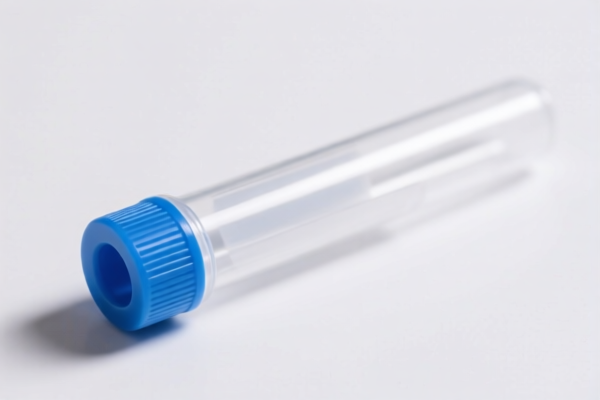
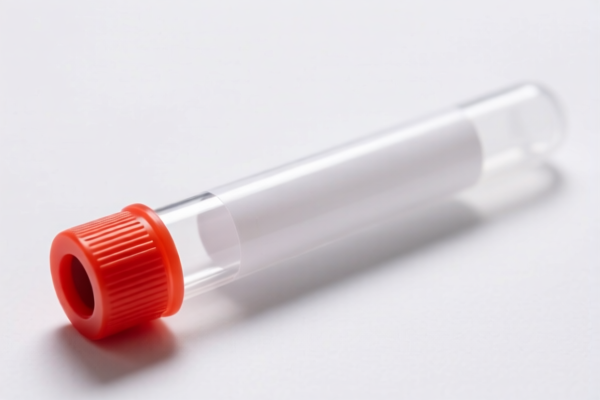
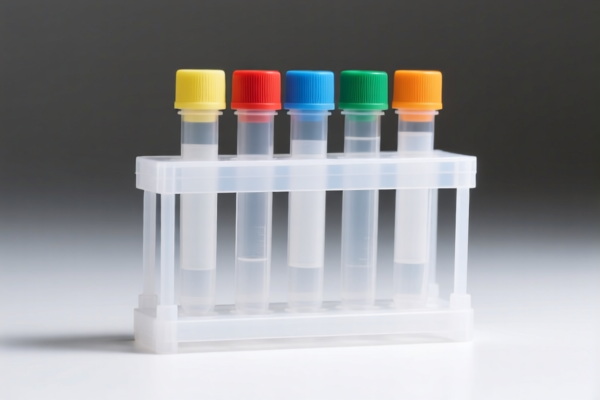
AI Analysis
🧪 Plastic Laboratory Sampling Tube (Laboratory Plastic Calibration/Calibration Tubes)
🌐 HS Code Reference & Customs Clearance Guide | 2026 Latest Tariff Analysis | Professional Compliance Strategy
📌 I. Product Definition & Classification: What Exactly Are "Plastic Laboratory Sampling Tubes"?
Plastic Laboratory Sampling Tubes (often referred to as calibration tubes or sampling vials) are specialized containers made primarily of plastic, designed for holding, transporting, or calibrating laboratory samples. In international trade, their classification depends heavily on whether they are viewed as general plastic packaging or as scientific/medical instrument accessories.
Key Distinction Criteria: 1. Material & Form: If they are simple plastic tubes without complex mechanical components, they lean towards Chapter 39 (Plastics). 2. Function & Use: If they are specifically designed as attachments for measuring instruments (calibration tools), they may fall under Chapter 90 (Instruments). 3. Specificity: HS codes that are more specific to "instruments" usually take precedence over general "plastic goods" if the primary function is measurement/calibration support.
⚠️ Critical Classification Note:
- If the tube is a generic plastic tube used for storage → 3926.90 or 3917.21.
- If the tube is a specific accessory for a laboratory instrument (e.g., a calibration standard holder) → 9017.90.
- Misclassification Risk: Declaring an instrument accessory as a general plastic good often leads to lower duties but triggers audits if the product's primary purpose is clearly scientific measurement.
📦 II. HS Code Classification Details (2026 Latest Tariff Authority Comparison)
| HS Code | Product Description | Application Scenario | Duty Structure |
|---|---|---|---|
9017.90.01.60 |
Laboratory Plastic Calibration Tube, Material: Plastic, Purpose: Lab Calibration, Category: Accessory to Measuring Instruments. | Specific calibration tools, high-precision lab accessories. | 35.0% (Highest Specific Duty) |
9017.80.00.00 |
Laboratory Plastic Calibration Tube, Material: Plastic, Purpose: Lab Measurement/Calibration Tool, Category: Other Instruments. | General lab measurement tools, non-specific instrument parts. | 40.3% (Highest Overall Rate) |
3926.90.99.10 |
Laboratory Plastic Calibration Tube, Material: Plastic, Purpose: Lab Calibration, Category: Plastic Articles. | General plastic lab ware, storage, non-instrument specific. | 22.8% (Lowest Specific Duty) |
3917.21.00.00 |
Plastic Tube, Material: Plastic, Form: Tube, Complies with Plastic Tube Classification. | Generic plastic tubing, industrial/consumer use. | 38.1% (High General Duty) |
3926.90.99.89 |
Plastic Tube, Material: Plastic, Category: Plastic Articles, No Other Material/Shape Conflict. | General plastic tubes, no specific instrument link. | 22.8% (Lowest General Duty) |
🔍 Key Insight:
- Chapter 90 (9017) codes are higher risk/higher cost because they target instrument accessories. The "122 Clause" and "Section 301" tariffs stack up significantly here.
- Chapter 39 (3926/3917) codes are often lower duty but require proof that the item is not an integral part of a measuring instrument. If customs determines it is an instrument part, they will reclassify to 9017, leading to back-duties.
💰 III. 2026 Latest Tariff Rate Breakdown (Including Additional Taxes & Policy Surcharges)
✅ Applicable Country: United States (US)
✅ Origin: China (CN)
✅ Effective Date: November 10, 2025 (and subsequent imports)
🎯 1. 9017.90.01.60 — Laboratory Plastic Calibration Tube (Instrument Accessory)
| Item | Content |
|---|---|
| Base Duty | The rate applicable to the article of which it is a part or accessory. |
| Section 301 Surcharge | +25.0% |
| Section 122 Surcharge | +10.0% |
| Total Tax Rate | 35.0% (Calculated as Base + 25% + 10%) |
| Tax Calculation | CIF Value × 35% |
| De Minimis Eligibility | ❌ Not Eligible (High duty rate exceeds thresholds) |
| Legal Basis Path | USITC:9017.90.01.60 → Section 301: Footnote 9903.88.01 → Section 122: IEEPA |
📌 Explanation:
- This code is highly specific to instrument accessories.
- The 25% Section 301 tariff is standard for Chinese instrument parts.
- The 10% Section 122 tariff applies to certain categories, pushing the total to 35%.
- Risk: Customs may challenge this if the tube is deemed a "generic" plastic item.
🎯 2. 9017.80.00.00 — Other Instruments (Lab Calibration Tool)
| Item | Content |
|---|---|
| Base Duty | 5.3% |
| Section 301 Surcharge | +25.0% |
| Section 122 Surcharge | +10.0% |
| Total Tax Rate | 40.3% |
| Tax Calculation | CIF Value × 40.3% |
| De Minimis Eligibility | ❌ Not Eligible |
| Legal Basis Path | USITC:9017.80.00.00 → Section 301: Footnote 9903.88.01 → Section 122 |
📌 Note:
- This is the highest tax burden in the dataset.
- It categorizes the tube as a general "Other Instrument," which attracts the full stack of tariffs.
- Recommendation: Avoid this code if possible unless the product is clearly a standalone instrument, not just a tube.
🎯 3. 3926.90.99.10 — Plastic Articles (Lab Calibration Tube)
| Item | Content |
|---|---|
| Base Duty | 5.3% |
| Section 301 Surcharge | +7.5% |
| Section 122 Surcharge | +10.0% |
| Total Tax Rate | 22.8% |
| Tax Calculation | CIF Value × 22.8% |
| De Minimis Eligibility | ❌ Not Eligible (Due to Section 301) |
| Legal Basis Path | USITC:3926.90.99.10 → Section 301: Footnote 9903.88.01 → Section 122 |
📌 Key Advantage:
- Lower Section 301 Rate: Only 7.5% instead of 25%. This is because general plastic articles often fall under different 301 exclusions or lower brackets than specific instrument parts.
- Total Cost Savings: ~17.5% lower than the 9017.90.01.60 code.
- Condition: Must prove it is a plastic article for general lab use, not a specialized instrument part.
🎯 4. 3917.21.00.00 — Plastic Tubes
| Item | Content |
|---|---|
| Base Duty | 3.1% |
| Section 301 Surcharge | +25.0% |
| Section 122 Surcharge | +10.0% |
| Total Tax Rate | 38.1% |
| Tax Calculation | CIF Value × 38.1% |
| De Minimis Eligibility | ❌ Not Eligible |
| Legal Basis Path | USITC:3917.21.00.00 → Section 301 → Section 122 |
📌 Warning:
- Although the base duty is low (3.1%), the 25% Section 301 tariff makes it expensive.
- Only use this if the product is a simple, unbranded, generic plastic tube with no specific lab calibration markings.
🎯 5. 3926.90.99.89 — Other Plastic Articles (No Conflict)
| Item | Content |
|---|---|
| Base Duty | 5.3% |
| Section 301 Surcharge | +7.5% |
| Section 122 Surcharge | +10.0% |
| Total Tax Rate | 22.8% |
| Tax Calculation | CIF Value × 22.8% |
| De Minimis Eligibility | ❌ Not Eligible |
| Legal Basis Path | USITC:3926.90.99.89 → Section 301 → Section 122 |
📌 Note:
- Same tax rate as3926.90.99.10(22.8%).
- Use this if the tube does not fit the specific "plastic articles" subheading10but is still clearly a general plastic good.
- Strategy: Both3926options offer the lowest effective duty due to the reduced 301 rate (7.5% vs 25%).
🛠️ IV. Customs Clearance Practical Advice (Real-World Pitfall Guide)
✅ 1. Documentation Checklist (Non-Negotiable)
| Document | Mandatory? | Description |
|---|---|---|
| ✅ Product Specification Sheet | ✔️ | Must detail material (e.g., PP, PE, PTFE), dimensions, and lack of electronic/mechanical parts. |
| ✅ Product Photos | ✔️ | Clear images showing no brand markings of specific instruments, no calibration certs attached. |
| ✅ Commercial Invoice | ✔️ | Description must be precise: "Plastic Tubes for General Laboratory Use" vs "Calibration Instrument Accessory". |
| ✅ Origin Certificate (CO) | ✔️ | To prove Chinese origin and apply correct tariffs. |
| ✅ Packing List | ✔️ | List only tubes, no accessories like holders or cases. |
✅ 2. Declaration Strategy (Key Mantra)
🔥 "Material First, Function Second, No Instrument Link = Lower Duty!"
| Scenario | Correct Declaration | Wrong Declaration |
|---|---|---|
| Generic Plastic Tube | 3926.90.99.10 or 3926.90.99.89 |
9017.90.01.60 (Unnecessary 25% 301 tariff) |
| Tube with Calibration Markings | High Risk: May be reclassified to 9017. Declare as 3926 only if markings are generic. |
Declare as 9017 without justification → Audit. |
| Tube + Holder Kit | Split Declaration: Tubes as 3926, Holders as 3926. |
Single HS code for kit → Potential misclassification. |
| Custom Lab Tool | 9017.80.00.00 or 9017.90.01.60 |
3926 → High risk of seizure/reclassification. |
✅ 3. Special Case Handling
| Situation | Handling Advice |
|---|---|
| OEM for Lab Brand | If the tube has the brand of a major lab instrument maker (e.g., Thermo Fisher, Sigma), customs may assume it’s an accessory → Use 9017. |
| Uncalibrated vs. Calibrated | If sold as "Uncalibrated Plastic Tubes," argue for 3926. If sold as "Calibration Standards," you must use 9017. |
| Material Type | If the plastic is PTFE (Teflon), ensure it doesn’t trigger higher chemical product duties. |
| Small Quantity Samples | If value is very low, consider if De Minimis applies (unlikely with 22-40% duties, but check current thresholds). |
🌍 V. Global Market Clearance Comparison (2026 Latest)
| Country/Region | Recommended HS Code | Tariff Rate | Certification | Note |
|---|---|---|---|---|
| 🇺🇸 USA | 3926.90.99.10 |
22.8% | None | Avoid 9017 unless necessary (40.3%). |
| 🇨🇳 China | 3926.90.99.10 |
~5% | None | Low import duty, no 301/122. |
| 🇪🇺 EU | 3926.90.99 |
~5-6% | REACH + RoHS | Generally low duties, focus on chemical compliance. |
| 🇬🇧 UK | 3926.90.99 |
~5-6% | UKCA | Similar to EU. |
| 🇨🇦 Canada | 3926.90.99 |
~5% | None | MFN rate applicable. |
📌 Conclusion:
- USA is the only market with punitive additional tariffs (301/122).
- Strategy for US: Maximize use of Chapter 39 (3926) codes to benefit from the 7.5% Section 301 rate instead of 25%.
- Strategy for EU/UK/Canada: Focus on REACH/RoHS compliance rather than tariff optimization.
📌 VI. Common Mistakes & Pitfall Guide (Lessons from the Field)
❌ Mistake 1: Using 9017.90.01.60 for generic plastic tubes.
👉 Consequence: Paying 35% total duty when 22.8% was possible. Loss of 12.2% margin.
❌ Mistake 2: Declaring 3926.90.99.10 for tubes with brand logos of instrument manufacturers.
👉 Consequence: Customs reclassifies to 9017, charges back-duties + penalties. Total cost > 40%.
❌ Mistake 3: Ignoring Section 122 (10%) in cost calculations.
👉 Consequence: Underestimating landed cost by 10%. Budget overrun.
❌ Mistake 4: Packaging the tube with instrument-specific accessories (e.g., a specific holder).
👉 Consequence: The entire kit is classified under the highest duty item (Instrument Accessory). No splitting allowed.
✅ Correct Approach:
"Plastic Sampling Tubes, Unbranded, for General Laboratory Sample Storage, Not Specific to Any Instrument Model."
🎯 VII. Conclusion: Precise Classification, Maximum Savings!
🎯 Remember the Mantra:
🔹 "No Brand, No Function, No Accessories = 3926 (22.8%)!
🔹 "Brand, Specific Use, Instrument Link = 9017 (35-40%)!"
🔹 "Avoid 3917 (38.1%) unless it’s a simple raw tube!"
📌 Pro Tip:
If your product is branded or specifically calibrated, you must use
9017.
If it is unbranded, generic, and for general lab use, aggressively argue for3926.90.99.10or3926.90.99.89.
Consult a customs broker to review product photos before final declaration.
📣 Immediate Action:
📞 Contact your customs broker.
📸 Provide high-res photos.
📄 Get a Pre-Ruling if the value is high.
🚀 Clear customs smoothly, save 12-17% in duties!
✨ Professional Clearance Starts with Accurate Classification!
💼 Every cent saved is a cent earned!
Customer Reviews
About HS Code Classification
The Harmonized System (HS) is an internationally standardized nomenclature developed by the World Customs Organization (WCO) to classify traded products. Over 200 countries use the HS system as the basis for customs tariffs, trade statistics, and import/export regulations.
Each HS code follows a hierarchical structure:
- Chapter (2 digits) — Broad category of goods (e.g., Chapter 84: Machinery and Mechanical Appliances)
- Heading (4 digits) — More specific grouping within the chapter
- Subheading (6 digits) — Internationally standardized breakdown, used by all WCO member countries
- National subdivisions (8-10 digits) — Country-specific extensions for further classification, such as US HTSUS 10-digit codes
Correct HS code classification is essential for smooth customs clearance, accurate duty payment, and compliance with trade regulations. Misclassification can lead to customs delays, overpayment of duties, or penalties.
When importing from CN to US, the applicable tariff rates may include:
- Most-Favored-Nation (MFN) rate — The standard duty rate applied to WTO members
- General rate — Applied to countries without trade agreements
- Trade remedy duties — Additional tariffs such as Section 301 (anti-dumping), Section 232 (national security), or countervailing duties
The information provided on this page is for reference purposes only. For official classification, please consult with your local customs authority or a licensed customs broker.