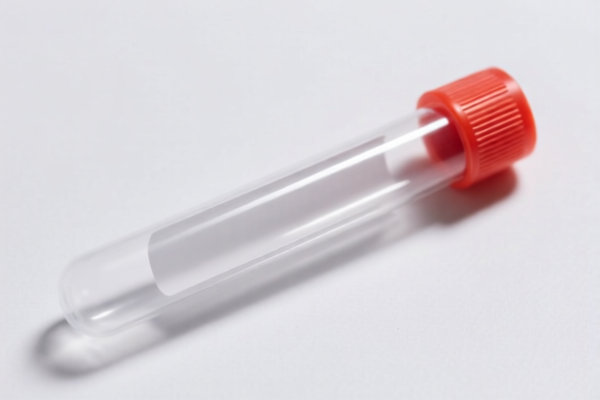
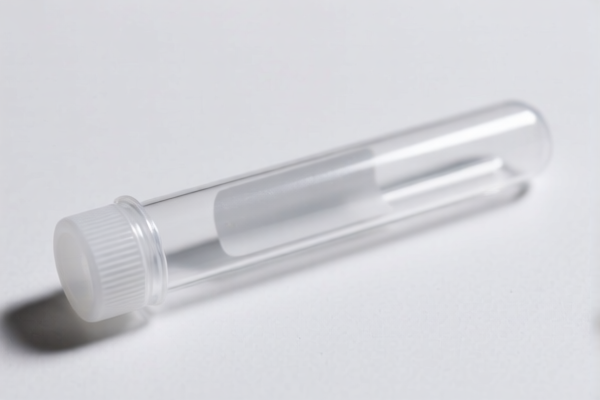
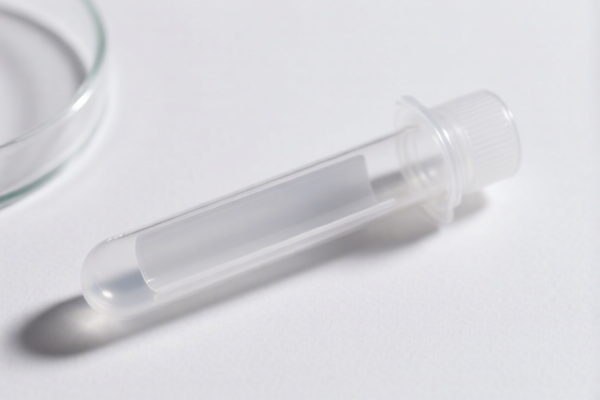
Plastic Laboratory Test Tube
CN → US| HS Code | Tariff Rate | Origin | Destination | Doc |
|---|---|---|---|---|
| 3926909989 | 22.8% | CN | US | Official Doc |
| 3926909910 | 22.8% | CN | US | Official Doc |
| 3917400095 | 40.3% | CN | US | Official Doc |
| 3917290090 | 38.1% | CN | US | Official Doc |
| 7017905000 | 41.7% | CN | US | Official Doc |
Product Images

AI Analysis
🧪 Plastic Laboratory Test Tube (Plastic Lab Tubes)
🌐 HS Code Reference & Customs Clearance Guide | 2026 Latest Tariff Analysis | Professional Customs Strategy
📌 I. Product Definition & Classification: What is a "Plastic Lab Test Tube"?
A Plastic Laboratory Test Tube is a cylindrical container used in scientific, medical, and industrial laboratories for holding, mixing, or heating small quantities of liquid samples. Unlike glass tubes, plastic tubes (typically made from Polypropylene (PP), Polystyrene (PS), or Polyethylene (PE)) offer advantages such as shatterproof durability, cost-effectiveness, and disposability.
Key Classification Distinction:
In international trade, the classification depends heavily on the primary use and material composition:
1. General Purpose Plastic Parts: If the tube is considered a generic plastic article without specific laboratory designation, it falls under Chapter 39 (Plastics and Articles Thereof).
2. Laboratory Glassware/Equipment: If classified as "Laboratory, Sanitary, Medical or Surgical Articles," it might fall under Chapter 70 (Glassware) or Chapter 90 (Instruments), even if plastic, due to specific legal notes regarding laboratory apparatus.
⚠️ Critical Distinction Point:
- If the product is strictly a generic plastic part (e.g., used for storage, non-laboratory specific, or considered a "container" under general plastics rules) → Chapter 39.
- If the product is explicitly designed for laboratory analysis, certified for chemical resistance, and used in scientific contexts → Chapter 70 or Chapter 90 (depending on specific national interpretations of "Glassware" vs. "Plastic Parts").
📦 II. HS Code Classification Details (2026 Latest Tariff Authority对照)
Based on the provided data , the following HS Codes are identified for "Plastic Laboratory Test Tube" or related plastic components (stands/parts for tubes). Note that some entries refer to "Stands" (支架) which are accessories to test tubes.
| HS Code | Product Description | Application Scenario | Tax Rate (US/China Origin) |
|---|---|---|---|
3926.90.99.89 |
Plastic articles, other (e.g., generic plastic frames/stands) | Generic plastic parts, frames, or supports not specified elsewhere. Bottom-up logic for plastics. | 22.8% |
3926.90.99.10 |
Plastic articles, other (e.g., Plastic Test Tube Racks/Stands) | Laboratory apparatus made of plastic (racks, holders, generic lab containers). Fits "Other" category for plastic lab ware. | 22.8% |
3917.40.00.95 |
Plastic fittings for pipes/cables, other | Plastic support/fixing parts for tubing systems. Classified as "Fittings/Other" for piping accessories. | 40.3% |
3917.29.00.90 |
Plastic pipes/hoses and fittings, other | Other plastic tubing accessories (clips, brackets, connectors). Fits "Other" category for tube accessories. | 38.1% |
7017.90.50.00 |
Laboratory, sanitary, medical or surgical glassware, other | Inferred Plastic: Treated as laboratory apparatus accessories. Fits "Other" lab equipment logic. | 41.7% |
🔍 Key Observation:
- Direct Lab Tube vs. Accessory: The data includes "Stands" (支架) and "Fittings". A pure "Test Tube" is most closely aligned with 3926.90.99.10 (Plastic Lab Ware) or potentially 7017.90.50.00 if interpreted as "Laboratory Apparatus" regardless of material.
- High Tariff Risk: Codes under 3917 (Pipe Fittings) and 7017 (Lab Glassware equivalent) carry significantly higher tariffs due to "Section 301" and "122 Clause" additions.
💰 III. 2026 Latest Tariff Rate Breakdown (Including Additional Taxes & Policy Surcharges)
✅ Applicable Country: United States (US)
✅ Origin: China (CN)
✅ Effective Date: From November 10, 2025 (and subsequent imports)
🎯 1. 3926.90.99.89 & 3926.90.99.10 —— Plastic Articles (General Lab Ware / Stands)
| Item | Detail |
|---|---|
| Base Duty Rate | 5.3% (Ad Valorem) |
| Section 301 Additional Duty | +7.5% (USITC Footnote 9903.88.01) |
| 122 Clause Duty | +10% (Targeted specific categories) |
| Total Tax Rate | 22.8% |
| Calculation Basis | CIF Value × 22.8% |
| De Minimis Exemption | ❌ Not Eligible (deny_de_minimis) |
| Legal Path | Base Tariff → Section 301: +7.5% → 122 Clause: +10% |
📌 Explanation:
- This is the most favorable rate among the options provided.
- Applicable if the item is classified as a generic plastic article or plastic laboratory accessory (like racks/stands) under Chapter 39.
- Total 22.8% is high but significantly lower than the 40%+ brackets.
🎯 2. 3917.40.00.95 —— Plastic Fittings (Supports/Fixings for Tubing)
| Item | Detail |
|---|---|
| Base Duty Rate | 5.3% (Ad Valorem) |
| Section 301 Additional Duty | +25.0% (Aggressive 301 Duty) |
| 122 Clause Duty | +10% |
| Total Tax Rate | 40.3% |
| Calculation Basis | CIF Value × 40.3% |
| De Minimis Exemption | ❌ Not Eligible |
| Legal Path | Base Tariff → Section 301: +25% → 122 Clause: +10% |
📌 Warning:
- Misclassifying a simple plastic tube or rack as a "Pipe Fitting" (3917) triggers the higher 25% Section 301 rate.
- Only use if the item is strictly a connector, bracket, or clamp for industrial piping, not a standalone test tube.
🎯 3. 3917.29.00.90 —— Other Plastic Piping Accessories
| Item | Detail |
|---|---|
| Base Duty Rate | 3.1% (Ad Valorem) |
| Section 301 Additional Duty | +25.0% |
| 122 Clause Duty | +10% |
| Total Tax Rate | 38.1% |
| Calculation Basis | CIF Value × 38.1% |
| De Minimis Exemption | ❌ Not Eligible |
📌 Warning:
- Similar to above, the 25% Section 301 surcharge applies to Chapter 3917 items.
- Higher base rate than 3926, leading to a 38.1% total. Avoid if possible.
🎯 4. 7017.90.50.00 —— Laboratory Apparatus (Inferred Plastic)
| Item | Detail |
|---|---|
| Base Duty Rate | 6.7% (Ad Valorem) |
| Section 301 Additional Duty | +25.0% |
| 122 Clause Duty | +10% |
| Total Tax Rate | 41.7% |
| Calculation Basis | CIF Value × 41.7% |
| De Minimis Exemption | ❌ Not Eligible |
📌 Critical Risk:
- Although "Glassware" is in Chapter 70, plastic lab equipment is often scrutinized here.
- This category incurs the highest total tariff (41.7%) in the provided data.
- Use only if customs explicitly requires "Laboratory Apparatus" classification for chemical-resistant plastic tubes, but be prepared for higher costs.
🛠️ IV. Customs Clearance Practical Advice (Battle-Tested Pitfall Guide)
✅ 1. Required Documentation Checklist (Non-Negotiable)
| Document | Mandatory? | Description |
|---|---|---|
| ✅ Product Specification Sheet | ✔️ | Must state material (PP/PS/PE), dimensions, capacity, and intended use (Laboratory vs. General Storage). |
| ✅ Usage Declaration | ✔️ | Explicitly state "For Laboratory Use" or "General Purpose Storage". This affects Chapter 39 vs. 70/90 classification. |
| ✅ Product Photos | ✔️ | Clear images of the tube, packaging, and any labeling (e.g., "Lab Grade"). |
| ✅ Material Certificate | ✔️ | Proof of plastic type (e.g., PP, Polystyrene) to rule out hazardous materials. |
| ✅ Commercial Invoice | ✔️ | Describe as "Plastic Laboratory Test Tubes" or "Plastic Lab Containers". Avoid vague terms like "Plastic Parts". |
| ✅ Packing List | ✔️ | Detail quantity per carton. |
✅ 2. Classification Strategy (Key Mnemonic)
🔥 "Use Defines Code; Chapter 39 Saves Money!"
| Scenario | Recommended HS Code | Reason |
|---|---|---|
| Plastic Test Tube Rack / Stand | 3926.90.99.10 |
Classified as "Other Plastic Article". Lowest risk, 22.8% rate. |
| Plastic Test Tube (Generic/Storage) | 3926.90.99.89 |
Fits "Other Plastic Articles". 22.8% rate. |
| Plastic Test Tube (Strict Lab Use) | Consult Customs | May be pushed to 7017.90.50.00 (41.7%) if strictly interpreted as "Lab Apparatus". |
| Tube Connectors / Clamps | 3917.40.00.95 or 3917.29.00.90 |
Classified as Piping Fittings. 38.1% - 40.3% rate. Avoid for standalone tubes. |
⚠️ Critical Advice:
- Do NOT classify plastic test tubes as "Piping Fittings" (3917) unless they are strictly connectors/clamps.
- Do NOT automatically assume "Lab Use" forces classification into Chapter 70/90 if Chapter 39 offers a "Other" category that fits. Chapter 39 is generally safer and cheaper (22.8%) than Chapter 70 (41.7%) for plastic items, provided the description is accurate.
✅ 3. Special Handling Tips
| Situation | Handling Suggestion |
|---|---|
| Disposable vs. Reusable | Both can fall under 3926. Specify "Disposable Lab Tubes" to clarify non-reusable nature. |
| Sterile vs. Non-Sterile | Sterile tubes may require additional FDA/CE documentation but do not change HS Code. |
| Customs Challenge | If Customs questions "Plastic Lab Ware", provide a Letter of Explanation stating that plastic tubes are standard laboratory consumables and fit under "Other Plastic Articles" (3926). |
| Origin Declaration | Ensure CO (Certificate of Origin) matches China (CN) to avoid unexpected origin-based penalties. |
🌍 V. Global Market Comparison (2026 Latest)
| Country/Region | Recommended HS Code | Estimated Duty | Remarks |
|---|---|---|---|
| 🇺🇸 USA | 3926.90.99.10 |
22.8% | Best rate for plastic lab ware. |
| 🇺🇸 USA | 7017.90.50.00 |
41.7% | Avoid if possible; high penalty. |
| 🇨🇳 China (Import) | 3926.90.99.10 |
~5-9% | Lower base rates, no Section 301. |
| 🇪🇺 EU | 3926.90.99 |
~6.5% | No Section 301. Standard WTO rates. |
| 🇦🇺 Australia | 3926.90.99 |
~5% | Low duties, simple clearance. |
📌 Conclusion:
- USA is the most complex market due to Section 301 and 122 Clause tariffs.
- Chapter 39 (22.8%) is the optimal classification for plastic test tubes/racks to minimize costs.
- Chapter 70/90 (41.7%) should be avoided unless legally mandated by specific local customs rulings.
📌 VI. Common Mistakes & Pitfalls (Lessons Learned)
❌ Mistake 1: Classifying plastic test tubes as "Glassware" (7017)
👉 Consequence: Tax rate jumps from 22.8% to 41.7% → +$18,900 extra tax on $100k shipment!
❌ Mistake 2: Classifying lab racks/stands as "Piping Fittings" (3917)
👉 Consequence: Tax rate increases from 22.8% to 40.3% → Unnecessary cost increase.
❌ Mistake 3: Using vague descriptions like "Plastic Parts"
👉 Consequence: Customs may assign a default higher rate or reject the entry → Delays and Demurrage Fees.
✅ Correct Practice:
"Plastic Laboratory Test Tubes, Polypropylene, Disposable, 15ml, Box of 1000"
HS Code: 3926.90.99.10 (if deemed lab ware) or 3926.90.99.89 (if generic).
🎯 VII. Conclusion: Smart Classification, Cost Savings!
🎯 Remember the Golden Rule:
🔹 "Plastic Lab Ware under 3926: Save 20% vs. 7017!"
🔹 "Don't call a tube a fitting, or your taxes will be hitting!"
🔹 "22.8% is the sweet spot; 41.7% is the expense knot!"
📌 Pro Tip:
If your supplier is in China, ensure the Invoice Description matches 3926.90.99.10 or 3926.90.99.89. Request a Pre-Ruling from US Customs (CBP) if shipping large volumes, to lock in the 22.8% rate and avoid post-entry audits.
📣 Immediate Action:
📞 Engage a licensed customs broker.
📄 Provide Material Safety Data Sheets (MSDS) and Product Specs.
🚀 Ensure Smooth Customs Clearance with Accurate HS Codes!
✨ Professional Customs Clearance Starts with Precise Classification!
💼 Your Cost Efficiency Depends on the First 8 Digits!
Customer Reviews
About HS Code Classification
The Harmonized System (HS) is an internationally standardized nomenclature developed by the World Customs Organization (WCO) to classify traded products. Over 200 countries use the HS system as the basis for customs tariffs, trade statistics, and import/export regulations.
Each HS code follows a hierarchical structure:
- Chapter (2 digits) — Broad category of goods (e.g., Chapter 84: Machinery and Mechanical Appliances)
- Heading (4 digits) — More specific grouping within the chapter
- Subheading (6 digits) — Internationally standardized breakdown, used by all WCO member countries
- National subdivisions (8-10 digits) — Country-specific extensions for further classification, such as US HTSUS 10-digit codes
Correct HS code classification is essential for smooth customs clearance, accurate duty payment, and compliance with trade regulations. Misclassification can lead to customs delays, overpayment of duties, or penalties.
When importing from CN to US, the applicable tariff rates may include:
- Most-Favored-Nation (MFN) rate — The standard duty rate applied to WTO members
- General rate — Applied to countries without trade agreements
- Trade remedy duties — Additional tariffs such as Section 301 (anti-dumping), Section 232 (national security), or countervailing duties
The information provided on this page is for reference purposes only. For official classification, please consult with your local customs authority or a licensed customs broker.