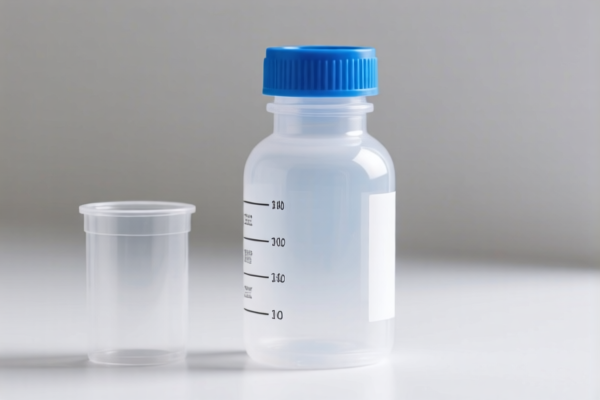
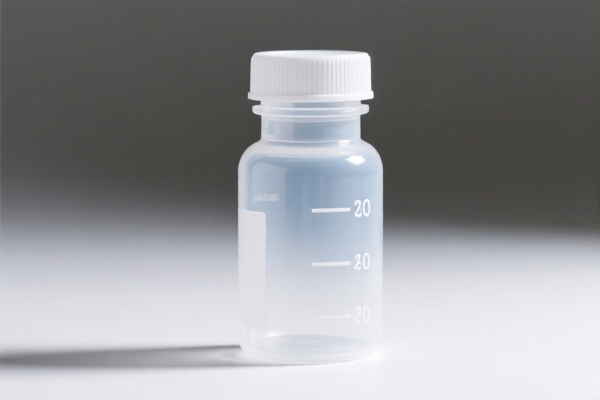
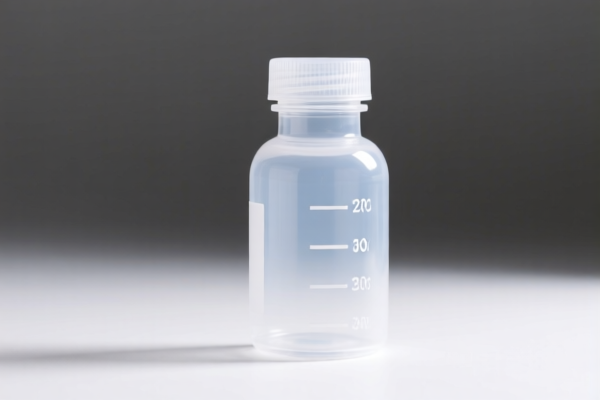
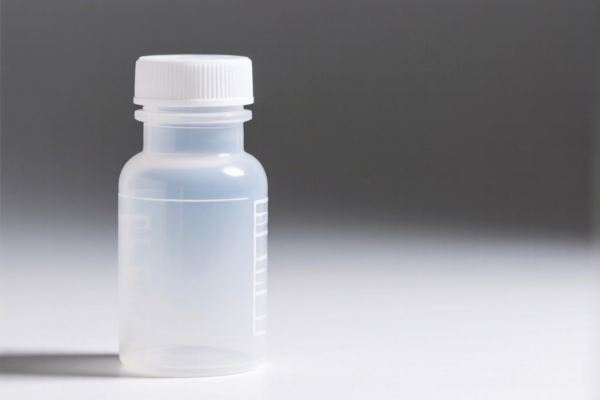
Plastic Laboratory Vial
CN → US| HS Code | Tariff Rate | Origin | Destination | Doc |
|---|---|---|---|---|
| 3917400095 | 40.3% | CN | US | Official Doc |
| 3917290090 | 38.1% | CN | US | Official Doc |
| 7017905000 | 41.7% | CN | US | Official Doc |
| 3926909989 | 22.8% | CN | US | Official Doc |
| 3926909910 | 22.8% | CN | US | Official Doc |
Product Images
AI Analysis
🧪 Plastic Laboratory Vial (Plastic Lab Sample Containers)
🌐 HS Code Reference & Customs Clearance Guide | 2026 Latest Tariff Analysis | Professional-Level Customs Strategy
📌 I. Product Definition & Classification: Do You Really Understand "Plastic Laboratory Vials"?
Plastic laboratory vials are essential containers used in scientific research, clinical diagnostics, pharmaceutical testing, and chemical analysis. In international trade, their classification depends heavily on their intended use, material composition, and structural role (whether they are standalone containers or structural supports/parts).
Key Distinction: - Standalone Container (Vial/Bottle): Used to hold liquids, solids, or samples. Often classified under "Plastic articles." - Structural Support/Holder (Rack/Stand/Bracket): Used to hold multiple vials or support equipment. Classified under "Plastic tubes, pipes, and fittings" or "Other plastic articles." - Glass vs. Plastic: This guide strictly covers PLASTIC vials/holders. Glass items fall under Chapter 70.
⚠️ Critical Classification Point:
- If the item is a standalone container for storing samples (even if used in a lab) → Often3926.90.99.89(Other plastic articles) or3926.90.99.10(Lab ware).
- If the item is a support/holder/bracket made of plastic → Often3917.40.00.95or3917.29.00.90.
- If the item is specifically identified as laboratory apparatus (not just a container but part of a system) → May fall under3926.90.99.10or7017.90.50.00(if glass, but plastic equivalents often get grouped differently).
📦 II. HS Code Classification Details (2026 Latest Tariff Authority Comparison)
Based on the provided data, here are the applicable HS Codes for plastic laboratory vials and related accessories:
| HS Code | Product Description | Applicable Scenario | Key Classification Basis |
|---|---|---|---|
3926.90.99.89 |
Plastic Articles, Other (Racks/Components/Stands) | Plastic racks, holders, or structural supports for lab vials; general plastic lab accessories not elsewhere specified. | "Other plastic articles" – Used when the item is a support structure (rack/holder) rather than a primary container. |
3926.90.99.10 |
Plastic Articles, Laboratory Ware Use | Standalone plastic vials, bottles, or containers specifically designed for laboratory use (holding reagents, samples). | "Lab Ware" – The most accurate code for plastic vials themselves if used as containers. |
3917.40.00.95 |
Plastic Materials, Tube Accessories (Support/Fixing Parts) | Plastic clips, brackets, or fixing parts that secure tubes/vials to benches or equipment. | "Tube Accessories" – For items that are fixing/supporting parts, not the vessel itself. |
3917.29.00.90 |
Plastic Materials, Pipeline Accessories (Stands/Parts) | Plastic stands, mounts, or parts for plumbing/tubing systems used in lab fluid handling. | "Pipeline Accessories" – For structural parts of fluid transport systems. |
7017.90.50.00 |
Laboratory Stands, as Accessories to Laboratory Utensils | ⚠️ Note: This code is for GLASS laboratory stands. However, if your "plastic vial" is part of a glass-based system or misclassified as glass, it may appear here. For pure plastic, prefer 3926 codes. |
"Lab Utensils Accessories" – Typically for glassware. Use cautiously for plastic; only if the item is a stand for glassware. |
🔍 Key Insight:
- For Plastic Vials (Containers): Use3926.90.99.10. This is the most precise code for "plastic articles for laboratory use."
- For Plastic Racks/Holders (Supports): Use3926.90.99.89.
- For Clips/Brackets: Use3917.40.00.95.
- Avoid7017unless the item is glass. Misclassifying plastic as glass can lead to severe penalties.
💰 III. 2026 Latest Tariff Rate Details (Including Additional Taxes, Policy Surcharges)
✅ Applicable Country: United States (US)
✅ Origin: China (CN)
✅ Effective Date: 2025–2026 (Current US Tariff Regime)
🎯 1. 3926.90.99.10 – Plastic Laboratory Vials (Containers)
| Item | Content |
|---|---|
| Base Tariff | 5.3% (ad valorem) |
| Section 301 Additional Tariff | 7.5% |
| 122 Section Tariff | 10% |
| Total Tariff Rate | 22.8% |
| Tax Calculation | CIF Value × 22.8% |
| De Minimis Eligibility | ❌ No (Deny De Minimis) |
| Legal Basis Path | USITC:3926.90.99.10 → Section 301: Footnote 9903.88.01 → 122 Section: 10% |
📌 Explanation:
- 5.3% Base Tariff: Standard MFN rate for other plastic articles.
- 7.5% Section 301: Reduced from earlier 25% rate for certain plastic lab goods under specific exclusions or tiered rates.
- 10% 122 Section Tariff: Additional surcharge on certain Chinese goods.
- Total 22.8%: This is the lowest tax burden for plastic lab items in the provided dataset. Strongly recommended for standalone plastic vials.
🎯 2. 3926.90.99.89 – Plastic Articles, Other (Racks/Components)
| Item | Content |
|---|---|
| Base Tariff | 5.3% |
| Section 301 Additional Tariff | 7.5% |
| 122 Section Tariff | 10% |
| Total Tariff Rate | 22.8% |
| Tax Calculation | CIF Value × 22.8% |
| De Minimis Eligibility | ❌ No |
| Legal Basis Path | USITC:3926.90.99.89 → Section 301: Footnote 9903.88.01 → 122 Section: 10% |
📌 Note:
- Same tariff rate as3926.90.99.10but for non-lab-specific or support structures.
- If your "vial" is actually a rack, use this code. Same cost, different classification.
🎯 3. 3917.40.00.95 – Plastic Tube Accessories (Support/Fixing Parts)
| Item | Content |
|---|---|
| Base Tariff | 5.3% |
| Section 301 Additional Tariff | 25.0% |
| 122 Section Tariff | 10% |
| Total Tariff Rate | 40.3% |
| Tax Calculation | CIF Value × 40.3% |
| De Minimis Eligibility | ❌ No |
| Legal Basis Path | USITC:3917.40.00.95 → Section 301: Footnote 9903.88.01 → 122 Section: 10% |
📌 Warning:
- High Tax! If you classify a vial as a "tube accessory," you pay 40.3% instead of 22.8%.
- Only use for clips, brackets, or fixing parts, not for the vial itself.
🎯 4. 3917.29.00.90 – Plastic Pipeline Accessories (Stands/Parts)
| Item | Content |
|---|---|
| Base Tariff | 3.1% |
| Section 301 Additional Tariff | 25.0% |
| 122 Section Tariff | 10% |
| Total Tariff Rate | 38.1% |
| Tax Calculation | CIF Value × 38.1% |
| De Minimis Eligibility | ❌ No |
| Legal Basis Path | USITC:3917.29.00.90 → Section 301: Footnote 9903.88.01 → 122 Section: 10% |
📌 Warning:
- High Tax! Similar to above. Only for pipeline/tubing system parts, not vials.
🎯 5. 7017.90.50.00 – Laboratory Stands (Glass/Accessories)
| Item | Content |
|---|---|
| Base Tariff | 6.7% |
| Section 301 Additional Tariff | 25.0% |
| 122 Section Tariff | 10% |
| Total Tariff Rate | 41.7% |
| Tax Calculation | CIF Value × 41.7% |
| De Minimis Eligibility | ❌ No |
| Legal Basis Path | USITC:7017.90.50.00 → Section 301: Footnote 9903.88.01 → 122 Section: 10% |
📌 Critical Warning:
- Highest Tax! And WRONG MATERIAL if your item is plastic.
-7017is for GLASS laboratory ware. Using this for plastic vials is misclassification and risks penalties, seizures, or forced reclassification.
- DO NOT USE for plastic vials unless you are importing glass vials or glass stands.
🛠️ IV. Customs Clearance Practical Advice (Pitfall Avoidance Guide)
✅ 1. Required Documentation Checklist
| Document | Mandatory? | Explanation |
|---|---|---|
| ✅ Product Specification Sheet | ✔️ | Must state: Material (e.g., PP, PE, PS), Volume (e.g., 2mL, 15mL), Closure Type, Intended Use (Laboratory). |
| ✅ Product Photos | ✔️ | Clear images of vials, labels, and any packaging. |
| ✅ Commercial Invoice | ✔️ | Must describe item as "Plastic Laboratory Vial" or "Plastic Lab Sample Container", not just "Plastic Part." |
| ✅ Origin Certificate (CO) | ✔️ | If claiming preferential rates (none apply here for US-China, but still required). |
| ✅ Material Declaration | ✔️ | Confirm plastic type (e.g., Polypropylene) to avoid misclassification as glass or metal. |
| ✅ Third-Party Lab Report | ✔️ | If claiming biocompatibility or chemical resistance, provide test reports (optional but helpful). |
✅ 2. Classification Strategy (Key Mnemonic)
🔥 "Vial is Container → 3926.90.99.10 (22.8%) | Rack is Support → 3926.90.99.89 (22.8%) | Fixing Part → 3917 (40%+) | Glass → 7017 (41.7%)"
| Scenario | Correct HS Code | Tax Rate | Common Mistake |
|---|---|---|---|
| Plastic Vial (Container) | 3926.90.99.10 |
22.8% | ❌ Misclassifying as 3917 → 40.3% |
| Plastic Rack/Holder | 3926.90.99.89 |
22.8% | ❌ Misclassifying as 7017 → 41.7% |
| Plastic Clip/Bracket | 3917.40.00.95 |
40.3% | ❌ Overpaying if classified as vial |
| Glass Vial/Stand | 7017.90.50.00 |
41.7% | ❌ Using plastic code for glass |
✅ 3. Special Cases
| Scenario | Handling Advice |
|---|---|
| Sterile vs. Non-Sterile | No difference in HS Code, but sterile vials may require FDA registration (if medical). |
| Custom Printed Vials | Still 3926.90.99.10. Labeling does not change classification. |
| Vials with Screw Caps | Classified as a whole. Do not split into "vial" and "cap" if sold together. |
| Vials for Non-Lab Use (e.g., Cosmetics) | If not explicitly for lab use, may fall under 3926.90.99.89 (Other plastic articles). Same tax rate (22.8%). |
🌍 V. Global Market Clearance Comparison (2026 Latest)
| Country/Region | Recommended HS Code | Tariff (China Origin) | Certification Requirements | Notes |
|---|---|---|---|---|
| 🇺🇸 United States | 3926.90.99.10 |
22.8% | FDA (if medical) + FCC (if electronic) | High tariffs. Pre-clearance advised. |
| 🇨🇳 China | 3926.90.99.10 |
5.3% | CCC (if applicable) | No additional surcharges. |
| 🇪🇺 European Union | 3926.90.99.90 |
0–6.5% | REACH + RoHS | Lower tariffs. No Section 301 equivalent. |
| 🇦🇺 Australia | 3926.90.99.90 |
5% | Australian Standards | Moderate tariffs. |
| 🇯🇵 Japan | 3926.90.99.00 |
0–6% | PSE (if electrical) | Low tariffs. |
📌 Conclusion:
- US Market: High tariffs (22.8%) apply. Ensure accurate classification to avoid 40%+ rates.
- Non-US Markets: Significantly lower tariffs. Consider supply chain diversification if US duties impact margins.
📌 VI. Common Errors & Pitfall Guide (Lessons Learned)
❌ Mistake 1: Classifying plastic vials as 3917 (Tube Accessories)
👉 Consequence: Tax jumps from 22.8% to 40.3% → Additional 17.5% cost!
❌ Mistake 2: Classifying plastic vials as 7017 (Glass Lab Ware)
👉 Consequence: Misclassification penalty, potential seizure, and tax of 41.7% + fines.
❌ Mistake 3: Not specifying "Laboratory Use" on Invoice
👉 Consequence: Customs may classify as "Other Plastic Articles" (3926.90.99.89) → Same tax (22.8%), but delays inspection.
✅ Correct Description Example:
"Plastic Laboratory Vial, Polypropylene, 15mL, Sterile, for Chemical Analysis, Model XYZ, Made in China"
🎯 VII. Conclusion: Precise Classification Saves Money!
🎯 Remember the Mantra:
🔹 "Vial = Container = 3926.90.99.10 (22.8%) | Rack = Support = 3926.90.99.89 (22.8%) | Fixing Part = 3917 (40%+) | Glass = 7017 (41.7%)"
🔹 "HS Code Determines Tax! A 2% difference can save thousands!"
📌 Pro Tip:
If your plastic vials are originating from Vietnam, Mexico, or Thailand, you may qualify for preferential tariffs under USMCA or other FTAs.
Apply for Advance Ruling if unsure about classification to avoid post-clearance audits.
📣 Immediate Action:
📞 Contact a licensed customs broker + Provide product specs + Request HS Code Pre-Ruling
🚀 Ensure your Plastic Laboratory Vials clear customs smoothly, minimize costs, and maximize profit!
✨ Professional Clearance Starts with Accurate Classification!
💼 Every Dollar of Duty Saved is Pure Profit!
Customer Reviews
About HS Code Classification
The Harmonized System (HS) is an internationally standardized nomenclature developed by the World Customs Organization (WCO) to classify traded products. Over 200 countries use the HS system as the basis for customs tariffs, trade statistics, and import/export regulations.
Each HS code follows a hierarchical structure:
- Chapter (2 digits) — Broad category of goods (e.g., Chapter 84: Machinery and Mechanical Appliances)
- Heading (4 digits) — More specific grouping within the chapter
- Subheading (6 digits) — Internationally standardized breakdown, used by all WCO member countries
- National subdivisions (8-10 digits) — Country-specific extensions for further classification, such as US HTSUS 10-digit codes
Correct HS code classification is essential for smooth customs clearance, accurate duty payment, and compliance with trade regulations. Misclassification can lead to customs delays, overpayment of duties, or penalties.
When importing from CN to US, the applicable tariff rates may include:
- Most-Favored-Nation (MFN) rate — The standard duty rate applied to WTO members
- General rate — Applied to countries without trade agreements
- Trade remedy duties — Additional tariffs such as Section 301 (anti-dumping), Section 232 (national security), or countervailing duties
The information provided on this page is for reference purposes only. For official classification, please consult with your local customs authority or a licensed customs broker.