Plastic Makeup Bag
CN → US| HS Code | Tariff Rate | Origin | Destination | Doc |
|---|---|---|---|---|
| 3924104000 | 13.4% | CN | US | Official Doc |
| 4202329300 | 52.6% | CN | US | Official Doc |
| 4202329900 | 52.6% | CN | US | Official Doc |
| 4205006000 | 39.9% | CN | US | Official Doc |
| 4205008000 | 35.0% | CN | US | Official Doc |
Product Images
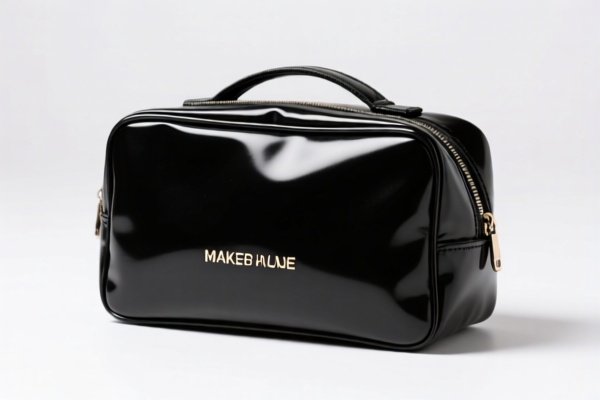
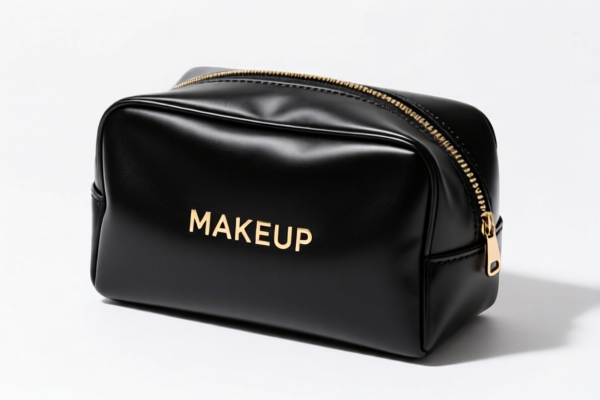
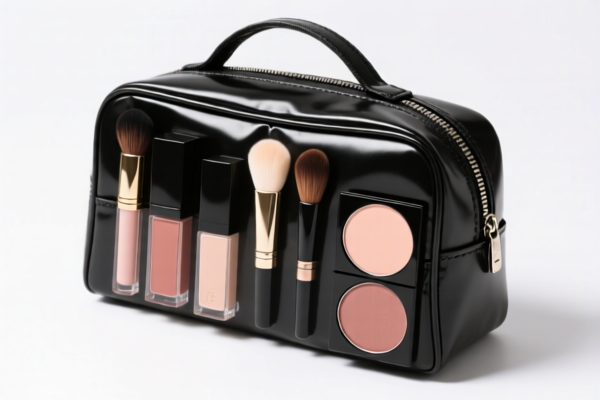
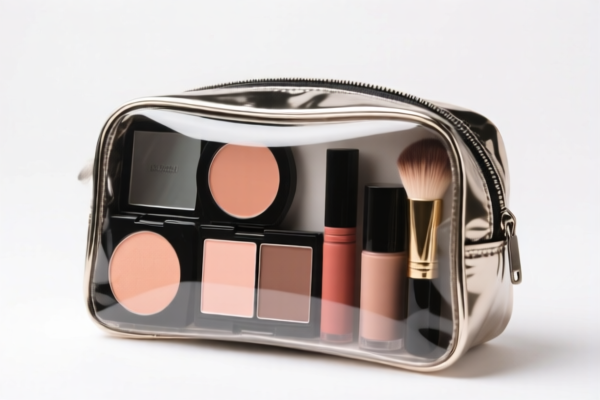
AI Analysis
🎒 Plastic Makeup Bag (Cosmetic Pouches & Cases)
🌐 HS Code Reference & Customs Clearance Guide | 2026 Updated Tariff Analysis | Strategic Customs Strategy
📌 I. Product Definition & Classification: Do You Truly Understand "Plastic Makeup Bags"?
A "Plastic Makeup Bag" is a generic term often used in retail, but in international trade and customs classification, it is not a single HS Code. The correct classification depends entirely on the primary material, shape, and manufacturing method (e.g., molded plastic vs. textile coated with plastic).
Two Primary Categories in Trade: 1. Plastic Household/Sanitary Articles: Rigid or semi-rigid plastic containers (bottles, jars, trays) used for storage in hygiene settings. These are often mistaken for "bags" but are technically "household articles." 2. Satchels, Purses & Similar Containers: Flexible bags made from textile materials (even if coated) or other materials. If the bag is flexible, sewn, or has a zipper and handles, it falls under Chapter 42.
⚠️ Critical Distinction Point:
- If the item is a rigid plastic bottle/jar or a hard plastic tray used for cosmetics/hygiene → It is NOT a "bag." It is classified as Household/Sanitary Plastic Article.
- If the item is a soft, flexible pouch (even if made of PVC, TPU, or plastic-coated fabric) → It is classified as a Bag/Pouch under Chapter 42.
- Misclassification Risk: Declaring a soft PVC pouch as a "plastic household article" can lead to severe penalties due to significant tariff differences (13.4% vs. 52.6%).
📦 II. HS Code Classification Details (2026 Latest Tariff Authority Match)
Based on the product description "Plastic Makeup Bag," here are the possible HS Codes depending on the specific physical form and material composition:
| HS Code | Product Description (Summary) | Primary Material/Shape | Key Classification Logic |
|---|---|---|---|
3924.10.40.00 |
Plastic Cosmetic Bottle/Container | Plastic, Rigid/Semi-rigid | Classified as Household/Sanitary Plastic Article. Used for storage in hygiene contexts. Not a flexible bag. |
4202.32.93.00 |
Makeup Bag (Textile Surface) | Textile Material, Flexible | Classified as a Satchel/Pouch. Outer surface is textile. Common for cosmetic pouches. |
4202.32.99.00 |
Makeup Bag (General Textile) | Textile Material, Flexible | Classified as a Bag/Pouch. General category for textile-made bags for carrying items. |
4205.00.60.00 |
Makeup Bag (Leather/Synthetic) | Leather or Synthetic Leather | Classified as Other Leather Articles. A "fallback" category if the material is leather-like but not primary leather. |
4205.00.80.00 |
Makeup Bag (Other Leather/Synthetic) | Leather or Synthetic Leather | Classified as Other Leather/Synthetic Leather Articles. General fallback for non-primary leather products. |
🔍 Key Insight:
- Rigid Plastic →3924.10.40.00(Lower Tariff)
- Flexible Fabric/Textile Bag →4202.32.xxxx(Higher Tariff due to Section 21 duties)
- Leather/Synthetic Leather Bag →4205.00.xxxx(Medium-High Tariff)
💰 III. 2026 Latest Tariff Rate Breakdown (Including Duties & Policy Add-ons)
✅ Applicable Market: United States (US)
✅ Country of Origin: China (CN)
✅ Effective Date: Post-2025 Trade Policy Updates (Including Section 301 & IEEPA Add-ons)
🎯 1. 3924.10.40.00 —— Plastic Household/Sanitary Article (Rigid Plastic)
| Item | Content |
|---|---|
| Base Duty Rate | 3.4% (ad valorem) |
| Section 301 Additional Duty | 0.0% (No additional 25% tariff for this specific subheading in some contexts, but verify current exclusions) |
| IEEPA 122 Clause Duty | +10% (Specific to China-origin goods under certain emergency powers) |
| Total Effective Tariff | 13.4% |
| Tax Calculation | CIF Value × 13.4% |
| De Minimis Exemption | ❌ No (High-risk category for low-value shipments if misdeclared) |
| Legal Basis Path | HTSUS:3924.10.40.00 → IEEPA:122 → USITC:3924 |
📌 Explanation:
- This is the lowest tariff option for plastic cosmetic storage items.
- However, it only applies if the item is rigid (bottles, jars, hard cases).
- Warning: If you declare a soft PVC makeup pouch as3924.10.40.00, CBP will reject it, as it is not a "household article" but a "bag."
🎯 2. 4202.32.93.00 & 4202.32.99.00 —— Makeup Bag (Textile Material)
| Item | Content |
|---|---|
| Base Duty Rate | 17.6% (ad valorem) |
| Section 301 Additional Duty | +25.0% (Trump/Biden-era Section 301 tariffs on Chinese textile bags) |
| IEEPA 122 Clause Duty | +10.0% (Additional levy on Chinese origins) |
| Total Effective Tariff | 52.6% |
| Tax Calculation | CIF Value × 52.6% |
| De Minimis Exemption | ❌ No (Textile/bag categories are heavily scrutinized) |
| Legal Basis Path | HTSUS:4202.32.93.00 → USITC:Footnote 25 → IEEPA:122 |
📌 Explanation:
- This is the most common classification for standard cosmetic pouches made of nylon, polyester, or cotton with plastic lining.
- 52.6% is a very high tariff. Importers must factor this into pricing strategies.
- Both4202.32.93.00and4202.32.99.00share the same total tax rate. The difference lies in minor subcategory details (e.g., specific textile type), but the duty impact is identical.
🎯 3. 4205.00.60.00 & 4205.00.80.00 —— Makeup Bag (Leather/Synthetic Leather)
| Item | Content |
|---|---|
| Base Duty Rate | 0.0% - 4.9% (varies by specific leather type) |
| Section 301 Additional Duty | +25.0% |
| IEEPA 122 Clause Duty | +10.0% |
| Total Effective Tariff | 35.0% - 39.9% |
| Tax Calculation | CIF Value × Total Rate |
| De Minimis Exemption | ❌ No |
| Legal Basis Path | HTSUS:4205.00.xxxx → USITC:Footnote 25 → IEEPA:122 |
📌 Explanation:
- Leather and synthetic leather bags have a lower base duty but still face the full 35%+ total due to Section 301 and IEEPA add-ons.
-4205.00.80.00has 0% base duty, making it slightly cheaper than4205.00.60.00(4.9% base).
- Crucial: Must be genuinely leather or high-quality synthetic leather. "Plastic-looking" bags must not be misclassified here.
🛠️ IV. Customs Clearance Practical Advice (Avoid Pitfalls)
✅ 1. Documentation Checklist (Mandatory)
| Document | Required | Purpose |
|---|---|---|
| ✅ Product Specification Sheet | ✔️ | Must clearly state: Material (e.g., 100% Polyester, PVC-coated), Dimensions, Closure Type (Zipper, Snap). |
| ✅ Material Composition Statement | ✔️ | Critical for Chapter 42. Must specify the outer surface material. If outer surface is textile, it goes to 4202. If rigid plastic, it goes to 3924. |
| ✅ Product Photos (Front/Back/Inside) | ✔️ | Show flexibility. If it bends, it’s a bag. If it stands rigid, it’s a container. |
| ✅ Commercial Invoice | ✔️ | Description must match HS Code logic (e.g., "Plastic Cosmetic Bottle" vs. "Textile Cosmetic Pouch"). |
| ✅ Packing List | ✔️ | Ensure no mixing of rigid plastic and flexible bags in one shipment unless declared separately. |
✅ 2. Declaration Strategy (Key Rules)
🔥 "Rigid is Plastic, Flexible is Textile/Leather. Name it Right, Save Big or Pay Right!"
| Scenario | Correct HS Code | Incorrect HS Code | Consequence of Error |
|---|---|---|---|
| Hard Plastic Cosmetic Case | 3924.10.40.00 (13.4%) |
4202.32.93.00 (52.6%) |
Overpayment of 39.2% tariff. |
| Soft PVC/TPU Cosmetic Pouch | 4202.32.93.00 (52.6%) |
3924.10.40.00 (13.4%) |
Severe Penalty. CBP will reclassify and demand back taxes + fines. PVC pouches are NOT household articles. |
| Nylon/Polyester Cosmetic Bag | 4202.32.93.00 (52.6%) |
3924.10.40.00 (13.4%) |
Severe Penalty. Textile-based bags are Chapter 42. |
| Faux Leather Cosmetic Bag | 4205.00.80.00 (35.0%) |
4202.32.93.00 (52.6%) |
Overpayment of 17.6% if misclassified as textile. |
✅ 3. Special Considerations for "Plastic" Bags
- PVC/TPU Bags: Even if 100% plastic, if they are flexible bags (soft, sewn, zipped), they are often classified under Chapter 42 as "articles of textile materials" (if coated) or Chapter 39 only if they are rigid containers. However, flexible plastic bags (like Ziploc bags) have different rules. For makeup bags, CBP often looks at the primary use and material.
- Note: Some flexible plastic cosmetic bags may fall under
4202if they are considered "satchels" with an outer surface of textile (even if the inner lining is plastic). If the outer surface is pure plastic film, it might be3924or4202depending on specific CBP rulings. Consult a customs broker for pure plastic film bags. - Lining: The outer surface determines the classification for Chapter 42 bags. A cotton bag with plastic lining is still a textile bag (
4202).
🌍 V. Global Market Comparison (2026)
| Country/Region | Recommended HS Code | Total Tariff (China Origin) | Key Certifications | Notes |
|---|---|---|---|---|
| 🇺🇸 USA | 3924.10.40.00 (Rigid) |
13.4% | No special certs | 4202 bags are 52.6% |
| 🇺🇸 USA | 4202.32.93.00 (Textile Bag) |
52.6% | None | High tariff, plan accordingly |
| 🇪🇺 EU | 3924.10.40 |
4.5% | REACH, LFGB | No Section 301 |
| 🇨🇳 China | 3924.10.40 |
10.0% | CCC (if applicable) | Domestic export rebate available |
| 🇬🇧 UK | 3924.10.40 |
4.5% | UKCA, REACH | Post-Brexit alignment with EU |
📌 Conclusion:
- USA is the most challenging market for makeup bags due to the massive tariff gap between rigid plastic (13.4%) and flexible bags (52.6%).
- Strategic Tip: If possible, design rigid plastic cosmetic containers to enjoy the 13.4% rate instead of the 52.6% rate for soft bags.
- Avoid Misclassification: Never declare a soft bag as a rigid container. CBP uses X-ray and physical inspection.
📌 VI. Common Errors & Pitfalls (Lessons Learned)
❌ Error 1: Declaring a soft PVC makeup pouch as 3924.10.40.00 ("Plastic Household Article")
👉 Result: CBP rejects the entry, demands reclassification to 4202.32.93.00, and charges 39.2% back taxes + penalties.
❌ Error 2: Using the term "Plastic Bag" in the description for a textile bag
👉 Result: Confusion with plastic shopping bags (which may have different duties). Always specify "Makeup Bag" and "Outer Material."
❌ Error 3: Ignoring the Outer Surface Material for Chapter 42 bags
👉 Result: Misclassification between 4202 (Textile) and 4205 (Leather). If the outer surface is synthetic leather, use 4205.
❌ Error 4: Not accounting for IEEPA 122 Clause (10%)
👉 Result: Underestimating total landed cost. This 10% is additive to Section 301 and Base Duties.
✅ Correct Practice:
"Cosmetic Pouch, 100% Nylon Outer Surface, Polyester Lining, Zipper Closure, Model XYZ" →
4202.32.93.00
"Plastic Cosmetic Bottle, PET Material, Screw Cap, Model ABC" →3924.10.40.00
🎯 VII. Conclusion: Strategic Classification for Cost Efficiency
🎯 Key Takeaway:
🔹 "Rigid = Plastic = 13.4% | Flexible Bag = Textile = 52.6% | Leather = ~35%"
🔹 "Check the Outer Surface, Not Just the Name."
🔹 "Avoid Misclassification Penalties by Providing Material Specs."
📌 Pro Tip:
If you are importing large volumes, consider designing rigid plastic cosmetic containers (jars, bottles, trays) to utilize the 13.4% tariff instead of the 52.6% tariff for soft makeup bags. This is a common supply chain optimization strategy.
📣 Immediate Action:
📞 Verify Material Composition with your supplier.
📸 Take Photos showing flexibility/rigidity.
📄 Declare Accurately based on the HS Code logic above.
🚀 Protect Your Margins from the 52.6% tariff shock!
✨ Professional Customs Clearance Starts with Accurate Classification!
💼 Every Percentage Point of Tariff Matters!
Customer Reviews
About HS Code Classification
The Harmonized System (HS) is an internationally standardized nomenclature developed by the World Customs Organization (WCO) to classify traded products. Over 200 countries use the HS system as the basis for customs tariffs, trade statistics, and import/export regulations.
Each HS code follows a hierarchical structure:
- Chapter (2 digits) — Broad category of goods (e.g., Chapter 84: Machinery and Mechanical Appliances)
- Heading (4 digits) — More specific grouping within the chapter
- Subheading (6 digits) — Internationally standardized breakdown, used by all WCO member countries
- National subdivisions (8-10 digits) — Country-specific extensions for further classification, such as US HTSUS 10-digit codes
Correct HS code classification is essential for smooth customs clearance, accurate duty payment, and compliance with trade regulations. Misclassification can lead to customs delays, overpayment of duties, or penalties.
When importing from CN to US, the applicable tariff rates may include:
- Most-Favored-Nation (MFN) rate — The standard duty rate applied to WTO members
- General rate — Applied to countries without trade agreements
- Trade remedy duties — Additional tariffs such as Section 301 (anti-dumping), Section 232 (national security), or countervailing duties
The information provided on this page is for reference purposes only. For official classification, please consult with your local customs authority or a licensed customs broker.